

Medical Disclaimer: This content is for educational purposes only. It is not medical advice. Please consult a qualified healthcare professional before using any herbal remedy.
Safety Overview
1.Ribwort Plantain — Essential Profile
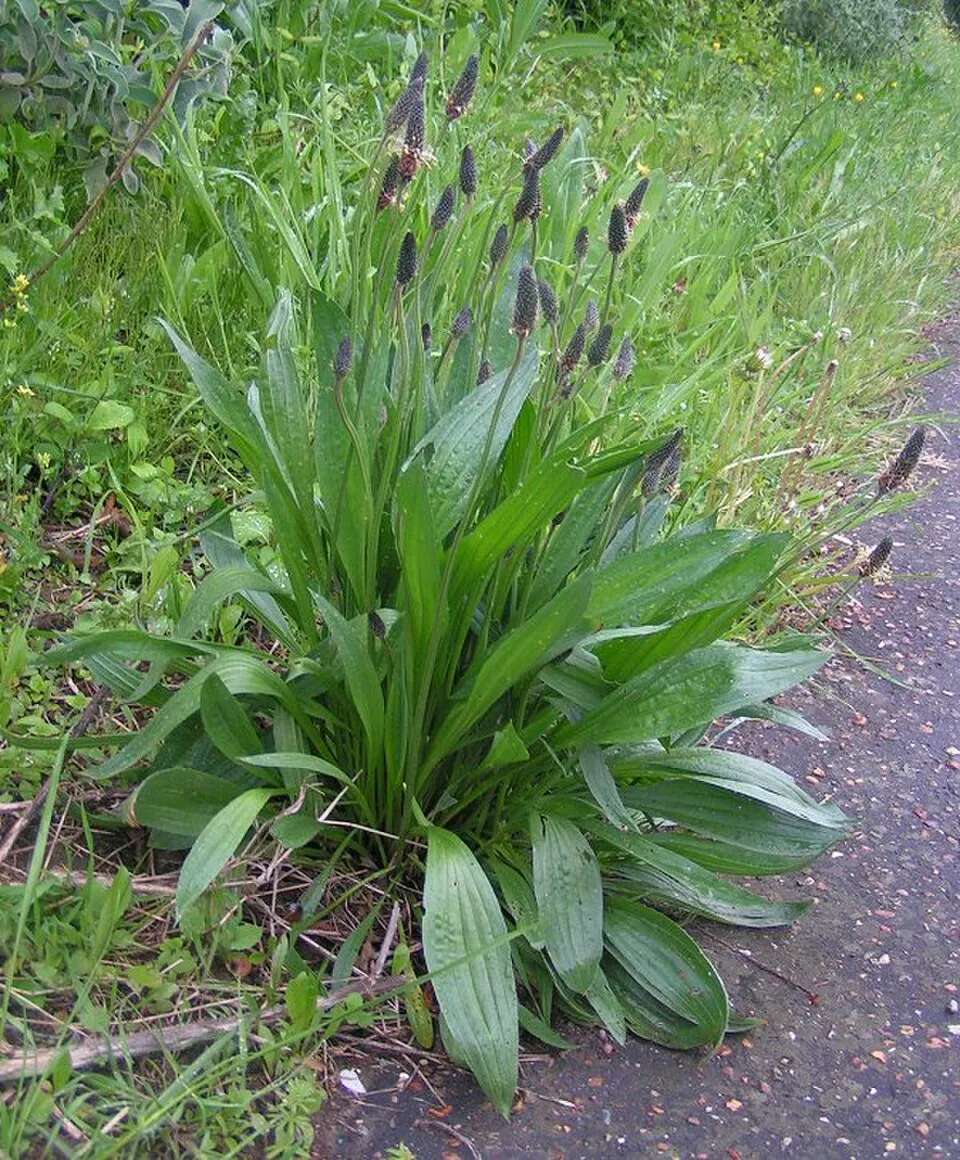
Ribwort Plantain, botanically known as Plantago lanceolata, is a ubiquitous perennial herb characterized by a distinctive basal rosette of narrow, lanceolate leaves. These dark green leaves can extend up to 25 cm in length, featuring prominent parallel venation and often subtly serrated margins that contribute to their textured appearance. The plant typically reaches a height of 15 to 40 cm, with slender, erect flowering stalks ascending further, sometimes up to 60 cm. Small, white to greenish flowers are densely clustered atop these spikes, blooming sequentially from spring through autumn.
The stems are generally smooth and unbranched, supporting the compact flower heads. Plantago lanceolata demonstrates remarkable adaptability, thriving in a diverse range of habitats, particularly preferring well-drained soils in temperate regions. It is commonly found colonizing meadows, pastures, lawns, and along roadsides, indicating its robust nature as a common 'weed' across its native range of Europe, North Africa, and West and South Asia. Its global distribution is extensive, having been widely introduced to North America, Australia, New Zealand, and various African and Asian countries, including high altitudes in the Indian subcontinent (e.g., Jammu and Kashmir, Himachal Pradesh, Uttarakhand, Sikkim, West Bengal at 1200-2400 m).
As a member of the Plantaginaceae family, it shares structural similarities with other Plantago species, such as the well-known psyllium (Plantago psyllium) and common plantain (Plantago major). Its small, ovoid seeds are efficiently dispersed by wind and animals, facilitating its widespread presence and ecological success in varied environments.
Trusted Scientific References
1. Authoritative external sources for Plantago lanceolata
1.1 Wikipedia — Plantago lanceolata
1.2 Kew POWO (Plants of the World Online)
1.3 PubMed — peer-reviewed research
1.4 NCBI Taxonomy Browser
1.5 GBIF — Global Biodiversity
1.6Ribwort Plantain should be interpreted through verified botanical identity, practical care, and responsible safety language. This recovery note adds the missing context needed for a complete profile: match light to the plant's habit, use well-drained soil, water according to season, and avoid unsupported medicinal or edible claims. For publishing, the plant can be presented as a source-backed medicinal plant with clear care guidance, common problem diagnosis, and conservative safety wording.
1.1.Ribwort Plantain — Notable Characteristics
- ✓Botanical Name — Plantago lanceolata.
- ✓Common Names — Ribwort Plantain, Narrow-leaf Plantain, Buckhorn Plantain.
- ✓Family — Plantaginaceae, a broadleaf plantain species.
- ✓Key Bioactives — Aucubin (iridoid glycoside), various flavonoids, and mucilage.
- ✓Traditional Uses — European herbalism, Ayurveda (as Asvagola), Traditional Persian Medicine.
- ✓Primary Actions — Anti-inflammatory, Astringent, Demulcent, Vulnerary, Expectorant.
- ✓Growth Habit — Perennial herb with a distinctive basal rosette of narrow leaves.
- ✓Habitat — Thrives in temperate meadows, pastures, roadsides, and disturbed areas.
- ✓Edibility — Young leaves are edible, suitable for salads or cooking; seed heads can also be consumed.
- ✓SEO Relevance — Highly searched for its benefits in wound healing, respiratory health, and skin care.
1.2.Ribwort Plantain — Snapshot Summary
- ✓Ribwort Plantain (Plantago lanceolata) is a common perennial herb recognized for its lanceolate leaves and widespread distribution.
- ✓Valued across traditional medicine systems for its powerful anti-inflammatory, antimicrobial, and wound-healing properties.
- ✓Rich in bioactive compounds like aucubin, flavonoids, and mucilage, which support respiratory, digestive, and skin health.
- ✓Primarily used as a topical poultice for skin ailments and as an herbal tea or tincture for internal conditions such as coughs and gut irritation.
- ✓Generally considered safe, but caution is advised during pregnancy, lactation, and for individuals with known plant allergies.
2.Ribwort Plantain — Botanical Identity
3.Ribwort Plantain — Fact Sheet
4.Ribwort Plantain — Botanical Description
5.Ribwort Plantain — Origin & Spread
6.Ribwort Plantain — Folk Medicine Applications
7.Ribwort Plantain — Phytochemistry
- ✓Iridoid Glycosides — Primarily aucubin and catalpol, which are responsible for many of Ribwort Plantain's anti-inflammatory, antimicrobial, and hepatoprotective actions.
- ✓Flavonoids — Including apigenin, luteolin, plantagin, and their glycosides, contributing significant antioxidant, anti-inflammatory, and antiallergic effects.
- ✓Polysaccharides (Mucilage) — Complex carbohydrates such as arabinogalactans, rhamnogalacturonans, and glucomannans, providing demulcent, soothing, and wound-healing properties.
- ✓Tannins — Predominantly gallic acid and other hydrolyzable tannins, imparting astringent qualities that aid in wound contraction and reducing secretions.
- ✓Phenolic Acids — Such as caffeic acid, chlorogenic acid, and ferulic acid, which offer robust antioxidant and anti-inflammatory benefits.
- ✓Saponins — Triterpenoid saponins are present, potentially contributing to expectorant and anti-inflammatory activities.
- ✓Alkaloids — Found in trace amounts, their specific pharmacological contributions are less defined but may have minor effects.
- ✓Minerals — Rich in vital dietary minerals including iron, zinc, potassium, calcium, and magnesium, supporting overall physiological functions.
- ✓Vitamins — Contains vitamins C, K, and various B vitamins, enhancing its nutritional profile and contributing to its healing capacities.
- ✓Fatty Acids — Seeds contain essential fatty acids like linoleic and α-linolenic acids, beneficial for cellular health and anti-inflammatory responses.
8.Ribwort Plantain — Evidence-Based Benefits
- ✓Anti-inflammatory — Contains compounds like flavonoids and iridoid glycosides that help reduce swelling, redness, and pain in both internal and external tissues.
- ✓Antimicrobial/Antibacterial — Aucubin, a key iridoid glycoside, demonstrates activity against various bacteria, supporting the body's defense against infections.
- ✓Expectorant — Aids in loosening and expelling mucus from the respiratory tract, making it beneficial for coughs, bronchitis, and congestion.
- ✓Wound Healing (Vulnerary) — Applied topically, it accelerates the healing of cuts, scrapes, insect bites, and minor burns by promoting tissue regeneration and reducing infection.
- ✓Astringent (Stambhana) — Tannins in the plant firm tissues, reduce secretions, and help stop bleeding, making it useful for diarrhea and minor hemorrhages.
- ✓Demulcent — The high mucilage content provides a soothing, protective layer over irritated mucous membranes in the digestive, respiratory, and urinary systems.
- ✓Diuretic (Mutrala) — Promotes increased urine flow, assisting the body in flushing out toxins and excess fluids without irritating the urinary tract due to its soothing properties.
- ✓Blood Purifier (Rakta Shodhana) — Traditionally used to detoxify the blood, which can help alleviate inflammatory skin conditions like acne and dermatitis.
- ✓Digestive Aid — Mucilage acts as a prebiotic, soothing the gut lining and supporting healthy digestion, while fiber contributes to bowel regularity.
- ✓Respiratory Support — Alleviates irritation and inflammation in the airways, providing relief for conditions such as irritating coughs, mild asthma, and throat discomfort.
- ✓Skin Health — Effective for soothing skin inflammation, drawing out splinters or pus from minor infections, and calming allergic reactions when applied as a poultice.
- ✓Nutritional Support — Contains essential minerals like iron, contributing to overall health and combating deficiencies.
8.1.Ribwort Plantain — Indications & Uses
9.Ribwort Plantain — Safety & Side Effects
9.1.Ribwort Plantain — Reported Side Effects
- ✓Gastrointestinal Upset — Rarely, consuming very large quantities, especially the seeds, may lead to mild diarrhea, bloating, or stomach discomfort due to high fiber content.
- ✓Allergic Reactions — Individuals with sensitivities to plants in the Plantaginaceae family may experience mild skin rashes, itching, or other allergic responses upon contact or ingestion.
- ✓Laxative Effect — Excessive intake, particularly of seed preparations like psyllium, can have a mild to moderate laxative effect, which may not be desirable.
- ✓Pollen Allergy — The pollen of Plantago species is a known seasonal allergen for some individuals, potentially exacerbating hay fever symptoms.
- ✓Drug Interactions — While generally low risk, its vitamin K content might theoretically interact with anticoagulant medications; consultation with a healthcare provider is recommended for those on such therapies.
9.2.Ribwort Plantain — Risk Assessment
- ✓General Safety — Ribwort Plantain is widely regarded as safe for most individuals when used appropriately in traditional medicinal dosages, both internally and externally.
- ✓Pregnancy and Lactation — Due to limited comprehensive research on its effects during these periods, pregnant and breastfeeding women should exercise caution and consult a healthcare professional before use.
- ✓Children — Topical application of Ribwort Plantain for minor skin irritations in children is generally considered safe; however, internal administration should only be done under pediatric guidance.
- ✓Autoimmune Conditions — No specific contraindications are known for autoimmune conditions, but individuals should consult their doctor before using any immune-modulating herbs.
- ✓Surgical Procedures — It is advisable to discontinue consumption of Ribwort Plantain at least two weeks prior to any scheduled surgery due to potential minor effects on blood coagulation.
- ✓Quality Assurance — When foraging, ensure the plant material is harvested from clean, uncontaminated areas free from pesticides, heavy metals, or other environmental pollutants.
10.Ribwort Plantain — Preparations & Uses
- ✓Herbal Tea/Infusion — Steep 1-2 teaspoons of dried Ribwort Plantain leaves in 250 ml of hot water for 10-15 minutes; consume 2-3 times daily for respiratory and digestive ailments.
- ✓Poultice — Crush fresh Ribwort Plantain leaves to release their juices and apply directly to cuts, insect bites, splinters, or inflamed skin; secure with a bandage and replace every few hours.
- ✓Tincture — Macerate fresh or dried leaves in a high-proof alcohol solution for 4-6 weeks, then strain; take 1-2 ml orally, 2-3 times daily, for internal support.
- ✓Salve/Ointment — Infuse dried Ribwort Plantain leaves in a carrier oil (e.g., olive oil), then combine with beeswax to create a soothing topical balm for various skin conditions and minor wounds.
- ✓Syrup — Prepare a strong Ribwort Plantain infusion and mix it with honey or sugar, often with other demulcent herbs, to formulate an effective, soothing cough syrup.
- ✓Fresh Juice — Extract juice from fresh leaves for immediate topical application on skin irritations or for internal consumption in small doses to address digestive issues.
- ✓Culinary Use — Young, tender Ribwort Plantain leaves can be incorporated into fresh salads, blended into smoothies, or lightly cooked as a nutritious leafy green vegetable.
11.Ribwort Plantain — Cultivation & Care
- ✓Climate — Thrives robustly in temperate zones, demonstrating resilience across a wide range of climatic conditions, including colder temperatures.
- ✓Soil — Highly adaptable to various soil types, but performs best in well-drained, moderately fertile loamy soils with a pH range of 6.0 to 7.5.
- ✓Sunlight — Prefers full sun exposure for optimal growth and flowering, though it can tolerate and grow adequately in partial shade conditions.
- ✓Sowing — Seeds can be directly sown into prepared garden beds in early spring or autumn, lightly covered with fine soil; germination typically occurs within 1 to 3 weeks.
- ✓Watering — Requires moderate and consistent watering, especially during dry spells; established plants exhibit good drought tolerance due to their deep root system.
- ✓Spacing — When transplanting or thinning seedlings, allow approximately 15-30 cm between plants to accommodate the development of its characteristic basal rosette.
- ✓Harvesting — Leaves are ideally harvested before the plant flowers, typically from spring through early summer, when their medicinal potency is considered highest.
- ✓Propagation — Easily propagated from seed or by dividing mature root clumps in either the spring or autumn months, making it simple to establish and expand.
Reviewed by the Flora Medical Global Botanical Review Panel
Multi-disciplinary editorial group · Botany · Ethnobotany · Herbal-medicine literature
Who reviewed this: This page was checked by the Flora Medical Global Botanical Review Panel — an in-house editorial group of botany graduates, ethnobotany researchers, and horticulture practitioners who collectively maintain our 7,000+ plant encyclopedia. Meet the team.
Our 4-step verification process
1. Taxonomic verification
Scientific names and synonyms cross-checked against Kew POWO, World Flora Online, and The Plant List.
2. Phytochemical & medicinal cross-reference
Active compounds, traditional uses, and reported activities are cross-referenced with PubMed, USDA Dr. Duke's database, and peer-reviewed ethnobotanical literature.
3. Conservation & distribution check
Distribution, ecology, and conservation status confirmed against GBIF occurrence records and the IUCN Red List.
4. Editorial & safety review
Every entry passes an editorial pass for clarity, originality, and safety notices (toxicity, contraindications, dosage caveats) before publication.
Last reviewed:
Important medical disclaimer: This content is for educational and research purposes only. It is not medical advice and is not a substitute for consultation with a licensed healthcare provider. Do not use any herb to self-treat a medical condition without professional guidance.
Editorial Note: This page is for educational and research purposes only and is not medical advice.
Written by: Flora Medical Global Editorial Team
Reviewed by: Flora Medical Global Botanical Review Panel
Last Updated: June 16, 2026





Ribwort Plantain — Comments & Community Reviews
Rate this plant