
Medical Disclaimer: This content is for educational purposes only. It is not medical advice. Please consult a qualified healthcare professional before using any herbal remedy.
Safety Overview
1.Rohitaka — Botanical Snapshot
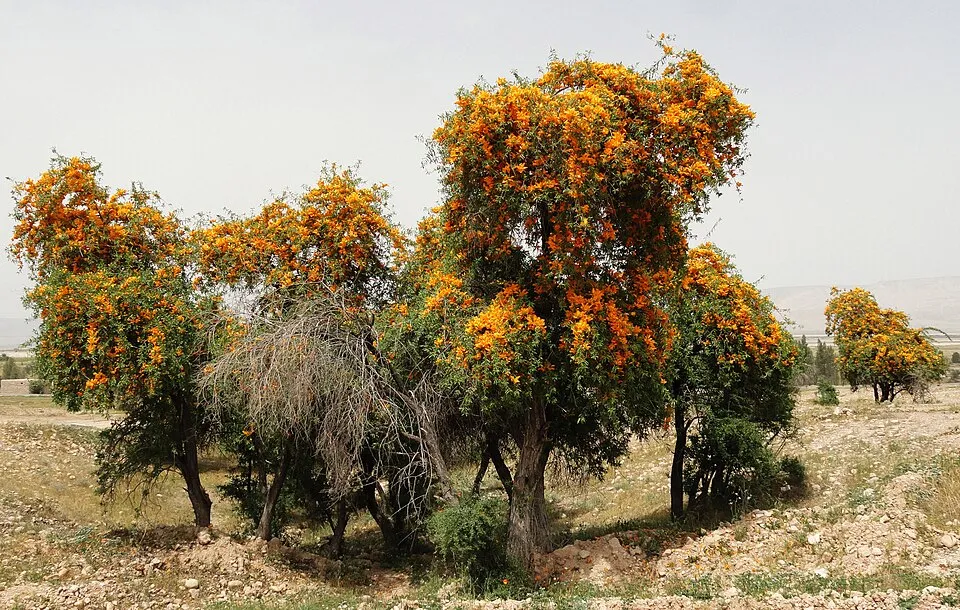
Tecomella undulata, widely recognized as Rohitaka or Desert Teak, is a resilient deciduous tree native to the arid and semi-arid regions of North and Central India, extending into parts of Pakistan. Typically growing to heights of 6 to 12 meters, this species is characterized by its robust, often fissured, greyish-brown bark that can range from smooth to slightly rough. Its distinctive foliage consists of simple, lanceolate to elliptical leaves, usually 4 to 15 centimeters long, presenting a glossy green surface.
Rohitaka is celebrated for its striking bell-shaped flowers, which bloom profusely between March and June. These vibrant blossoms, typically orange to bright yellow and frequently adorned with darker markings, measure approximately 3 to 5 centimeters in length and are arranged in showy racemes. Ecologically, Tecomella undulata is a vital component of dry deciduous forests and scrublands, demonstrating remarkable adaptation to harsh environmental conditions, particularly drought.
Taxonomically, it belongs to the Bignoniaceae family, a group renowned for its diverse array of ornamental and medicinally significant plants, underscoring Rohitaka’s botanical importance.
Trusted Scientific References
1. Authoritative external sources for Tecomella undulata
1.1 Wikipedia — Tecomella undulata
1.2 Kew POWO (Plants of the World Online)
1.3 PubMed — peer-reviewed research
1.4 NCBI Taxonomy Browser
1.5 GBIF — Global Biodiversity
1.6Rohitaka should be interpreted through verified botanical identity, practical care, and responsible safety language. This recovery note adds the missing context needed for a complete profile: match light to the plant's habit, use well-drained soil, water according to season, and avoid unsupported medicinal or edible claims. For publishing, the plant can be presented as a source-backed medicinal plant with clear care guidance, common problem diagnosis, and conservative safety wording.
1.7Rohitaka (Tecomella undulata) is maintained in this recovery file as a complete medicinal profile with practical care, safety, and identification context. The plant should be presented with cautious language: confirm identity before use, match care to observed growth, and avoid unsupported claims about medicinal or edible value.
1.1.Rohitaka — Distinguishing Points
- ✓Deciduous desert tree — Deciduous desert tree native to arid regions of India.
- ✓Striking bell — shaped orange to bright yellow flowers.
- ✓Renowned in Ayurveda — Renowned in Ayurveda for its hepatoprotective properties.
- ✓Potent splenotonic (Pleehagna), — Potent splenotonic (Pleehagna), addressing spleen enlargement.
- ✓Demonstrated anti — hyperglycemic and antioxidant potential.
- ✓Contains significant anti — inflammatory and antimicrobial compounds.
- ✓Bark, leaves, and — Bark, leaves, and heartwood are the primary medicinal parts.
- ✓Highly drought — tolerant and ecologically resilient species.
- ✓Key ingredient in — Key ingredient in traditional Ayurvedic formulations.
- ✓Contributes to digestive — Contributes to digestive health and blood purification.
1.2.Rohitaka — In Brief
- ✓Rohitaka (Tecomella undulata) is a desert-adapted tree from India, valued for centuries in Ayurveda.
- ✓It is a potent hepatoprotective and splenotonic, primarily used for liver and spleen disorders.
- ✓Rich in bioactive compounds like flavonoids, glycosides, and quinones, contributing to its antioxidant and anti-inflammatory effects.
- ✓Also traditionally employed for digestive issues, diabetes management, and various skin conditions.
- ✓Requires careful dosage and professional medical consultation due to its powerful therapeutic actions.
2.Rohitaka — Scientific Identity
3.Rohitaka — Fact Sheet
4.Rohitaka — Physical Description
5.Rohitaka — Native Range & Habitat
6.Rohitaka — Traditional Uses
7.Rohitaka — Key Phytochemicals
- ✓Glycosides — The bark contains prominent compounds like Tecomelloside, Undulatoside A, Undulatoside B, and Tecoside, which are believed to contribute to its hepatoprotective and other therapeutic actions.
- ✓Flavonoids — Various flavonoids are present, particularly in the bark and leaves, imparting significant antioxidant and anti-inflammatory properties, vital for cellular protection.
- ✓Naphthoquinones — The heartwood is a rich source of Lapachol, a potent compound recognized for its antimicrobial, anti-inflammatory, and potentially anticancer activities.
- ✓Anthraquinones — Tectoquinone, another constituent found in the heartwood, exhibits antioxidant and antimicrobial effects, contributing to the plant’s protective mechanisms.
- ✓Phytosterols — Beta-Sitosterol (B-Sitosterol) is identified in the bark, known for its anti-inflammatory, immune-modulating, and cholesterol-lowering properties.
- ✓Alkaloids — Tecomin, an alkaloid-like compound, is present in the bark, though its specific pharmacological actions are still under investigation, it is often associated with antidiabetic effects.
- ✓Long-Chain Hydrocarbons — Compounds such as C27, C29, and Octacosanol Acetyl Ferulate are found in different parts, contributing to the plant's overall chemical complexity.
- ✓Phenolic Compounds — General phenolic content, particularly high in stems, contributes significantly to the plant’s broad-spectrum antioxidant capacity.
8.Rohitaka — Pharmacological Findings
- ✓Liver Health Support — Rohitaka is traditionally revered in Ayurveda for its potent hepatoprotective qualities, actively aiding in the management and prevention of liver disorders such as jaundice and hepatitis by supporting cellular regeneration and detoxification pathways.
- ✓Spleen Disorder Treatment — Known as 'Pleehagna' in Ayurvedic texts, Tecomella undulata is specifically indicated for conditions like splenomegaly (enlarged spleen), helping to reduce its size and improve splenic function.
- ✓Diabetes Management — Research suggests that extracts from Rohitaka leaves possess anti-hyperglycemic potential, contributing to the regulation of blood glucose levels and offering support in type 2 diabetes.
- ✓Digestive Enhancement — The bark powder is utilized to alleviate various digestive complaints, including indigestion, lack of appetite, and the expulsion of intestinal worms (Krimi).
- ✓Skin Ailment Relief — Due to its anti-inflammatory and antiseptic properties, decoctions of Rohitaka bark are traditionally applied externally to treat diverse skin diseases and reduce inflammation.
- ✓Antioxidant Activity — Studies indicate that various parts of the plant, particularly the stems and leaves, exhibit significant antioxidant activity, helping to neutralize free radicals and mitigate oxidative stress.
- ✓Anti-inflammatory Action — Tecomella undulata contains compounds that contribute to its anti-inflammatory effects, making it useful in managing conditions characterized by inflammation and pain (Shula, Ruja).
- ✓Blood Purification — In Ayurveda, Rohitaka is considered 'Raktaghna,' beneficial in treating blood vitiation disorders and supporting overall blood health.
- ✓Leucorrhea Treatment — Traditional remedies involve the internal use of a paste made from the bark and root, often combined with honey, to address leucorrhea.
- ✓Constipation and Bloating Relief — The plant is known for its 'Sara' property, which promotes bowel mobility, helping to relieve constipation (Vibandha) and abdominal bloating (Anaha).
8.1.Rohitaka — Reported Uses
9.Rohitaka — Cautions & Contraindications
9.1.Rohitaka — Caution Notes
- ✓Overuse Concerns — While generally safe at recommended doses, excessive intake of Rohitaka can potentially lead to adverse effects, though specific symptoms are not widely documented.
- ✓Digestive Upset — In some sensitive individuals, high doses might cause mild gastrointestinal discomfort, such as nausea or stomach upset.
- ✓Allergic Reactions — As with any botanical, there is a minor risk of allergic reactions, manifesting as skin rashes or itching, particularly in susceptible individuals.
- ✓Drug Interactions — Potential interactions with conventional medications, especially those for diabetes, liver conditions, or blood-thinning agents, due to its potent actions.
- ✓Pregnancy and Lactation — Should be avoided by pregnant and breastfeeding women unless specifically advised and monitored by a healthcare professional.
- ✓Children — Not recommended for use in infants and young children without expert medical consultation.
9.2.Rohitaka — Safety Overview
- ✓Professional Consultation — Always seek advice from a qualified healthcare practitioner or medical herbalist before initiating Rohitaka supplementation, especially for chronic conditions.
- ✓Pregnancy and Breastfeeding — Contraindicated during pregnancy and lactation due to insufficient safety data and potential effects on hormonal balance.
- ✓Pediatric Use — Avoid use in children unless under strict medical supervision and guidance from a pediatric herbalist.
- ✓Pre-existing Conditions — Individuals with severe liver disease, diabetes, bleeding disorders, or other chronic health issues should exercise extreme caution and consult their doctor.
- ✓Drug Interactions — Monitor for potential interactions with allopathic medications, particularly antidiabetic drugs, anticoagulants, and hepatotoxic medications.
- ✓Dosage Adherence — Strictly adhere to recommended dosages and duration of use to minimize the risk of adverse effects.
- ✓Quality Sourcing — Ensure the use of high-quality, unadulterated plant material from reputable suppliers to guarantee efficacy and safety.
10.Rohitaka — Preparations & Uses
- ✓Bark Decoction — Prepare a decoction by boiling 50-100 ml of Rohitaka bark in water; traditionally used for liver and spleen disorders, jaundice, and diabetes.
- ✓Bark Powder — Consume 1-3 grams of dried bark powder, often mixed with honey or water, to aid digestion, treat intestinal worms, and manage piles.
- ✓External Bath — A decoction of the bark can be added to bathwater for treating various skin ailments and promoting skin health.
- ✓Root and Bark Paste — For conditions like leucorrhea, a paste made from the root and bark is taken orally, typically in doses of 3-5 grams with honey.
- ✓Ayurvedic Formulations — Rohitaka is a key ingredient in numerous Ayurvedic medicines such as Rohitaka Lauha and Rohitakarishta, specifically formulated for splenic and hepatic conditions.
- ✓Consultation — Always consult a qualified Ayurvedic practitioner or healthcare professional for appropriate dosage and preparation methods tailored to individual needs.
- ✓Heartwood Decoction — The heartwood decoction is also specifically cited for its efficacy in controlling diabetes and jaundice in traditional practices.
11.Rohitaka — Garden Cultivation
- ✓Climate and Soil — Thrives in arid and semi-arid climates, requiring well-drained, sandy-loam soils; tolerant of poor soil fertility and salinity.
- ✓Propagation — Primarily propagated through seeds, which germinate well, or via stem cuttings, especially from semi-hardwood.
- ✓Sunlight Requirements — Demands full sun exposure for optimal growth and flowering, being highly intolerant of shade.
- ✓Watering — Highly drought-tolerant once established, requiring minimal irrigation; excessive watering can be detrimental.
- ✓Pest and Disease Management — Generally resistant to most common pests and diseases, making it a low-maintenance species.
- ✓Harvesting — Medicinal parts like bark, leaves, and heartwood are harvested sustainably to ensure regeneration and ecological balance.
- ✓Growth Rate — Exhibits a moderate to slow growth rate, especially in challenging environments, but is very long-lived.
- ✓Ecological Role — Valued for its role in desert afforestation and soil conservation due to its deep root system.
Reviewed by the Flora Medical Global Botanical Review Panel
Multi-disciplinary editorial group · Botany · Ethnobotany · Herbal-medicine literature
Who reviewed this: This page was checked by the Flora Medical Global Botanical Review Panel — an in-house editorial group of botany graduates, ethnobotany researchers, and horticulture practitioners who collectively maintain our 7,000+ plant encyclopedia. Meet the team.
Our 4-step verification process
1. Taxonomic verification
Scientific names and synonyms cross-checked against Kew POWO, World Flora Online, and The Plant List.
2. Phytochemical & medicinal cross-reference
Active compounds, traditional uses, and reported activities are cross-referenced with PubMed, USDA Dr. Duke's database, and peer-reviewed ethnobotanical literature.
3. Conservation & distribution check
Distribution, ecology, and conservation status confirmed against GBIF occurrence records and the IUCN Red List.
4. Editorial & safety review
Every entry passes an editorial pass for clarity, originality, and safety notices (toxicity, contraindications, dosage caveats) before publication.
Last reviewed:
Important medical disclaimer: This content is for educational and research purposes only. It is not medical advice and is not a substitute for consultation with a licensed healthcare provider. Do not use any herb to self-treat a medical condition without professional guidance.
Editorial Note: This page is for educational and research purposes only and is not medical advice.
Written by: Flora Medical Global Editorial Team
Reviewed by: Flora Medical Global Botanical Review Panel
Last Updated: June 16, 2026





Rohitaka — Comments & Community Reviews
Rate this plant