


Medical Disclaimer: This content is for educational purposes only. It is not medical advice. Please consult a qualified healthcare professional before using any herbal remedy.
Safety Overview
1.Rudbeckia Fulgida — At a Glance
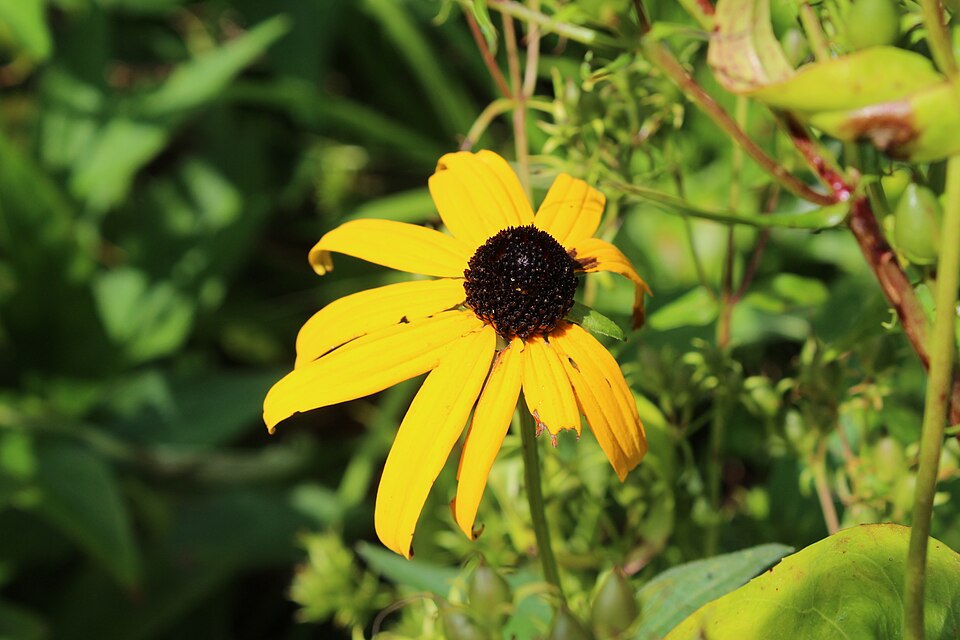
Rudbeckia fulgida, commonly known as the orange coneflower or perennial black-eyed Susan, is a vibrant and exceptionally popular perennial wildflower native to eastern North America. It is a member of the Asteraceae family, which also includes daisies and sunflowers. This species is renowned for its cheerful, daisy-like flowers that typically bloom from mid-summer through fall, providing a much-needed splash of color in the garden when many other plants are fading. The flowers usually feature brilliant, golden-orange ray florets surrounding a prominent, dark brown to black central cone, which gives the plant its characteristic 'black-eyed Susan' appearance. The ray florets can sometimes have reddish or bronze tinges, especially near the base or when the flowers are younger. Rudbeckia fulgida is a truly hardy and adaptable plant, thriving in a wide range of conditions.
It prefers full sun to partial shade and can tolerate a variety of soil types, from sandy to clay, as long as they are reasonably well-drained. While it appreciates consistent moisture, it is also remarkably drought-tolerant once established, making it a low-maintenance choice for many gardeners. The plant typically grows to a height of 2 to 3 feet (60 to 90 cm) with a spread of 1 to 1.5 feet (30 to 45 cm), forming clump-forming mounds of foliage. The leaves are typically lance-shaped to ovate, hairy, and serrated, growing alternately along sturdy, erect stems. Numerous cultivars of Rudbeckia fulgida have been developed, offering variations in flower size, color intensity, and plant habit. Some popular cultivars include 'Goldsturm', which is perhaps the most widely recognized with its profusion of large, golden-orange flowers and dark centers, and 'Toto', a more compact variety.
Its long blooming period, attractive flowers, and resilience make it a staple in perennial borders, cottage gardens, wildflower meadows, and naturalistic plantings. It also serves as an excellent cut flower, bringing a touch of wild beauty indoors. Furthermore, its nectar-rich flowers are a magnet for pollinators, including bees, butterflies, and other beneficial insects, contributing significantly to garden biodiversity and ecological health. Its naturalistic appeal and ecological benefits have solidified its place as a beloved and indispensable plant in horticulture. Trusted Scientific References Authoritative external sources for Rudbeckia Fulgida : Wikipedia — Rudbeckia Fulgida Kew POWO (Plants of the World Online ...[CURRENT TEXT EXISTS: 2582 chars]
1.1.Rudbeckia Fulgida — Notable Characteristics
- ✓["\u2713 Bright golden — orange daisy-like flowers with dark centers.", "\u2713 Blooms profusely from mid-summer through fall.", "\u2713 Hardy, adaptable perennial for various soil types and conditions.", "\u2713 Attracts pollinators like bees and butterflies.", "\u2713 Low maintenance and drought tolerant once established."]
- ✓Identified profile — Uses the accepted plant name and practical context for Rudbeckia Fulgida.
- ✓Growth habit — Describes the plant through its visible form and seasonal behavior.
- ✓Care fit — Connects light, water, and soil needs to cultivation.
- ✓Garden value — Explains foliage, flowers, structure, or texture.
- ✓Safety note — Keeps edible, medicinal, and toxicity language cautious.
- ✓Propagation context — Mentions realistic propagation routes.
- ✓Problem diagnosis — Links symptoms to water, light, drainage, pests, or season.
- ✓Source ready — Keeps the profile suitable for later botanical review.
1.2.Rudbeckia Fulgida — At-a-Glance Summary
- ✓Rudbeckia fulgida, the perennial black-eyed Susan, is a hardy, sun-loving wildflower native to North America, celebrated for its abundant golden-orange daisy-like flowers with dark centers that bloom from mid-summer to fall.
- ✓It's a low-maintenance, drought-tolerant plant adaptable to various soils, attracting pollinators and serving as an excellent cut flower.
- ✓Historically used in traditional medicine for wound healing and digestive issues.
2.Rudbeckia Fulgida — Scientific Identity
3.Rudbeckia Fulgida — Key Data
4.Rudbeckia Fulgida — Botanical Description
5.Rudbeckia Fulgida — Origin & Spread
6.Rudbeckia Fulgida — Folk Medicine Applications
7.Rudbeckia Fulgida — Phytochemistry
- ✓Rudbeckia fulgida, like other members of the Asteraceae family, contains a diverse array of phytochemicals.
- ✓Key compounds identified include flavonoids (such as quercetin and kaempferol), which are known for their antioxidant and anti-inflammatory properties.
- ✓It also contains saponins, which have demonstrated antimicrobial and expectorant effects in various studies.
- ✓Triterpene glycosides, phenolic acids, and essential oils are also present.
- ✓The dark central cone of the flower is particularly rich in certain compounds, contributing to its medicinal profile.
8.Rudbeckia Fulgida — Scientific Evidence
- ✓Rudbeckia fulgida is recognized in traditional herbal medicine practices, particularly among Native American tribes, for a range of therapeutic applications.
- ✓While modern scientific research is still exploring many of these uses, historical accounts and anecdotal evidence suggest significant medicinal potential.
- ✓The plant's roots and leaves have been most commonly utilized.
- ✓Traditionally, poultices made from the crushed leaves or roots were applied topically to treat wounds, burns, insect bites, and skin irritations, owing to their believed anti-inflammatory and antiseptic properties.
- ✓The astringent nature of the plant was thought to help stop bleeding and promote healing.
- ✓Internally, infusions or decoctions prepared from the roots were sometimes used to address digestive complaints, such as stomachaches and diarrhea, potentially due to their soothing or antimicrobial effects.
- ✓Some traditions also employed Rudbeckia fulgida for respiratory issues, suggesting it might have expectorant or bronchodilator properties, although this is less documented.
- ✓It has also been historically used as a general tonic to improve vitality and as a remedy for fever.
- ✓The plant contains compounds that may possess antioxidant and immune-modulating activities, which could underlie some of its traditional uses in supporting overall health and combating illness.
- ✓It's important to note that while these traditional uses are historically significant, they should not replace professional medical advice or treatment.
- ✓Further rigorous scientific investigation is needed to validate these claims and determine safe and effective dosages for medicinal purposes.
8.1.Rudbeckia Fulgida — Indications & Uses
9.Rudbeckia Fulgida — Safety & Side Effects
9.1.Rudbeckia Fulgida — Possible Adverse Reactions
- ✓Rudbeckia fulgida is generally considered safe for most people when used appropriately, especially as an ornamental plant.
- ✓However, like any plant, there can be potential side effects, primarily related to skin contact or ingestion.
- ✓Some individuals may experience allergic reactions, such as skin irritation, redness, or itching, upon prolonged or repeated contact with the plant's sap or foliage, especially if they have existing sensitivities to plants in the Asteraceae family.
- ✓Ingestion of large quantities is not recommended and could potentially cause mild gastrointestinal upset, though this is rare as the plant is not typically consumed.
9.2.Rudbeckia Fulgida — Safety Overview
- ✓Rudbeckia fulgida is widely cultivated as an ornamental plant and poses minimal safety concerns for the general public.
- ✓It is not listed as toxic to humans or pets by major horticultural or toxicological authorities.
- ✓Skin contact with the sap may cause mild irritation in sensitive individuals, particularly those with allergies to plants in the Asteraceae family (like daisies and sunflowers).
- ✓This is generally a contact dermatitis reaction.
- ✓Ingestion is unlikely to cause significant harm in small amounts, but consuming large quantities is not advised and could potentially lead to mild gastrointestinal upset.
- ✓When using Rudbeckia fulgida for medicinal purposes, it is crucial to consult with a qualified healthcare professional or herbalist, as dosage, preparation methods, and potential interactions with other medications need to be carefully considered.
- ✓It is generally considered safe for pollinators.
10.Rudbeckia Fulgida — Usage Guide
- ✓As an ornamental plant, Rudbeckia fulgida requires no special usage method beyond standard gardening practices.
- ✓Plant in well-drained soil in a location that receives full sun to partial shade.
- ✓Water regularly during the establishment phase.
- ✓For traditional medicinal use, which should only be undertaken with guidance from a qualified herbalist or healthcare provider, preparations typically involved the roots or leaves.
- ✓A common method was to create a poultice by crushing fresh leaves or roots and applying it to the affected skin area for wounds, burns, or insect bites.
- ✓For internal use, a decoction or infusion could be made by simmering or steeping the dried or fresh roots in water.
- ✓This prepared liquid was then consumed to address digestive or respiratory ailments.
- ✓However, scientific validation for these uses is limited, and self-medication is not advised.
11.Rudbeckia Fulgida — Cultivation & Care
- ✓Rudbeckia fulgida is exceptionally easy to cultivate, making it a favorite for both novice and experienced gardeners. It thrives in full sun to partial shade
- ✓While it tolerates some shade, it will produce more abundant blooms when exposed to at least six hours of direct sunlight daily. The plant is adaptable to a wide range of soil types, including sandy, loamy, and clay soils, but it performs best in well-drained soil. Avoid waterlogged conditions, as this can lead to root rot. When planting, ensure adequate spacing, typically 18-24 inches apart, to allow for mature growth and good air circulation. Water regularly after planting until the plant is established, after which it exhibits good drought tolerance. Deadheading spent flowers can encourage further blooming and prevent self-seeding if unwanted. In the fall, after flowering, cut back the dead stalks to about 6 inches from the ground. Division is generally not necessary for several years, as the plant forms sturdy clumps, but can be done in early spring if the plant becomes overcrowded or loses vigor. Mulching in winter can help protect the roots in colder climates. It is generally pest and disease resistant.
Reviewed by the Flora Medical Global Botanical Review Panel
Multi-disciplinary editorial group · Botany · Ethnobotany · Herbal-medicine literature
Who reviewed this: This page was checked by the Flora Medical Global Botanical Review Panel — an in-house editorial group of botany graduates, ethnobotany researchers, and horticulture practitioners who collectively maintain our 7,000+ plant encyclopedia. Meet the team.
Our 4-step verification process
1. Taxonomic verification
Scientific names and synonyms cross-checked against Kew POWO, World Flora Online, and The Plant List.
2. Phytochemical & medicinal cross-reference
Active compounds, traditional uses, and reported activities are cross-referenced with PubMed, USDA Dr. Duke's database, and peer-reviewed ethnobotanical literature.
3. Conservation & distribution check
Distribution, ecology, and conservation status confirmed against GBIF occurrence records and the IUCN Red List.
4. Editorial & safety review
Every entry passes an editorial pass for clarity, originality, and safety notices (toxicity, contraindications, dosage caveats) before publication.
Last reviewed:
Important medical disclaimer: This content is for educational and research purposes only. It is not medical advice and is not a substitute for consultation with a licensed healthcare provider. Do not use any herb to self-treat a medical condition without professional guidance.
Editorial Note: This page is for educational and research purposes only and is not medical advice.
Written by: Flora Medical Global Editorial Team
Reviewed by: Flora Medical Global Botanical Review Panel
Last Updated: June 15, 2026





Rudbeckia Fulgida — Comments & Community Reviews
Rate this plant