
Medical Disclaimer: This content is for educational purposes only. It is not medical advice. Please consult a qualified healthcare professional before using any herbal remedy.
Safety Overview
1.Sahachara — Overview
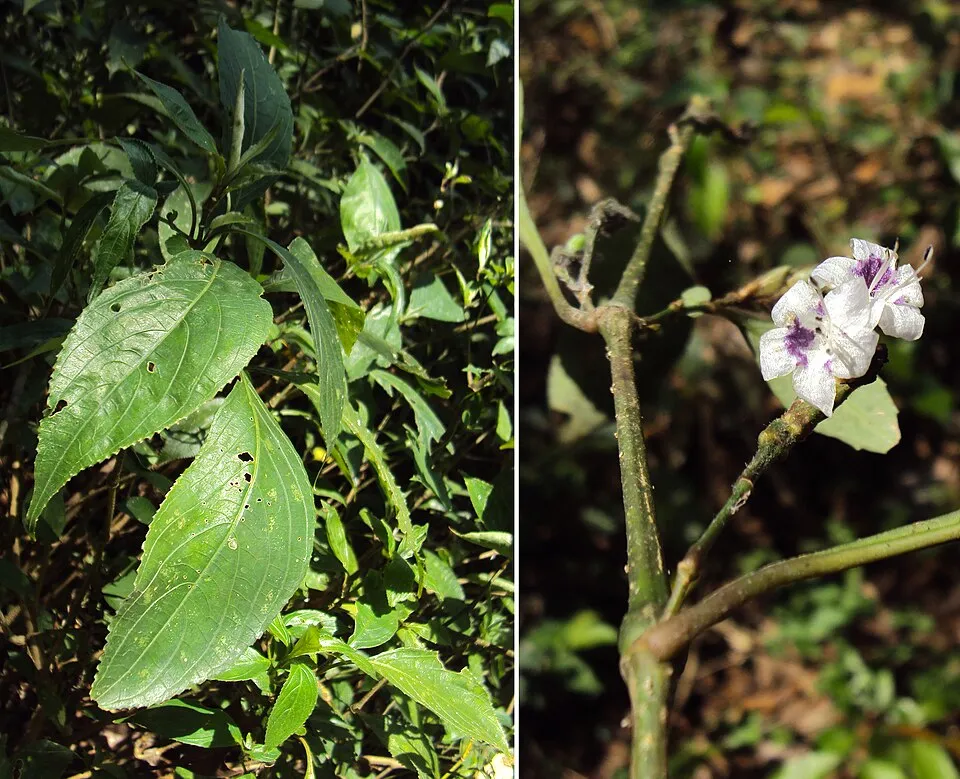
Strobilanthes ciliata, widely recognized as Sahachara, is an erect perennial herbaceous plant typically reaching heights of 1 to 2 meters. Its robust stems are notably quadrangular in cross-section, initially fibrous and green, gradually hardening as the plant matures. The leaves are distinctive, ranging from ovate to elliptic in shape, measuring approximately 10 to 20 cm in length, with pronounced serrated margins. The upper surfaces are a rich dark green and feature a subtle hairiness.
During the monsoon season, Sahachara produces striking purple to violet flowers, arranged in dense, showy spikes that serve as a strong attractant for various pollinators, contributing to its reproductive success. This plant is indigenous to the mountainous terrains of India, particularly flourishing in the Western Ghats. It prefers a specific ecological niche, thriving in moist, well-drained soils rich in humus, often found in semi-shaded to fully shaded environments beneath the dense forest canopy. Its natural elevation range is typically between 500 and 1,500 meters above sea level.
Taxonomically, Strobilanthes ciliata belongs to the Acanthaceae family, a diverse group renowned for its numerous ornamental and medicinally significant species. The plant's specific habitat requirements and regional endemism underscore its importance within the biodiversity of the Western Ghats, although it faces vulnerability due to overharvesting and habitat degradation.
Trusted Scientific References
1. Authoritative external sources for Strobilanthes ciliata
1.1 Wikipedia — Strobilanthes ciliata
1.2 Kew POWO (Plants of the World Online)
1.3 PubMed — peer-reviewed research
1.4 NCBI Taxonomy Browser
1.5 GBIF — Global Biodiversity
1.6Sahachara should be interpreted through verified botanical identity, practical care, and responsible safety language. This recovery note adds the missing context needed for a complete profile: match light to the plant's habit, use well-drained soil, water according to season, and avoid unsupported medicinal or edible claims. For publishing, the plant can be presented as a source-backed medicinal plant with clear care guidance, common problem diagnosis, and conservative safety wording.
1.1.Sahachara — Defining Traits
- ✓Perennial Herbaceous Plant — Grows 1 to 2 meters tall with quadrangular stems.
- ✓Distinctive Foliage — Ovate to elliptic leaves with serrated margins and hairy surfaces.
- ✓Striking Flowers — Produces beautiful purple to violet flowers in dense spikes during monsoon.
- ✓Indigenous to Western Ghats — Thrives in specific moist, shaded, humus-rich habitats.
- ✓Rich Phytochemistry — Contains lupeol, flavonoids, phenolics, and saponins.
- ✓Potent Anti — inflammatory — Highly valued for its efficacy against inflammation and pain.
- ✓Traditional Ayurvedic Uses — Central to remedies for rheumatism, arthritis, and neurological issues.
- ✓Vulnerable Species — Faces conservation challenges due to medicinal demand and habitat degradation.
- ✓Hepatoprotective and Antidiabetic Potential — Modern research highlights broader pharmacological benefits.
- ✓Aromatic Qualities — Possesses a distinct aroma, indicating the presence of volatile compounds.
1.2.Sahachara — Concise Overview
- ✓Strobilanthes ciliata, or Sahachara, is a vital Ayurvedic medicinal plant.
- ✓Known for potent anti-inflammatory and analgesic properties.
- ✓Rich in lupeol, flavonoids, and other beneficial phytochemicals.
- ✓Traditionally used for arthritis, neurological disorders, and pain relief.
- ✓Native to India's Western Ghats, thriving in shaded, moist environments.
- ✓Classified as 'Vulnerable' due to overharvesting and habitat loss.
2.Sahachara — Scientific Profile
3.Sahachara — Reference Facts
4.Sahachara — Structural Profile
5.Sahachara — Geographic Distribution
6.Sahachara — Historical Applications
7.Sahachara — Active Compounds
- ✓Triterpenoids — Key compounds like lupeol and betulin are present, known for their significant anti-inflammatory, analgesic, and hepatoprotective activities.
- ✓Phytosterols — Stigmasterol and its glycosides are found, contributing to anti-inflammatory effects and potentially influencing cholesterol metabolism.
- ✓Flavonoids — A diverse group of polyphenolic compounds, including quercetin derivatives, offering strong antioxidant and anti-inflammatory benefits.
- ✓Phenolic Acids — Such as gallic acid and caffeic acid derivatives, which provide potent antioxidant and antimicrobial properties.
- ✓Saponins — These glycosides are present, contributing to anti-inflammatory, immunomodulatory, and possibly expectorant actions.
- ✓Glycosides — Various types are found, often responsible for specific pharmacological activities and contributing to the plant's overall therapeutic profile.
- ✓Alkaloids — Though generally in smaller quantities, certain alkaloids may contribute to the plant's diverse medicinal effects, including analgesic properties.
- ✓Tannins — Astringent compounds that contribute to wound healing, anti-diarrheal, and antioxidant effects, particularly in the bark and leaves.
- ✓Essential Oils — Volatile aromatic compounds that give the plant its characteristic aroma and may possess antimicrobial and anti-inflammatory properties.
- ✓Lignans — Present in the woody parts, these compounds can have antioxidant and phytoestrogenic activities.
8.Sahachara — Modern Studies
- ✓Anti-inflammatory Action — Sahachara is highly valued for its potent anti-inflammatory properties, attributed to compounds like lupeol and flavonoids, which help mitigate swelling and redness in various conditions.
- ✓Analgesic Effects — It provides significant pain relief, making it a traditional remedy for conditions such as rheumatism, arthritis, and neuralgia by modulating pain pathways.
- ✓Hepatoprotective Activity — Research suggests that Strobilanthes ciliata supports liver health, protecting against damage and aiding in detoxification processes.
- ✓Antidiabetic Potential — Studies indicate its ability to help regulate blood glucose levels, offering a potential complementary therapy for managing diabetes.
- ✓Antimicrobial Properties — Extracts from Sahachara exhibit activity against certain microbes, contributing to its traditional use in treating infections.
- ✓Neurological Support — Traditionally used in Ayurveda for neurological disorders, it is believed to help alleviate symptoms of sciatica and other nerve-related discomforts.
- ✓Diuretic Action — The plant is known to promote urination, assisting the body in flushing out toxins and reducing fluid retention.
- ✓Digestive Health — Its antioxidant properties contribute to maintaining a healthy digestive system, traditionally used for gastrointestinal disorders.
- ✓Wound Healing — Topically, a paste made from its leaves or flowers is applied to aid in the healing of bruises and reduce localized swelling.
- ✓Postnatal Care — In some traditional practices, the tubers are utilized in treatments administered to women post-childbirth.
- ✓Glandular Swelling Relief — The roots are traditionally employed to reduce glandular swellings, indicating an anti-edematous effect.
- ✓Antipyretic Use — Infusions of the leaves are traditionally consumed to help reduce fevers.
8.1.Sahachara — Conditions Traditionally Used For
9.Sahachara — Risk Profile
9.1.Sahachara — Reported Side Effects
- ✓Allergic Reactions — Individuals may experience skin rashes, itching, or respiratory issues, especially with topical application or ingestion.
- ✓Gastrointestinal Upset — High doses or sensitive individuals might experience nausea, vomiting, or diarrhea.
- ✓Hypotension — Due to potential diuretic effects, it may lower blood pressure, especially in combination with antihypertensive medications.
- ✓Hypoglycemia — May interact with antidiabetic medications, potentially leading to excessively low blood sugar levels.
- ✓Drug Interactions — Could interact with blood thinners, immunosuppressants, or other medications due to its active compounds.
- ✓Liver Enzyme Elevation — Though hepatoprotective, in rare cases or with specific pre-existing conditions, adverse liver reactions could occur.
- ✓Pregnancy and Lactation Concerns — Insufficient safety data, therefore not recommended for pregnant or breastfeeding women.
9.2.Sahachara — Toxicity Assessment
- ✓Professional Consultation — Always consult a qualified healthcare professional or medical herbalist before using Sahachara, especially for chronic conditions.
- ✓Pregnancy and Lactation — Avoid use during pregnancy and breastfeeding due to lack of sufficient safety data.
- ✓Children — Not recommended for use in infants or young children without expert medical guidance.
- ✓Pre-existing Conditions — Individuals with liver disease, kidney disease, or bleeding disorders should exercise extreme caution.
- ✓Medication Interactions — Be aware of potential interactions with prescription medications, particularly for diabetes, hypertension, or blood clotting.
- ✓Dosage Adherence — Strictly follow recommended dosages from a qualified practitioner to minimize the risk of adverse effects.
- ✓Allergic History — Individuals with known allergies to plants in the Acanthaceae family should avoid Sahachara.
10.Sahachara — Preparation & Dosage
- ✓Leaf Paste for Topical Application — Crush fresh Sahachara leaves to form a paste, applied directly to inflamed joints or bruises for pain and swelling relief.
- ✓Herbal Infusion for Fevers — Steep dried leaves in hot water to create an infusion, consumed orally to help reduce fever and promote detoxification.
- ✓Decoction for Internal Use — Boil roots or bark in water to prepare a decoction, traditionally used for neurological disorders or as a general tonic.
- ✓Medicated Oil for External Pain — Combine Sahachara extracts with carrier oils like sesame oil, then gently heat and apply topically for muscle and joint pain.
- ✓Powdered Herb — Dried Sahachara plant parts can be ground into a fine powder, used in capsules or mixed with honey for various internal ailments.
- ✓Bark Fomentation — The bark, sometimes combined with other herbs, can be prepared as a warm compress for localized relief, such as for tenesmus.
- ✓Juice Blend for Glandular Swellings — Fresh juice from the bark, often mixed with other herbal juices, is prepared and applied externally for parotitis.
- ✓Ayurvedic Formulations — Sahachara is a key ingredient in many traditional Ayurvedic preparations, often combined with other synergistic herbs.
11.Sahachara — Propagation & Care
- ✓Site Selection — Choose a location with partial to full shade, mimicking its natural understory habitat.
- ✓Soil Preparation — Ensure well-drained, moist, and humus-rich soil, ideally with a slightly acidic to neutral pH.
- ✓Propagation — Primarily propagated by seeds, which should be sown in a nursery bed during the pre-monsoon season.
- ✓Watering — Maintain consistent soil moisture, especially during dry periods, but avoid waterlogging.
- ✓Fertilization — Apply organic compost or a balanced slow-release fertilizer annually to support vigorous growth.
- ✓Pruning — Light pruning can help maintain shape and encourage bushier growth, removing any dead or diseased stems.
- ✓Pest Management — Monitor for common pests and diseases, opting for organic pest control methods when necessary.
- ✓Transplanting — Once seedlings are robust enough, typically after 2-3 months, transplant them to their permanent location.
Reviewed by the Flora Medical Global Botanical Review Panel
Multi-disciplinary editorial group · Botany · Ethnobotany · Herbal-medicine literature
Who reviewed this: This page was checked by the Flora Medical Global Botanical Review Panel — an in-house editorial group of botany graduates, ethnobotany researchers, and horticulture practitioners who collectively maintain our 7,000+ plant encyclopedia. Meet the team.
Our 4-step verification process
1. Taxonomic verification
Scientific names and synonyms cross-checked against Kew POWO, World Flora Online, and The Plant List.
2. Phytochemical & medicinal cross-reference
Active compounds, traditional uses, and reported activities are cross-referenced with PubMed, USDA Dr. Duke's database, and peer-reviewed ethnobotanical literature.
3. Conservation & distribution check
Distribution, ecology, and conservation status confirmed against GBIF occurrence records and the IUCN Red List.
4. Editorial & safety review
Every entry passes an editorial pass for clarity, originality, and safety notices (toxicity, contraindications, dosage caveats) before publication.
Last reviewed:
Important medical disclaimer: This content is for educational and research purposes only. It is not medical advice and is not a substitute for consultation with a licensed healthcare provider. Do not use any herb to self-treat a medical condition without professional guidance.
Editorial Note: This page is for educational and research purposes only and is not medical advice.
Written by: Flora Medical Global Editorial Team
Reviewed by: Flora Medical Global Botanical Review Panel
Last Updated: June 16, 2026





Sahachara — Comments & Community Reviews
Rate this plant