

Medical Disclaimer: This content is for educational purposes only. It is not medical advice. Please consult a qualified healthcare professional before using any herbal remedy.
Safety Overview
1.Sceletium — Botanical Snapshot
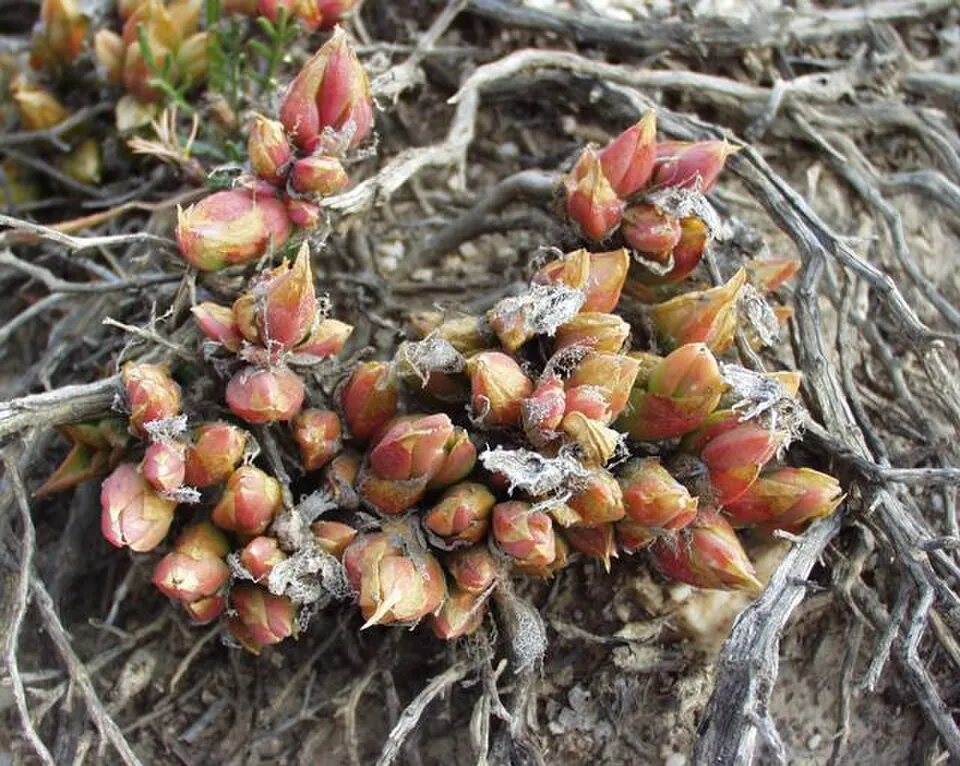
Sceletium tortuosum, widely recognized as Kanna, is a remarkable succulent perennial indigenous to the arid and semi-arid regions of South Africa, primarily flourishing in the Western Cape. This resilient herb typically forms low-growing, dense clumps, reaching heights of 10 to 30 centimeters. Its distinctive morphology includes fleshy, gray-green leaves, obovate to elliptical in shape, usually measuring between 2 to 4 centimeters in length, adapted to conserve moisture in its harsh environment.
The stems are also succulent and often exhibit a twisted or gnarled appearance, contributing to the plant's unique aesthetic. Small, yellow-green, tubular flowers, approximately 1 to 2.5 centimeters long, emerge in late spring and early summer, attracting various native pollinators. Following successful pollination, these flowers develop into small, oval seed capsules containing numerous tiny seeds.
The plant's roots are fibrous and spread to anchor it in sandy, well-drained soils and rocky crevices, showcasing its profound drought tolerance. Taxonomically, Sceletium tortuosum belongs to the Aizoaceae family, a diverse group known for its succulent members, reflecting its evolutionary adaptation to xeric conditions. Its ethnobotanical history is rich, with the indigenous San and Khoikhoi peoples having utilized Kanna for centuries for its mood-enhancing and appetite-suppressing properties.
Trusted Scientific References
1. Authoritative external sources for Sceletium tortuosum
1.1 Wikipedia — Sceletium tortuosum
1.2 Kew POWO (Plants of the World Online)
1.3 PubMed — peer-reviewed research
1.4 NCBI Taxonomy Browser
1.5 GBIF — Global Biodiversity
1.6Sceletium should be interpreted through verified botanical identity, practical care, and responsible safety language. This recovery note adds the missing context needed for a complete profile: match light to the plant's habit, use well-drained soil, water according to season, and avoid unsupported medicinal or edible claims. For publishing, the plant can be presented as a source-backed medicinal plant with clear care guidance, common problem diagnosis, and conservative safety wording.
1.1.Sceletium — Highlights
- ✓Indigenous South African Herb — Native to the Western Cape, deeply rooted in San and Khoikhoi ethnobotanical traditions.
- ✓Succulent Perennial — Characterized by fleshy leaves and stems, adapted for arid environments.
- ✓Mood Enhancer — Widely recognized for its ability to promote a sense of well-being and reduce emotional tension.
- ✓Anxiolytic Properties — Effective in alleviating anxiety and stress without significant sedation.
- ✓Serotonin Reuptake Inhibitor (SRI) — Primary mechanism of action through key alkaloids like mesembrine.
- ✓PDE4 Inhibitor — Contributes to its neuropharmacological effects, including cognitive benefits.
- ✓Cognitive Support — Emerging evidence suggests improvements in focus, attention, and executive function.
- ✓Non — Habit Forming — Generally considered non-addictive when used responsibly at therapeutic doses.
- ✓Versatile Usage — Traditionally chewed, now available in modern forms like capsules, tinctures, and teas.
- ✓Research — Backed — Growing scientific interest and studies validating its traditional uses and mechanisms.
1.2.Sceletium — At-a-Glance Summary
- ✓Sceletium tortuosum, or Kanna, is a South African succulent.
- ✓Traditionally used by indigenous peoples for mood and stress relief.
- ✓Contains mesembrine alkaloids, acting as serotonin reuptake inhibitors.
- ✓Offers benefits for anxiety, depression, and cognitive function.
- ✓Available in various forms including extracts, capsules, and tinctures.
- ✓Caution advised with other psychoactive medications and during pregnancy.
2.Sceletium — Scientific Identity
3.Sceletium — Key Data
4.Sceletium — Botanical Features
5.Sceletium — Native Range & Habitat
6.Sceletium — Traditional Uses
7.Sceletium — Key Phytochemicals
- ✓Mesembrine Alkaloids — This is the primary class of psychoactive compounds in Sceletium tortuosum, including mesembrine, mesembrenone, mesembrenol, and tortuosamine. Mesembrine and mesembrenone are the most prominent, acting as serotonin reuptake inhibitors (SRIs) and phosphodiesterase-4 (PDE4) inhibitors, which are key to the plant's mood-enhancing and anxiolytic effects.
- ✓Oxindole Alkaloids — While less studied than mesembrine alkaloids, other oxindole-type alkaloids may also be present, contributing to the plant's overall pharmacological profile.
- ✓Triterpenoids — These compounds are common in plants and may offer anti-inflammatory or adaptogenic properties, though their specific role in Sceletium tortuosum is less characterized.
- ✓Flavonoids — Found widely in the plant kingdom, flavonoids in Kanna may contribute antioxidant and anti-inflammatory effects, supporting cellular health.
- ✓Saponins — These glycosides are known for their surfactant properties and can have various biological activities, including immunomodulatory or adaptogenic effects.
- ✓Polysaccharides — Complex carbohydrates that can contribute to the plant's bulk and may have immune-modulating or gut-health benefits.
- ✓Phenolic Acids — Compounds like caffeic acid or ferulic acid, which are known for their antioxidant and anti-inflammatory properties, potentially enhancing the plant's therapeutic scope.
- ✓Amino Acids — Basic building blocks of proteins, present in the plant's cellular structure, though not typically considered active medicinal constituents in this context.
- ✓Organic Acids — Various organic acids contribute to the plant's metabolism and may have minor roles in its overall chemical synergy.
8.Sceletium — Scientific Evidence
- ✓Mood Elevation — Sceletium tortuosum is traditionally and scientifically recognized for its ability to uplift mood, primarily due to its mesembrine alkaloids which are believed to act as serotonin reuptake inhibitors (SRIs), thereby increasing serotonin availability in the brain.
- ✓Stress Reduction — Kanna helps mitigate feelings of stress and nervous tension, promoting a profound sense of calm without causing significant sedation, making it a valuable anxiolytic agent.
- ✓Anxiety Relief — The plant's active compounds interact with neural pathways to reduce symptoms of anxiety, supporting emotional balance and mental tranquility.
- ✓Depression Support — Through its serotonergic and phosphodiesterase-4 (PDE4) inhibitory activities, Sceletium shows promise in alleviating symptoms associated with mild to moderate depression, offering a natural approach to mental well-being.
- ✓Cognitive Enhancement — Emerging research suggests that Kanna may improve cognitive function, including executive function, focus, and attention, by modulating neurochemical systems.
- ✓Enhanced Social Interaction — Traditionally, indigenous peoples chewed fermented Sceletium to foster communication and reduce social anxiety during gatherings, promoting camaraderie and well-being.
- ✓Appetite Regulation — Historically, Kanna was used as an appetite suppressant, particularly during long journeys, which may be attributed to its modulatory effects on satiety signals.
- ✓Sleep Quality Improvement — While not a direct sedative, by reducing anxiety and promoting a calm state, Sceletium can indirectly contribute to improved sleep quality and duration.
- ✓Pain Management Support — Some traditional accounts suggest its use for minor pain relief, possibly through its general stress-reducing and mood-elevating effects that can alter pain perception.
- ✓Energy and Focus — Users often report a subtle increase in energy and improved mental clarity without the jitteriness associated with stimulants, aiding in daily tasks and concentration.
8.1.Sceletium — Indications & Uses
9.Sceletium — Safety & Side Effects
9.1.Sceletium — Warnings
- ✓Mild Nausea — Some individuals may experience slight stomach upset or nausea, especially with higher doses or on an empty stomach.
- ✓Headache — Occasional reports of mild headaches have been noted, which typically resolve with reduced dosage or discontinuation.
- ✓Dizziness — A transient feeling of lightheadedness or dizziness can occur, particularly upon initial use or dose escalation.
- ✓Mild Sedation — While generally uplifting, some users might experience mild drowsiness, especially at higher doses.
- ✓Irritability — Paradoxically, a small number of users report increased irritability or agitation, suggesting individual sensitivity.
- ✓Dry Mouth — A common anticholinergic-like effect reported by some individuals.
- ✓Gastrointestinal Discomfort — General digestive upset, including diarrhea or constipation, although less common, can occur.
9.2.Sceletium — Risk Assessment
- ✓Pregnancy and Breastfeeding — Sceletium tortuosum is contraindicated during pregnancy and breastfeeding due to insufficient safety data and potential effects on fetal or infant development.
- ✓Psychiatric Medications — Avoid concomitant use with SSRIs, MAOIs, tricyclic antidepressants, or other psychoactive medications due to potential for serotonin syndrome or adverse interactions.
- ✓Pre-existing Conditions — Individuals with psychiatric disorders, heart conditions, liver or kidney disease, or blood pressure issues should consult a healthcare professional before use.
- ✓Children — Kanna is not recommended for use in children or adolescents due to lack of safety research in these populations.
- ✓Driving and Operating Machinery — Exercise caution when driving or operating heavy machinery until individual response to Sceletium is known, as it may cause dizziness or drowsiness in some.
- ✓Dosage Adherence — Adhere strictly to recommended dosages; excessive consumption may increase the risk of adverse effects.
- ✓Alcohol and CNS Depressants — Avoid combining Sceletium with alcohol or other central nervous system depressants, as it may potentiate sedative effects.
10.Sceletium — Preparations & Uses
- ✓Traditional Chewing — Historically, indigenous San and Khoikhoi peoples fermented and then chewed the dried Sceletium tortuosum plant material, often with a quid of gum or bark.
- ✓Sublingual Application — Modern extracts and powdered Kanna can be held under the tongue for rapid absorption of active compounds into the bloodstream.
- ✓Oral Capsules/Tablets — Standardized Sceletium extracts are available in capsule or tablet form, providing a convenient and controlled dosage for daily use.
- ✓Tinctures/Liquid Extracts — Alcohol-based tinctures allow for precise dosing and can be added to water or juice for oral consumption.
- ✓Herbal Teas — Dried and powdered Sceletium can be steeped in hot water to create a mild tea, though the alkaloid content may be lower than in concentrated extracts.
- ✓Nasal Insufflation (Snuff) — In traditional contexts, powdered Kanna was sometimes used as a snuff, leading to rapid onset of effects, though this method is less common and not generally recommended in modern use.
- ✓Vaping/Smoking — Some modern users vaporize or smoke dried Kanna, which offers quick absorption but may have different effects and safety considerations compared to oral routes.
- ✓Dosage — Begin with low doses (e.g., 25-50mg of extract) and gradually increase as needed, always under the guidance of a healthcare professional, as optimal dosage varies widely.
11.Sceletium — Garden Cultivation
- ✓Soil Preference — Sceletium tortuosum thrives in well-drained, sandy loam or gravelly soils, mimicking its natural arid habitat; avoid heavy, water-retentive clays.
- ✓Light Requirements — Requires full sun exposure for optimal growth, at least 6-8 hours of direct sunlight daily, performing best in bright, warm conditions.
- ✓Watering — As a succulent, Kanna is highly drought-tolerant; water sparingly, allowing the soil to dry out completely between waterings, especially during dormant periods.
- ✓Temperature and Climate — Prefers warm, dry climates and is sensitive to frost; ideal growing temperatures range from 20-30°C (68-86°F).
- ✓Propagation — Can be propagated effectively from seeds, which should be sown in spring, or from stem cuttings, which root readily in sandy soil.
- ✓Fertilization — Generally low-maintenance regarding nutrients; a diluted, balanced succulent fertilizer can be applied sparingly during the active growing season.
- ✓Container Growing — Excellent for container cultivation, allowing for easy relocation to protect from cold temperatures or excessive moisture.
- ✓Pests and Diseases — Relatively resistant to most pests, but watch for mealybugs or root rot in overly moist conditions.
Reviewed by the Flora Medical Global Botanical Review Panel
Multi-disciplinary editorial group · Botany · Ethnobotany · Herbal-medicine literature
Who reviewed this: This page was checked by the Flora Medical Global Botanical Review Panel — an in-house editorial group of botany graduates, ethnobotany researchers, and horticulture practitioners who collectively maintain our 7,000+ plant encyclopedia. Meet the team.
Our 4-step verification process
1. Taxonomic verification
Scientific names and synonyms cross-checked against Kew POWO, World Flora Online, and The Plant List.
2. Phytochemical & medicinal cross-reference
Active compounds, traditional uses, and reported activities are cross-referenced with PubMed, USDA Dr. Duke's database, and peer-reviewed ethnobotanical literature.
3. Conservation & distribution check
Distribution, ecology, and conservation status confirmed against GBIF occurrence records and the IUCN Red List.
4. Editorial & safety review
Every entry passes an editorial pass for clarity, originality, and safety notices (toxicity, contraindications, dosage caveats) before publication.
Last reviewed:
Important medical disclaimer: This content is for educational and research purposes only. It is not medical advice and is not a substitute for consultation with a licensed healthcare provider. Do not use any herb to self-treat a medical condition without professional guidance.
Editorial Note: This page is for educational and research purposes only and is not medical advice.
Written by: Flora Medical Global Editorial Team
Reviewed by: Flora Medical Global Botanical Review Panel
Last Updated: June 16, 2026





Sceletium — Comments & Community Reviews
Rate this plant