
Medical Disclaimer: This content is for educational purposes only. It is not medical advice. Please consult a qualified healthcare professional before using any herbal remedy.
Safety Overview
1.Shankhini — Plant Snapshot
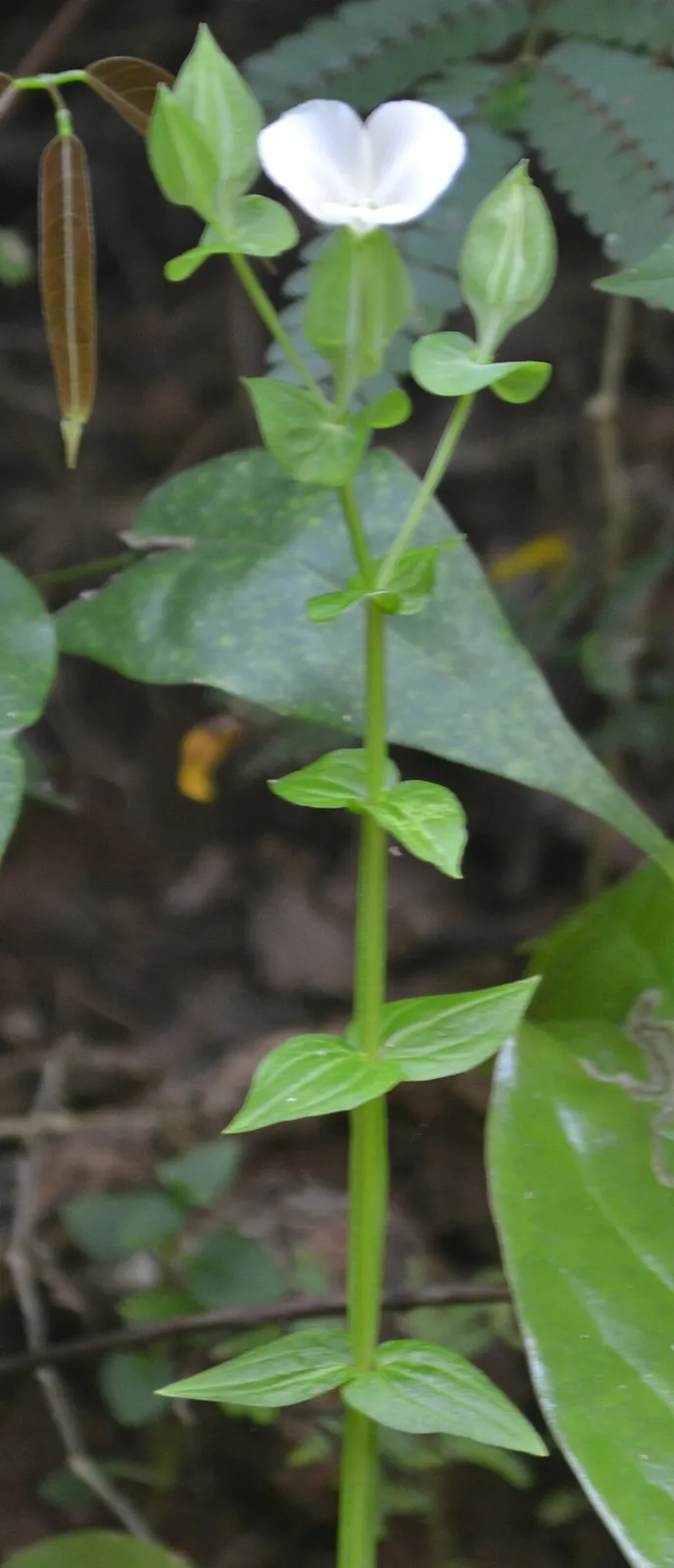
Canscora decussata, commonly known as Shankhini, is a slender annual herbaceous plant typically reaching a height of 20 to 40 centimeters. Its distinctive stems are quadrangular and often glabrous or sparsely hairy, giving the plant an angular yet delicate appearance. The leaves are arranged in a decussate (cross-arranged) opposite pattern, ovate to lanceolate in shape, measuring approximately 5 to 10 centimeters long, with smooth, dark green surfaces and a prominent midrib.
The margins of the leaves are entire, contributing to its neat botanical profile. Shankhini flowers bloom in small, axillary clusters at the stem tips; they are tubular, ranging from pale yellow to pinkish or violet hues, with five slender, elongated lobes. Blooming primarily during the monsoon season, these flowers attract various pollinators.
The fruit is a small, elongated capsule containing several smooth-textured seeds, which aid in dispersal. Shankhini is indigenous to diverse regions across Asia, particularly thriving in tropical countries like India and in the Himalayan foothills of Nepal, where it prefers moist, well-drained soils under partial shade or in damp, shaded rock crevices and forest margins at elevations of 500–1800 meters. This species belongs to the Gentianaceae family, known for its members' medicinal properties, embodying both unique morphology and significant ecological roles.
Trusted Scientific References
1. Authoritative external sources for Canscora decussata
1.1 Wikipedia — Canscora decussata
1.2 Kew POWO (Plants of the World Online)
1.3 PubMed — peer-reviewed research
1.4 NCBI Taxonomy Browser
1.5 GBIF — Global Biodiversity
1.6Shankhini should be interpreted through verified botanical identity, practical care, and responsible safety language. This recovery note adds the missing context needed for a complete profile: match light to the plant's habit, use well-drained soil, water according to season, and avoid unsupported medicinal or edible claims. For publishing, the plant can be presented as a source-backed medicinal plant with clear care guidance, common problem diagnosis, and conservative safety wording.
1.1.Shankhini — Key Features
- ✓Potent Nervine Tonic — Supports brain health, memory, and concentration.
- ✓Digestive Stimulant — Enhances Agni (digestive fire) and alleviates bloating.
- ✓Adaptogenic Herb — Helps the body manage stress and combat fatigue.
- ✓Rich in Xanthones — Contains neuroprotective and antioxidant compounds.
- ✓Traditional Ayurvedic Use — Valued in classical texts for its diverse therapeutic effects.
- ✓Anti — inflammatory Action — Reduces inflammation and mild joint discomfort.
- ✓Mild Anxiolytic — Contributes to mood stabilization and stress reduction.
- ✓Unique Bitter — Sweet Taste — Characteristic flavor profile influencing its traditional applications.
- ✓Quadrangular Stems and Decussate Leaves — Distinctive botanical identification features.
- ✓Sustainable Wild — Crafting — Often harvested with environmentally conscious methods.
1.2.Shankhini — At-a-Glance Summary
- ✓Shankhini (Canscora decussata) is a potent Ayurvedic herb known for its nervine tonic and digestive properties.
- ✓Rich in xanthones, iridoid glycosides, and alkaloids, it offers cognitive enhancement and anti-inflammatory benefits.
- ✓Traditionally used for memory, digestion, and stress relief, it acts as a holistic adaptogen.
- ✓Available in powder, decoction, extract, and tea forms, with specific dosage guidelines.
- ✓Requires caution for pregnant/nursing women and those on specific medications.
- ✓Sourced sustainably from Himalayan foothills and Western Ghats, emphasizing organic and authenticated products.
2.Shankhini — Scientific Profile
3.Shankhini — Quick Facts
4.Shankhini — Structural Profile
5.Shankhini — Where It Grows
6.Shankhini — Ethnobotanical Uses
7.Shankhini — Bioactive Constituents
- ✓Xanthones — Bellidifolin and Decussatin are key xanthone derivatives that exhibit neuroprotective, antioxidant, and anxiolytic effects by scavenging free radicals in brain tissue and modulating GABA receptors.
- ✓Iridoid Glycosides — Swertiamarin is a prominent iridoid glycoside known for its hepatoprotective and digestive activities, primarily by modulating bile secretion.
- ✓Secoiridoid Glycosides — Sweroside contributes to the plant's anti-inflammatory properties and may support immune modulation, easing mild joint discomfort.
- ✓Alkaloids — Gentianine is a bitter alkaloid that acts as a tonic, stimulating appetite and gastric secretions through the activation of bitter taste receptors (T2Rs).
- ✓Flavonoids — These compounds often possess antioxidant, anti-inflammatory, and neuroprotective properties, supporting overall cellular health.
- ✓Phenolic Acids — Known for their antioxidant capacity, these compounds help protect cells from oxidative stress.
- ✓Terpenoids — Contribute to the plant's aromatic profile and may offer various biological activities, including anti-inflammatory and antimicrobial effects.
- ✓Glycosides — A broad category including iridoid and secoiridoid glycosides, responsible for many of the plant's bitter taste and therapeutic actions.
- ✓Saponins — These compounds can have adaptogenic and immune-modulating effects, contributing to the plant's overall health benefits.
- ✓Sterols — Plant sterols are known for their potential to lower cholesterol and exhibit anti-inflammatory properties.
8.Shankhini — Research Insights
- ✓Cognitive Enhancement — Preclinical studies indicate Canscora decussata improves memory, learning, and spatial memory by inhibiting acetylcholinesterase, a mechanism similar to classical cholinesterase inhibitors.
- ✓Digestive Stimulant — Traditional Ayurvedic practices recognize its bitter taste (tikta rasa) for stimulating Agni (digestive fire), which aids in increasing appetite and gastric secretions.
- ✓Carminative Action — A small human pilot study noted reductions in postprandial bloating and gas, suggesting its efficacy in alleviating digestive discomfort.
- ✓Mild Anxiolytic — Xanthone compounds like decussatin modulate GABAergic transmission, contributing to reduced mild anxiety and stress, as observed in anecdotal reports.
- ✓Mood Stabilization — Daily consumption as a tea infusion has been self-reported to improve mood, potentially due to its adaptogenic properties and GABAergic modulation.
- ✓Hepatoprotective Effects — The presence of swertiamarin correlates with normalization of hepatic enzymes and protection against liver injury in experimental models.
- ✓Anti-inflammatory Properties — Ethanolic extracts have shown to reduce edema in inflammatory models, hinting at potential COX-2 inhibition pathways.
- ✓Analgesic Effects — Research suggests the plant possesses pain-relieving properties, likely linked to its anti-inflammatory mechanisms.
- ✓Adaptogenic Support — Studies indicate improved physical stamina and reduced fatigue, classifying Shankhini as a holistic adaptogen that supports the body's resilience to stress.
- ✓Antimicrobial Activity — Crude extracts exhibit moderate inhibitory effects against certain bacteria like Staphylococcus aureus and E. coli, suggesting potential for natural antimicrobial applications.
- ✓Blood Purification — Traditional Ayurvedic texts highlight its use for purifying the blood, considered essential for maintaining overall health and well-being.
- ✓Appetite Enhancement — Its bitter constituents, such as gentianine and swertiamarin, trigger cephalic-phase digestive reflexes, stimulating a healthy appetite.
8.1.Shankhini — Conditions Traditionally Used For
9.Shankhini — Precautions & Warnings
9.1.Shankhini — Caution Notes
- ✓Mild gastrointestinal discomfort — Nausea or cramping may occur if high doses are taken on an empty stomach.
- ✓Dizziness — Transient dizziness can be experienced at doses exceeding 6 grams of powder per day.
- ✓Headache — Mild headaches have been reported with higher daily doses.
- ✓Hypersensitivity reactions — Although rare, skin rash or itching may manifest in sensitive individuals.
- ✓Increased gastric acid — Bitter tonics can potentially increase gastric acid secretion, which might be problematic for individuals with peptic ulcer disease.
- ✓Sedation — May potentiate sedative effects when combined with certain medications due to its anxiolytic properties.
9.2.Shankhini — Safety Profile
- ✓Pregnant/nursing women — Not recommended due to insufficient safety data and potential uterine stimulant effects; consult a qualified practitioner.
- ✓Children under 12 — Avoid use without professional medical advice.
- ✓Cholinesterase inhibitors — Use caution or avoid, as Shankhini may potentiate cholinergic activity, leading to adverse interactions.
- ✓Sedatives/Benzodiazepines — Monitor closely or avoid, as it may enhance sedative effects.
- ✓Blood thinners — Exercise caution due to potential unknown interactions; consult a healthcare provider.
- ✓Peptic ulcer disease — Use with caution and start with a low dose, as bitter tonics can increase gastric acid.
- ✓Disclose herbal intake — Always inform your healthcare provider about all herbal supplements being taken.
10.Shankhini — How to Use
- ✓Powder (Churna) — Take 1–3 grams daily, mixed with warm water or honey, ideally before main meals for digestive support.
- ✓Decoction (Kwath) — Boil 10–15 grams of dried herb in 200 mL of water until reduced to 50 mL; consume twice daily for cognitive and mood benefits.
- ✓Hydro-alcoholic Extract Capsules — Administer 250–500 mg capsules, standardized to ≥3% swertiamarin, once or twice daily with meals.
- ✓Tea Infusion — Steep 2–4 grams of dried herb in hot (not boiling) water for 10 minutes; sip gently as a nightly tonic, optionally blended with tulsi or ginger.
- ✓Fresh Juice — In some traditional practices, fresh juice of the aerial parts is consumed, particularly during the monsoon season.
- ✓Poultice Application — Historically used topically as a poultice on insect bites to reduce swelling, though less common today.
- ✓Traditional Formulations — Often combined with other nervine tonics like Brahmi (Bacopa monnieri) and Shankhapushpi (Convolvulus pluricaulis) in Ayurvedic brain tonics.
- ✓Medhya Rasayana Blends — Incorporated into mind-rejuvenating formulations for cognitive support in elders.
11.Shankhini — Propagation & Care
- ✓Prefers moist, well-drained soils — Thrives in loamy or sandy-loam soils with good drainage.
- ✓Partial to full sunlight — Best growth observed under partial shade conditions, mimicking its natural forest margin habitat.
- ✓Optimal elevation range — Grows naturally between 500 and 1800 meters in Himalayan foothills and tropical Asian zones.
- ✓Propagation by seeds — Seeds can be sown in well-prepared nursery beds during early monsoon for optimal germination.
- ✓Traditional harvesting — Aerial parts (stems, leaves, flowers) are typically harvested just before flowering during monsoon months (July–August).
- ✓Shade-drying technique — Harvested parts are sun-dried or shade-dried within 2–3 days to preserve bitter glycosides and other active compounds.
- ✓Sustainable wild-crafting — Many small cooperatives practice sustainable harvesting to ensure population longevity and environmental stewardship.
- ✓Requires consistent moisture — Adequate watering is crucial, especially during dry spells, to support its growth in damp environments.
Reviewed by the Flora Medical Global Botanical Review Panel
Multi-disciplinary editorial group · Botany · Ethnobotany · Herbal-medicine literature
Who reviewed this: This page was checked by the Flora Medical Global Botanical Review Panel — an in-house editorial group of botany graduates, ethnobotany researchers, and horticulture practitioners who collectively maintain our 7,000+ plant encyclopedia. Meet the team.
Our 4-step verification process
1. Taxonomic verification
Scientific names and synonyms cross-checked against Kew POWO, World Flora Online, and The Plant List.
2. Phytochemical & medicinal cross-reference
Active compounds, traditional uses, and reported activities are cross-referenced with PubMed, USDA Dr. Duke's database, and peer-reviewed ethnobotanical literature.
3. Conservation & distribution check
Distribution, ecology, and conservation status confirmed against GBIF occurrence records and the IUCN Red List.
4. Editorial & safety review
Every entry passes an editorial pass for clarity, originality, and safety notices (toxicity, contraindications, dosage caveats) before publication.
Last reviewed:
Important medical disclaimer: This content is for educational and research purposes only. It is not medical advice and is not a substitute for consultation with a licensed healthcare provider. Do not use any herb to self-treat a medical condition without professional guidance.
Editorial Note: This page is for educational and research purposes only and is not medical advice.
Written by: Flora Medical Global Editorial Team
Reviewed by: Flora Medical Global Botanical Review Panel
Last Updated: June 16, 2026





Shankhini — Comments & Community Reviews
Rate this plant