


Medical Disclaimer: This content is for educational purposes only. It is not medical advice. Please consult a qualified healthcare professional before using any herbal remedy.
Safety Overview
1.Shyonaka — Overview
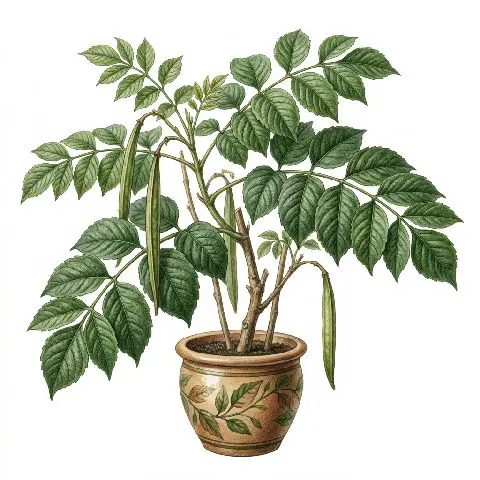
Oroxylum indicum, widely known as Shyonaka, the Indian trumpet flower, or the Broken Bones Tree, is a striking medium-sized deciduous tree belonging to the Bignoniaceae family. It typically reaches impressive heights of up to 12 meters, with a trunk that can expand to 30 cm in diameter. The bark is characteristically greyish-brown, smooth when young, and progressively develops rough, scaly textures with maturity. Its most distinctive feature is its enormous, bipinnate leaves, which can span 60-80 cm in length, adorned with numerous lanceolate leaflets, forming a dense and lush canopy.
The tree's nocturnal flowers are a spectacle, emerging in grand, upright racemes. Each trumpet-shaped bloom measures about 10 cm, showcasing a captivating palette from white to pale purple, accented by a deep purple throat, specifically adapted to attract nocturnal pollinators like bats. Oroxylum indicum thrives in tropical and subtropical climates, preferring well-drained soils and flourishing under full sun to partial shade. Its natural habitat extends across vast regions of Southeast Asia, including India, Malaysia, and Thailand, where it is frequently found in disturbed forest areas and grasslands.
The tree produces exceptionally long, flat, and woody dehiscent pods, often reaching up to 60 cm in length, which contain numerous winged seeds facilitating wind dispersal. Beyond its ecological significance, Shyonaka holds profound value in various traditional medicine systems, notably Ayurveda, for its diverse therapeutic properties.
Trusted Scientific References
1. Authoritative external sources for Oroxylum indicum
1.1 Wikipedia — Oroxylum indicum
1.2 Kew POWO (Plants of the World Online)
1.3 PubMed — peer-reviewed research
1.4 NCBI Taxonomy Browser
1.5 GBIF — Global Biodiversity
1.6Shyonaka should be interpreted through verified botanical identity, practical care, and responsible safety language. This recovery note adds the missing context needed for a complete profile: match light to the plant's habit, use well-drained soil, water according to season, and avoid unsupported medicinal or edible claims. For publishing, the plant can be presented as a source-backed medicinal plant with clear care guidance, common problem diagnosis, and conservative safety wording.
1.1.Shyonaka — Defining Traits
- ✓Botanical Identity — A large deciduous tree known as Indian trumpet flower, Broken Bones Tree, or Shyonaka.
- ✓Distinctive Morphology — Features large, bipinnate leaves, nocturnal trumpet-shaped flowers, and exceptionally long, flat pods.
- ✓Bignoniaceae Family — Belongs to a family known for its ornamental and medicinal species.
- ✓Ayurvedic Significance — A cornerstone herb in Ayurveda, particularly as a component of the Dashamoola group.
- ✓Broad Medicinal Spectrum — Exhibits anti-inflammatory, antioxidant, anti-cancer, anti-diabetic, and antimicrobial activities.
- ✓Rich Phytochemistry — Abundant in flavonoids (e.g., Baicalein, Oroxylin A), phenylethanoids, and other bioactive compounds.
- ✓Traditional Applications — Used for fevers, coughs, diarrhea, arthritis, skin issues, and as a digestive aid.
- ✓Cultivation Adaptability — Can be grown from seeds or cuttings in tropical to subtropical environments.
- ✓Ethnobotanical Value — Leaves and stems are consumed as edible vegetables in various cultures.
- ✓Research Interest — Continues to be a subject of modern scientific research for its therapeutic potential.
1.2.Shyonaka — In Brief
- ✓Shyonaka (Oroxylum indicum) is a significant deciduous tree native to Southeast Asia.
- ✓Renowned in Ayurveda as part of Dashamoola for its anti-inflammatory and diverse medicinal properties.
- ✓Contains potent flavonoids like Baicalein and Oroxylin A, contributing to antioxidant, anti-cancer, and anti-diabetic effects.
- ✓Traditionally used for digestive issues, fever, cough, and wound healing.
- ✓Generally considered safe, but medical supervision is advised during pregnancy and for specific health conditions.
- ✓Cultivated from seeds or cuttings, preferring warm, humid climates and well-drained soil.
2.Shyonaka — Scientific Profile
3.Shyonaka — Quick Facts
4.Shyonaka — Plant Morphology
5.Shyonaka — Where It Grows
6.Shyonaka — Ethnobotanical Uses
7.Shyonaka — Active Compounds
- ✓Flavonoids — Key compounds include Baicalein, Oroxylin A, and Chrysin, known for their significant anti-inflammatory, antioxidant, and anti-cancer activities by modulating cellular signaling pathways.
- ✓Phenylethanoids — These compounds contribute to the plant's antioxidant and anti-inflammatory effects, playing a role in cellular protection.
- ✓Terpenoids — A diverse group of organic compounds that contribute to the plant's aromatic profile and possess various medicinal properties, including anti-inflammatory and antimicrobial actions.
- ✓Lignans — These phytochemicals are recognized for their antioxidant and potential anticancer properties, influencing hormone-dependent processes.
- ✓Anthraquinones — Present in the plant, these compounds can exert purgative effects and have also been studied for their antimicrobial and anticancer potential.
- ✓Tannins — Known for their astringent properties, tannins contribute to the plant's wound-healing and anti-diarrheal effects by precipitating proteins and forming protective layers.
- ✓Alkaloids — While present, specific active alkaloids and their precise roles in Oroxylum indicum's pharmacology are still under investigation, often contributing to diverse biological activities.
- ✓Steroids — Including compounds like B-sitosterol, these phytosteroids contribute to the plant's anti-inflammatory and cholesterol-lowering potential.
- ✓Other compounds — Tetuin, Oroxindin, aloe-emodin, 6-methylether of baicalein (Oroxylium A), p-coumaric acid, scutellarein-7-rutinoside, and prunetin are also identified, collectively contributing to the plant's broad spectrum of medicinal properties.
8.Shyonaka — Research Insights
- ✓Anti-inflammatory — Shyonaka is highly valued for its potent anti-inflammatory properties, attributed to flavonoids like Baicalein and Oroxylin A, which modulate inflammatory pathways and cytokine production.
- ✓Antioxidant — Rich in phenolic compounds and flavonoids, Oroxylum indicum exhibits strong antioxidant activity, neutralizing harmful free radicals and protecting cells from oxidative damage.
- ✓Anti-cancer — Research suggests potential cytotoxic and anti-metastatic effects, particularly against certain cancer cell lines, due to compounds like Baicalein and Chrysin that induce apoptosis and inhibit proliferation.
- ✓Anti-diabetic — Oroxin A, a key constituent, has shown promise in preventing the progression from prediabetes by improving insulin sensitivity and lipid profiles.
- ✓Anti-bacterial — Extracts from the stem bark possess antimicrobial properties, effectively inhibiting the growth of various pathogenic bacteria, contributing to its traditional use in infections.
- ✓Anti-fungal — The plant also demonstrates significant antifungal activity, making it beneficial in combating fungal infections.
- ✓Hepatoprotective — Shyonaka supports liver health by protecting hepatic cells from damage and aiding detoxification processes, likely due to its antioxidant and anti-inflammatory compounds.
- ✓Immunomodulatory — It helps regulate the immune system, enhancing the body's natural defense mechanisms and improving overall immune response.
- ✓Neuroprotective — Certain compounds in Oroxylum indicum have been investigated for their ability to protect neuronal cells, potentially offering benefits in neurodegenerative conditions.
- ✓Digestive Aid — Traditionally used to improve digestion strength (Deepana), alleviate anorexia (Aruchihara), and manage diarrhea (Atisara) and irritable bowel syndrome (Grahi) due to its absorbent qualities.
- ✓Wound Healing — External application of bark juice or decoction is traditionally used to cleanse wounds and promote faster healing.
- ✓Cardiovascular Support — The fruit is considered Hrudya, meaning beneficial for heart health, contributing to overall cardiovascular well-being.
8.1.Shyonaka — Health Applications
9.Shyonaka — Precautions & Warnings
9.1.Shyonaka — Side Effects & Warnings
- ✓Gastrointestinal Upset — High doses may potentially lead to mild digestive discomfort, such as stomach upset or loose stools, in sensitive individuals.
- ✓Allergic Reactions — Although rare, individuals may experience allergic reactions, including skin rashes or itching, upon internal or external use.
- ✓Pregnancy Contraindication — Not recommended for use during pregnancy without strict medical supervision due to insufficient safety data on fetal development.
- ✓Drug Interactions — Potential interactions with certain medications, particularly those affecting blood sugar or blood clotting, warrant caution and medical consultation.
- ✓Hypotension Risk — Compounds with cardiovascular effects might theoretically lower blood pressure; individuals with hypotension should use with care.
- ✓Overdose Effects — Excessive consumption beyond recommended dosages could potentially exacerbate mild side effects or lead to unknown adverse reactions.
9.2.Shyonaka — Risk Assessment
- ✓Pregnancy and Lactation — Use during pregnancy should be strictly under medical supervision; generally considered safe during lactation and for children under professional guidance.
- ✓Medical Supervision — Always consult a healthcare professional before initiating use, especially for individuals with pre-existing health conditions or those on medication.
- ✓Drug Interactions — Generally compatible with homeopathic medicines and most dietary supplements; however, advise patients to consult their doctor when combining with modern (allopathic) medicines.
- ✓Allergic Sensitivity — Individuals with known allergies to plants in the Bignoniaceae family or other herbal preparations should exercise caution.
- ✓Dosage Adherence — Strict adherence to recommended dosages is crucial to minimize the risk of potential adverse effects.
- ✓Long-term Use — For prolonged use, periodic medical review is advisable to monitor for any unforeseen effects or interactions.
- ✓Quality Sourcing — Ensure the use of high-quality, unadulterated plant material from reputable sources to guarantee safety and efficacy.
10.Shyonaka — Preparation & Dosage
- ✓Decoction (Kwatha) — A common preparation involves boiling the root bark or fruit in water, traditionally taken in doses of 40-80 ml for systemic benefits like anti-inflammatory or digestive support.
- ✓Powder (Churna) — Dried and powdered root bark is consumed in doses of 3-6 grams, often mixed with honey or warm water, for internal administration in conditions like fever or diarrhea.
- ✓Ghana Satva (Water Extract) — A concentrated water extract, taken in smaller doses, typically up to one gram per day in divided doses, for enhanced potency.
- ✓External Application — A paste or decoction of the bark can be applied topically to wounds, joint pains, and inflammations to aid healing and reduce discomfort.
- ✓Edible Parts — In some regions, the young leaves and stems are consumed as vegetables, often prepared in curries or chutneys, providing nutritional and mild medicinal benefits.
- ✓Ayurvedic Formulations — Shyonaka is a vital component of the Dashamoola group, incorporated into numerous Ayurvedic medicines like Dasamoolarishtam and Dhanwantaram tailam, used for post-natal care, arthritis, and respiratory issues.
- ✓Oil Enema (Anuvasana Basti) — In Ayurveda, it is categorized under Anuvasanopaga, indicating its use in oil enemas for Vata-related disorders.
11.Shyonaka — Propagation & Care
- ✓Propagation — Shyonaka can be effectively propagated through both seeds and stem cuttings, offering flexibility for cultivation efforts.
- ✓Climate — It thrives best in warm, humid tropical and subtropical climates, necessitating consistent warmth for optimal growth and development.
- ✓Soil Requirements — Prefers well-draining, fertile soil, ideally sandy loam or loamy soil, which supports strong root establishment and prevents waterlogging.
- ✓Light Exposure — Requires full sun to partial shade conditions; young plants may benefit from some shade initially, while mature trees tolerate full sun.
- ✓Watering — Regular and adequate watering is crucial, especially during dry spells and for young saplings, to maintain soil moisture without over-saturation.
- ✓Pest and Disease Management — Generally robust, Oroxylum indicum shows good resistance to most common pests and diseases, minimizing the need for extensive interventions.
- ✓Growth Rate — Exhibits a moderate to fast growth rate under ideal conditions, quickly developing its distinctive canopy and long pods.
- ✓Seed Treatment — Seeds often benefit from scarification (e.g., soaking in warm water) to break dormancy and improve germination rates.
Reviewed by the Flora Medical Global Botanical Review Panel
Multi-disciplinary editorial group · Botany · Ethnobotany · Herbal-medicine literature
Who reviewed this: This page was checked by the Flora Medical Global Botanical Review Panel — an in-house editorial group of botany graduates, ethnobotany researchers, and horticulture practitioners who collectively maintain our 7,000+ plant encyclopedia. Meet the team.
Our 4-step verification process
1. Taxonomic verification
Scientific names and synonyms cross-checked against Kew POWO, World Flora Online, and The Plant List.
2. Phytochemical & medicinal cross-reference
Active compounds, traditional uses, and reported activities are cross-referenced with PubMed, USDA Dr. Duke's database, and peer-reviewed ethnobotanical literature.
3. Conservation & distribution check
Distribution, ecology, and conservation status confirmed against GBIF occurrence records and the IUCN Red List.
4. Editorial & safety review
Every entry passes an editorial pass for clarity, originality, and safety notices (toxicity, contraindications, dosage caveats) before publication.
Last reviewed:
Important medical disclaimer: This content is for educational and research purposes only. It is not medical advice and is not a substitute for consultation with a licensed healthcare provider. Do not use any herb to self-treat a medical condition without professional guidance.
Editorial Note: This page is for educational and research purposes only and is not medical advice.
Written by: Flora Medical Global Editorial Team
Reviewed by: Flora Medical Global Botanical Review Panel
Last Updated: June 16, 2026





Shyonaka — Comments & Community Reviews
Rate this plant