
Medical Disclaimer: This content is for educational purposes only. It is not medical advice. Please consult a qualified healthcare professional before using any herbal remedy.
Safety Overview
1.Sorrel — Overview
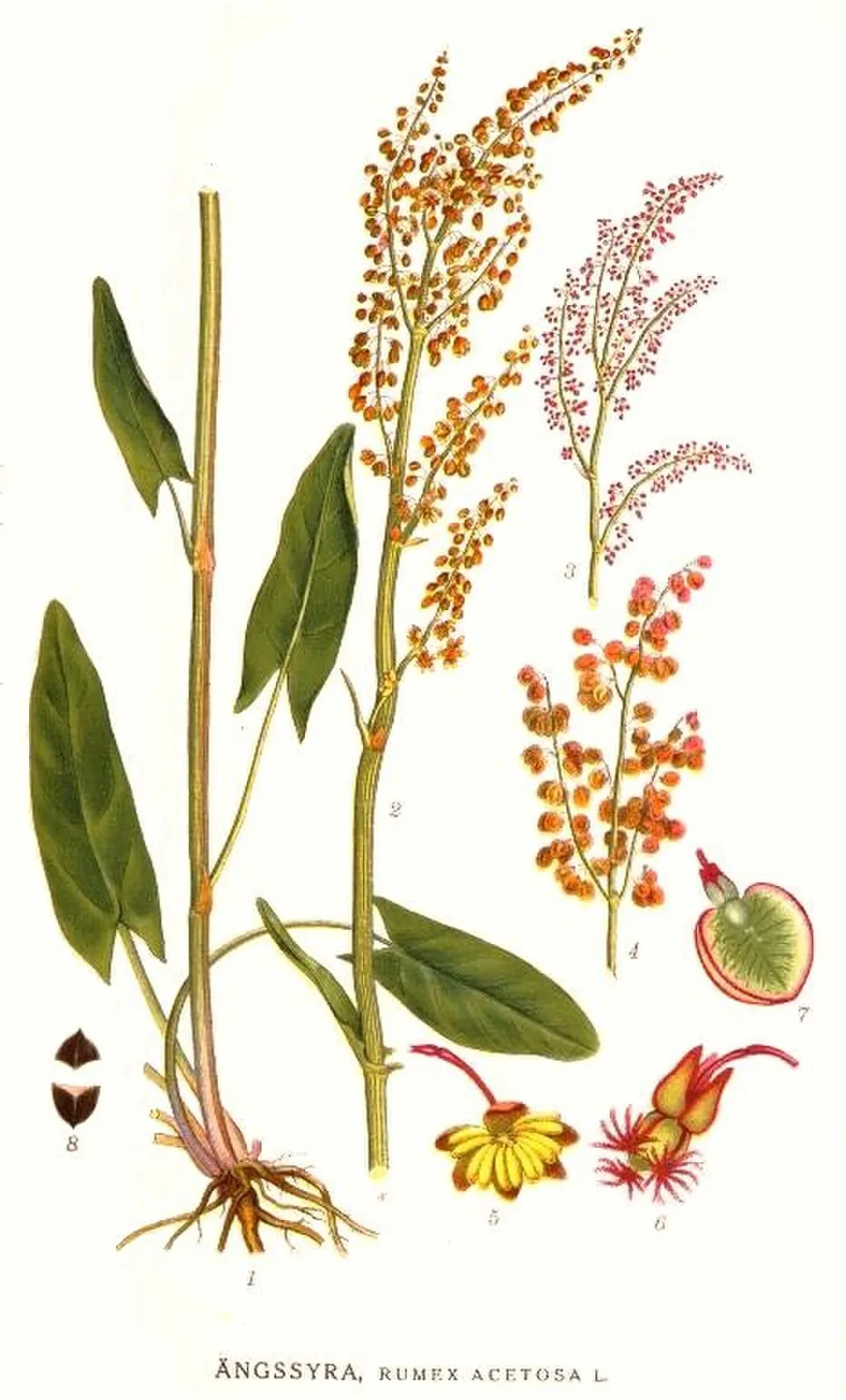
Sorrel (Rumex acetosa) is a distinguished perennial herbaceous plant belonging to the Polygonaceae family, commonly recognized for its unique tart flavor and vibrant green foliage. Typically growing to a height of 30 to 80 centimeters, its erect, smooth stems often acquire a reddish hue as they mature, providing a visual contrast to its leaves. The basal leaves are lanceolate to ovate, reaching up to 15 centimeters in length and 6 centimeters in width, characterized by a glossy surface and prominent veins. Higher on the stem, the leaves become smaller and more sessile.
During spring to early summer, Rumex acetosa produces inconspicuous greenish-yellow flowers, arranged in dense, cylindrical spikes at the apex of its stems. Each individual flower is small, approximately 4–6 millimeters, and dioecious, meaning male and female flowers are borne on separate plants. Following successful pollination, the plant develops small, triangular achenes, which are its distinctive fruit structures. This adaptable species thrives in a variety of moisture-rich environments, including meadows, grasslands, along riverbanks, and in disturbed or cultivated soils.
Its natural distribution spans across extensive regions of Europe and parts of Asia, and it has successfully naturalized in North America, becoming a familiar sight in temperate zones globally. Taxonomically, its placement within the Polygonaceae family is supported by shared characteristics such as alternate leaf arrangement, ocrea (a sheathing stipule), and the specific morphology of its achenes. Beyond its ecological role, Rumex acetosa holds significant value in both culinary applications and traditional medicinal practices.
Trusted Scientific References
1. Authoritative external sources for Rumex acetosa
1.1 Wikipedia — Rumex acetosa
1.2 Kew POWO (Plants of the World Online)
1.3 PubMed — peer-reviewed research
1.4 NCBI Taxonomy Browser
1.5 GBIF — Global Biodiversity
1.6Sorrel should be interpreted through verified botanical identity, practical care, and responsible safety language. This recovery note adds the missing context needed for a complete profile: match light to the plant's habit, use well-drained soil, water according to season, and avoid unsupported medicinal or edible claims. For publishing, the plant can be presented as a source-backed medicinal plant with clear care guidance, common problem diagnosis, and conservative safety wording.
1.1.Sorrel — Standout Qualities
- ✓Perennial herbaceous plant — Perennial herbaceous plant with erect, reddish stems.
- ✓Distinctive lanceolate to — Distinctive lanceolate to ovate leaves with a glossy, tart flavor.
- ✓Blooms greenish — yellow flowers in dense spikes during spring/early summer.
- ✓Native to Europe — Native to Europe and Asia, now naturalized globally in temperate zones.
- ✓Rich source of — Rich source of Vitamin C, contributing to its historical use against scurvy.
- ✓Contains oxalic acid, — Contains oxalic acid, tannins, flavonoids (quercetin), and proanthocyanidins.
- ✓Known for its — Known for its sour, lemony taste due to organic acids.
- ✓Utilized in traditional — Utilized in traditional medicine for immune, digestive, and anti-inflammatory support.
- ✓Potential antiviral properties — Potential antiviral properties against influenza A and HSV-1.
- ✓Caution advised due — Caution advised due to oxalate content, especially for kidney stone sufferers.
1.2.Sorrel — At-a-Glance Summary
- ✓Rumex acetosa is a tart, perennial herb valued culinarily and medicinally.
- ✓Rich in antioxidants, Vitamin C, and beneficial phenolic compounds.
- ✓Traditionally used for immune support, digestion, and anti-inflammatory effects.
- ✓Contains high levels of oxalates, necessitating caution for kidney health.
- ✓Exhibits potential antiviral and blood-clotting modulation properties in studies.
- ✓Should be consumed in moderation, especially by individuals with kidney concerns.
2.Sorrel — Taxonomic Classification
3.Sorrel — Reference Facts
4.Sorrel — Plant Morphology
5.Sorrel — Geographic Distribution
6.Sorrel — Historical Applications
7.Sorrel — Bioactive Constituents
- ✓Oxalates — Primarily oxalic acid, which imparts the distinctive tart flavor and, in high concentrations, can bind with calcium, potentially leading to kidney stone formation.
- ✓Tannins — Astringent compounds responsible for the drying effect, contributing to its traditional use in reducing mucous production and acting as an antimicrobial.
- ✓Flavonoids — Including quercetin and its glucosides, these are potent antioxidants and anti-inflammatory agents, offering cellular protection and immune support.
- ✓Anthraquinones — Compounds with potential laxative effects, historically used to support digestive regularity.
- ✓Proanthocyanidins — Oligomeric and polymeric forms, particularly 3-O-galloylated procyanidins, which have demonstrated antiviral activity against influenza A and herpes simplex virus.
- ✓Vitamins — Notably high in Vitamin C (ascorbic acid), crucial for immune function and collagen synthesis, and Vitamin A (beta-carotene) precursors important for vision and skin health.
- ✓Minerals — Contains significant amounts of potassium, magnesium, and iron, contributing to electrolyte balance, muscle function, and oxygen transport.
- ✓Organic Acids — Besides oxalic acid, malic acid and tartaric acid contribute to its sour taste and may play roles in metabolic processes.
- ✓Phenolic Acids — Such as caffeic acid and chlorogenic acid, which contribute to the plant's overall antioxidant capacity and protective effects.
- ✓Polysaccharides — Complex carbohydrates that may have immunomodulatory properties, supporting the body's defense systems.
8.Sorrel — Modern Studies
- ✓Immune Support — Rumex acetosa is rich in Vitamin C and antioxidants, which are crucial for bolstering the body's natural defense mechanisms and enhancing overall immune function against pathogens.
- ✓Anti-inflammatory Properties — The presence of flavonoids and proanthocyanidins contributes to sorrel's ability to modulate inflammatory pathways, potentially alleviating symptoms associated with various inflammatory conditions.
- ✓Digestive Health Promotion — Traditionally, sorrel has been used to stimulate appetite and aid digestion, with its mild laxative properties contributing to regular bowel movements and alleviating constipation.
- ✓Antioxidant Activity — High concentrations of polyphenolic compounds, including flavonoids like quercetin, provide potent antioxidant effects, protecting cells from oxidative stress and free radical damage.
- ✓Antimicrobial Action — Research indicates that compounds in sorrel, particularly proanthocyanidins, possess antiviral activity against viruses like influenza A and herpes simplex virus type-1, and potential antibacterial effects.
- ✓Blood Clotting Modulation — Studies suggest that Rumex acetosa may influence platelet aggregation, indicating a potential role in modulating blood clotting processes, which could have implications for cardiovascular health.
- ✓Sinus and Respiratory Health — In traditional European medicine, sorrel, often as part of herbal combinations, has been used to support the treatment of acute sinusitis and bronchitis by reducing mucous production due to its tannin content.
- ✓Traditional Detoxification — Historically, sorrel was employed as a general tonic and blood purifier in various folk medicine systems, believed to cleanse the body and support liver function.
- ✓Diuretic Effects — Its traditional use as a diuretic suggests it can help increase urine output, potentially aiding in the removal of excess fluids and toxins from the body.
- ✓Skin Health — Applied topically, sorrel has been used in traditional remedies for minor skin irritations, insect bites, and to promote wound healing due to its astringent and anti-inflammatory properties.
- ✓Nutritional Support — Beyond its medicinal compounds, sorrel provides essential vitamins and minerals, contributing to overall nutritional well-being and preventing deficiency-related ailments like scurvy due to its high Vitamin C.
- ✓Cancer Research Interest — Preliminary in vitro studies have explored the cytotoxic and antimutagenic effects of certain Rumex acetosa constituents on tumor cell lines, indicating a potential area for future research in oncology.
8.1.Sorrel — Therapeutic Indications
9.Sorrel — Adverse Effects
9.1.Sorrel — Possible Adverse Reactions
- ✓Kidney Stone Risk — High intake of sorrel, particularly in concentrated forms, can significantly increase the risk of developing calcium oxalate kidney stones in susceptible individuals.
- ✓Liver Damage — Consumption of very large quantities of sorrel over extended periods might potentially lead to liver damage due to its high oxalic acid content.
- ✓Stomach Irritation — Excessive consumption can cause gastrointestinal upset, including stomach pain, nausea, vomiting, or diarrhea, especially in individuals with sensitive digestive systems.
- ✓Increased Bleeding Risk — Sorrel may possess properties that slow blood clotting, potentially increasing the risk of bruising and bleeding, particularly if combined with anticoagulant medications.
- ✓Allergic Reactions — Sensitive individuals may experience allergic reactions, such as skin rashes, itching, or respiratory symptoms, although this is uncommon.
- ✓Oxalic Acid Poisoning — In extreme cases of very high intake, acute oxalic acid poisoning can occur, leading to severe symptoms including cardiovascular collapse and kidney failure.
9.2.Sorrel — Clinical Safety Notes
- ✓Pregnancy and Breastfeeding — Sorrel is generally considered safe in food amounts, but its medicinal use during pregnancy and breastfeeding is not sufficiently studied and should be avoided.
- ✓Kidney Disease — Individuals with pre-existing kidney disease, a history of kidney stones, or those at risk of stone formation should strictly avoid medicinal doses of sorrel due to its high oxalate content.
- ✓Pre-surgical Avoidance — Due to its potential to slow blood clotting, it is advisable to discontinue sorrel consumption at least two weeks before any scheduled surgical procedure to prevent excessive bleeding.
- ✓Drug Interactions — Moderate interaction with medications that slow blood clotting (anticoagulants/antiplatelets) and certain drugs moved by cellular pumps (OATP substrates) like fexofenadine, requiring caution.
- ✓Dosage Importance — While safe in culinary amounts, there is insufficient reliable information on appropriate medicinal dosages, emphasizing the need to consult a healthcare professional before therapeutic use.
- ✓Distinction from Look-alikes — It is crucial to correctly identify Rumex acetosa and not confuse it with other plants like wood sorrel (Oxalis spp.) or yellow dock (Rumex crispus), which have different chemical profiles and safety considerations.
- ✓Moderate Consumption — For general consumption, sorrel should be enjoyed in moderation as part of a balanced diet rather than in large, concentrated medicinal quantities.
10.Sorrel — Preparation & Dosage
- ✓Fresh Culinary Use — Young, tender leaves are commonly added fresh to salads, sandwiches, or used as a garnish to impart a distinctive tart, lemony flavor.
- ✓Infusion or Tea — Dried or fresh leaves can be steeped in hot water to create a tart herbal tea, traditionally consumed for its diuretic and digestive properties.
- ✓Soups and Sauces — Sorrel is a classic ingredient in various European cuisines, particularly in soups (e.g., sorrel soup) and sauces for fish or poultry, where its acidity cuts richness.
- ✓Tincture — A concentrated liquid extract made by steeping fresh or dried sorrel in alcohol, used for medicinal purposes in smaller, controlled doses.
- ✓Juicing — Fresh sorrel leaves can be juiced, often combined with other fruits and vegetables, to create a nutrient-dense beverage, though caution is advised due to oxalate content.
- ✓Poultice or Compress — Traditionally, crushed fresh leaves have been applied topically as a poultice to soothe minor skin irritations, insect bites, or reduce localized swelling.
- ✓Commercial Extracts/Supplements — Available in encapsulated or liquid extract forms, often as part of multi-herb formulations for specific health benefits, ensuring standardized dosing.
- ✓Herbal Infused Oils — Fresh leaves can be infused into carrier oils for topical applications, leveraging its anti-inflammatory and skin-soothing properties.
11.Sorrel — Propagation & Care
- ✓Climate and Soil — Rumex acetosa thrives in temperate climates and prefers well-drained, fertile, slightly acidic to neutral soil (pH 5.5-7.0) rich in organic matter.
- ✓Sunlight Requirements — It performs best in full sun to partial shade; in hotter climates, some afternoon shade can prevent bolting and leaf scorch.
- ✓Watering — Requires consistently moist soil; regular watering is essential, especially during dry periods, but avoid waterlogging to prevent root rot.
- ✓Propagation — Can be propagated from seeds sown directly in spring or autumn, or more commonly by division of established clumps in early spring or fall.
- ✓Fertilization — Benefits from an annual application of compost or a balanced organic fertilizer in spring to support vigorous leaf growth.
- ✓Harvesting — Leaves can be harvested continuously from spring through fall, picking the outer, younger leaves for the best flavor and to encourage further production.
- ✓Pest and Disease Management — Generally robust, but watch for common garden pests like aphids and slugs; good air circulation helps prevent fungal diseases.
- ✓Winter Care — As a perennial, it often overwinters well in temperate zones, dying back to the ground and regrowing in spring; mulching can provide extra protection in colder regions.
Reviewed by the Flora Medical Global Botanical Review Panel
Multi-disciplinary editorial group · Botany · Ethnobotany · Herbal-medicine literature
Who reviewed this: This page was checked by the Flora Medical Global Botanical Review Panel — an in-house editorial group of botany graduates, ethnobotany researchers, and horticulture practitioners who collectively maintain our 7,000+ plant encyclopedia. Meet the team.
Our 4-step verification process
1. Taxonomic verification
Scientific names and synonyms cross-checked against Kew POWO, World Flora Online, and The Plant List.
2. Phytochemical & medicinal cross-reference
Active compounds, traditional uses, and reported activities are cross-referenced with PubMed, USDA Dr. Duke's database, and peer-reviewed ethnobotanical literature.
3. Conservation & distribution check
Distribution, ecology, and conservation status confirmed against GBIF occurrence records and the IUCN Red List.
4. Editorial & safety review
Every entry passes an editorial pass for clarity, originality, and safety notices (toxicity, contraindications, dosage caveats) before publication.
Last reviewed:
Important medical disclaimer: This content is for educational and research purposes only. It is not medical advice and is not a substitute for consultation with a licensed healthcare provider. Do not use any herb to self-treat a medical condition without professional guidance.
Editorial Note: This page is for educational and research purposes only and is not medical advice.
Written by: Flora Medical Global Editorial Team
Reviewed by: Flora Medical Global Botanical Review Panel
Last Updated: June 16, 2026





Sorrel — Comments & Community Reviews
Rate this plant