


Medical Disclaimer: This content is for educational purposes only. It is not medical advice. Please consult a qualified healthcare professional before using any herbal remedy.
Safety Overview
1.Spikenard — Introduction & Highlights
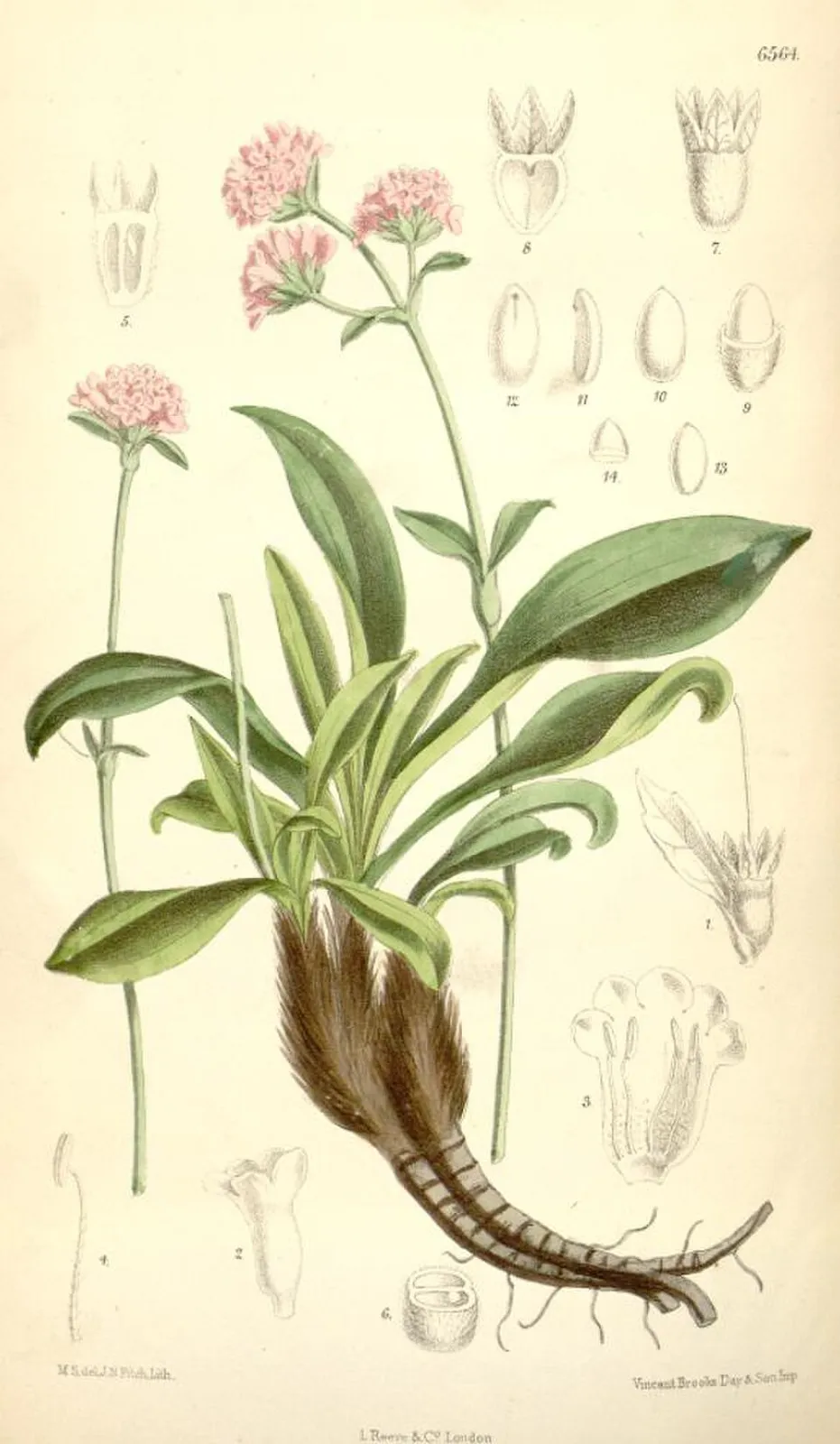
Spikenard, scientifically known as Nardostachys grandiflora, is a highly esteemed perennial herb native to the challenging, high-altitude regions of the Himalayas, specifically found across Nepal, India, China, and Bhutan. This resilient member of the Caprifoliaceae family, though historically classified under Valerianaceae, thrives in cool, moist, and partially shaded alpine environments at elevations ranging from 2,500 to 3,600 meters. The plant typically grows between 30 to 120 cm tall, anchoring itself firmly with its distinctive, thick, and highly aromatic rhizomes. These gnarled, fibrous rootstocks are the primary source of Spikenard's profound medicinal and aromatic properties, giving rise to its characteristic earthy scent.
Its basal leaves are notably large, often ovate to elliptic, measuring 20 to 30 cm in length, presenting a glossy, deep green surface with prominent venation. From the central crown, slender flowering stems emerge, bearing delicate whorls of small, tubular flowers. These intensely fragrant blossoms exhibit a color spectrum from pale lilac to creamy white and are arranged in dense, graceful spikes, adding an ethereal beauty to the rugged landscape during its blooming season. The outer bark of the rootstock is characteristically rough and fibrous, reflecting its hardy nature and ability to withstand harsh conditions.
Spikenard's aromatic roots are not only crucial for its survival but also serve as a potent attractant for pollinators and have captivated herbalists and spiritual practitioners for millennia. Historically, this species holds immense cultural and spiritual significance, being referenced in ancient texts for its profound uses in perfumery, religious ceremonies, and comprehensive healing traditions, particularly within Ayurvedic and traditional Eastern medicinal systems.
Trusted Scientific References
1. Authoritative external sources for Nardostachys grandiflora
1.1 Wikipedia — Nardostachys grandiflora
1.2 Kew POWO (Plants of the World Online)
1.3 PubMed — peer-reviewed research
1.4 NCBI Taxonomy Browser
1.5 GBIF — Global Biodiversity
1.1.Spikenard — Key Features
- ✓Indigenous to the high — altitude Himalayan ranges of Nepal, India, China, and Bhutan.
- ✓Characterized by robust, — Characterized by robust, aromatic rhizomes that are the primary source of its medicinal properties.
- ✓Historically revered in — Historically revered in ancient cultures for spiritual, perfumery, and healing purposes.
- ✓Potent nervine tonic, — Potent nervine tonic, anxiolytic, and sedative, promoting mental calm and sleep.
- ✓Contains a rich — Contains a rich profile of sesquiterpenes, notably jatamansone, and valeranone.
- ✓Classified under the — Classified under the Caprifoliaceae family, formerly part of Valerianaceae.
- ✓Recognized in traditional — Recognized in traditional systems like Ayurveda (as Jatamansi) and Traditional Chinese Medicine (as Gan Song).
- ✓Exhibts significant anti — inflammatory, antioxidant, and antimicrobial activities.
- ✓Faces conservation challenges — Faces conservation challenges due to overharvesting, leading to endangered status.
- ✓Essential oil is — Essential oil is highly valued in aromatherapy for its grounding and calming aroma.
1.2.Spikenard — Concise Overview
- ✓Himalayan perennial herb, Nardostachys grandiflora, revered for its aromatic rhizomes.
- ✓Traditional nervine tonic, anxiolytic, and sedative, promoting calm and restful sleep.
- ✓Used in Ayurveda (Jatamansi) and TCM (Gan Song) for mental well-being, inflammation, and skin.
- ✓Rich in sesquiterpenes like jatamansone, responsible for its therapeutic effects.
- ✓Requires careful cultivation due to its endangered status and wild overharvesting.
- ✓Exercise caution with pregnancy, children, and potential drug interactions, especially with sedatives.
2.Spikenard — Systematic Position
3.Spikenard — Reference Facts
4.Spikenard — Plant Morphology
5.Spikenard — Geographic Distribution
6.Spikenard — Historical Applications
7.Spikenard — Bioactive Constituents
- ✓Sesquiterpenes — Key compounds include jatamansone (nardostachone), valeranone, spikenardone, and patchouli alcohol, which are largely responsible for Spikenard's distinctive aroma and its sedative, anxiolytic, and anti-inflammatory effects.
- ✓Valerenic Acid Derivatives — Although now in Caprifoliaceae, Nardostachys grandiflora shares some chemical similarities with Valeriana, including compounds like valerenic acid and its esters, contributing to its calming properties.
- ✓Coumarins — Herniarin and umbelliferone are present, which may contribute to Spikenard's anti-inflammatory and antioxidant activities.
- ✓Flavonoids — Compounds such as luteolin and apigenin offer antioxidant and anti-inflammatory benefits, protecting cells from oxidative damage.
- ✓Triterpenoids — Various triterpenoid compounds contribute to the plant's overall therapeutic profile, potentially offering anti-inflammatory and adaptogenic support.
- ✓Lignans — Present in smaller quantities, lignans are known for their antioxidant and potential anticancer properties.
- ✓Alkaloids — Trace amounts of alkaloids may be found, though their specific contribution to Spikenard's medicinal actions is less understood compared to other compound classes.
- ✓Phenolic Compounds — A range of phenolic acids and related compounds contribute to the plant's robust antioxidant capacity.
- ✓Essential Oil Components — Beyond jatamansone, the essential oil contains nardol, nardosinone, and various monoterpenes and sesquiterpenes, which provide its characteristic fragrance and therapeutic actions.
- ✓Glycosides — Various glycosides are present, which can influence the bioavailability and activity of other compounds within the plant matrix.
8.Spikenard — What Research Suggests
- ✓Nervine Tonic — Spikenard is traditionally revered as a powerful nervine tonic, helping to calm the nervous system, reduce mental fatigue, and support overall neurological health.
- ✓Anxiolytic Properties — Its compounds exhibit anxiolytic effects, effectively reducing symptoms of anxiety, stress, and nervous tension, promoting a sense of peace and well-being.
- ✓Sedative and Hypnotic Aid — Spikenard essential oil and extracts are known for their mild sedative qualities, aiding in relaxation and promoting restful sleep, making it beneficial for insomnia.
- ✓Anti-inflammatory Action — Active constituents in Nardostachys grandiflora demonstrate significant anti-inflammatory activity, which can help alleviate pain and swelling associated with various inflammatory conditions.
- ✓Antioxidant Support — Rich in antioxidants, Spikenard helps combat oxidative stress by neutralizing free radicals, thereby protecting cells from damage and supporting healthy aging.
- ✓Cognitive Enhancer — Traditional systems utilize Spikenard to improve memory, concentration, and cognitive function, making it a valuable herb for mental clarity and focus.
- ✓Antimicrobial and Antifungal — The essential oil possesses potent antimicrobial and antifungal properties, useful in protecting against various bacterial and fungal infections, both internally and externally.
- ✓Digestive Aid — Spikenard acts as a carminative and antispasmodic, helping to relieve digestive discomforts such as bloating, gas, and abdominal cramps.
- ✓Skin Rejuvenation — Applied topically, Spikenard oil can aid in skin regeneration, soothe irritation, promote wound healing, and contribute to a healthy, youthful complexion.
- ✓Hair Growth Stimulant — Traditional applications include using Spikenard to promote hair growth, strengthen hair follicles, and maintain scalp health, addressing issues like dandruff and hair fall.
- ✓Cardiovascular Health — Some traditional uses suggest Spikenard supports heart health by potentially helping to regulate blood pressure and improve circulation, though more research is needed.
- ✓Mood Elevation — Beyond calming, Spikenard is believed to have mood-uplifting properties, assisting in managing symptoms of mild depression and promoting emotional balance.
8.1.Spikenard — Conditions Traditionally Used For
9.Spikenard — Adverse Effects
9.1.Spikenard — Warnings
- ✓Skin Irritation — Undiluted Spikenard essential oil can cause skin irritation or sensitization, especially in individuals with sensitive skin, necessitating proper dilution.
- ✓Drowsiness — High doses of Spikenard, particularly when taken internally, may induce excessive drowsiness or sedation, impacting alertness and coordination.
- ✓Gastrointestinal Upset — Oral consumption, especially of large quantities, might lead to mild gastrointestinal disturbances such as nausea or stomach discomfort.
- ✓Allergic Reactions — Although rare, some individuals may experience allergic reactions, including skin rashes, itching, or respiratory symptoms.
- ✓Hypotension Risk — Due to its potential to influence blood pressure, individuals with naturally low blood pressure should use Spikenard with caution.
- ✓Drug Interactions — Spikenard may interact with sedative medications, anxiolytics, or blood thinners, potentially enhancing their effects or altering their metabolism.
- ✓Photosensitivity — While not a primary concern, some coumarins found in plants can potentially increase photosensitivity in susceptible individuals, warrant with caution.
9.2.Spikenard — Toxicity Assessment
- ✓Pregnancy and Lactation — Spikenard is generally contraindicated during pregnancy and breastfeeding due to insufficient safety data and its potential emmenagogue effects in traditional use.
- ✓Children — Avoid use in infants and young children due to lack of established safety guidelines and potential for adverse reactions.
- ✓Pre-Surgical Discontinuation — Due to its sedative properties, individuals scheduled for surgery should discontinue Spikenard use at least two weeks prior to avoid interactions with anesthesia.
- ✓Drug Interactions — Exercise caution when combining Spikenard with sedative medications, antidepressants, anticoagulants, or blood pressure-lowering drugs, as interactions are possible.
- ✓Topical Dilution — Always dilute Spikenard essential oil with a suitable carrier oil (e.g., jojoba, almond) before applying topically to prevent skin irritation.
- ✓Internal Use Consultation — For internal use, consult a qualified healthcare professional or medical herbalist to determine appropriate dosages and monitor for potential adverse effects.
- ✓Quality Sourcing — Ensure that Spikenard products are sourced from reputable suppliers to guarantee purity and prevent adulteration, which is a common risk for this rare herb.
10.Spikenard — Application Forms
- ✓Essential Oil — Spikenard essential oil is widely used in aromatherapy for its calming and grounding effects; it should always be diluted with a carrier oil before topical application.
- ✓Topical Application — Diluted essential oil or infused oils can be massaged onto the skin for relaxation, pain relief, or to support skin health, often targeting areas like the temples or pulse points.
- ✓Decoction — The dried, powdered rhizome can be simmered in water to create a potent decoction, suitable for internal use to harness its systemic medicinal benefits.
- ✓Tincture — An alcoholic extract of the root, tinctures offer a concentrated form of Spikenard that can be taken orally, typically diluted in water or juice.
- ✓Powdered Herb — The finely ground rhizome can be encapsulated for convenient oral consumption or mixed with honey or other carriers in traditional Ayurvedic preparations (churna).
- ✓Infusion — While less common for the root, an infusion of the aerial parts or a milder root preparation can be used for calming teas, though the rhizome is generally too woody for simple infusion.
- ✓Ayurvedic Formulations — In Ayurveda, Spikenard (Jatamansi) is incorporated into various complex formulations, including ghritas (ghee-based preparations) and tailas (medicated oils), for specific therapeutic outcomes.
- ✓Traditional Chinese Medicine (TCM) — In TCM, Gan Song is often used as part of multi-herb formulas to address conditions related to qi stagnation, pain, and emotional imbalances.
11.Spikenard — Growing Guide
- ✓Propagation — Spikenard can be propagated through seeds, though germination can be slow and erratic, or more commonly and effectively via rhizome division.
- ✓Soil Requirements — It thrives in well-drained, humus-rich soil, preferably slightly acidic to neutral (pH 6.0-7.0), mimicking its natural alpine habitat.
- ✓Climate and Light — Requires a cool, moist climate with partial shade, as direct, intense sunlight can stress the plant; it is accustomed to the high-altitude conditions of the Himalayas.
- ✓Watering — Consistent moisture is crucial, but waterlogging should be avoided; regular watering, especially during dry spells, supports healthy rhizome development.
- ✓Fertilization — Minimal fertilization is typically needed; incorporating compost or well-rotted manure during planting can provide sufficient nutrients for its growth.
- ✓Harvesting — The aromatic rhizomes are typically harvested in late autumn after 2-3 years of growth, when their medicinal properties are most concentrated.
- ✓Pest and Disease Management — Spikenard is generally robust; however, ensuring good air circulation and proper drainage can prevent fungal issues, and monitoring for common garden pests is advisable.
- ✓Conservation Concerns — Due to overharvesting in the wild, sustainable cultivation practices are critical for this endangered species.
Reviewed by the Flora Medical Global Botanical Review Panel
Multi-disciplinary editorial group · Botany · Ethnobotany · Herbal-medicine literature
Who reviewed this: This page was checked by the Flora Medical Global Botanical Review Panel — an in-house editorial group of botany graduates, ethnobotany researchers, and horticulture practitioners who collectively maintain our 7,000+ plant encyclopedia. Meet the team.
Our 4-step verification process
1. Taxonomic verification
Scientific names and synonyms cross-checked against Kew POWO, World Flora Online, and The Plant List.
2. Phytochemical & medicinal cross-reference
Active compounds, traditional uses, and reported activities are cross-referenced with PubMed, USDA Dr. Duke's database, and peer-reviewed ethnobotanical literature.
3. Conservation & distribution check
Distribution, ecology, and conservation status confirmed against GBIF occurrence records and the IUCN Red List.
4. Editorial & safety review
Every entry passes an editorial pass for clarity, originality, and safety notices (toxicity, contraindications, dosage caveats) before publication.
Last reviewed:
Important medical disclaimer: This content is for educational and research purposes only. It is not medical advice and is not a substitute for consultation with a licensed healthcare provider. Do not use any herb to self-treat a medical condition without professional guidance.
Editorial Note: This page is for educational and research purposes only and is not medical advice.
Written by: Flora Medical Global Editorial Team
Reviewed by: Flora Medical Global Botanical Review Panel
Last Updated: June 16, 2026





Spikenard — Comments & Community Reviews
Rate this plant