

Medical Disclaimer: This content is for educational purposes only. It is not medical advice. Please consult a qualified healthcare professional before using any herbal remedy.
Safety Overview
1.Star Anise — Essential Profile
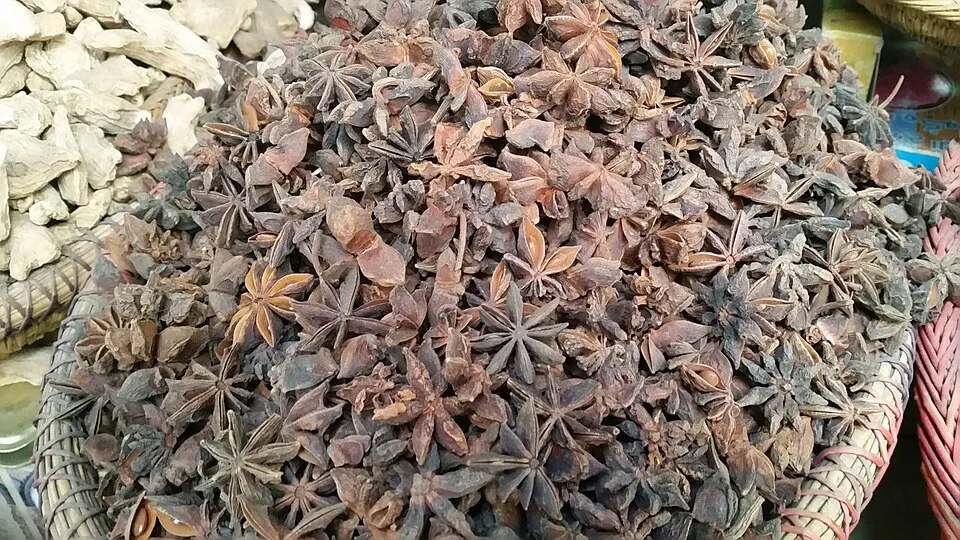
Illicium verum, commonly known as Star Anise, is an evergreen tree belonging to the family Schisandraceae, typically reaching heights of 4 to 10 meters. Its foliage is characterized by dark green, lanceolate leaves, measuring approximately 7 to 15 centimeters in length and 2 to 5 centimeters in width, exhibiting a distinct glossy texture. The plant is most recognized for its unique star-shaped fruits, which usually comprise seven to eight pointed carpels, each containing a single, smooth seed.
These fruits mature to a reddish-brown hue and are often harvested while still green to maximize their aromatic properties. Small, yellowish-green flowers, about 1 to 2 centimeters in diameter, emerge in clusters before the fruit develops. The bark is initially smooth but becomes subtly fissured and greyish-brown with age.
Star Anise flourishes in subtropical climates, predominantly found in the southern regions of China and throughout Southeast Asia, thriving in well-drained, fertile, loamy soils. Taxonomically, its placement within the Schisandraceae family highlights its close relation to plants known for their significant aromatic compounds, particularly those like shikimic acid, which are pivotal in both traditional and modern pharmaceutical applications.
Trusted Scientific References
1. Authoritative external sources for Illicium verum
1.1 Wikipedia — Illicium verum
1.2 Kew POWO (Plants of the World Online)
1.3 PubMed — peer-reviewed research
1.4 NCBI Taxonomy Browser
1.5 GBIF — Global Biodiversity
1.6Star Anise should be interpreted through verified botanical identity, practical care, and responsible safety language. This recovery note adds the missing context needed for a complete profile: match light to the plant's habit, use well-drained soil, water according to season, and avoid unsupported medicinal or edible claims. For publishing, the plant can be presented as a source-backed medicinal plant with clear care guidance, common problem diagnosis, and conservative safety wording.
1.1.Star Anise — Highlights
- ✓Distinctive Star — Shaped Fruit — Easily recognizable and aesthetically unique morphology.
- ✓Rich Anise — Like Aroma — Characteristic flavor and scent attributed to high anethole content.
- ✓Antiviral Powerhouse — A crucial natural source of shikimic acid, vital for flu medication synthesis.
- ✓Digestive System Ally — Effectively soothes gastrointestinal discomfort, including gas and bloating.
- ✓Anti — inflammatory Properties — Contains compounds that help reduce inflammation and associated pain.
- ✓Traditional Chinese Medicine Staple — Integral to ancient healing practices for warming and Qi regulation.
- ✓Potent Antioxidant Activity — Protects cellular health by combating oxidative stress and free radicals.
- ✓Essential Oil Versatility — Utilized in aromatherapy, topical remedies, and as a fragrance component.
- ✓Cautionary Identification — Requires vigilant differentiation from toxic look-alike species for safe use.
- ✓Global Culinary and Medicinal Importance — Widely valued across diverse cultures for its flavor and health benefits.
1.2.Star Anise — Snapshot Summary
- ✓Aromatic spice and potent medicinal herb, Illicium verum.
- ✓Primary natural source of antiviral shikimic acid, a Tamiflu precursor.
- ✓Aids digestion, reduces inflammation, and offers antioxidant benefits.
- ✓Valued in Traditional Chinese Medicine for warming and pain relief.
- ✓Critical to distinguish from highly toxic Japanese Star Anise.
- ✓Versatile in culinary applications, herbal teas, and essential oil use.
2.Star Anise — Botanical Identity
3.Star Anise — Fact Sheet
4.Star Anise — Botanical Description
5.Star Anise — Ecological Habitat
6.Star Anise — Heritage Uses
7.Star Anise — Chemical Profile
- ✓Essential Oils — The predominant constituent, trans-anethole, accounts for 85-95% of the essential oil, imparting the characteristic licorice-like aroma and contributing to its carminative and antimicrobial properties. Other volatile compounds include estragole, limonene, linalool, eugenol, and methyl chavicol.
- ✓Shikimic Acid — A crucial cyclitol, shikimic acid is a key biosynthetic intermediate and a vital precursor for the pharmaceutical production of oseltamivir (Tamiflu), renowned for its antiviral efficacy.
- ✓Flavonoids — Star Anise contains various flavonoids such as quercetin, kaempferol, and their glycosides, which contribute significantly to its antioxidant and anti-inflammatory activities.
- ✓Phenylpropanoids — Beyond anethole, other phenylpropanoid derivatives are present, influencing the plant's distinct aroma and contributing to its diverse pharmacological actions.
- ✓Terpenoids — Monoterpenes like limonene and linalool, along with sesquiterpenes, are minor but important components of the essential oil, adding to its complex fragrance and biological properties.
- ✓Coumarins — Trace amounts of coumarins can be found, which may offer additional pharmacological benefits, including anticoagulant and anti-inflammatory effects.
- ✓Tannins — These polyphenolic compounds provide astringent properties, which can be beneficial in certain traditional applications for digestive health.
- ✓Fatty Acids — The seeds of Star Anise contain various fatty acids, though typically not considered primary active medicinal components, they contribute to the overall nutritional profile.
8.Star Anise — Pharmacological Findings
- ✓Antiviral Activity — Star Anise is a primary natural source of shikimic acid, a critical precursor for the pharmaceutical synthesis of oseltamivir (Tamiflu), a leading antiviral medication used against influenza strains, including H5N1.
- ✓Digestive Aid — It is widely used to alleviate various digestive complaints, including gas, bloating, indigestion, and abdominal discomfort, by promoting healthy peristalsis and reducing spasms.
- ✓Anti-inflammatory Properties — Compounds within Star Anise, such as anethole, exhibit anti-inflammatory effects that can help reduce swelling and pain associated with inflammatory conditions.
- ✓Antioxidant Effects — Rich in phenolic compounds and flavonoids, Star Anise provides potent antioxidant activity, protecting cells from damage caused by free radicals and oxidative stress.
- ✓Antimicrobial & Antifungal — The essential oil, particularly its anethole and eugenol content, demonstrates significant inhibitory effects against a broad spectrum of bacteria and fungi, making it useful against various infections.
- ✓Traditional Chinese Medicine (TCM) — In TCM, Star Anise is prized for its ability to warm Yang, disperse cold, regulate Qi, and relieve pain, often used for conditions associated with coldness and stagnation.
- ✓Respiratory Support — It can be employed in remedies for respiratory ailments such as coughs, bronchitis, and congestion, helping to clear airways and soothe irritation.
- ✓Potential Anticancer Activity — Emerging research suggests that certain phytochemicals in Star Anise may possess antiproliferative effects, indicating potential in cancer prevention and therapy.
- ✓Neuroprotective Potential — Some compounds found in Illicium verum are being investigated for their potential to protect nerve cells and support neurological health.
- ✓Immune System Boost — Regular, moderate consumption may contribute to overall immune system resilience, helping the body defend against common pathogens.
8.1.Star Anise — Conditions Traditionally Used For
9.Star Anise — Safety & Side Effects
9.1.Star Anise — Caution Notes
- ✓Allergic Reactions — Sensitive individuals may experience skin rashes, itching, or respiratory issues upon exposure or ingestion.
- ✓Gastrointestinal Upset — Excessive consumption can lead to nausea, vomiting, or diarrhea due to its potent aromatic compounds.
- ✓Neurotoxicity — A severe risk arises from adulteration with Japanese Star Anise (Illicium anisatum or I. religiosum), which contains the highly toxic neurotoxin anisatin, causing seizures and other neurological symptoms.
- ✓Drug Interactions — May interact with anticoagulant or antiplatelet medications due to potential blood-thinning effects, increasing bleeding risk.
- ✓Photosensitivity — Rare cases of increased skin sensitivity to sunlight have been reported with topical application of the essential oil.
- ✓Hormonal Effects — Trans-anethole, a major component, exhibits mild estrogenic activity, which could be a concern for individuals with hormone-sensitive conditions.
9.2.Star Anise — Risk Assessment
- ✓Correct Identification — It is absolutely critical to differentiate true Illicium verum from its highly toxic look-alike, Japanese Star Anise (Illicium anisatum or I. religiosum), which can cause severe neurological damage.
- ✓Pregnancy and Lactation — Avoid use during pregnancy and lactation due to insufficient safety data and potential hormonal activity of its constituents.
- ✓Children — Not recommended for infants and young children, especially due to the risk of neurotoxicity from potential adulteration or overdose.
- ✓Pre-existing Conditions — Individuals with hormone-sensitive cancers, bleeding disorders, or epilepsy should avoid Star Anise or use it only under strict medical supervision.
- ✓Dosage — Adhere strictly to recommended dosages; high doses of Star Anise can lead to adverse effects, even with the authentic species.
- ✓Quality Sourcing — Always purchase Star Anise from reputable suppliers to ensure authenticity, purity, and to minimize the risk of toxic adulteration.
10.Star Anise — Preparation Methods
- ✓Culinary Spice — Whole or ground Star Anise is a staple in many cuisines, particularly Asian, used to flavor savory dishes, soups, stews, and sometimes desserts.
- ✓Herbal Tea — An infusion made from crushed Star Anise pods can be consumed to aid digestion, relieve gas, and soothe respiratory discomfort.
- ✓Essential Oil — The highly concentrated essential oil is used in aromatherapy or diluted for topical applications, such as massage for muscle aches or fungal skin conditions, always with caution.
- ✓Tinctures — Alcoholic extracts of Star Anise fruits are prepared for a more concentrated medicinal form, used internally under professional guidance.
- ✓Decoctions — A stronger preparation involves simmering the dried fruits in water for an extended period, often used in Traditional Chinese Medicine formulas.
- ✓Powdered Extracts — Standardized powdered extracts are encapsulated or incorporated into herbal formulations for precise dosing and convenience.
- ✓Topical Ointments — Extracts or diluted essential oil can be incorporated into ointments or balms for localized relief of pain, inflammation, or fungal skin issues.
11.Star Anise — Garden Cultivation
- ✓Climate — Star Anise thrives in warm, humid subtropical climates with consistent rainfall, avoiding frost.
- ✓Soil — Requires well-drained, fertile, slightly acidic to neutral loamy soil rich in organic matter.
- ✓Propagation — Primarily propagated from seeds, though germination can be slow and erratic; cuttings are also possible.
- ✓Planting — Young plants prefer partial shade, gradually transitioning to full sun as they mature for optimal fruit production.
- ✓Watering — Consistent moisture is essential, especially during dry periods and fruit development, but waterlogging must be avoided.
- ✓Fertilization — Benefits from regular application of a balanced organic fertilizer during its active growing season.
- ✓Pest and Disease Control — Generally robust, but monitoring for common fungal diseases and pests like scale insects is advisable.
- ✓Harvesting — Fruits are typically harvested when they are still green but fully formed, then dried in the sun or using artificial heat.
Reviewed by the Flora Medical Global Botanical Review Panel
Multi-disciplinary editorial group · Botany · Ethnobotany · Herbal-medicine literature
Who reviewed this: This page was checked by the Flora Medical Global Botanical Review Panel — an in-house editorial group of botany graduates, ethnobotany researchers, and horticulture practitioners who collectively maintain our 7,000+ plant encyclopedia. Meet the team.
Our 4-step verification process
1. Taxonomic verification
Scientific names and synonyms cross-checked against Kew POWO, World Flora Online, and The Plant List.
2. Phytochemical & medicinal cross-reference
Active compounds, traditional uses, and reported activities are cross-referenced with PubMed, USDA Dr. Duke's database, and peer-reviewed ethnobotanical literature.
3. Conservation & distribution check
Distribution, ecology, and conservation status confirmed against GBIF occurrence records and the IUCN Red List.
4. Editorial & safety review
Every entry passes an editorial pass for clarity, originality, and safety notices (toxicity, contraindications, dosage caveats) before publication.
Last reviewed:
Important medical disclaimer: This content is for educational and research purposes only. It is not medical advice and is not a substitute for consultation with a licensed healthcare provider. Do not use any herb to self-treat a medical condition without professional guidance.
Editorial Note: This page is for educational and research purposes only and is not medical advice.
Written by: Flora Medical Global Editorial Team
Reviewed by: Flora Medical Global Botanical Review Panel
Last Updated: June 16, 2026





Star Anise — Comments & Community Reviews
Rate this plant