
Medical Disclaimer: This content is for educational purposes only. It is not medical advice. Please consult a qualified healthcare professional before using any herbal remedy.
Safety Overview
1.Tamala — Botanical Snapshot
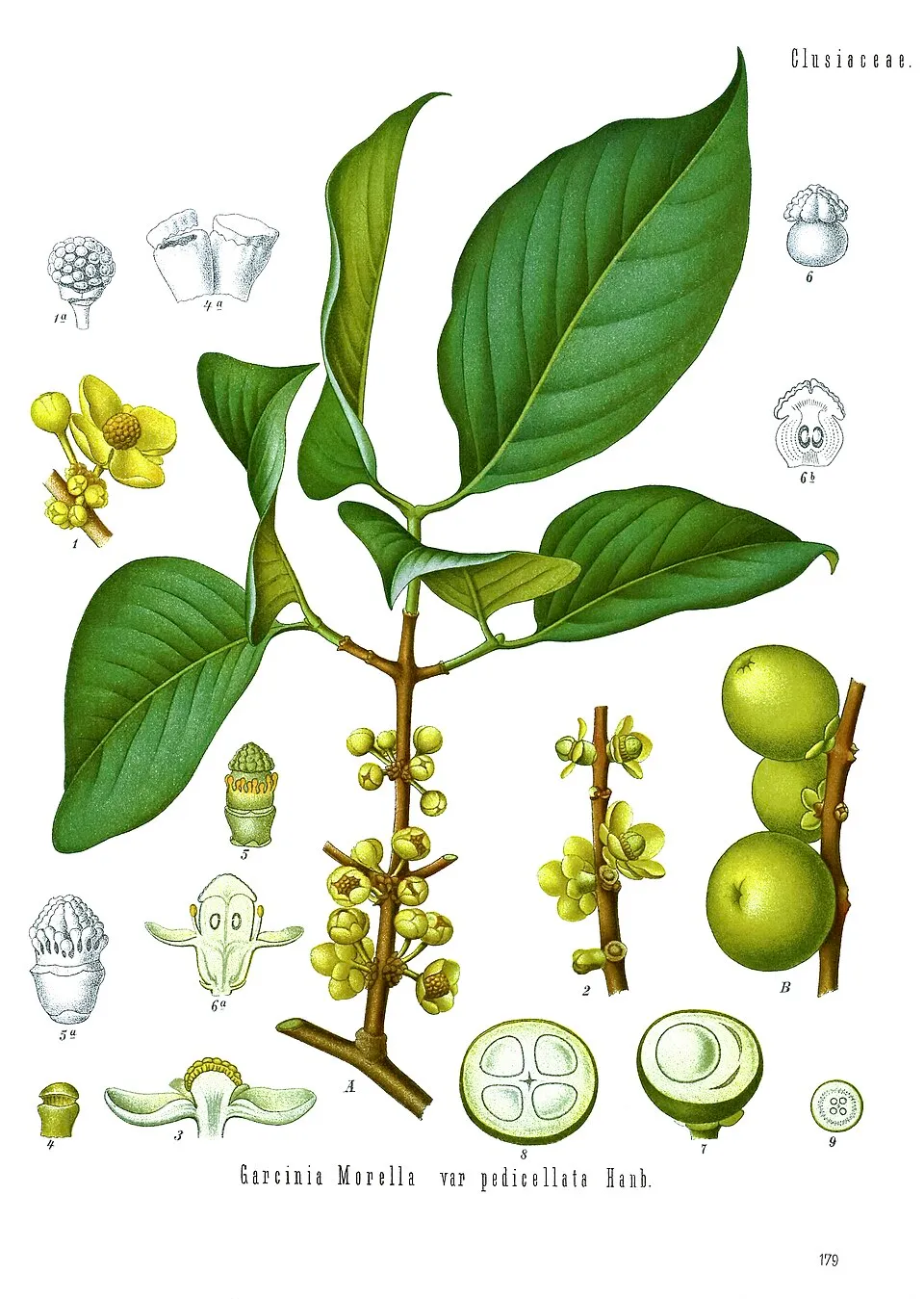
Garcinia morella, commonly known as Tamala or Indian gamboge, is an impressive evergreen tree belonging to the Clusiaceae family, often reaching majestic heights of up to 15 meters. Its dense, perennial canopy provides significant ecological value in its native habitats. The foliage is characterized by elliptical leaves, typically measuring between 10 to 20 cm in length and 4 to 8 cm in width. These leaves present a glossy dark green surface and a distinctly leathery texture, contributing to the tree's robust appearance.
The bark of the Tamala tree is smooth and grayish-brown in its younger stages, gradually developing a rougher, fissured texture as it matures. During the monsoon season, the tree adorns itself with small, yellowish-white flowers, each approximately 2 cm across, which are typically found clustered in the leaf axils. These blossoms eventually give way to small, round fruits, about 2-3 cm in diameter, which transition from green to a reddish-brown hue upon ripening. Native to the lush tropical forests of India and Southeast Asia, Garcinia morella thrives in moist, well-drained soils and is particularly prevalent in the hilly terrains of India’s Western Ghats, Sikkim, and Assam.
Taxonomically, its placement within the Clusiaceae family highlights its relation to other economically and medicinally important species, including the renowned mangosteen (Garcinia mangostana). Beyond its ecological role, Tamala holds profound cultural and traditional significance in the regions where it flourishes.
Trusted Scientific References
1. Authoritative external sources for Garcinia morella
1.1 Wikipedia — Garcinia morella
1.2 Kew POWO (Plants of the World Online)
1.3 PubMed — peer-reviewed research
1.4 NCBI Taxonomy Browser
1.5 GBIF — Global Biodiversity
1.6Tamala should be interpreted through verified botanical identity, practical care, and responsible safety language. This recovery note adds the missing context needed for a complete profile: match light to the plant's habit, use well-drained soil, water according to season, and avoid unsupported medicinal or edible claims. For publishing, the plant can be presented as a source-backed medicinal plant with clear care guidance, common problem diagnosis, and conservative safety wording.
1.1.Tamala — Notable Characteristics
- ✓Botanical Identity — Garcinia morella, known as Tamala or Indian gamboge, a tropical evergreen tree.
- ✓Family — Belongs to the Clusiaceae family, known for many medicinal and edible species.
- ✓Key Phytochemicals — Abundant in xanthones (e.g., gambogic acid), flavonoids, and the benzophenone garcinol.
- ✓Traditional Medicinal Uses — Utilized in Ayurveda and Unani for treating gastrointestinal issues, respiratory ailments, and fevers.
- ✓Modern Research — Documented for antioxidant, anti-inflammatory, antimicrobial, hepatoprotective, and potential anticancer activities.
- ✓Edible & Commercial Uses — Fruits are edible, seeds yield cooking oil, and the resin (gamboge) is a historical yellow dye.
- ✓Geographical Distribution — Native to tropical India and Southeast Asia, particularly the Western Ghats.
- ✓Morphological Characteristics — Distinctive glossy, leathery leaves, smooth bark, and small, round, reddish-brown fruits.
- ✓Astringent Properties — Fruit rind is highly valued for its astringent action, beneficial for digestive complaints.
- ✓Relation to Mangosteen — A close botanical relative of the popular Garcinia mangostana.
1.2.Tamala — Snapshot Summary
- ✓Garcinia morella, or Tamala, is a tropical evergreen tree from Southeast Asia.
- ✓Rich in xanthones, flavonoids, and garcinol, offering potent health benefits.
- ✓Traditionally used in Ayurveda and Unani for digestive, respiratory, and fever relief.
- ✓Modern research supports its antioxidant, anti-inflammatory, and antimicrobial actions.
- ✓Its resin, 'gamboge,' is a historical dye, while seeds yield edible oil.
- ✓Caution advised for pregnant individuals and those on specific medications.
2.Tamala — Botanical Identity
3.Tamala — Fact Sheet
4.Tamala — Botanical Description
5.Tamala — Native Range & Habitat
6.Tamala — Folk Medicine Applications
7.Tamala — Chemical Profile
- ✓Xanthones — Key compounds like gambogic acid, mangostin, and morellic acid, known for their potent antioxidant, anti-inflammatory, and anticancer activities.
- ✓Benzophenones — Notably garcinol, which contributes significantly to the plant's anti-inflammatory, antioxidant, and antimicrobial effects.
- ✓Flavonoids — Including amentoflavone, apigenin, epicatechin, quercetin, kaempferol, luteolin, isoorientin, isovitexin, and vitexin, offering diverse antioxidant and anti-inflammatory benefits.
- ✓Phenolic Acids — Such as caffeic acid, ferulic acid, protocatechuic acid, and vanillic acid, which are known for their strong antioxidant and free-radical scavenging properties.
- ✓Organic Acids — Including hydroxycitric acid and garcinia acid, which are involved in various metabolic pathways and may influence fat metabolism.
- ✓Triterpenoids — A class of compounds with potential anti-inflammatory, hepatoprotective, and cytotoxic activities, contributing to the plant's therapeutic profile.
- ✓Fatty Acids — Present in the seeds, forming a yellow fat used in cooking, indicating nutritional and potential emollient properties.
- ✓Biflavonoids — Specific Garcinia biflavonoids, demonstrating enhanced antioxidant and anti-inflammatory actions compared to monomeric flavonoids.
- ✓Stilbenoids — Another group of phenolic compounds that may contribute to the plant's overall antioxidant and protective effects.
- ✓Coumarins — Known for various biological activities, including anti-inflammatory and anticoagulant properties, though their presence in Tamala is less prominent than other classes.
8.Tamala — Pharmacological Findings
- ✓Potent Antioxidant — Tamala is rich in xanthones and flavonoids, which combat oxidative stress by neutralizing free radicals, thereby protecting cellular integrity and reducing cellular damage.
- ✓Anti-inflammatory Support — Compounds such as garcinol and specific xanthones exhibit significant anti-inflammatory properties, potentially alleviating symptoms associated with chronic inflammatory conditions.
- ✓Antimicrobial Action — Extracts from Garcinia morella have demonstrated broad-spectrum antimicrobial activity against various bacteria and fungi, offering protective effects against common infections.
- ✓Gastrointestinal Relief — Traditionally, the fruit rind powder is used to treat diarrhea and dysentery due to its astringent qualities, which help to firm stools and soothe inflamed intestinal mucosa.
- ✓Respiratory Health — Decoctions made from the bark and leaves are employed in traditional medicine to alleviate respiratory illnesses like coughs and bronchitis, acting as an expectorant to clear airways.
- ✓Antipyretic Properties — The fruit is consumed to help reduce fevers, indicating its traditional use in managing febrile conditions and promoting comfort during illness.
- ✓Hepatoprotective Effects — Research suggests that Tamala compounds may offer protective benefits to the liver, supporting its function and safeguarding against toxin-induced damage.
- ✓Potential Anticancer Activity — Some phytochemicals isolated from Garcinia morella, particularly certain xanthones, have shown promising cytotoxic effects against various cancer cell lines in in vitro studies.
- ✓Antiviral Capabilities — Preliminary studies indicate that constituents of Tamala possess antiviral properties, suggesting a potential role in inhibiting viral replication.
- ✓Larvicidal Activity — Extracts have been found to exhibit larvicidal effects, which could be relevant in natural pest control or disease vector management.
- ✓Metabolic Health Support — Certain organic acids found in Tamala may play a role in metabolic processes, though further research is needed to fully understand their impact on human metabolism.
- ✓Immune System Modulation — The collective action of its bioactive compounds may contribute to modulating immune responses, enhancing the body's natural defense mechanisms.
8.1.Tamala — Therapeutic Indications
9.Tamala — Safety & Side Effects
9.1.Tamala — Warnings
- ✓Gastrointestinal Upset — High doses may lead to mild stomach discomfort, nausea, or changes in bowel habits.
- ✓Allergic Reactions — Individuals sensitive to plants in the Clusiaceae family might experience allergic skin reactions or respiratory symptoms.
- ✓Hypotension — Certain compounds could potentially lower blood pressure, requiring caution for individuals on hypotensive medications.
- ✓Drug Interactions — May interact with anticoagulants or antiplatelet drugs due to potential effects on blood clotting.
- ✓Liver Enzyme Elevation — Extremely high or prolonged use could, theoretically, impact liver enzyme levels; caution is advised.
- ✓Headaches — Infrequent reports of headaches have been associated with concentrated extracts in some sensitive individuals.
- ✓Pregnancy and Lactation — Lack of sufficient safety data necessitates avoidance during pregnancy and breastfeeding.
9.2.Tamala — Risk Assessment
- ✓Pregnancy and Lactation — Contraindicated during pregnancy and breastfeeding due to insufficient safety data.
- ✓Children — Not recommended for use in infants or young children without expert medical supervision.
- ✓Pre-existing Conditions — Individuals with liver disease, bleeding disorders, or hypotension should use with extreme caution.
- ✓Medication Interactions — Consult a healthcare professional if taking anticoagulants, antiplatelets, or blood pressure medications.
- ✓Dosage — Adhere strictly to recommended dosages; excessive intake can increase the risk of adverse effects.
- ✓Allergic Sensitivity — Discontinue use if allergic reactions such as rash, itching, or swelling occur.
- ✓Professional Guidance — Always seek advice from a qualified medical herbalist or healthcare provider before incorporating Tamala into a therapeutic regimen.
10.Tamala — Preparation Methods
- ✓Fruit Rind Powder — Dried fruit rind is pulverized into a fine powder, traditionally mixed with water or honey to treat gastrointestinal issues like diarrhea.
- ✓Bark and Leaf Decoctions — Bark and leaves are boiled in water to create a decoction, used as an expectorant for respiratory conditions such as coughs and bronchitis.
- ✓Fresh Fruit Consumption — Ripe fruits are consumed directly for their antipyretic effects or as a refreshing, slightly tart dessert.
- ✓Seed Oil Extraction — The yellow fat (oil) extracted from the seeds is utilized in local cooking and confectionery, serving as a substitute for ghee.
- ✓Gamboge Resin Collection — The bright yellow gum-resin, known as gamboge, is traditionally collected by incising the bark, then dried and used as a natural dye, pigment, or in varnishes.
- ✓Topical Applications — Certain preparations, though less documented, might be used topically for skin ailments due to the plant's antimicrobial properties.
- ✓Herbal Formulations — Standardized extracts of Garcinia morella are incorporated into complex Ayurvedic and Unani formulations for targeted therapeutic effects.
- ✓Modern Supplements — Bioactive compounds like garcinol are isolated and formulated into dietary supplements for antioxidant or anti-inflammatory support.
11.Tamala — How to Grow
- ✓Climate — Thrives in tropical and subtropical climates with high humidity and consistent rainfall.
- ✓Soil Requirements — Prefers moist, well-drained loamy soils rich in organic matter, with a slightly acidic to neutral pH.
- ✓Light Exposure — Requires full sun to partial shade for optimal growth, especially when young.
- ✓Propagation — Primarily propagated from seeds, which should be sown fresh, or sometimes via grafting.
- ✓Watering — Needs regular and ample watering, particularly during dry spells, to maintain soil moisture.
- ✓Fertilization — Benefits from periodic application of organic fertilizers or well-rotted compost to enrich the soil.
- ✓Pruning — Minimal pruning is generally required, mainly for shaping or removing dead/diseased branches.
- ✓Pest and Disease Control — Relatively hardy, but monitoring for common tropical plant pests and fungal issues is advisable.
Reviewed by the Flora Medical Global Botanical Review Panel
Multi-disciplinary editorial group · Botany · Ethnobotany · Herbal-medicine literature
Who reviewed this: This page was checked by the Flora Medical Global Botanical Review Panel — an in-house editorial group of botany graduates, ethnobotany researchers, and horticulture practitioners who collectively maintain our 7,000+ plant encyclopedia. Meet the team.
Our 4-step verification process
1. Taxonomic verification
Scientific names and synonyms cross-checked against Kew POWO, World Flora Online, and The Plant List.
2. Phytochemical & medicinal cross-reference
Active compounds, traditional uses, and reported activities are cross-referenced with PubMed, USDA Dr. Duke's database, and peer-reviewed ethnobotanical literature.
3. Conservation & distribution check
Distribution, ecology, and conservation status confirmed against GBIF occurrence records and the IUCN Red List.
4. Editorial & safety review
Every entry passes an editorial pass for clarity, originality, and safety notices (toxicity, contraindications, dosage caveats) before publication.
Last reviewed:
Important medical disclaimer: This content is for educational and research purposes only. It is not medical advice and is not a substitute for consultation with a licensed healthcare provider. Do not use any herb to self-treat a medical condition without professional guidance.
Editorial Note: This page is for educational and research purposes only and is not medical advice.
Written by: Flora Medical Global Editorial Team
Reviewed by: Flora Medical Global Botanical Review Panel
Last Updated: June 16, 2026





Tamala — Comments & Community Reviews
Rate this plant