

Medical Disclaimer: This content is for educational purposes only. It is not medical advice. Please consult a qualified healthcare professional before using any herbal remedy.
Safety Overview
1.Trikatu — Plant Snapshot
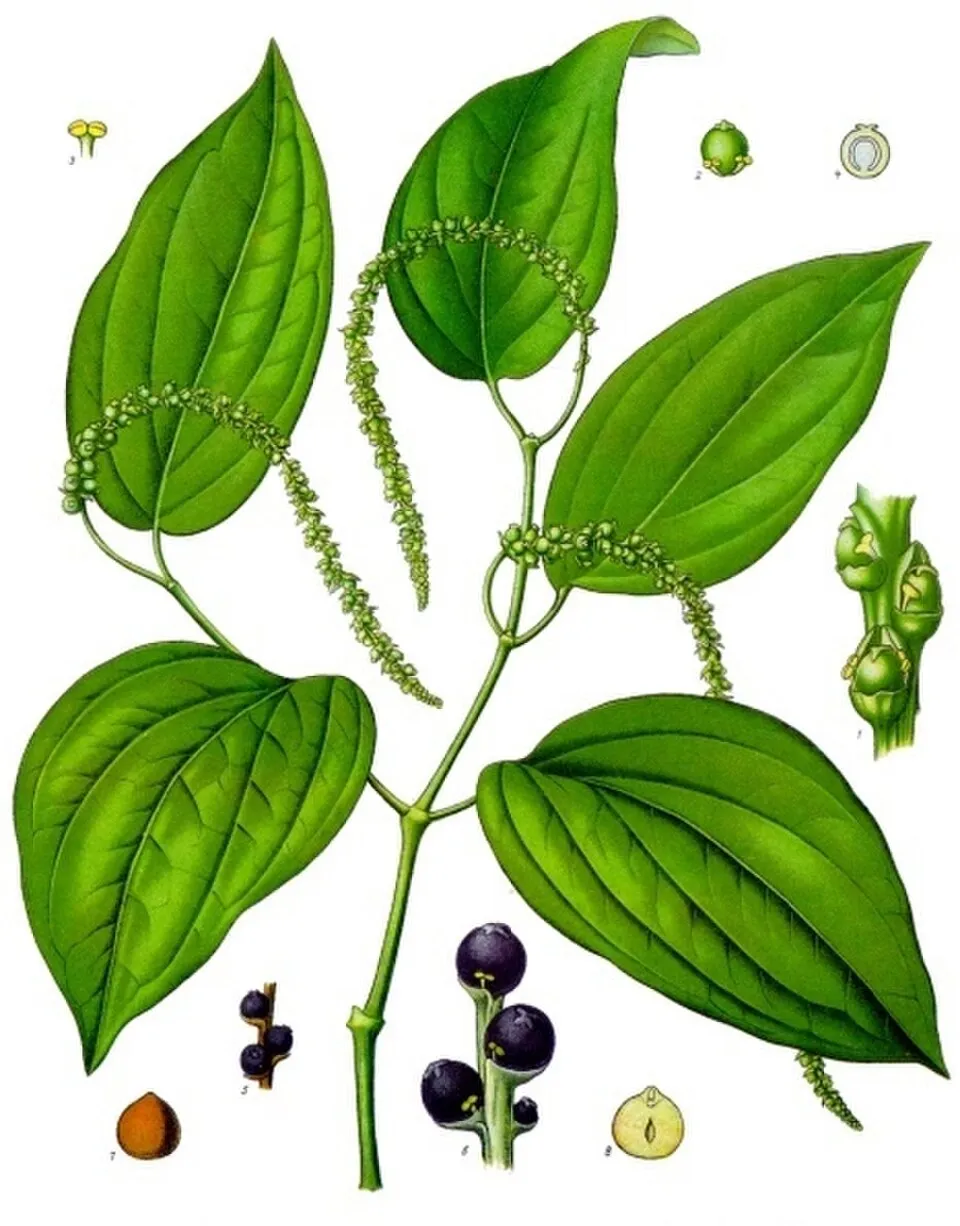
Trikatu, meaning "the three pungents," is a revered traditional Ayurvedic polyherbal formulation comprising three distinct yet profoundly synergistic spices: Piper nigrum (black pepper), Piper longum (long pepper), and Zingiber officinale (ginger). Piper nigrum, a perennial climbing vine, can ascend to heights of 4 meters, characterized by its glossy, dark green, heart-shaped leaves and small, greenish-white flowers clustering in dense, elongated spikes. Its spherical fruits, harvested at different stages of maturity, yield the familiar black, white, or green peppers. Piper longum, a closely related species within the Piperaceae family, is also a slender climbing vine, typically reaching 2 meters.
It produces distinctive elongated, narrow spikes of tiny fruits, which are the dried, medicinally valued component. Its leaves are lanceolate, and its flowers display a spectrum from green to pale yellow. Zingiber officinale, commonly known as ginger, is a herbaceous perennial that typically grows to about 1 meter, featuring erect, leafy shoots and delicate pale yellow flowers often marked with purple. The primary therapeutic part is its thick, aromatic, and fibrous rhizome, which boasts a characteristic pungent aroma and flavor.
These three potent spices predominantly flourish in tropical to subtropical climates across South and Southeast Asia, including India, Sri Lanka, and Indonesia. They thrive in rich, well-drained, loamy soils, often benefiting from partial shade, conditions that optimize the development of their unique phytochemical profiles. The deliberate combination of these botanicals in Trikatu exemplifies a deep understanding of synergy, where the collective action transcends the sum of individual parts, particularly in enhancing digestive and metabolic functions.
Trusted Scientific References
Authoritative external sources for Piper nigrum + Piper longum + Zingiber officinale:
Wikipedia — Piper nigrum + Piper longum + Zingiber officinale
Kew POWO (Plants of the World Online)
PubMed — peer-reviewed research
NCBI Taxonomy Browser
GBIF — Global Biodiversity
1.1.Trikatu — Defining Traits
- ✓Traditional Ayurvedic Formulation — Ancient blend known for centuries.
- ✓Synergistic Action — Components work together for enhanced efficacy.
- ✓Thermogenic Properties — Generates warmth, stimulating metabolism.
- ✓Pungent Rasa (Taste) — Characteristic hot and spicy flavor.
- ✓Deepana & Pachana — Enkindles digestive fire and digests toxins.
- ✓Rasayana (Rejuvenative) — Especially for the respiratory system and certain tissues.
- ✓Broad Spectrum Benefits — From digestion to respiration and circulation.
- ✓Natural Bioavailability Enhancer — Contains piperine for improved absorption.
- ✓Balances Doshas — Primarily pacifies Vata and Kapha.
- ✓Rooted in Tropical Spices — Derived from plants native to South and Southeast Asia.
1.2.Trikatu — Quick Summary
- ✓Ayurvedic Tri-Spice Blend — Formulated from Black Pepper, Long Pepper, and Ginger.
- ✓Digestive Powerhouse — Potently enhances digestion and nutrient absorption.
- ✓Metabolic Booster — Supports healthy metabolism and weight management.
- ✓Respiratory Aid — Clears congestion and supports lung function.
- ✓Bioavailability Enhancer — Piperine significantly improves drug and nutrient uptake.
- ✓Warming & Pungent — Balances Vata and Kapha, may increase Pitta.
2.Trikatu — Taxonomic Classification
3.Trikatu — Botanical Stats
4.Trikatu — Morphological Account
5.Trikatu — Where It Grows
6.Trikatu — Historical Applications
7.Trikatu — Bioactive Constituents
- ✓Alkaloids — Piperine (Piper nigrum, Piper longum) is a primary alkaloid, known for its pungent taste, thermogenic effects, and significant bioavailability-enhancing properties. Piperlongumine (Piper longum) also contributes to its biological activities.
- ✓Volatile Oils/Essential Oils — Comprising monoterpenes and sesquiterpenes (e.g., β-caryophyllene, limonene from Piper species; zingiberene, β-bisabolene, curcumene from Zingiber officinale), these impart characteristic aromas and contribute to anti-inflammatory and antimicrobial actions.
- ✓Gingerols — Predominantly found in fresh Zingiber officinale, these phenolic compounds (e.g., 6-gingerol, 8-gingerol, 10-gingerol) are responsible for much of ginger's pungent flavor and potent anti-inflammatory and antioxidant activities.
- ✓Shogaols — Formed from gingerols upon drying or heating Zingiber officinale (e.g., 6-shogaol, 8-shogaol, 10-shogaol), these compounds possess even stronger pungency and exhibit significant anti-inflammatory, antioxidant, and anti-cancer properties.
- ✓Resins — Present in all three components, contributing to the overall pungent taste and therapeutic effects, often containing complex mixtures of active compounds.
- ✓Flavonoids — Various flavonoids are present across the three plants, acting as antioxidants and contributing to anti-inflammatory and immunomodulatory effects.
- ✓Phenolic Compounds — Beyond gingerols and shogaols, other phenolic acids and derivatives (e.g., gallic acid, ferulic acid) contribute to the antioxidant and protective properties of the formulation.
- ✓Lignans — Present in Piper species, these compounds possess antioxidant and potential anti-cancer activities.
- ✓Oleoresins — A complex mixture of essential oils and resins found in all three plants, responsible for their characteristic flavor, aroma, and many pharmacological activities.
- ✓Carbohydrates and Fiber — While not primary active compounds, these provide bulk and support digestive health, particularly from the ginger rhizome.
8.Trikatu — Research Insights
- ✓Enhances Digestive Fire (Agni) — Trikatu significantly stimulates digestive enzymes and bile secretion, improving the breakdown of food and preventing indigestion, bloating, and flatulence.
- ✓Boosts Nutrient Absorption — The piperine in black and long pepper enhances the bioavailability of nutrients, vitamins, minerals, and other herbal compounds, ensuring efficient assimilation into the body.
- ✓Supports Respiratory Health — Its pungent and warming qualities help to clear excess mucus and congestion from the respiratory passages, offering relief in conditions like coughs, colds, and mild asthma.
- ✓Promotes Metabolic Function — Trikatu stimulates metabolism, aiding in calorie expenditure and supporting healthy weight management by optimizing fat and carbohydrate breakdown.
- ✓Acts as a Detoxifier (Ama Pachana) — By improving digestion and circulation, it helps to eliminate accumulated toxins (Ama) from the body, preventing their systemic spread and promoting cellular health.
- ✓Possesses Anti-inflammatory Properties — The gingerols, shogaols, and piperine contribute to Trikatu's anti-inflammatory effects, potentially alleviating pain and swelling associated with various inflammatory conditions.
- ✓Exhibits Antimicrobial Activity — Components within Trikatu, particularly from ginger and peppers, show efficacy against certain bacteria and fungi, supporting gut health and systemic immunity.
- ✓Invigorates Circulation — The warming nature of Trikatu helps to improve blood flow, which in turn supports nutrient delivery and waste removal throughout the body.
- ✓Supports Liver Function — By enhancing metabolic processes and aiding detoxification, Trikatu indirectly supports the liver in its crucial role of processing and eliminating waste products.
- ✓Balances Kapha and Vata Doshas — In Ayurvedic terms, Trikatu is highly effective in reducing Kapha (cold, heavy, damp) and Vata (cold, dry, light) imbalances, while potentially increasing Pitta (hot, sharp).
- ✓Alleviates Cold and Flu Symptoms — Its diaphoretic and expectorant actions help to induce sweating, clear congestion, and reduce fever associated with common cold and flu.
- ✓Supports Reproductive Tissue (Shukra Dhatu) — Despite its heating nature, Long Pepper specifically nourishes reproductive tissues (Shukra Dhatu) due to its unique sweet post-digestive effect, aiding in reproductive debility.
8.1.Trikatu — Health Applications
9.Trikatu — Adverse Effects
9.1.Trikatu — Side Effects & Warnings
- ✓Gastric Irritation — High doses or prolonged use, especially in individuals with Pitta imbalance, can cause heartburn, acidity, or stomach irritation due to its pungent and heating nature.
- ✓Increased Body Heat — May lead to a sensation of increased internal heat, sweating, or exacerbate conditions associated with excess Pitta.
- ✓Skin Rashes — In sensitive individuals, or with excessive internal heat, skin eruptions or rashes might occur.
- ✓Blood Thinning — Ginger and pepper constituents may have mild anti-platelet effects, potentially increasing the risk of bleeding in susceptible individuals or those on anticoagulant medication.
- ✓Drug Interactions — Piperine can enhance the bioavailability of certain drugs, potentially leading to increased drug levels and side effects; caution is advised with medications having narrow therapeutic windows.
- ✓Oral Irritation — The direct consumption of Trikatu powder can cause temporary burning or irritation in the mouth and throat due to its strong pungency.
- ✓Diarrhea — Very high doses may stimulate bowel movements excessively, leading to loose stools or diarrhea in some individuals.
9.2.Trikatu — Safety Overview
- ✓Pregnancy and Lactation — Generally not recommended during pregnancy in large medicinal doses due to its heating nature and potential uterine stimulation; consult a healthcare professional.
- ✓Pitta Imbalance — Individuals with conditions characterized by excess heat (e.g., hyperacidity, ulcers, inflammatory bowel disease) should use Trikatu with extreme caution or avoid it.
- ✓Anticoagulant Medications — Use with caution by individuals on blood-thinning medications due to potential additive anti-platelet effects.
- ✓Surgical Procedures — Discontinue use at least two weeks prior to scheduled surgery to minimize potential bleeding risks.
- ✓Children — Administer to children only under the guidance of a qualified healthcare practitioner, typically in reduced doses.
- ✓Gastrointestinal Sensitivity — Individuals with sensitive stomachs or pre-existing gastric conditions should start with low doses and monitor for adverse reactions.
- ✓Allergic Reactions — Though rare, allergic reactions to any of the components are possible; discontinue use if symptoms like itching, swelling, or difficulty breathing occur.
10.Trikatu — Preparation & Dosage
- ✓Powder Form — The most common method; the three dried components are ground into a fine powder, often in equal proportions, and consumed with honey or warm water.
- ✓Decoction (Kwath) — A coarser powder can be boiled in water until reduced, then strained and consumed, allowing for extraction of water-soluble compounds.
- ✓Anupana (Adjuvant) — Trikatu powder is frequently taken with specific adjuvants like honey (for Kapha), ghee (for Vata), or warm water, depending on the desired therapeutic effect and individual constitution.
- ✓Ayurvedic Formulations — Incorporated as a key ingredient in numerous complex Ayurvedic medicines, including churnas, gugguls, and arishtas, to enhance their efficacy and bioavailability.
- ✓Culinary Spice Blend — Can be used in small quantities as a warming and digestive spice in cooking, particularly in traditional Indian cuisine, though medicinal doses are higher.
- ✓Capsules/Tablets — For convenience and precise dosing, standardized extracts or powders of Trikatu are available in encapsulated or tablet forms.
- ✓Topical Applications — Rarely used topically, but ginger and pepper components can be found in liniments for localized pain relief due to their rubefacient properties.
- ✓Dosage — Typical Ayurvedic dosage for the powder is 1-3 grams, 1-2 times daily, adjusted based on individual constitution, condition, and practitioner's advice.
11.Trikatu — Growth Requirements
- ✓Climate — Requires tropical to subtropical climates with high humidity, consistent rainfall (150-300 cm annually), and temperatures between 20-35°C, without frost.
- ✓Soil — Thrives in rich, well-drained loamy soils with a pH of 6.0-7.0, ideally with high organic matter content to support vigorous growth.
- ✓Propagation — Primarily propagated vegetatively; Piper species from stem cuttings, and Zingiber officinale from rhizome pieces (setts) containing viable buds.
- ✓Planting — Cuttings or setts are planted at the onset of the monsoon season in partial shade, often under support trees for the climbing peppers.
- ✓Watering — Regular and ample watering is crucial, especially during dry spells, to maintain soil moisture without waterlogging.
- ✓Fertilization — Benefits from organic manures like compost and well-rotted farmyard manure, supplemented with balanced NPK fertilizers for optimal growth and yield.
- ✓Harvesting — Piper nigrum berries are harvested when they begin to turn red; Piper longum fruit spikes are picked when mature but still green; Zingiber officinale rhizomes are typically harvested 8-10 months after planting, when leaves start to yellow.
- ✓Post-harvest — Proper drying methods are essential to preserve the active compounds and prevent mold, often involving sun-drying or mechanical dryers.
Reviewed by the Flora Medical Global Botanical Review Panel
Multi-disciplinary editorial group · Botany · Ethnobotany · Herbal-medicine literature
Who reviewed this: This page was checked by the Flora Medical Global Botanical Review Panel — an in-house editorial group of botany graduates, ethnobotany researchers, and horticulture practitioners who collectively maintain our 7,000+ plant encyclopedia. Meet the team.
Our 4-step verification process
1. Taxonomic verification
Scientific names and synonyms cross-checked against Kew POWO, World Flora Online, and The Plant List.
2. Phytochemical & medicinal cross-reference
Active compounds, traditional uses, and reported activities are cross-referenced with PubMed, USDA Dr. Duke's database, and peer-reviewed ethnobotanical literature.
3. Conservation & distribution check
Distribution, ecology, and conservation status confirmed against GBIF occurrence records and the IUCN Red List.
4. Editorial & safety review
Every entry passes an editorial pass for clarity, originality, and safety notices (toxicity, contraindications, dosage caveats) before publication.
Last reviewed:
Important medical disclaimer: This content is for educational and research purposes only. It is not medical advice and is not a substitute for consultation with a licensed healthcare provider. Do not use any herb to self-treat a medical condition without professional guidance.
Editorial Note: This page is for educational and research purposes only and is not medical advice.
Written by: Flora Medical Global Editorial Team
Reviewed by: Flora Medical Global Botanical Review Panel
Last Updated: June 16, 2026





Trikatu — Comments & Community Reviews
Rate this plant