
Medical Disclaimer: This content is for educational purposes only. It is not medical advice. Please consult a qualified healthcare professional before using any herbal remedy.
Safety Overview
1.Turkey Tail Mushroom — Introduction & Highlights
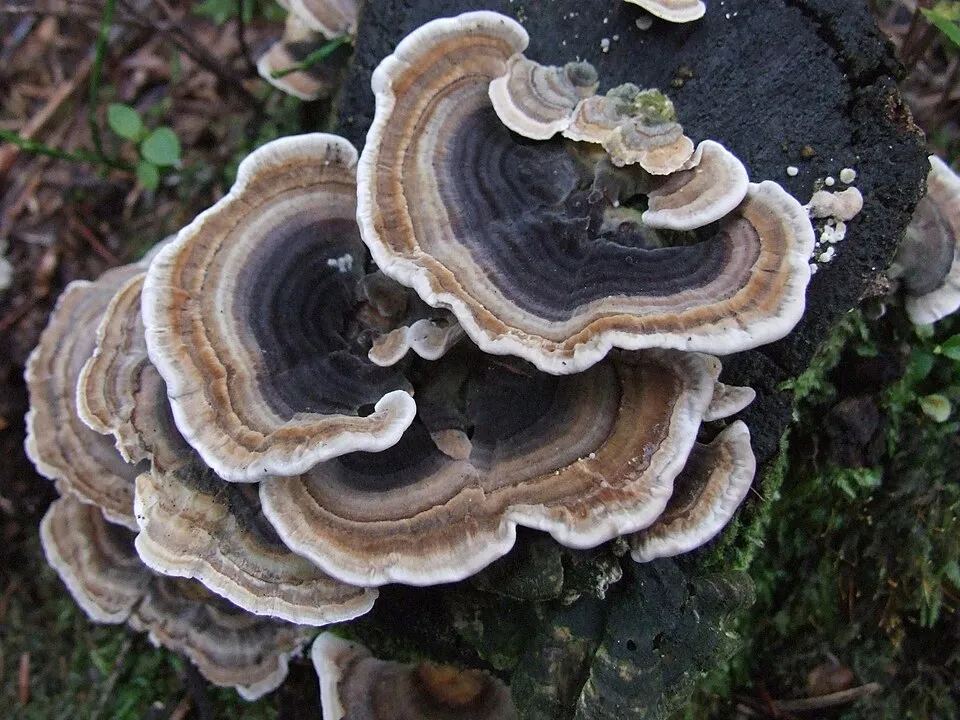
Turkey Tail Mushroom (Trametes versicolor) is a globally distributed, distinctive polypore fungus renowned for its striking, fan-shaped fruiting bodies. Characterized by concentric zones of varying hues, including rich browns, vibrant yellows, muted greens, and creamy whites, it vividly resembles a turkey's fanned tail, giving rise to its common name. These velvety or somewhat fuzzy caps typically measure between 2 to 10 cm in diameter, presenting a unique texture.
Unlike vascular plants, Trametes versicolor lacks true leaves, stems, or roots; instead, it features a smooth underside adorned with countless minute pores from which spores are released, a hallmark of its classification within the Polyporaceae family as a shelf fungus. This saprophytic organism plays a crucial ecological role by decomposing decaying hardwood and conifer logs. It thrives in moist, temperate forest environments across continents, including North America, Europe, and Asia, adapting readily to habitats with high humidity.
Its widespread presence and distinctive appearance make it a recognizable and ecologically important component of woodland ecosystems.
Trusted Scientific References
1. Authoritative external sources for Trametes versicolor
1.1 Wikipedia — Trametes versicolor
1.2 Kew POWO (Plants of the World Online)
1.3 PubMed — peer-reviewed research
1.4 NCBI Taxonomy Browser
1.5 GBIF — Global Biodiversity
1.6Turkey Tail Mushroom should be interpreted through verified botanical identity, practical care, and responsible safety language. This recovery note adds the missing context needed for a complete profile: match light to the plant's habit, use well-drained soil, water according to season, and avoid unsupported medicinal or edible claims. For publishing, the plant can be presented as a source-backed medicinal plant with clear care guidance, common problem diagnosis, and conservative safety wording.
1.7Turkey Tail Mushroom (Trametes versicolor) is maintained in this recovery file as a complete medicinal profile with practical care, safety, and identification context. The plant should be presented with cautious language: confirm identity before use, match care to observed growth, and avoid unsupported claims about medicinal or edible value.
1.1.Turkey Tail Mushroom — Defining Traits
- ✓Distinctive Appearance — Multicolored, fan-shaped fruiting bodies resembling a turkey's tail.
- ✓Global Distribution — Found in temperate forests worldwide on decaying wood.
- ✓Potent Immunomodulator — Contains PSK and PSP, key compounds for immune system support.
- ✓Adaptogenic Qualities — Supports the body's ability to adapt to stress and maintain balance.
- ✓Rich in Antioxidants — High content of phenolic compounds and flavonoids.
- ✓Saprophytic Fungus — Plays a vital role in forest ecosystems by decomposing wood.
- ✓Traditional Chinese Medicine (TCM) Herb — Long history of use for vitality and health.
- ✓Non — Psychoactive — Does not possess hallucinogenic properties.
- ✓Versatile Preparations — Can be consumed as teas, tinctures, extracts, or encapsulated powders.
- ✓Research — Backed — Subject of numerous scientific studies, particularly in oncology.
1.2.Turkey Tail Mushroom — Quick Summary
- ✓Immune-Boosting Fungus — Trametes versicolor is a potent immunomodulator, enhancing immune cell activity.
- ✓Key Bioactive Compounds — Rich in Polysaccharide Krestin (PSK) and Polysaccharide Peptide (PSP).
- ✓Cancer Support Adjuvant — Researched for its potential to improve outcomes in cancer therapies.
- ✓Traditional Medicinal Staple — Valued in TCM for overall wellness, energy, and anti-fatigue properties.
- ✓Antioxidant and Anti-Inflammatory — Offers cellular protection and helps mitigate systemic inflammation.
- ✓Generally Safe with Precautions — Well-tolerated by most, but caution needed with certain conditions or medications.
2.Turkey Tail Mushroom — Scientific Profile
3.Turkey Tail Mushroom — Botanical Stats
4.Turkey Tail Mushroom — Morphological Account
5.Turkey Tail Mushroom — Geographic Distribution
6.Turkey Tail Mushroom — Historical Applications
7.Turkey Tail Mushroom — Active Compounds
- ✓Polysaccharides — Key compounds include Polysaccharide Krestin (PSK) and Polysaccharide Peptide (PSP), which are beta-glucans known for their potent immunomodulatory and antitumor activities.
- ✓Triterpenoids — These compounds contribute to the mushroom's adaptogenic and anti-inflammatory properties, often found in various medicinal fungi.
- ✓Phenolic Compounds — A diverse group of antioxidants, including flavonoids, which help protect cells from oxidative stress and have anti-inflammatory effects.
- ✓Ergosterols — Precursors to vitamin D2, these sterols are important for fungal cell membrane integrity and may offer various health benefits.
- ✓Glycoproteins — Complex molecules that combine protein and carbohydrate chains, often involved in cell recognition and immune responses, contributing to the mushroom's bioactive profile.
- ✓Enzymes — Contains various enzymes that aid in its decomposition role and may have therapeutic applications, though less studied than polysaccharides.
- ✓Minerals — Rich in essential trace minerals such as selenium, copper, and zinc, which are vital cofactors for numerous enzymatic reactions and immune function.
- ✓Amino Acids — Provides a range of essential and non-essential amino acids, contributing to its nutritional value and overall health-supporting properties.
- ✓Fatty Acids — Contains various fatty acids, though typically in lower concentrations compared to other constituents, contributing to cell structure.
- ✓Volatile Organic Compounds — Minor constituents responsible for some of the mushroom's aroma and potentially contributing to its antimicrobial properties.
8.Turkey Tail Mushroom — Research Insights
- ✓Immune System Modulation — Polysaccharide Krestin (PSK) and Polysaccharide Peptide (PSP) found in Turkey Tail mushroom are potent immunomodulators, enhancing the activity of immune cells like natural killer cells and T-cells, thereby strengthening the body's defense mechanisms.
- ✓Cancer Adjuvant Therapy — PSK has been extensively researched for its role as an adjuvant in cancer treatment, potentially improving patient response to chemotherapy and radiation by supporting the immune system and inhibiting tumor growth.
- ✓Anti-Inflammatory Properties — Bioactive compounds within Trametes versicolor exhibit anti-inflammatory effects, which can help mitigate chronic inflammation throughout the body and support overall cellular health.
- ✓Antioxidant Activity — The mushroom contains a range of phenolic compounds and flavonoids that act as powerful antioxidants, neutralizing free radicals and protecting cells from oxidative damage.
- ✓Gut Microbiome Support — Prebiotic fibers and polysaccharides in Turkey Tail can promote the growth of beneficial gut bacteria, contributing to a healthy gut microbiome and improved digestive function.
- ✓Antiviral Effects — Traditional uses and some studies suggest Trametes versicolor may possess antiviral properties, potentially aiding the body in combating various viral infections.
- ✓Antibacterial Potential — Certain extracts from Turkey Tail Mushroom have demonstrated antibacterial activity, offering support against pathogenic bacterial strains.
- ✓Fatigue Reduction (Traditional Use) — In Traditional Chinese Medicine (TCM), Turkey Tail is valued for its ability to combat fatigue and improve stamina, particularly in individuals undergoing strenuous treatments.
- ✓Liver Health Support — Some research indicates that compounds like PSP may offer hepatoprotective effects, helping to protect the liver from damage and support its detoxification processes.
- ✓Enhanced Athletic Performance (Traditional Use) — Historically, it has been used to enhance physical endurance and muscle strength, aligning with its general wellness and anti-fatigue properties.
- ✓Respiratory Health — Traditional systems have utilized Turkey Tail to support respiratory function and alleviate symptoms associated with various lung conditions.
- ✓Urinary Tract Health — Traditionally, Trametes versicolor has been employed to support urinary tract health, particularly in managing discomfort or promoting general wellness in the urinary system.
8.1.Turkey Tail Mushroom — Indications & Uses
9.Turkey Tail Mushroom — Risk Profile
9.1.Turkey Tail Mushroom — Warnings
- ✓Gastrointestinal Upset — Some individuals may experience mild digestive issues such as nausea, vomiting, or diarrhea, particularly when starting supplementation or at higher doses.
- ✓Low White Blood Cell Count — In some cancer patients receiving chemotherapy and PSK, a decrease in white blood cell count has been reported, though direct causation by PSK is unclear.
- ✓Liver Enzyme Elevation — Rare instances of elevated liver enzymes have been noted in individuals undergoing concurrent cancer treatments, making it difficult to attribute solely to Turkey Tail.
- ✓Allergic Reactions — As with any natural product, allergic reactions such as skin rash, itching, or hives are possible, though uncommon.
- ✓Vaginal Irritation — When used topically in the vaginal area, Turkey Tail preparations have been reported to cause local itching and irritation.
- ✓Fatigue or Weakness — While traditionally used for fatigue, some sensitive individuals may paradoxically experience increased tiredness.
- ✓Blood Sugar Fluctuations — Due to its potential to lower blood sugar, individuals with diabetes should monitor their levels closely.
9.2.Turkey Tail Mushroom — Toxicity Assessment
- ✓Generally Well-Tolerated — Turkey Tail Mushroom is considered likely safe for most healthy adults when taken orally and appropriately.
- ✓Pregnancy and Breastfeeding — Insufficient reliable information exists regarding its safety during pregnancy or breastfeeding; therefore, avoidance is recommended as a precautionary measure.
- ✓Concurrent Chemotherapy — Patients undergoing chemotherapy should use Turkey Tail (especially PSK) only under strict medical supervision due to potential interactions and overlapping side effects.
- ✓Diabetes Management — Individuals with diabetes should exercise caution and monitor blood sugar levels closely, as Turkey Tail may lower blood glucose.
- ✓Autoimmune Conditions — Due to its immunomodulatory effects, individuals with autoimmune diseases should consult a healthcare provider before use to assess potential risks.
- ✓Organ Transplant Recipients — Immunosuppressed individuals, such as organ transplant recipients, should avoid Turkey Tail due to its immune-boosting properties, which could interfere with medications.
- ✓Allergic Sensitivities — Discontinue use if any signs of allergic reaction occur, such as rash, itching, or swelling.
10.Turkey Tail Mushroom — Application Forms
- ✓Hot Water Extracts — Due to its high polysaccharide content, Turkey Tail is often prepared as a hot water extract (tea or decoction) to make its beneficial compounds bioavailable.
- ✓Dual Extracts (Alcohol-Water) — For a broader spectrum of compounds, including triterpenoids (alcohol-soluble) and polysaccharides (water-soluble), a dual extraction method is commonly employed.
- ✓Tinctures — An alcohol-based tincture can be prepared by soaking dried Turkey Tail mushroom in high-proof alcohol, extracting compounds that are not readily soluble in water.
- ✓Encapsulated Powder — Dried and finely ground Turkey Tail mushroom powder can be encapsulated for convenient and precise dosing, often taken daily as a dietary supplement.
- ✓Culinary Use (Limited) — While tough and leathery, young Turkey Tail mushrooms can be simmered in broths or soups, primarily for their medicinal properties rather than texture.
- ✓Concentrated Syrups — Extracts can be further processed into concentrated syrups, often combined with other medicinal herbs or natural sweeteners for palatability and ease of consumption.
- ✓Topical Applications (Traditional) — Historically, poultices or infused oils made from Turkey Tail have been applied externally for various skin conditions or localized inflammation, though less common today.
- ✓Standardized Supplements — Commercially available supplements often provide standardized extracts, ensuring a consistent concentration of key active compounds like PSK or beta-glucans.
11.Turkey Tail Mushroom — Growth Requirements
- ✓Substrate Preparation — Turkey Tail thrives on lignified materials; suitable substrates include hardwood logs (oak, maple, birch), sawdust, or wood chips, often supplemented with a nitrogen source like wheat bran.
- ✓Sterilization Process — The chosen substrate must be sterilized, typically via high-pressure steam or boiling, to eliminate competing microorganisms and ensure the mycelium can colonize effectively.
- ✓Inoculation — Introduce Turkey Tail spores or a liquid culture/grain spawn containing Trametes versicolor mycelium into the sterilized substrate under aseptic conditions to prevent contamination.
- ✓Incubation — Maintain inoculated substrates in a dark, warm (20-25°C) environment with high humidity to encourage mycelial growth and colonization, which can take several weeks to months.
- ✓Fruiting Conditions — Once fully colonized, expose the substrate to cooler temperatures (10-18°C), increased light, and high humidity (85-95%) with good air exchange to stimulate fruiting body formation.
- ✓Harvesting — Harvest the fan-shaped fruiting bodies when they reach a mature size, typically 2-10 cm in diameter, before they begin to degrade, ensuring optimal potency.
- ✓Humidity Management — Consistent moisture is crucial; regular misting or using a humidity tent helps maintain the high humidity levels required for successful growth and development.
- ✓Air Exchange — Adequate fresh air exchange is necessary to prevent CO2 buildup, which can inhibit proper fruiting body development and lead to malformed mushrooms.
Reviewed by the Flora Medical Global Botanical Review Panel
Multi-disciplinary editorial group · Botany · Ethnobotany · Herbal-medicine literature
Who reviewed this: This page was checked by the Flora Medical Global Botanical Review Panel — an in-house editorial group of botany graduates, ethnobotany researchers, and horticulture practitioners who collectively maintain our 7,000+ plant encyclopedia. Meet the team.
Our 4-step verification process
1. Taxonomic verification
Scientific names and synonyms cross-checked against Kew POWO, World Flora Online, and The Plant List.
2. Phytochemical & medicinal cross-reference
Active compounds, traditional uses, and reported activities are cross-referenced with PubMed, USDA Dr. Duke's database, and peer-reviewed ethnobotanical literature.
3. Conservation & distribution check
Distribution, ecology, and conservation status confirmed against GBIF occurrence records and the IUCN Red List.
4. Editorial & safety review
Every entry passes an editorial pass for clarity, originality, and safety notices (toxicity, contraindications, dosage caveats) before publication.
Last reviewed:
Important medical disclaimer: This content is for educational and research purposes only. It is not medical advice and is not a substitute for consultation with a licensed healthcare provider. Do not use any herb to self-treat a medical condition without professional guidance.
Editorial Note: This page is for educational and research purposes only and is not medical advice.
Written by: Flora Medical Global Editorial Team
Reviewed by: Flora Medical Global Botanical Review Panel
Last Updated: June 16, 2026





Turkey Tail Mushroom — Comments & Community Reviews
Rate this plant