
Medical Disclaimer: This content is for educational purposes only. It is not medical advice. Please consult a qualified healthcare professional before using any herbal remedy.
Safety Overview
1.Turmeric Zedoary — Plant Snapshot
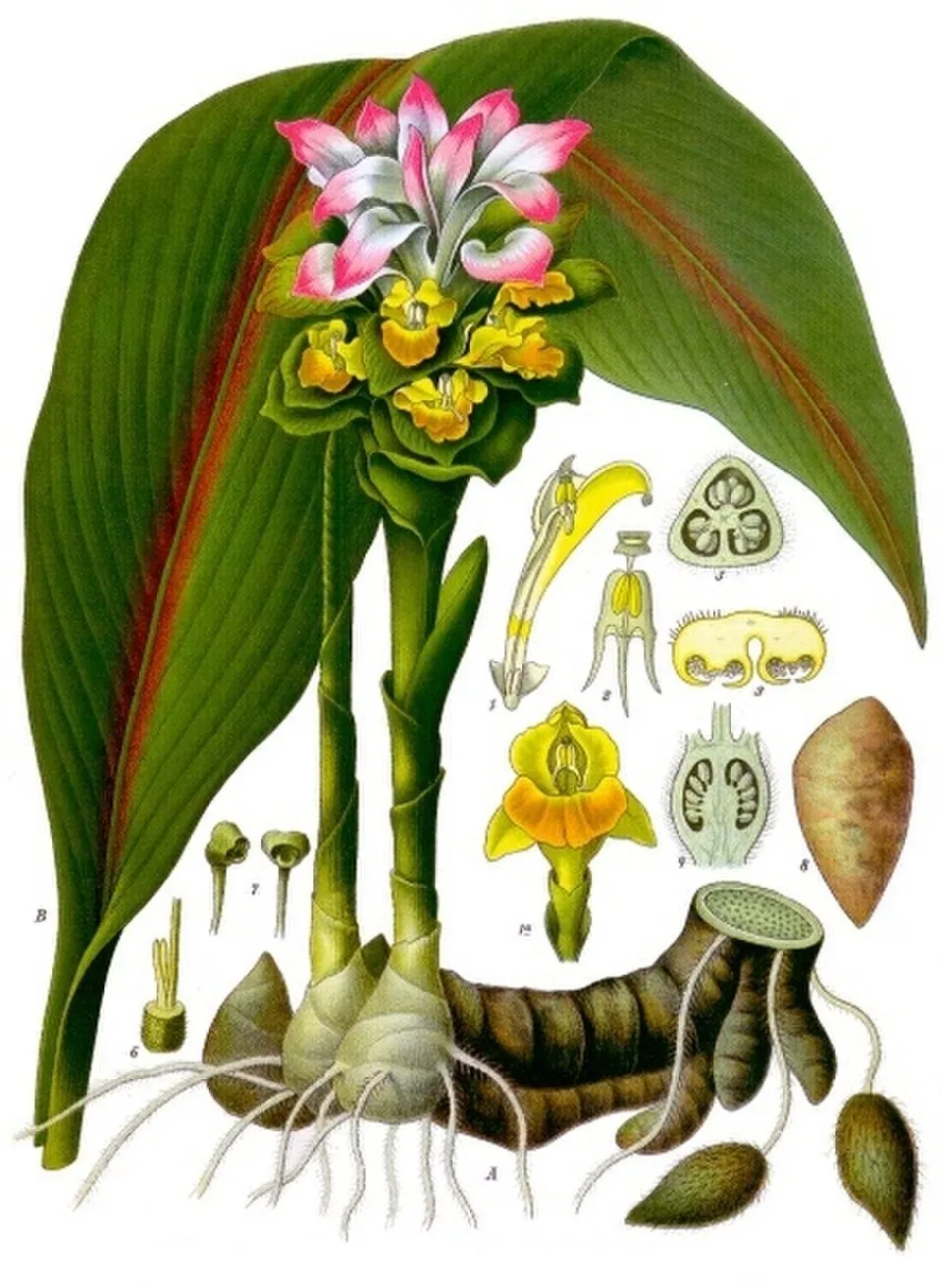
Curcuma zedoaria, widely known as Zedoary or turmeric zedoary, is a distinguished perennial herbaceous plant belonging to the robust ginger family, Zingiberaceae. This impressive species can attain a height of up to 1.5 meters, showcasing large, lanceolate leaves that can measure up to 30 cm in length and 10 cm in width, characterized by their striking glossy green surface. Its captivating inflorescence emerges as dense spikes, adorned with delicate pale yellow to white flowers, each featuring a distinct tubular structure that can extend up to 10 cm.
The plant typically flowers during the monsoon season, adding to its aesthetic allure. The underground rhizome, the most medicinally valued part, is thick and highly aromatic, identifiable by its reddish-brown exterior and pale yellow, sometimes grayish, flesh.
In its native environment, Curcuma zedoaria flourishes across the tropical expanses of Southeast Asia, with significant prevalence in India, Indonesia, and Malaysia. It thrives in moist, well-drained soils, often found in low-lying areas and cultivated in home gardens for its diverse culinary and medicinal applications. Taxonomically, it falls under the order Zingiberales, family Zingiberaceae, and shares a close botanical relationship with the more commonly known turmeric (Curcuma longa).
The fleshy stem lacks the prominent bark texture seen in woody plants, further defining its herbaceous nature. The unique, pungent aroma and distinct rhizome morphology of zedoary set it apart from its relatives within the broader Curcuma genus.
Trusted Scientific References
1. Authoritative external sources for Curcuma zedoaria
1.1 Wikipedia — Curcuma zedoaria
1.2 Kew POWO (Plants of the World Online)
1.3 PubMed — peer-reviewed research
1.4 NCBI Taxonomy Browser
1.5 GBIF — Global Biodiversity
1.6Turmeric Zedoary should be interpreted through verified botanical identity, practical care, and responsible safety language. This recovery note adds the missing context needed for a complete profile: match light to the plant's habit, use well-drained soil, water according to season, and avoid unsupported medicinal or edible claims. For publishing, the plant can be presented as a source-backed medicinal plant with clear care guidance, common problem diagnosis, and conservative safety wording.
1.1.Turmeric Zedoary — Defining Traits
- ✓Common Name — Zedoary, Turmeric Zedoary, White Turmeric.
- ✓Scientific Name — Curcuma zedoaria Rosc.
- ✓Family — Zingiberaceae (Ginger family).
- ✓Plant Type — Perennial herbaceous plant with a robust rhizome.
- ✓Edible Part — Aromatic and pungent underground rhizome.
- ✓Aroma — Distinctly camphoraceous, slightly bitter, and peppery.
- ✓Traditional Uses — Digestive aid, anti-inflammatory, analgesic, blood purifier, carminative.
- ✓Key Constituents — Essential oils (zedoarone, zedoarol, curzerenone), curcuminoids.
- ✓Habitat — Native to tropical Southeast Asia, thriving in moist, well-drained soils.
- ✓Culinary Use — Employed as a spice and flavoring agent in traditional Asian cuisines.
1.2.Turmeric Zedoary — Quick Summary
- ✓Aromatic rhizome from the ginger family, native to tropical Southeast Asia, known as Zedoary or white turmeric.
- ✓Valued for its extensive traditional medicinal uses, particularly in Ayurvedic and Traditional Chinese Medicine.
- ✓Rich in essential oils, unique sesquiterpenes, and curcuminoids, contributing to its diverse therapeutic actions.
- ✓Traditionally used for digestive issues, pain relief, improving blood circulation, and as an anti-inflammatory agent.
- ✓Possesses notable antioxidant, antimicrobial, and preliminary antineoplastic properties, attracting modern research interest.
- ✓Requires careful consideration regarding potential drug interactions and contraindications, especially for pregnant individuals or those with specific medical conditions.
2.Turmeric Zedoary — Taxonomic Classification
3.Turmeric Zedoary — Botanical Stats
4.Turmeric Zedoary — Morphological Account
5.Turmeric Zedoary — Where It Grows
6.Turmeric Zedoary — Ethnobotanical Uses
7.Turmeric Zedoary — Active Compounds
- ✓Curcuminoids — Includes curcumin, demethoxycurcumin, and bisdemethoxycurcumin, known for potent anti-inflammatory and antioxidant activities, though in lower concentrations than Curcuma longa.
- ✓Essential Oils — Comprise compounds like zedoarone, zedoarol, curzerenone, germacrone, and cineole, contributing to the plant's distinctive aroma and exhibiting antimicrobial, anti-inflammatory, and antispasmodic effects.
- ✓Sesquiterpenes — A diverse group including furanodienone, isofuranogermacrene, and curcumenol, responsible for many of zedoary's biological activities, particularly its anti-inflammatory and cytotoxic properties.
- ✓Diterpenes — Compounds such as labdane-type diterpenes contribute to various pharmacological actions, including potential antineoplastic effects observed in vitro.
- ✓Polysaccharides — Contribute to immunomodulatory effects, enhancing the body's natural defense mechanisms and supporting immune cell activity.
- ✓Phenolic Compounds — Act as powerful antioxidants, protecting cells from oxidative damage and contributing to overall cellular health.
- ✓Flavonoids — Contribute to the plant's overall antioxidant and anti-inflammatory capacity, often working synergistically with other phytochemicals.
- ✓Starch — A primary carbohydrate component, providing bulk to the rhizome and serving as an energy reserve for the plant, also influencing texture in culinary applications.
8.Turmeric Zedoary — What Research Suggests
- ✓Digestive Support — Zedoary rhizome traditionally aids digestion by stimulating bile production and enhancing enzymatic activity, helping alleviate bloating, flatulence, and dyspepsia.
- ✓Anti-inflammatory Action — Contains compounds like zedoarol and curcuminoids, which modulate inflammatory pathways, offering relief from various inflammatory conditions.
- ✓Antioxidant Properties — Rich in phenolic compounds and essential oils, Curcuma zedoaria scavenges free radicals, protecting cells from oxidative stress and damage.
- ✓Pain Relief (Analgesic) — Traditionally used as an analgesic, its active constituents may help mitigate pain, including menstrual discomfort and general body aches.
- ✓Antimicrobial Effects — Extracts have demonstrated inhibitory effects against certain bacteria and fungi, contributing to its traditional use in treating infections.
- ✓Potential Antineoplastic Activity — Preliminary research indicates that certain compounds in zedoary may exhibit antiproliferative effects against cancer cells, supporting its historical use in some folk medicines.
- ✓Blood Circulation Enhancement — In traditional systems like TCM, it is valued for its warming qualities that are believed to improve blood flow, which can alleviate conditions like menstrual pain.
- ✓Gastrointestinal Health — Beyond digestion, Curcuma zedoaria can soothe irritated gastrointestinal lining, contributing to overall gut health and integrity.
- ✓Respiratory Support — Some traditional uses point to its efficacy in addressing respiratory issues, possibly due to its expectorant properties that help clear congestion.
- ✓Liver Protection — Certain compounds within zedoary may support liver function and protect liver cells from damage, aiding in the body's natural detoxification processes.
8.1.Turmeric Zedoary — Therapeutic Indications
9.Turmeric Zedoary — Risk Profile
9.1.Turmeric Zedoary — Reported Side Effects
- ✓Gastrointestinal Upset — May cause mild stomach discomfort, nausea, or diarrhea in sensitive individuals, especially when consumed in high doses or on an empty stomach.
- ✓Allergic Reactions — Rare cases of skin rash, itching, or swelling have been reported in individuals sensitive to plants within the ginger family (Zingiberaceae).
- ✓Blood Thinning — High doses might theoretically increase the risk of bleeding, particularly in individuals on anticoagulant medications, due to potential antiplatelet effects.
- ✓Hypoglycemia — Could potentially lower blood sugar levels, requiring caution for diabetic individuals already on medication for blood glucose control.
- ✓Gallbladder Issues — May stimulate bile flow, which could be problematic for individuals with gallstones or pre-existing bile duct obstruction, potentially exacerbating symptoms.
- ✓Uterine Contractions — In extremely high doses, or in sensitive individuals, it might stimulate uterine contractions, making it potentially unsafe during pregnancy.
9.2.Turmeric Zedoary — Risk Assessment
- ✓Pregnancy and Lactation — Generally not recommended during pregnancy due to potential uterine stimulating effects; consult a healthcare professional before use during lactation.
- ✓Gallbladder Conditions — Individuals with gallstones or bile duct obstruction should avoid zedoary or use it under strict medical supervision due to its bile-stimulating properties.
- ✓Bleeding Disorders and Surgery — Discontinue use at least two weeks before scheduled surgery or dental procedures due to potential anticoagulant effects. Use with caution if you have bleeding disorders.
- ✓Diabetes — Monitor blood glucose levels closely if diabetic and using zedoary, as it may potentially lower blood sugar, necessitating dosage adjustments of antidiabetic medications.
- ✓Drug Interactions — May interact with anticoagulant/antiplatelet drugs (e.g., warfarin, aspirin), antidiabetic medications, and drugs metabolized by the liver's cytochrome P450 (CYP450) enzymes.
- ✓Children — Use in children should be with caution and only under professional medical guidance due to insufficient safety and dosage data in pediatric populations.
- ✓Dosage — Always adhere to recommended dosages from qualified healthcare practitioners or product labels; excessive intake may significantly increase the risk of adverse effects.
10.Turmeric Zedoary — Application Forms
- ✓Decoction — Dried or fresh rhizome slices are simmered in water for 10-15 minutes to extract water-soluble compounds, commonly consumed as a warm tea for digestive issues.
- ✓Powder — Dried rhizomes are ground into a fine powder, which can be encapsulated, mixed with honey or other foods, or prepared as a traditional herbal tea.
- ✓Tincture — Fresh or dried rhizomes are macerated in a mixture of alcohol and water for several weeks, creating a concentrated liquid extract for internal use, typically dosed in drops.
- ✓Essential Oil — Extracted through steam distillation of the rhizome, the essential oil is used topically (always diluted in a carrier oil) or in aromatherapy for its aromatic and therapeutic properties.
- ✓Poultice — Fresh rhizomes are crushed or grated and applied externally as a poultice to reduce localized inflammation, swelling, or pain.
- ✓Culinary Spice — Fresh or dried zedoary is used as a spice in various Southeast Asian cuisines, imparting a unique bitter, camphoraceous, and peppery flavor to curries and savory dishes.
- ✓Infused Oil — Rhizomes can be infused into carrier oils like coconut or sesame oil over low heat for several hours, creating a topical oil for massage, particularly for muscle aches or joint discomfort.
11.Turmeric Zedoary — Propagation & Care
- ✓Climate — Thrives in tropical and subtropical climates with high humidity and consistent warmth, ideally between 20-35°C.
- ✓Soil Requirements — Prefers well-drained, fertile, loamy soils rich in organic matter with a slightly acidic to neutral pH, typically between 6.0 and 7.5.
- ✓Propagation — Primarily propagated through rhizome cuttings; small pieces, each containing at least one healthy bud, are planted directly into the soil.
- ✓Planting Depth and Spacing — Rhizome pieces are typically planted 5-7 cm deep and spaced about 25-30 cm apart to allow for proper growth and rhizome development.
- ✓Watering — Requires consistent moisture, especially during the active growing season, but good drainage is crucial to prevent waterlogging and rhizome rot.
- ✓Sunlight — Prefers partial shade to full sun, with optimal growth often observed in areas receiving 4-6 hours of direct sunlight daily, protected from intense midday sun.
- ✓Fertilization — Benefits from regular applications of organic compost or balanced, slow-release fertilizers to support vigorous rhizome and foliage development.
- ✓Harvesting — Rhizomes are typically ready for harvest 8-10 months after planting, usually when the aerial parts of the plant, such as the leaves, begin to yellow and dry.
Reviewed by the Flora Medical Global Botanical Review Panel
Multi-disciplinary editorial group · Botany · Ethnobotany · Herbal-medicine literature
Who reviewed this: This page was checked by the Flora Medical Global Botanical Review Panel — an in-house editorial group of botany graduates, ethnobotany researchers, and horticulture practitioners who collectively maintain our 7,000+ plant encyclopedia. Meet the team.
Our 4-step verification process
1. Taxonomic verification
Scientific names and synonyms cross-checked against Kew POWO, World Flora Online, and The Plant List.
2. Phytochemical & medicinal cross-reference
Active compounds, traditional uses, and reported activities are cross-referenced with PubMed, USDA Dr. Duke's database, and peer-reviewed ethnobotanical literature.
3. Conservation & distribution check
Distribution, ecology, and conservation status confirmed against GBIF occurrence records and the IUCN Red List.
4. Editorial & safety review
Every entry passes an editorial pass for clarity, originality, and safety notices (toxicity, contraindications, dosage caveats) before publication.
Last reviewed:
Important medical disclaimer: This content is for educational and research purposes only. It is not medical advice and is not a substitute for consultation with a licensed healthcare provider. Do not use any herb to self-treat a medical condition without professional guidance.
Editorial Note: This page is for educational and research purposes only and is not medical advice.
Written by: Flora Medical Global Editorial Team
Reviewed by: Flora Medical Global Botanical Review Panel
Last Updated: June 16, 2026





Turmeric Zedoary — Comments & Community Reviews
Rate this plant