


Medical Disclaimer: This content is for educational purposes only. It is not medical advice. Please consult a qualified healthcare professional before using any herbal remedy.
Safety Overview
1.Vriddhadaru — Plant Snapshot
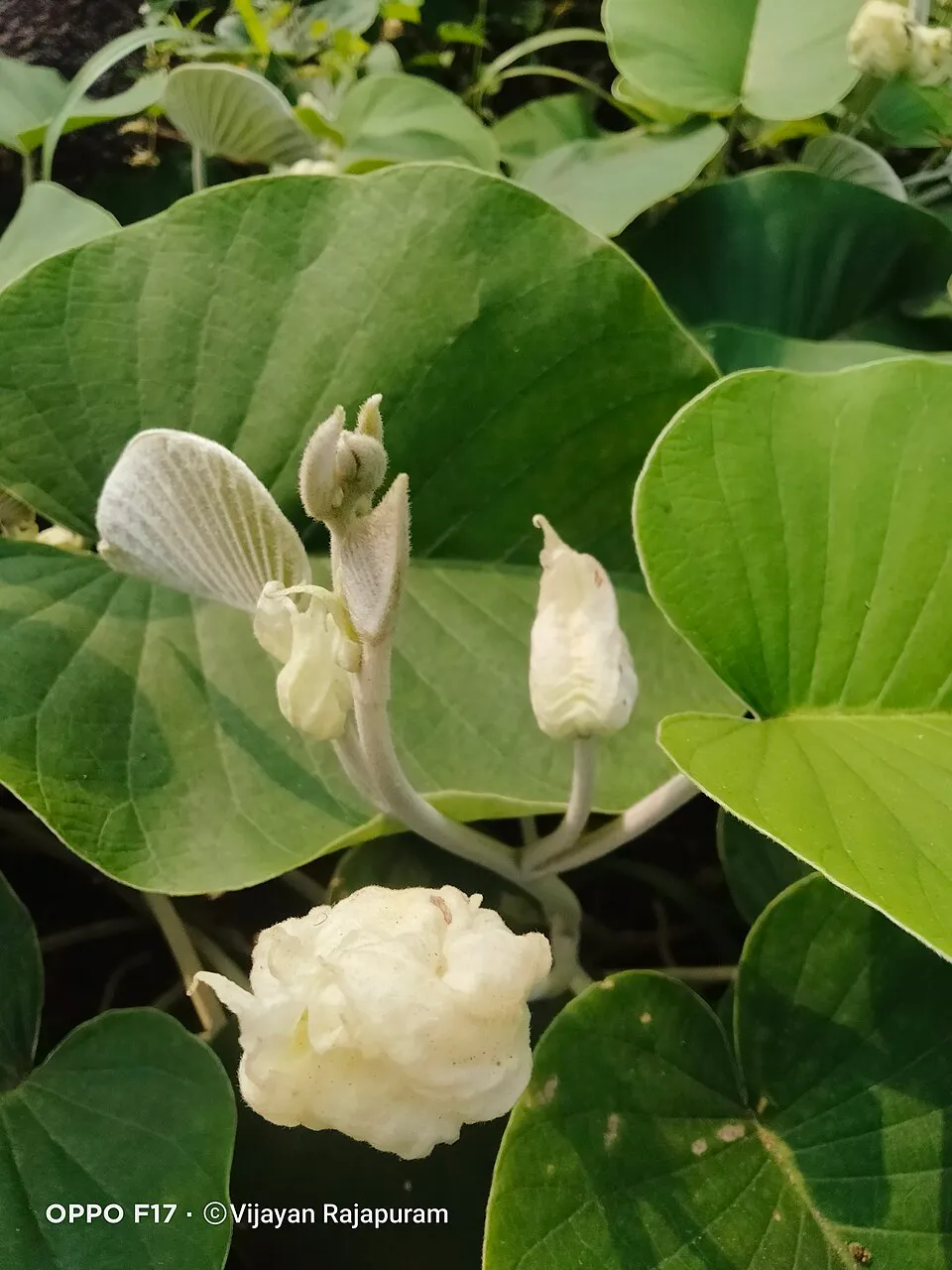
Argyreia nervosa, commonly known as Vriddhadaru or the Elephant Creeper, is a perennial climbing plant that can reach heights of up to 15 meters (approximately 50 feet). The leaves are heart-shaped, measuring between 10 to 20 cm long, with a smooth, glossy texture and a vibrant dark green coloration. In the summer months, the plant produces beautiful, bell-shaped flowers that are typically pale pink to purple in color, measuring around 4-5 cm in diameter. The flowering occurs in clusters, attracting various pollinators.
The stems of Argyreia nervosa are sturdy with a somewhat woody texture, twining around supports as it grows. This species thrives in tropical habitats, predominantly found in India, Sri Lanka, and other parts of Southeast Asia in forest margins, open grasslands, and disturbed areas. Taxonomically, it belongs to the Convolvulaceae family, which includes morning glories and bindweeds. The plant contains psychoactive compounds, primarily the alkaloids, such as lysergic acid amide (LSA), which has been linked to various traditional medicinal uses.
Historically, Vriddhadaru has been utilized in Ayurveda for its analgesic and anti-inflammatory properties, especially in the treatment of joint pains and nerve-related issues. Its extensive climbing nature and striking flowers also render it an ornamental option in gardening, although care should be taken due to its vigorous growth habit.
Trusted Scientific References
1. Authoritative external sources for Argyreia nervosa
1.1 Wikipedia — Argyreia nervosa
1.2 Kew POWO (Plants of the World Online)
1.3 PubMed — peer-reviewed research
1.4 NCBI Taxonomy Browser
1.5 GBIF — Global Biodiversity
1.6Vriddhadaru should be interpreted through verified botanical identity, practical care, and responsible safety language. This recovery note adds the missing context needed for a complete profile: match light to the plant's habit, use well-drained soil, water according to season, and avoid unsupported medicinal or edible claims. For publishing, the plant can be presented as a source-backed medicinal plant with clear care guidance, common problem diagnosis, and conservative safety wording.
1.1.Vriddhadaru — Defining Traits
- ✓Height — Typically grows up to 15 meters (50 feet).
- ✓Leaves — Heart-shaped, 10 to 20 cm long, smooth and glossy.
- ✓Flowers — Bell-shaped, pale pink to purple, 4 to 5 cm in diameter.
- ✓Stems — Sturdy with a woody texture, twining growth habit.
- ✓Habitat — Thrives in tropical regions, particularly in forest margins.
- ✓Alkaloids — Contains psychoactive compounds including LSA.
- ✓Medicinal Use — Traditionally used for pain relief and neural disorders.
- ✓Ornamental Value — Attractive flowers provide aesthetic appeal in gardens.
1.2.Vriddhadaru — Quick Summary
- ✓Argyreia nervosa, or Vriddhadaru, is a climbing perennial native to tropical regions like India and Sri Lanka.
- ✓Characterized by its heart-shaped leaves and striking bell-shaped flowers ranging from pale pink to purple, it can grow up to 15 meters in height.
- ✓Used traditionally in Ayurvedic and Chinese medicine, it offers analgesic and anti-inflammatory properties, primarily due to its alkaloid content.
- ✓While its psychoactive effects add to its traditional applications, care should be taken in usage due to potential side effects.
- ✓Thriving in well-drained, fertile soils, it requires moderate care, making it an attractive choice both for medicinal use and as an ornamental plant in tropical gardens.
2.Vriddhadaru — Systematic Position
3.Vriddhadaru — Botanical Stats
4.Vriddhadaru — Structural Profile
5.Vriddhadaru — Where It Grows
6.Vriddhadaru — Historical Applications
7.Vriddhadaru — Secondary Metabolites
- ✓Ergoline Alkaloids — Lysergic acid amide (LSA) and related ergoline derivatives are the primary psychoactive compounds found in the seeds, responsible for the plant's traditional use in spiritual practices.
- ✓Flavonoids — Including quercetin and kaempferol glycosides, these contribute to antioxidant and anti-inflammatory properties of the plant extracts.
- ✓Phenolic Compounds — Various phenolic acids are present, providing free radical scavenging activity and supporting cellular protection.
- ✓Saponins — Triterpenoid saponins contribute to the plant's adaptogenic and immunomodulatory properties.
- ✓Steroids — Phytosterols are present in the root and leaf extracts, contributing to the plant's tonic effects in traditional medicine.
- ✓Glycosides — Cardiac and cyanogenic glycosides have been identified, which require careful dosing in traditional preparations.
- ✓Tannins — Present in significant quantities, tannins contribute to the astringent properties and antimicrobial activity of the plant.
8.Vriddhadaru — Modern Studies
- ✓The traditional uses of Argyreia nervosa in Ayurvedic medicine are broad and well-documented.
- ✓It is primarily known for its analgesic properties, being used to alleviate joint pains, muscle spasms, and nerve discomfort.
- ✓The leaves, roots, and seeds are brewed into infusions and pastes, targeting inflammatory conditions effectively.
- ✓In Ayurvedic practices, the roots are often used in conjunction with other herbs to create balms that are applied topically to soothe pain.
- ✓Furthermore, the psychoactive effects of LSA are believed to contribute to its use in spiritual and healing rituals, promoting a sense of well-being and mental clarity.
- ✓In Traditional Chinese Medicine (TCM), it is sometimes utilized as a tonic for enhancing energy levels and combating fatigue.
- ✓However, caution is advised when using this plant due to the potential for adverse effects, particularly with overconsumption of the seeds, which can lead to nausea or other digestive disturbances.
- ✓Comprehensive research into its safety profile is necessary, as the varying concentrations of its chemical constituents can impact individual responses.
8.1.Vriddhadaru — Therapeutic Indications
9.Vriddhadaru — Risk Profile
9.1.Vriddhadaru — Warnings
- ✓S, but not all antipsychotics are likely to produce such effects. Many of these drugs may also be effective against nausea, emesis, and pruritus.
- ✓Medical Subject Headings (MeSH)
9.2.Vriddhadaru — Clinical Safety Notes
- ✓S
- ✓[\\
- ✓\\
- ✓](https://pubchem.ncbi.nlm.nih.gov/compound/Lysergol
10.Vriddhadaru — Application Forms
- ✓S in the traditional medicine of India
- ✓\[ [edit](https — //en.wikipedia.org/w/index.php?title=Argyreia_nervosa&action=edit§ion=9 "Edit section: Uses in the traditional medicine of India")\]
- ✓While he does not claim there to be any evidence for the use of the seeds of A. nervosa as a traditional entheogen in its native India, [Christian Rätsch](https://en.wikipedia.org/wiki/Christian_R%C3%A4tsch "Christian Rätsch") does describe some interesting traditional uses of the [root](https://en.wikipedia.org/wiki/Root "Root") of the plant in [Ayurveda](https://en.wikipedia.org/wiki/Ayurveda "Ayurv
11.Vriddhadaru — Growing Guide
- ✓\[ [edit](https — //en.wikipedia.org/w/index.php?title=Argyreia_nervosa&action=edit§ion=2 "Edit section: Cultivation")\]
- ✓Where temperatures fall below 13 °C (55 °F), Argyreia nervosa is grown in a warm [greenhouse](https://en.wikipedia.org/wiki/Greenhouse "Greenhouse"). Elsewhere, it is grown on arbours, [pergolas](https://en.wikipedia.org/wiki/Pergola "Pergola"), walls, or trees. It is often grown professionally under glass in a [loam](https://en.wikipedia.org/wiki/Loam "Loam")-based potting compost ( [John Innes](https://en.wikipedia.org/wiki/JohnInnescompost "John Innes compost") No. 3) in full light, and watered freely from spring to autumn, with a balanced liquid fertilizer applied monthly and reduced water in winter. It is grown outdoors in moderately fertile, moist but well
Reviewed by the Flora Medical Global Botanical Review Panel
Multi-disciplinary editorial group · Botany · Ethnobotany · Herbal-medicine literature
Who reviewed this: This page was checked by the Flora Medical Global Botanical Review Panel — an in-house editorial group of botany graduates, ethnobotany researchers, and horticulture practitioners who collectively maintain our 7,000+ plant encyclopedia. Meet the team.
Our 4-step verification process
1. Taxonomic verification
Scientific names and synonyms cross-checked against Kew POWO, World Flora Online, and The Plant List.
2. Phytochemical & medicinal cross-reference
Active compounds, traditional uses, and reported activities are cross-referenced with PubMed, USDA Dr. Duke's database, and peer-reviewed ethnobotanical literature.
3. Conservation & distribution check
Distribution, ecology, and conservation status confirmed against GBIF occurrence records and the IUCN Red List.
4. Editorial & safety review
Every entry passes an editorial pass for clarity, originality, and safety notices (toxicity, contraindications, dosage caveats) before publication.
Last reviewed:
Important medical disclaimer: This content is for educational and research purposes only. It is not medical advice and is not a substitute for consultation with a licensed healthcare provider. Do not use any herb to self-treat a medical condition without professional guidance.
Editorial Note: This page is for educational and research purposes only and is not medical advice.
Written by: Flora Medical Global Editorial Team
Reviewed by: Flora Medical Global Botanical Review Panel
Last Updated: June 16, 2026





Vriddhadaru — Comments & Community Reviews
Rate this plant