
Medical Disclaimer: This content is for educational purposes only. It is not medical advice. Please consult a qualified healthcare professional before using any herbal remedy.
Safety Overview
1.Water Mint — Overview
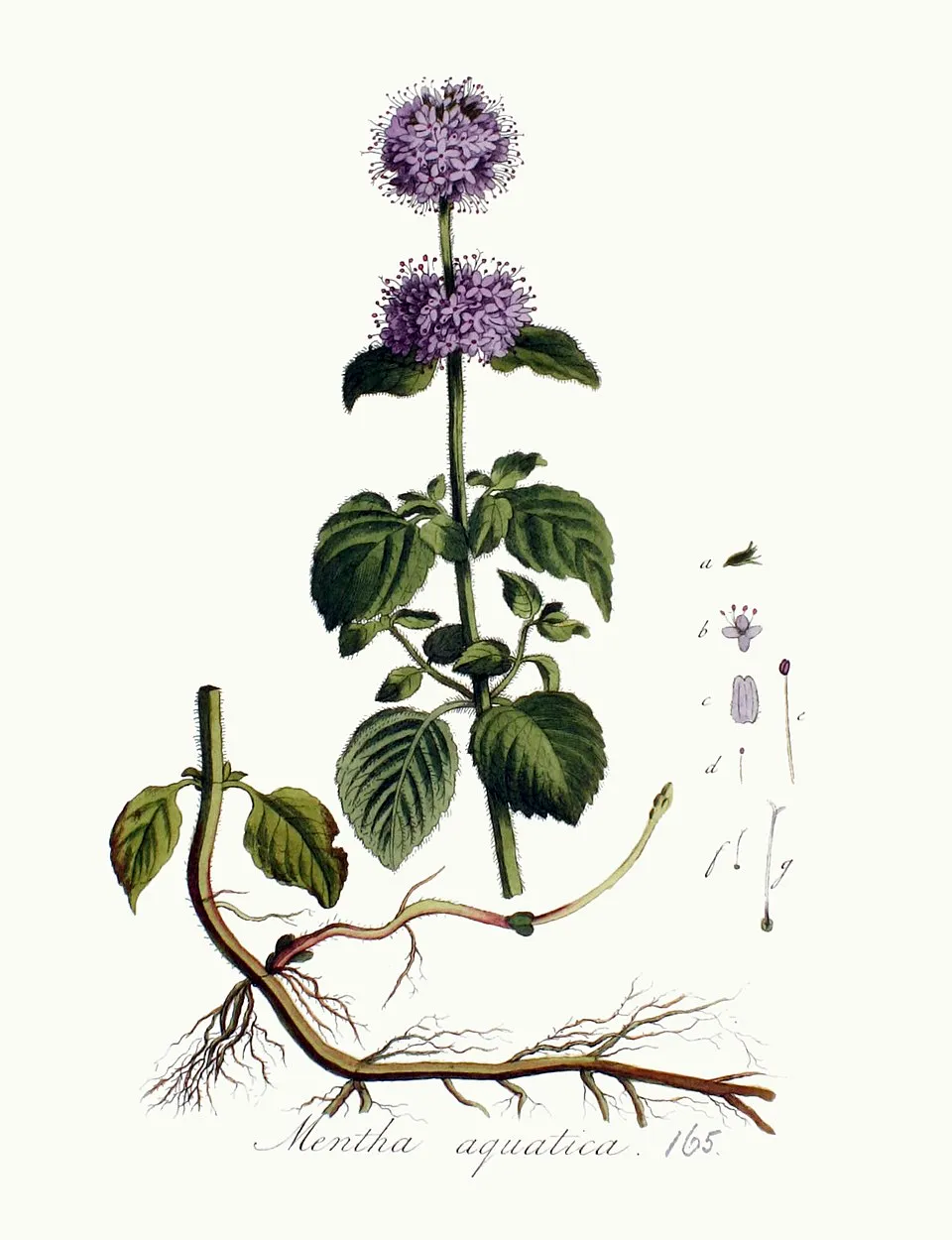
Water Mint (Mentha aquatica) is a captivating perennial herb, typically growing 30 to 100 cm in height, characterized by its robust, often hairy, square stems—a feature that helps distinguish it from other mint species. Its leaves are ovate to lanceolate, measuring 4 to 8 cm in length, with a smooth edge and a rich green hue accented by darker veins, contributing to their appealing appearance.
When crushed, these leaves release a distinctly refreshing mint aroma, making the plant desirable for both culinary and medicinal applications. Small, tubular flowers, ranging from pale lilac to pink, form dense clusters that bloom from mid to late summer, actively attracting a diverse array of pollinators such as bees and butterflies.
This species thrives in consistently moist to wet environments, commonly found in marshes, along riverbanks, and beside ponds across Europe, Asia, and parts of North America. As a member of the Lamiaceae family and the Mentha genus, Water Mint shares aromatic and therapeutic qualities with its relatives. It prefers rich, damp soil and can tolerate partial shade, though it reaches its full potential in full sun.
The stems often feel sticky to the touch due to surface oils, and the plant spreads vigorously through rhizomes, forming lush growth in suitable conditions. The entire plant, especially its aerial parts during the flowering phase when the aroma is most potent, is harvested for its valuable essential oils.
Trusted Scientific References
1. Authoritative external sources for Mentha aquatica
1.1 Wikipedia — Mentha aquatica
1.2 Kew POWO (Plants of the World Online)
1.3 PubMed — peer-reviewed research
1.4 NCBI Taxonomy Browser
1.5 GBIF — Global Biodiversity
1.6Water Mint should be interpreted through verified botanical identity, practical care, and responsible safety language. This recovery note adds the missing context needed for a complete profile: match light to the plant's habit, use well-drained soil, water according to season, and avoid unsupported medicinal or edible claims. For publishing, the plant can be presented as a source-backed medicinal plant with clear care guidance, common problem diagnosis, and conservative safety wording.
1.1.Water Mint — Defining Traits
- ✓Distinctive Aromatic Profile — Emits a refreshing, unique mint aroma, often described as milder and more aquatic than peppermint.
- ✓Aquatic Habitat Preference — Uniquely adapted to thrive in wet, marshy, or waterlogged conditions, distinguishing it from most other mints.
- ✓Traditional Ayurvedic Herb — Known as Jala Pudina, it is historically prized for its ability to balance Pitta dosha due to its cooling properties.
- ✓Rich in Bioactive Compounds — Contains a notable concentration of menthol, menthyl acetate, rosmarinic acid, luteolin, and apigenin.
- ✓Versatile Medicinal Applications — Utilized for a wide range of health benefits, including digestive, respiratory, skin, and anti-inflammatory support.
- ✓Perennial and Vigorous Grower — A robust plant that spreads readily via rhizomes, forming dense mats in suitable growing conditions.
- ✓Attracts Pollinators — Its dense clusters of small, pale lilac to pink flowers are highly attractive to bees, butterflies, and other beneficial insects.
- ✓Historical European and Asian Use — Documented in ancient texts by Dioscorides, Ibn al-Baytar, and continued use in Unani and various European folk medicine traditions.
- ✓Natural Cooling Agent — Provides a noticeable cooling sensation, making it valuable for alleviating heat-related discomforts and imbalances.
- ✓Potential for Culinary Use — Its unique minty flavor makes it a refreshing addition to beverages, salads, and a variety of culinary creations.
1.2.Water Mint — Snapshot Summary
- ✓Water Mint (Mentha aquatica) is a perennial, aromatic herb thriving in moist environments across temperate regions.
- ✓Revered in traditional systems like Ayurveda as 'Jala Pudina' for its cooling energetics and profound digestive support.
- ✓Contains key bioactive compounds such as menthol, rosmarinic acid, and various flavonoids, contributing to its therapeutic profile.
- ✓Offers diverse medicinal benefits, including aiding digestion, soothing respiratory discomfort, calming skin irritations, and exhibiting antimicrobial action.
- ✓Available in various forms like teas, tinctures, and essential oils, but requires careful dosing and adherence to safety guidelines.
- ✓Modern scientific research increasingly supports its antioxidant, anti-inflammatory, and antimicrobial potential, though further human clinical trials are ongoing.
2.Water Mint — Scientific Profile
3.Water Mint — Botanical Stats
4.Water Mint — Plant Morphology
5.Water Mint — Where It Grows
6.Water Mint — Ethnobotanical Uses
7.Water Mint — Bioactive Constituents
- ✓Monoterpenoids — Menthol and menthone are primary components, with menthol conferring the characteristic cooling sensation, aiding respiratory comfort, and contributing to antispasmodic effects.
- ✓Esters — Menthyl acetate, a less volatile ester, is crucial for the plant's anti-inflammatory and antispasmodic actions, particularly within the digestive tract.
- ✓Polyphenols — Rosmarinic acid, a potent antioxidant polyphenol, exhibits significant anti-allergy and anti-inflammatory activities, protecting cells from oxidative stress.
- ✓Flavonoids — Luteolin and apigenin are present, functioning as free radical scavengers and modulating signaling pathways involved in inflammatory responses.
- ✓Phenolic Acids — Beyond rosmarinic acid, other phenolic acids contribute to the plant's overall antioxidant capacity and protective effects.
- ✓Terpenoids — Thymol and cineole are minor but significant constituents in the essential oil, exhibiting mild antimicrobial and notable carminative properties.
- ✓Volatile Oils — The complex blend of essential oil components, including menthol, menthone, and menthyl acetate, is responsible for the plant's distinctive aroma and many of its therapeutic actions.
- ✓Sesquiterpenes — While present in smaller quantities, these compounds contribute to the overall aromatic profile and subtle medicinal effects of Water Mint.
8.Water Mint — What Research Suggests
- ✓Digestive Support — Water Mint's carminative action helps alleviate bloating, gas, and abdominal discomfort, with studies showing significant reduction in pain for functional dyspepsia.
- ✓Respiratory Comfort — Menthol-rich vapors from Water Mint essential oil can effectively relieve nasal congestion, improve nasal airflow, and reduce the intensity of coughs.
- ✓Skin Soothing — Topical applications of crushed Water Mint leaves or diluted oil are traditionally used to calm dermatitis, reduce redness, and inhibit inflammatory markers associated with eczema.
- ✓Antimicrobial Effects — Laboratory tests indicate that Mentha aquatica essential oil can inhibit the growth of bacteria like Staphylococcus aureus and fungi such as Candida albicans, attributed to compounds like thymol and cineole.
- ✓Antioxidant Activity — Rich in rosmarinic acid and various flavonoids, Water Mint actively scavenges reactive oxygen species, offering protection against oxidative damage at a cellular level.
- ✓Menstrual Cramp Relief — Traditional Unani and Ayurvedic practices utilize Water Mint tea to ease dysmenorrhea, with pilot studies suggesting a reduction in pain severity.
- ✓Cognitive Refreshment — The invigorating aroma of Water Mint is anecdotally known to enhance alertness and mental clarity, providing a subtle cognitive boost.
- ✓Pitta Dosha Pacification — In Ayurveda, Water Mint, known as Jala Pudina, is highly valued for its cooling energetics (rasa) and soothing virya, which effectively pacify excessive Pitta dosha in the body.
- ✓Anti-inflammatory Action — Menthyl acetate, rosmarinic acid, and flavonoids contribute to its anti-inflammatory properties, potentially inhibiting pro-inflammatory cytokines and reducing colon damage in models of colitis.
- ✓Antispasmodic Properties — The essential oil components, particularly menthol and menthyl acetate, help relax smooth muscles, making it effective in calming gastrointestinal spasms and discomfort.
8.1.Water Mint — Health Applications
9.Water Mint — Precautions & Warnings
9.1.Water Mint — Reported Side Effects
- ✓Gastrointestinal Upset — Overconsumption, particularly of strong infusions or essential oil, may lead to heartburn or acid reflux by relaxing the lower esophageal sphincter.
- ✓Allergic Reactions — Rare instances of contact dermatitis have been reported from topical applications; always perform a patch test before widespread use.
- ✓Oral Irritation — Highly concentrated forms, especially essential oil, can cause mild irritation or burning sensation in the mouth or throat if ingested directly.
- ✓Skin Sensitivity — Undiluted essential oil can cause skin irritation, redness, or sensitization in sensitive individuals.
- ✓Nausea/Vomiting — Extremely high doses of Water Mint, especially its essential oil, may induce nausea or vomiting.
- ✓Heartburn Exacerbation — Individuals with pre-existing gastroesophageal reflux disease (GERD) might find that strong mint teas exacerbate their symptoms.
9.2.Water Mint — Clinical Safety Notes
- ✓Pregnancy/Nursing — Pregnant and nursing women should avoid high doses of Water Mint, especially the essential oil, as menthol may cross the placenta and potential effects are not fully studied.
- ✓Children — For children under six, only mild infusions in very low amounts are recommended; essential oil ingestion is contraindicated in infants and young children.
- ✓Drug Interactions — Menthol may potentially interfere with antacid medications and alter drug absorption; caution is advised if taking proton-pump inhibitors or other medications.
- ✓Contraindications — Avoid use in individuals with peptic ulcer disease, bile duct obstruction, or severe gastroesophageal reflux, as cooling herbs can sometimes aggravate these conditions.
- ✓Patch Test — Always conduct a patch test on a small skin area before topical application to check for any allergic reactions or sensitivities.
- ✓Professional Consultation — It is highly recommended to consult a qualified healthcare practitioner before using Mentha aquatica extensively, particularly if you have pre-existing health conditions or are on other medications.
- ✓Discontinue Use — If persistent irritation, allergic reactions, or any other adverse effects occur, discontinue use immediately and seek medical advice.
10.Water Mint — Application Forms
- ✓Herbal Infusion (Tea) — Steep 1-2 teaspoons of dried leaves in a cup of hot water for 5-7 minutes; consume 2-3 cups daily after meals for digestive aid.
- ✓Tincture — Administer 20-30 drops (1 mL) of a 1:5 ratio tincture in 60% ethanol, diluted in water, twice daily for digestive or respiratory support.
- ✓Essential Oil Inhalation — Add 1-2 drops of Water Mint essential oil to steaming water for direct inhalation to relieve nasal congestion and respiratory discomfort.
- ✓Topical Application (Essential Oil) — Dilute Water Mint essential oil to a 1-2% concentration in a suitable carrier oil for localized application to soothe skin irritations; never use undiluted.
- ✓Poultice — Crush fresh Water Mint leaves, optionally mixed with turmeric, and apply directly to the skin to calm irritations, insect bites, or minor inflammations.
- ✓Powder/Capsule — Take 300-500 mg of a standardized extract, once or twice daily, as directed by a healthcare professional.
- ✓Culinary Use — Fresh leaves can be incorporated into salads, beverages, desserts, and savory dishes for a refreshing, unique mint flavor.
- ✓Aromatic Water — Historically used as an aromatic water to freshen breath or as a gentle, cooling body splash.
11.Water Mint — Growing Guide
- ✓Climate — Thrives in temperate zones, requiring abundant water and a mild climate to flourish.
- ✓Soil — Prefers rich, damp, and marshy soils, demonstrating a high tolerance for waterlogged conditions and even standing water.
- ✓Light — Flourishes best in full sun, which maximizes essential oil production, but can also adapt and grow well in partial shade.
- ✓Propagation — Easily propagated through its vigorous rhizomes, division, or stem cuttings, allowing for rapid spread in suitable environments.
- ✓Watering — Requires consistently moist to wet conditions, making it ideal for planting along pond edges, riverbanks, or in bog gardens.
- ✓Harvesting — Aerial parts are typically collected at the early bloom stage, preferably in the morning, when essential oil content is at its peak.
- ✓Pest Management — Generally robust against pests, but regular inspection for common mint issues like rust or spider mites is advisable.
- ✓Container Growing — Can be successfully grown in large, water-retentive containers to control its expansive growth habit.
Reviewed by the Flora Medical Global Botanical Review Panel
Multi-disciplinary editorial group · Botany · Ethnobotany · Herbal-medicine literature
Who reviewed this: This page was checked by the Flora Medical Global Botanical Review Panel — an in-house editorial group of botany graduates, ethnobotany researchers, and horticulture practitioners who collectively maintain our 7,000+ plant encyclopedia. Meet the team.
Our 4-step verification process
1. Taxonomic verification
Scientific names and synonyms cross-checked against Kew POWO, World Flora Online, and The Plant List.
2. Phytochemical & medicinal cross-reference
Active compounds, traditional uses, and reported activities are cross-referenced with PubMed, USDA Dr. Duke's database, and peer-reviewed ethnobotanical literature.
3. Conservation & distribution check
Distribution, ecology, and conservation status confirmed against GBIF occurrence records and the IUCN Red List.
4. Editorial & safety review
Every entry passes an editorial pass for clarity, originality, and safety notices (toxicity, contraindications, dosage caveats) before publication.
Last reviewed:
Important medical disclaimer: This content is for educational and research purposes only. It is not medical advice and is not a substitute for consultation with a licensed healthcare provider. Do not use any herb to self-treat a medical condition without professional guidance.
Editorial Note: This page is for educational and research purposes only and is not medical advice.
Written by: Flora Medical Global Editorial Team
Reviewed by: Flora Medical Global Botanical Review Panel
Last Updated: June 16, 2026





Water Mint — Comments & Community Reviews
Rate this plant