

Medical Disclaimer: This content is for educational purposes only. It is not medical advice. Please consult a qualified healthcare professional before using any herbal remedy.
Safety Overview
1.White Clover — At a Glance
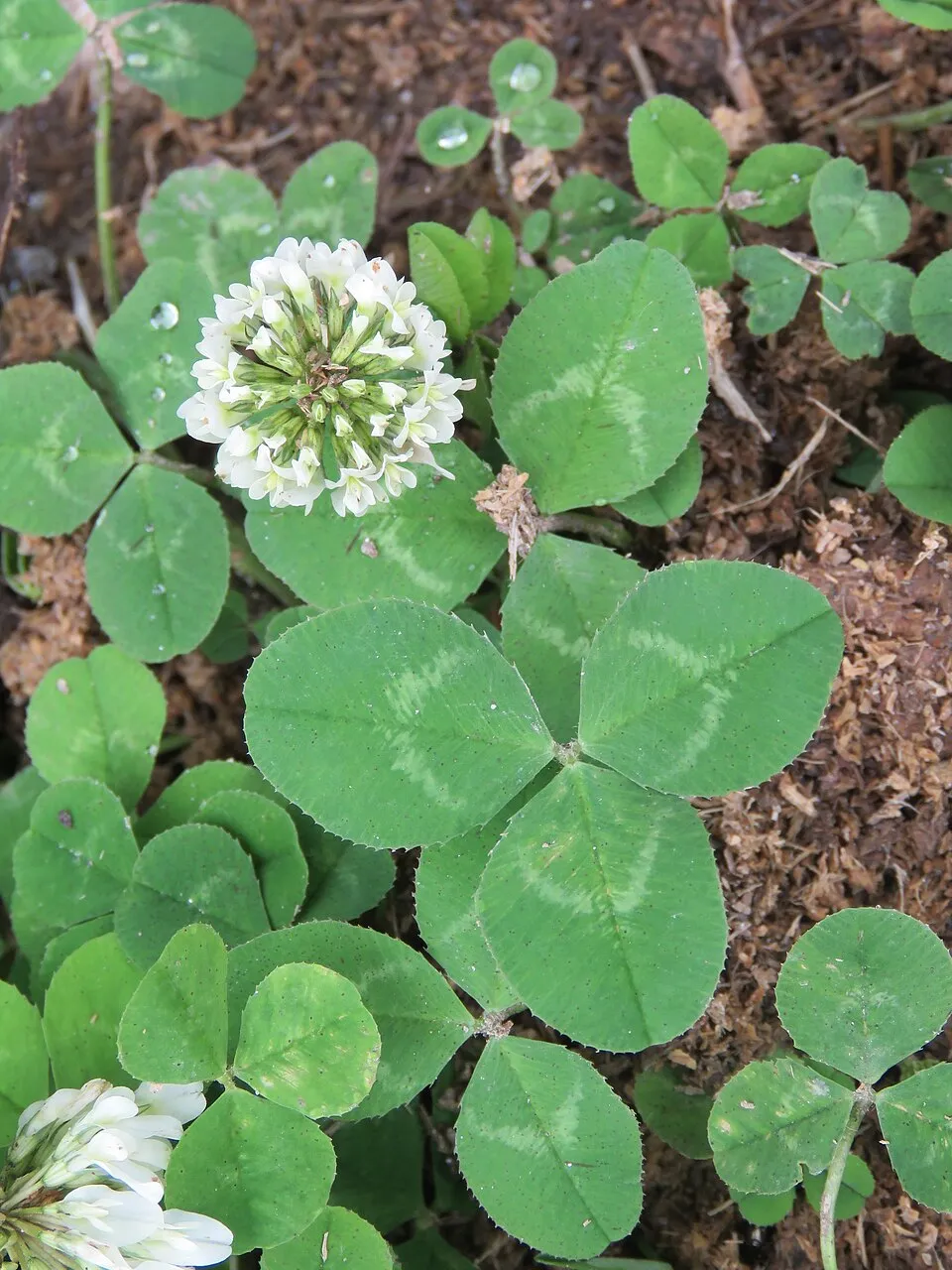
White Clover (Trifolium repens) is a resilient perennial herbaceous plant, typically reaching a modest height of 10 to 30 cm. It is readily identified by its characteristic trifoliate leaves, each leaflet measuring approximately 2 to 5 cm long and often displaying a distinctive white 'V' or crescent mark on its upper surface, sometimes with a glossy texture. The plant produces small, rounded flower heads composed of numerous individual white to pale pink florets, ranging from 40 to 100 or more per cluster, which bloom profusely from late spring through early autumn.
Its slender, creeping stems, known as stolons, spread horizontally along the ground and can root at the nodes, enabling the plant to form dense, mat-like ground cover. This growth habit contributes to its effectiveness in erosion control and its widespread presence in various ecosystems. Trifolium repens is native to Europe and Asia but has achieved a circumboreal distribution, extensively naturalized across North America, Australia, and other temperate regions.
It thrives in diverse soil types, preferring cool, moist climates with ample lime, phosphate, and potash, and is particularly well-adapted to well-drained, acidic to neutral clay and silt soils. As a member of the Fabaceae family, White Clover is renowned for its symbiotic relationship with nitrogen-fixing bacteria (Rhizobium), enriching the soil it inhabits. The abundant florets serve as a vital nectar and pollen source for a wide array of pollinators, including honeybees, contributing significantly to local biodiversity and agricultural ecosystems.
Trusted Scientific References
1. Authoritative external sources for Trifolium repens
1.1 Wikipedia — Trifolium repens
1.2 Kew POWO (Plants of the World Online)
1.3 PubMed — peer-reviewed research
1.4 NCBI Taxonomy Browser
1.5 GBIF — Global Biodiversity
1.6White Clover should be interpreted through verified botanical identity, practical care, and responsible safety language. This recovery note adds the missing context needed for a complete profile: match light to the plant's habit, use well-drained soil, water according to season, and avoid unsupported medicinal or edible claims. For publishing, the plant can be presented as a source-backed medicinal plant with clear care guidance, common problem diagnosis, and conservative safety wording.
1.1.White Clover — Distinguishing Points
- ✓Distinctive trifoliate leaves — Distinctive trifoliate leaves with a white 'V' mark.
- ✓Creeping stoloniferous growth — Creeping stoloniferous growth habit, forming dense mats.
- ✓Small, rounded white — Small, rounded white to pale pink flower heads.
- ✓Member of the nitrogen — fixing Fabaceae family.
- ✓Native to Europe — Native to Europe and Asia, widely naturalized globally.
- ✓Important forage plant — Important forage plant for livestock and wildlife.
- ✓Significant nectar and — Significant nectar and pollen source for pollinators.
- ✓Traditional uses in — Traditional uses in various herbal medicine systems.
- ✓Contains a range — Contains a range of bioactive phytochemicals.
- ✓Adaptable to diverse — Adaptable to diverse soil types and cool, moist climates.
1.2.White Clover — In Brief
- ✓White Clover (Trifolium repens) is a widespread perennial herb known for its trifoliate leaves and white flower heads.
- ✓Traditionally used in TCM and folk medicine for respiratory issues, skin conditions, and detoxification.
- ✓Contains flavonoids, phenolic acids, saponins, and potentially cyanogenic glycosides (chemotype-dependent).
- ✓Offers potential anti-inflammatory, astringent, expectorant, and antioxidant benefits.
- ✓Requires careful consideration regarding consumption due to potential for bloating and cyanogenic compounds.
- ✓Important for ecological health, serving as a nitrogen fixer and pollinator plant.
2.White Clover — Nomenclature & Classification
3.White Clover — Fact Sheet
4.White Clover — Botanical Features
5.White Clover — Native Range & Habitat
6.White Clover — Folk Medicine Applications
7.White Clover — Chemical Profile
- ✓Flavonoids — Key compounds include various flavones and flavonols such as kaempferol and quercetin derivatives, which contribute to its antioxidant and anti-inflammatory activities.
- ✓Phenolic Acids — Contains compounds like caffeic acid and p-coumaric acid, known for their antioxidant and antimicrobial properties, supporting cellular health.
- ✓Cyanogenic Glycosides — Specific chemotypes of Trifolium repens contain linamarin and lotaustralin, which can release hydrogen cyanide upon enzymatic hydrolysis, a factor important for plant defense and animal grazing safety.
- ✓Saponins — Triterpenoid saponins are present, contributing to its expectorant and mild diuretic effects, and potentially influencing foam formation in digestive systems.
- ✓Coumarins — While less prominent than in other clovers, minor amounts of coumarin derivatives may be found, which can have mild anticoagulant properties in some forms.
- ✓Polysaccharides — Complex carbohydrates that contribute to the plant's structural integrity and may possess immunomodulatory effects.
- ✓Volatile Oils — Trace amounts of volatile compounds contribute to the plant's characteristic aroma, particularly noticeable in the flowers, and may have minor antimicrobial action.
- ✓Minerals — Rich in essential minerals such as calcium, potassium, phosphorus, and magnesium, which are vital for various physiological functions in both plants and animals consuming it.
- ✓Vitamins — Contains small quantities of vitamins, including some B vitamins and vitamin C, contributing to its overall nutritional profile as a forage.
8.White Clover — Scientific Evidence
- ✓Expectorant Support — Traditionally, White Clover has been utilized in herbal medicine systems like TCM to help clear respiratory passages by promoting the expulsion of phlegm and mucus, offering relief from coughs.
- ✓Anti-inflammatory Action — The presence of various flavonoids and phenolic compounds contributes to its potential to reduce inflammation, which may be beneficial in soothing irritated tissues.
- ✓Astringent Properties — Its mild astringent qualities make it useful for toning tissues and can be applied topically to minor cuts, scrapes, or skin irritations to aid in healing and provide a protective layer.
- ✓Detoxification Support — In traditional practices, Trifolium repens is believed to 'clear heat' and detoxify the body, suggesting a role in supporting the body's natural cleansing processes.
- ✓Diuretic Effects — White Clover may exhibit mild diuretic properties, assisting the body in expelling excess fluids and supporting kidney function.
- ✓Wound Healing — Applied as a poultice or wash, the plant has been historically used to facilitate the healing of minor wounds and skin lesions, possibly due to its astringent and anti-inflammatory compounds.
- ✓Antioxidant Activity — Rich in antioxidant compounds such as flavonoids, White Clover helps combat oxidative stress and protects cells from damage caused by free radicals.
- ✓Skin Soothing — Its gentle properties can be beneficial for alleviating minor skin irritations, rashes, and insect bites, providing a calming effect when applied externally.
- ✓Digestive Aid — Historically, it has been used in folk medicine to address mild digestive discomfort, though specific mechanisms require further investigation.
- ✓Immunomodulatory Potential — Certain plant constituents, including polysaccharides, may contribute to a supportive effect on the immune system, helping to maintain overall health.
- ✓Mild Antispasmodic — Its traditional use for coughs suggests a mild antispasmodic action, which can help relax the smooth muscles of the respiratory tract and ease coughing spasms.
- ✓Nutritional Enhancement — As a highly nutritious forage plant, it indirectly supports health by enriching the diet of livestock, which in turn benefits human nutrition through food sources.
8.1.White Clover — Health Applications
9.White Clover — Cautions & Contraindications
9.1.White Clover — Side Effects & Warnings
- ✓Bloating — White Clover can cause bloating in livestock, and similarly, excessive human consumption, especially of fresh material, might lead to gastrointestinal discomfort.
- ✓Cyanide Toxicity — Certain chemotypes produce cyanogenic glycosides; large quantities of fresh plant material, if improperly processed or consumed, could theoretically pose a risk of cyanide poisoning.
- ✓Allergic Reactions — Individuals sensitive to plants in the Fabaceae family may experience allergic reactions such as skin rashes or digestive upset.
- ✓Photosensitivity — While less common with White Clover than some other clovers, some individuals might experience increased skin sensitivity to sunlight.
- ✓Digestive Upset — Overconsumption can lead to mild digestive disturbances, including nausea or diarrhea, particularly in sensitive individuals.
- ✓Drug Interactions — Potential interactions with anticoagulant medications due to trace coumarins, although this is generally considered a low risk with White Clover.
9.2.White Clover — Toxicity Assessment
- ✓Pregnancy and Lactation — Due to limited research, pregnant and breastfeeding individuals should exercise caution and consult a healthcare professional before use.
- ✓Children — Use in children should be approached with caution and under professional guidance, especially concerning the potential for cyanogenic glycosides.
- ✓Pre-existing Conditions — Individuals with bleeding disorders or those on anticoagulant medications should consult a doctor due to the theoretical presence of coumarins.
- ✓Allergic Sensitivities — People with known allergies to legumes or other members of the Fabaceae family should avoid White Clover to prevent adverse reactions.
- ✓Proper Preparation — Ensure proper drying and processing for internal use, as fresh, unprocessed plant material, particularly in large quantities, may contain higher levels of cyanogenic glycosides.
- ✓Dosage — Adhere to recommended dosages for herbal preparations; excessive consumption can increase the risk of side effects.
- ✓Identification — Ensure correct plant identification; misidentification with other plants could lead to unintended effects.
10.White Clover — Preparation Methods
- ✓Herbal Infusion (Tea) — Dried or fresh leaves and flowers can be steeped in hot water to create a tea, traditionally consumed for respiratory issues and general detoxification.
- ✓Topical Poultice — Freshly crushed White Clover leaves and flowers can be applied directly to minor cuts, scrapes, insect bites, or skin irritations to utilize its astringent and anti-inflammatory properties.
- ✓Tincture — A concentrated liquid extract made by steeping the plant material in alcohol, offering a convenient way to administer its medicinal compounds internally.
- ✓Herbal Compress — A cloth soaked in a strong White Clover infusion can be applied to inflamed or irritated skin areas for soothing relief.
- ✓Salve or Ointment — Infused oil made from White Clover can be incorporated into salves for topical application, providing a protective and healing balm for skin.
- ✓Culinary Use (Minor) — Young leaves can be added in small quantities to salads or smoothies, offering a mild, slightly sweet flavor and some nutritional value, though not a primary food source.
- ✓Herbal Bath — Adding a strong infusion of White Clover to bathwater can help soothe widespread skin irritations or provide a relaxing herbal soak.
11.White Clover — Garden Cultivation
- ✓Climate Preference — Thrives in cool, moist climates, making it well-suited for temperate regions.
- ✓Soil Requirements — Prefers well-drained, fertile soils with ample lime, phosphate, and potash; adapts well to clay and silt, and sandy soils with adequate moisture.
- ✓Seeding Rate — For solid stands, typically 4 pounds PLS (Pure Live Seed) per acre; for grass/legume mixtures, 1 pound PLS per acre is recommended.
- ✓Seed Inoculation — Seeds should be inoculated with the correct Rhizobium bacteria before planting to facilitate nitrogen fixation.
- ✓Planting Depth — Optimal seeding depth is shallow, between 1/8 to 1/4 inch, to ensure proper germination and establishment.
- ✓Seeding Time — Best planted in early spring (April to mid-May) or late summer/early fall in irrigated areas, ensuring at least six weeks of growth before freezing temperatures.
- ✓Management Practices — Benefits from rotational grazing to maintain clover percentage in pastures and prevent overgrazing, which can reduce its vigor.
- ✓Fertilizer Needs — Requires adequate phosphorus, potassium, and sulfur; nitrogen application should be limited in grass-legume mixes to avoid suppressing clover growth.
Reviewed by the Flora Medical Global Botanical Review Panel
Multi-disciplinary editorial group · Botany · Ethnobotany · Herbal-medicine literature
Who reviewed this: This page was checked by the Flora Medical Global Botanical Review Panel — an in-house editorial group of botany graduates, ethnobotany researchers, and horticulture practitioners who collectively maintain our 7,000+ plant encyclopedia. Meet the team.
Our 4-step verification process
1. Taxonomic verification
Scientific names and synonyms cross-checked against Kew POWO, World Flora Online, and The Plant List.
2. Phytochemical & medicinal cross-reference
Active compounds, traditional uses, and reported activities are cross-referenced with PubMed, USDA Dr. Duke's database, and peer-reviewed ethnobotanical literature.
3. Conservation & distribution check
Distribution, ecology, and conservation status confirmed against GBIF occurrence records and the IUCN Red List.
4. Editorial & safety review
Every entry passes an editorial pass for clarity, originality, and safety notices (toxicity, contraindications, dosage caveats) before publication.
Last reviewed:
Important medical disclaimer: This content is for educational and research purposes only. It is not medical advice and is not a substitute for consultation with a licensed healthcare provider. Do not use any herb to self-treat a medical condition without professional guidance.
Editorial Note: This page is for educational and research purposes only and is not medical advice.
Written by: Flora Medical Global Editorial Team
Reviewed by: Flora Medical Global Botanical Review Panel
Last Updated: June 16, 2026





White Clover — Comments & Community Reviews
Rate this plant