

Medical Disclaimer: This content is for educational purposes only. It is not medical advice. Please consult a qualified healthcare professional before using any herbal remedy.
Safety Overview
1.White Pine — Botanical Snapshot
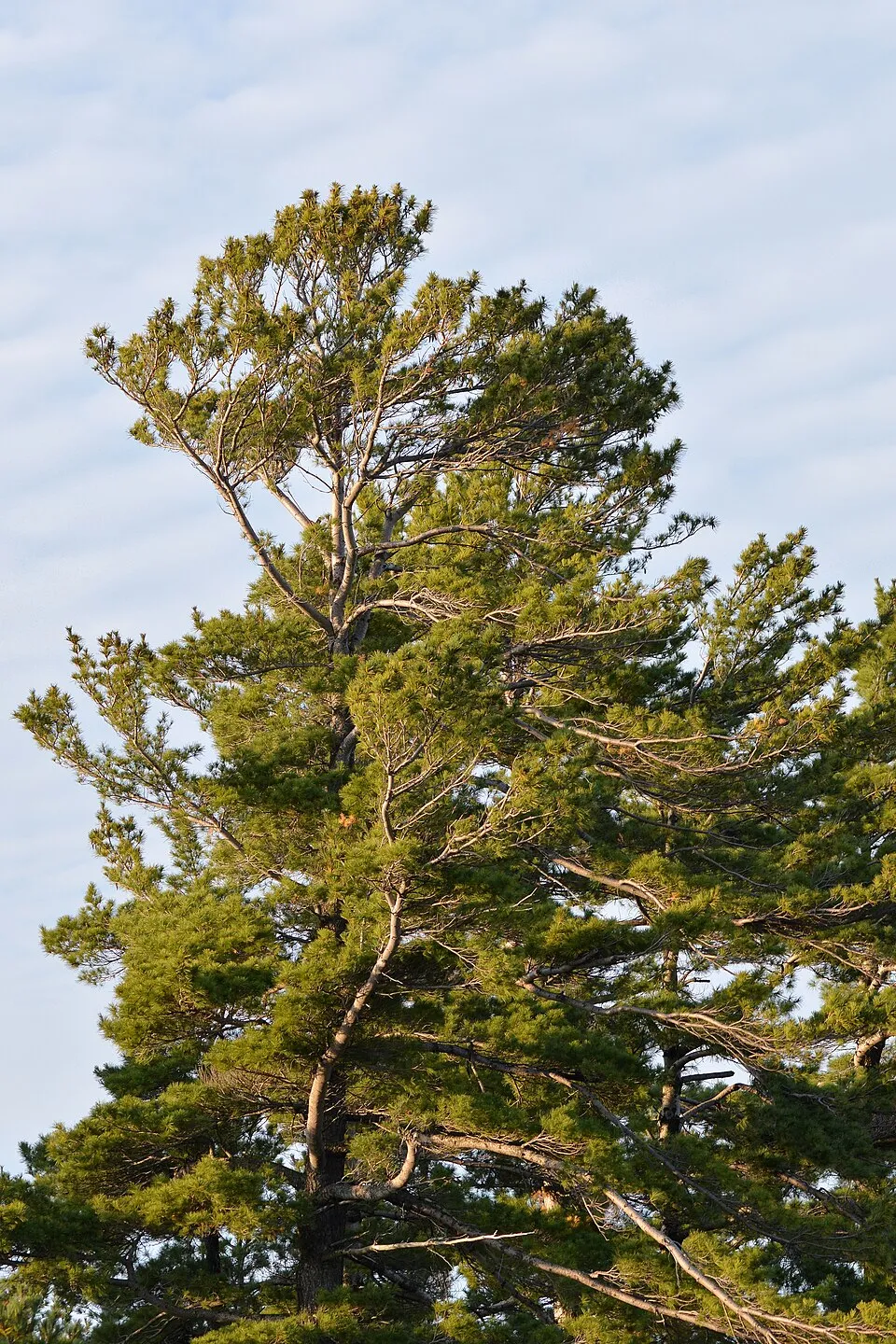
White Pine (Pinus strobus), an iconic conifer of the Pinaceae family, is a majestic tree native to eastern North America, recognized for its impressive stature, often reaching heights of 35 to 50 meters, with some specimens exceeding 70 meters. Its distinctive long, slender needles, measuring 7 to 12 centimeters in length, are arranged in soft, flexible clusters of five, a key identifying feature. The tree's bark transitions from smooth and greenish-brown on young trees to a grayish-brown hue, becoming deeply furrowed and scaly with age.
Pinus strobus produces elongated, pendulous cones, typically 8 to 20 centimeters long, which are green when immature and mature to a light brown. This species thrives across a vast range, from Newfoundland to Manitoba in Canada, extending south into Georgia and Kentucky in the United States. It adapts to various soil types, preferring well-drained sandy or loamy soils in temperate climates, often found alongside other conifers like hemlock and spruce, or mixed with deciduous trees.
Taxonomically, it belongs to the genus Pinus, which encompasses over a hundred species globally. Beyond its historical importance for shipbuilding and timber, White Pine is a vital ecological resource, providing essential habitat and food for diverse wildlife and serving as a keystone species in many forest ecosystems. It is also the emblematic tree of Ontario, symbolizing resilience and peace.
Trusted Scientific References
1. Authoritative external sources for Pinus strobus
1.1 Wikipedia — Pinus strobus
1.2 Kew POWO (Plants of the World Online)
1.3 PubMed — peer-reviewed research
1.4 NCBI Taxonomy Browser
1.5 GBIF — Global Biodiversity
1.6White Pine should be interpreted through verified botanical identity, practical care, and responsible safety language. This recovery note adds the missing context needed for a complete profile: match light to the plant's habit, use well-drained soil, water according to season, and avoid unsupported medicinal or edible claims. For publishing, the plant can be presented as a source-backed medicinal plant with clear care guidance, common problem diagnosis, and conservative safety wording.
1.1.White Pine — Highlights
- ✓Iconic Eastern North — Iconic Eastern North American Tree
- ✓Needles in Clusters — Needles in Clusters of Five
- ✓High Vitamin C — High Vitamin C Content
- ✓Expectorant and Antiseptic — Expectorant and Antiseptic Properties
- ✓Traditional Indigenous Medicine — Traditional Indigenous Medicine
- ✓Culinary Versatility (Shoots, — Culinary Versatility (Shoots, Inner Bark, Seeds)
- ✓Aromatic Essential Oil — Aromatic Essential Oil
- ✓Long Lifespan (200 — 450+ years)
- ✓Valued for Timber — Valued for Timber (Ship Masts)
- ✓Ecological Keystone Species — Ecological Keystone Species
1.2.White Pine — In Brief
- ✓Iconic Eastern North American conifer with soft needles grouped in fives.
- ✓Renowned for its high Vitamin C content, supporting immunity and respiratory health.
- ✓Traditionally used by Indigenous peoples and herbalists for colds, coughs, wounds, and as a food source.
- ✓Versatile applications include herbal teas, culinary ingredients, and aromatic essential oil.
- ✓Cautions advised for pregnant/nursing individuals, those with kidney/liver issues, and careful plant identification.
- ✓A significant ecological and historical tree species with diverse medicinal and practical uses.
2.White Pine — Botanical Identity
3.White Pine — Fact Sheet
4.White Pine — Botanical Description
5.White Pine — Ecological Habitat
6.White Pine — Folk Medicine Applications
7.White Pine — Phytochemistry
- ✓Terpenes — Predominantly alpha-pinene, limonene, and myrcene, these volatile compounds provide expectorant, bronchodilator, anti-inflammatory, and antiseptic actions.
- ✓Flavonoids — Including quercetin and kaempferol derivatives, these compounds contribute significant antioxidant and anti-inflammatory benefits.
- ✓Vitamin C (Ascorbic Acid) — Abundant in the needles, providing potent antioxidant and immune-boosting properties, crucial for collagen synthesis.
- ✓Vitamin A (Carotenoids) — Present in the needles, offering antioxidant support and contributing to vision health and immune function.
- ✓Resin Acids — Such as abietic acid and pimaric acid, found in the resin and bark, responsible for antiseptic, anti-inflammatory, and wound-healing effects.
- ✓Tannins — Located in the bark, these compounds impart astringent properties, useful for wound healing and reducing inflammation.
- ✓Volatile Oils — A complex mixture of monoterpenes and sesquiterpenes, giving the characteristic scent and contributing to respiratory and antiseptic actions.
- ✓Phenolic Compounds — A broad category of antioxidants that protect cells from damage caused by free radicals.
- ✓Glycosides — Various compounds linked to sugar molecules, contributing to diverse biological activities.
- ✓Mineral Salts — Contains essential minerals vital for overall physiological functions.
- ✓Polysaccharides — Found in the inner bark, these complex carbohydrates provide nutritive value and soothing mucilaginous properties.
8.White Pine — Pharmacological Findings
- ✓Immune System Support — Rich in Vitamin C and antioxidants, White Pine needles boost immune function and help the body ward off infections.
- ✓Respiratory Health Enhancement — Its expectorant properties, primarily from volatile oils, help clear mucus from the airways, easing coughs, colds, bronchitis, and congestion.
- ✓Anti-inflammatory Action — Compounds like terpenes and flavonoids contribute to its anti-inflammatory effects, potentially reducing swelling and pain in various conditions.
- ✓Antiseptic Properties — The resin and essential oil possess antiseptic qualities, useful for treating minor wounds, skin irritations, and traditionally for internal infections like kidney and bladder issues.
- ✓Vulnerary Aid — Traditionally applied to wounds, burns, and boils, White Pine helps promote healing and protect against infection due to its natural antiseptic and astringent compounds.
- ✓Antioxidant Protection — High levels of Vitamin A and C, along with other phenolic compounds, scavenge free radicals, protecting cells from oxidative damage.
- ✓Diuretic Effect — The inner bark and turpentine have traditional diuretic actions, potentially assisting in fluid balance and urinary tract health.
- ✓Antiascorbutic Activity — Historically, infusions of White Pine needles were a crucial remedy for scurvy due to their exceptionally high Vitamin C content.
- ✓Digestive Health Promotion — The inner bark, when consumed, provides mucilage that can soothe the digestive tract and act as a mild bulk-forming agent.
- ✓Stress Reduction and Aromatherapy — The fresh, woody scent of White Pine essential oil is used in aromatherapy to clear airways, reduce stress, improve concentration, and create a calming atmosphere.
- ✓Rubefacient Application — Turpentine derived from the resin can be used externally as a rubefacient to increase blood flow and alleviate rheumatic pain.
- ✓Traditional Vermifuge — Historically, turpentine was employed as a vermifuge to expel internal parasites, though this use requires extreme caution due to toxicity.
8.1.White Pine — Reported Uses
9.White Pine — Cautions & Contraindications
9.1.White Pine — Reported Side Effects
- ✓Allergic Reactions — Direct contact with resin or needles may cause skin irritation, dermatitis, or allergic respiratory responses in sensitive individuals.
- ✓Gastrointestinal Upset — Ingesting large quantities of inner bark or concentrated turpentine can lead to nausea, vomiting, diarrhea, and abdominal discomfort.
- ✓Kidney Irritation/Toxicity — High doses of turpentine, especially from internal use, can be nephrotoxic and potentially damage the kidneys.
- ✓Pregnancy and Lactation — Lack of sufficient safety data advises caution or avoidance of White Pine products during pregnancy and breastfeeding.
- ✓Drug Interactions — Theoretical risk of interaction with blood thinners due to trace amounts of coumarin-like compounds, though not well-documented for Pinus strobus.
- ✓Liver Toxicity — Extremely high or prolonged internal exposure to concentrated pine extracts or essential oils may pose a risk of liver damage.
- ✓Photosensitivity — Some individuals may experience increased skin sensitivity to sunlight after topical application of pine products.
9.2.White Pine — Safety Profile
- ✓Correct Identification — Essential to ensure accurate identification of Pinus strobus, as some other conifer species can be toxic if ingested.
- ✓Moderate Internal Use — Adhere to recommended dosages for internal preparations; excessive consumption can lead to adverse effects, especially with concentrated extracts.
- ✓Patch Testing for Topical Use — Before widespread topical application, perform a patch test with essential oil or resin to check for skin sensitivity or allergic reactions.
- ✓Avoid During Pregnancy/Lactation — Due to insufficient research on safety, pregnant and nursing individuals are advised to avoid internal use of White Pine.
- ✓Consult Healthcare Professional for Children — Always seek medical advice before administering White Pine products to infants or young children.
- ✓Pre-existing Health Conditions — Individuals with kidney disease, liver disorders, or bleeding disorders should exercise extreme caution or avoid use without medical supervision.
- ✓Sustainable and Clean Sourcing — Ensure any harvested or purchased White Pine products are from uncontaminated areas and processed responsibly to avoid impurities.
10.White Pine — Preparation Methods
- ✓Herbal Tea Infusion — Steep 1-2 teaspoons of fresh or dried needles in hot water for 10-15 minutes to create an immune-boosting and respiratory-supporting tea.
- ✓Decoction from Bark — Simmer pieces of inner bark in water for 20-30 minutes to extract compounds for a more potent medicinal preparation, traditionally for coughs.
- ✓Essential Oil Diffusion — Use a few drops of White Pine essential oil in a diffuser to purify air, promote respiratory clarity, and create a calming forest ambiance.
- ✓Topical Poultice/Compress — Crush fresh needles or powdered bark with a small amount of water to form a paste, apply directly to minor wounds, burns, or skin irritations.
- ✓Culinary Flavoring — Young shoots (pine candles) can be used to flavor syrups, vinegars, or roasted vegetables, offering a fresh, resinous, and slightly citrusy note.
- ✓Bath Infusion — Add a handful of fresh pine needles to a hot bath for an aromatic and therapeutic soak, beneficial for respiratory congestion and muscle relaxation.
- ✓Resin/Sap Application — The sticky resin can be chewed like gum for oral health or applied externally as a natural bandage for small cuts.
- ✓Steam Inhalation — Add fresh pine needles to a bowl of hot water, cover your head with a towel, and inhale the steam to relieve nasal and chest congestion.
11.White Pine — Cultivation & Care
- ✓Climate — Thrives in cool temperate zones (USDA Hardiness Zones 3-7), requiring adequate chilling hours.
- ✓Soil — Prefers well-drained, acidic to neutral soil (pH 5.0-6.5), performing best in sandy loams but tolerating various types.
- ✓Sunlight — Requires full sun exposure (at least 6 hours of direct sunlight daily) for optimal growth, especially when young.
- ✓Watering — Needs consistent moisture during establishment; mature trees are relatively drought-tolerant but benefit from supplemental watering during dry spells.
- ✓Propagation — Primarily by seed, which requires cold stratification for successful germination; cuttings are generally difficult to root.
- ✓Spacing — Due to its large mature size, plant saplings at least 20-30 feet apart to allow for proper canopy development.
- ✓Pests/Diseases — Monitor for white pine weevil and white pine blister rust, which are significant threats; proper air circulation helps prevent fungal issues.
- ✓Pruning — Minimal pruning is typically required, mainly for shaping or removing dead/diseased branches, best done in late winter or early spring.
Reviewed by the Flora Medical Global Botanical Review Panel
Multi-disciplinary editorial group · Botany · Ethnobotany · Herbal-medicine literature
Who reviewed this: This page was checked by the Flora Medical Global Botanical Review Panel — an in-house editorial group of botany graduates, ethnobotany researchers, and horticulture practitioners who collectively maintain our 7,000+ plant encyclopedia. Meet the team.
Our 4-step verification process
1. Taxonomic verification
Scientific names and synonyms cross-checked against Kew POWO, World Flora Online, and The Plant List.
2. Phytochemical & medicinal cross-reference
Active compounds, traditional uses, and reported activities are cross-referenced with PubMed, USDA Dr. Duke's database, and peer-reviewed ethnobotanical literature.
3. Conservation & distribution check
Distribution, ecology, and conservation status confirmed against GBIF occurrence records and the IUCN Red List.
4. Editorial & safety review
Every entry passes an editorial pass for clarity, originality, and safety notices (toxicity, contraindications, dosage caveats) before publication.
Last reviewed:
Important medical disclaimer: This content is for educational and research purposes only. It is not medical advice and is not a substitute for consultation with a licensed healthcare provider. Do not use any herb to self-treat a medical condition without professional guidance.
Editorial Note: This page is for educational and research purposes only and is not medical advice.
Written by: Flora Medical Global Editorial Team
Reviewed by: Flora Medical Global Botanical Review Panel
Last Updated: June 16, 2026





White Pine — Comments & Community Reviews
Rate this plant