
Medical Disclaimer: This content is for educational purposes only. It is not medical advice. Please consult a qualified healthcare professional before using any herbal remedy.
Safety Overview
1.Woman's Tongue — At a Glance
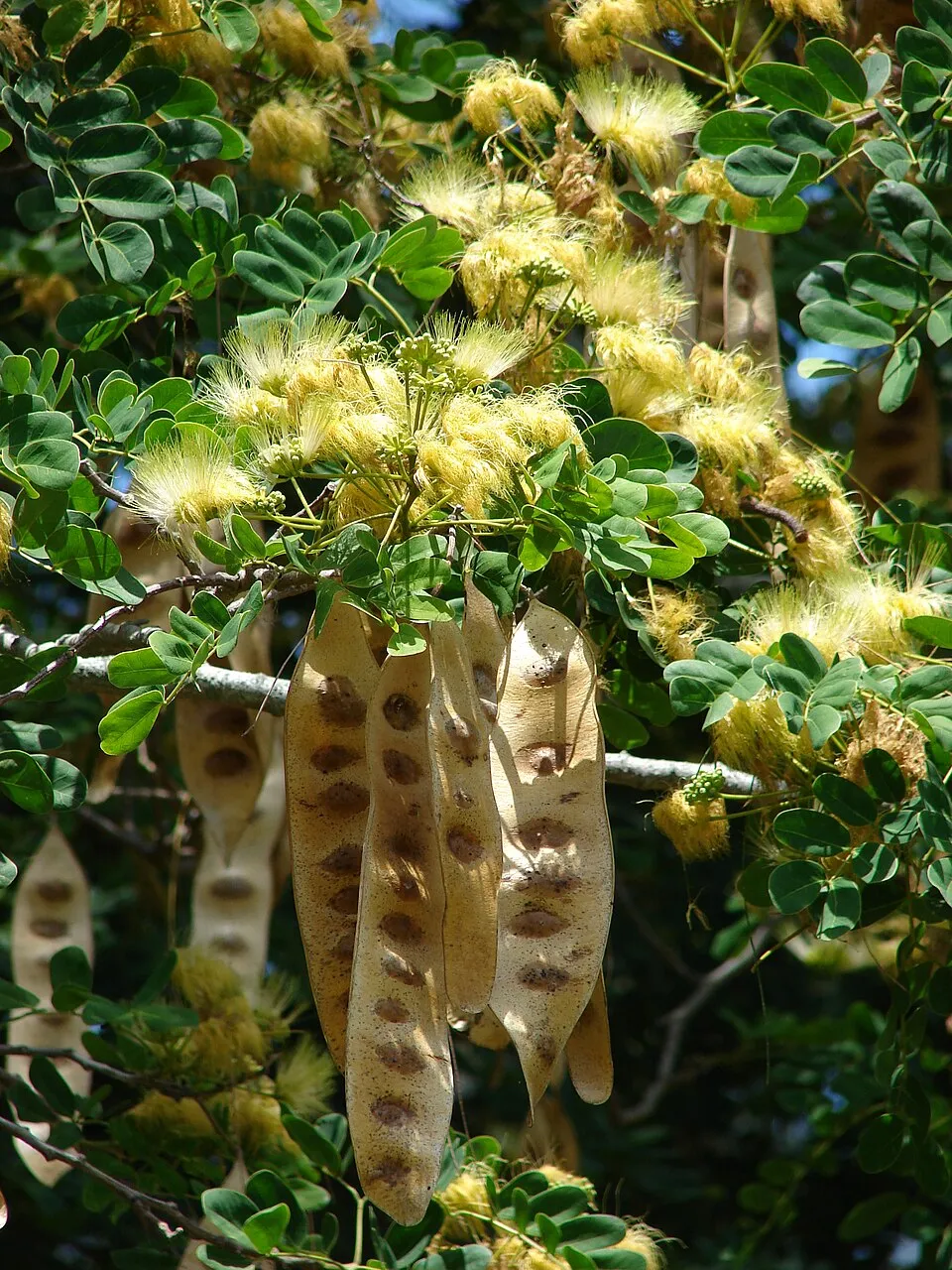
Albizia lebbeck, commonly known as Woman's Tongue or Siris Tree, is a majestic deciduous tree belonging to the Fabaceae family, sub-family Mimosoideae. This fast-growing species typically reaches impressive heights of 15 to 30 meters, characterized by a broad, spreading crown that provides ample shade. Its bark is distinctively dark grey, often deeply fissured, contributing to its rugged appearance. The foliage consists of elegantly bipinnate leaves, each composed of 4-9 pairs of leaflets, creating a lush and dense canopy.
One of the most enchanting features of Albizia lebbeck is its highly fragrant, globular clusters of flowers, which bloom in shades from creamy white to pale yellow, typically gracing the tree from March to May. Following the flowering period, the tree produces elongated, flat seed pods that mature from green to a straw-yellow or brown hue, each containing 6 to 12 seeds. These dry pods rattle distinctively in the wind, a sound that is widely believed to be the origin of its evocative common name, 'Woman's Tongue Tree'. Native to the tropical and subtropical regions of Asia and Northern Australia, Albizia lebbeck has naturalized across various parts of the world, including Africa, the Caribbean, and the Americas.
It thrives in diverse habitats, from roadsides and cultivated gardens to dry deciduous forests, and can be found at elevations up to 1500 meters. Beyond its ecological role, the tree holds profound cultural and traditional significance, frequently planted near temples and homes for its perceived sacredness and medicinal properties, which have been documented for millennia in systems like Ayurveda and Unani.
Trusted Scientific References
1. Authoritative external sources for Albizia lebbeck
1.1 Wikipedia — Albizia lebbeck
1.2 Kew POWO (Plants of the World Online)
1.3 PubMed — peer-reviewed research
1.4 NCBI Taxonomy Browser
1.5 GBIF — Global Biodiversity
1.6Woman's Tongue should be interpreted through verified botanical identity, practical care, and responsible safety language. This recovery note adds the missing context needed for a complete profile: match light to the plant's habit, use well-drained soil, water according to season, and avoid unsupported medicinal or edible claims. For publishing, the plant can be presented as a source-backed medicinal plant with clear care guidance, common problem diagnosis, and conservative safety wording.
1.1.Woman's Tongue — Highlights
- ✓Common Name — Woman's Tongue, Siris Tree.
- ✓Scientific Name — Albizia lebbeck (L.) Benth.
- ✓Family — Fabaceae (Leguminosae), Mimosoideae subfamily.
- ✓Traditional Names — Shirisha (Ayurveda), Darash (Urdu).
- ✓Distinctive Feature — Rustling seed pods in the wind.
- ✓Primary Benefits — Anti-allergic, anti-inflammatory, detoxification, respiratory support.
- ✓Key Phytochemicals — Saponins, Flavonoids, Alkaloids, Terpenoids.
- ✓Native Range — Tropical and subtropical Asia, Northern Australia.
- ✓Growth Habit — Deciduous tree, grows 15-30 meters tall.
- ✓Cultural Significance — Often planted near temples, valued ecologically and medicinally.
1.2.Woman's Tongue — Concise Overview
- ✓Albizia lebbeck, or Woman's Tongue, is a tropical tree revered in traditional medicine for millennia.
- ✓Known for its potent anti-allergic, anti-inflammatory, and detoxifying properties.
- ✓Rich in saponins, flavonoids, and alkaloids, supporting respiratory, skin, and neurological health.
- ✓Widely used in Ayurveda as 'Shirisha' for anti-toxic and allergy relief.
- ✓Requires careful dosage and professional consultation due to potential side effects and interactions.
- ✓A versatile medicinal plant with growing modern scientific validation for its traditional uses.
2.Woman's Tongue — Botanical Identity
3.Woman's Tongue — Key Data
4.Woman's Tongue — Physical Description
5.Woman's Tongue — Origin & Spread
6.Woman's Tongue — Traditional Uses
7.Woman's Tongue — Phytochemistry
- ✓Saponins — Contains a variety of triterpenoid saponins, such as lebbecacins and albiziasaponins, which are largely responsible for its anti-allergic, anti-inflammatory, and mast cell stabilizing activities.
- ✓Flavonoids — Rich in diverse flavonoids including quercetin, kaempferol, and their glycosides, contributing significantly to the plant's antioxidant, anti-inflammatory, and neuroprotective properties.
- ✓Alkaloids — Various alkaloids are present, which may contribute to its pharmacological profile, including potential antivenom and neuroprotective effects.
- ✓Terpenoids — A broad class of compounds, including triterpenoids and essential oils, that impart a range of biological activities such as anti-inflammatory, antimicrobial, and adaptogenic effects.
- ✓Phenolics — Includes phenolic acids and tannins, known for their strong antioxidant capacity, astringent properties, and role in wound healing and antimicrobial action.
- ✓Glycosides — Various glycosides, including cardiac glycosides, have been isolated, which can have diverse physiological impacts and contribute to its traditional medicinal uses.
- ✓Anthraquinones — Present in some parts of the plant, these compounds can offer laxative properties and contribute to its antimicrobial and anti-parasitic activities.
- ✓Phytosterols — Compounds like beta-sitosterol are found, known for their cholesterol-lowering and anti-inflammatory properties, supporting cardiovascular health.
- ✓Essential Oils — Volatile compounds contributing to the plant's characteristic fragrance and exhibiting antimicrobial, insecticidal, and anti-inflammatory actions.
- ✓Proteins and Amino Acids — Contribute to the nutritional value and potentially play a role in its wound healing and general therapeutic effects.
8.Woman's Tongue — Scientific Evidence
- ✓Anti-allergic Action — Albizia lebbeck is renowned for its mast cell stabilizing effects, helping to mitigate allergic reactions, asthma, and rhinitis by reducing histamine release.
- ✓Detoxification Support — Traditionally used as an anti-toxic agent, particularly against insect and snake venoms, it aids the body's natural detoxification processes.
- ✓Respiratory Health — Beneficial in managing various respiratory disorders, including coughs, bronchitis, and asthma, due to its expectorant and anti-inflammatory properties.
- ✓Skin Conditions — Applied topically and internally for skin ailments like leprosy, ulcers, and inflammatory skin conditions, promoting healing and reducing irritation.
- ✓Anti-inflammatory Effects — Possesses potent anti-inflammatory compounds that help alleviate pain and swelling associated with arthritis, injuries, and other inflammatory states.
- ✓Wound Healing — Extracts from the bark and leaves support faster wound closure and tissue regeneration, attributed to its antimicrobial and antioxidant properties.
- ✓Antimicrobial Activity — Exhibits broad-spectrum antimicrobial properties against various bacteria and fungi, useful in treating infections of the skin, oral cavity, and gastrointestinal tract.
- ✓Nootropic and Neuroprotective Effects — Research suggests it may enhance cognitive function and offer protection against neuronal damage, potentially benefiting neurological disorders.
- ✓Antidiabetic Potential — Studies indicate its ability to help regulate blood glucose levels, making it a subject of interest for managing diabetes.
- ✓Antioxidant Power — Rich in antioxidant compounds that combat oxidative stress, protecting cells from damage caused by free radicals and supporting overall cellular health.
- ✓Gastrointestinal Relief — Utilized in traditional medicine for issues like diarrhea, piles, and general gastrointestinal discomfort, promoting digestive balance.
- ✓Oral Health — Applied for gum problems and pharyngitis, leveraging its antiseptic and anti-inflammatory actions to maintain oral hygiene and soothe throat irritations.
8.1.Woman's Tongue — Health Applications
9.Woman's Tongue — Safety & Side Effects
9.1.Woman's Tongue — Side Effects & Warnings
- ✓Allergic Reactions — Sensitive individuals may experience skin rashes, itching, or respiratory distress upon exposure or ingestion.
- ✓Gastrointestinal Upset — High doses or sensitive individuals might experience nausea, vomiting, or diarrhea.
- ✓Hypotension — May potentially lower blood pressure; caution advised for individuals on hypotensive medication.
- ✓Sedation — Some compounds may cause mild drowsiness; avoid operating heavy machinery or driving if affected.
- ✓Drug Interactions — Potential to interact with immunosuppressants, anti-allergy medications, or blood pressure medications.
- ✓Pregnancy and Lactation — Lack of sufficient safety data; generally advised against use during pregnancy and breastfeeding.
- ✓Liver Toxicity — Extremely high doses over prolonged periods may theoretically pose a risk to liver function, though not well-documented in humans.
9.2.Woman's Tongue — Safety Overview
- ✓Professional Guidance — Always consult a qualified healthcare practitioner or medical herbalist before using Albizia lebbeck, especially for chronic conditions.
- ✓Dosage Adherence — Strictly follow recommended dosages from reputable sources or practitioners to avoid potential adverse effects.
- ✓Pregnancy and Breastfeeding — Contraindicated during pregnancy and lactation due to insufficient safety data and potential uterine stimulant effects.
- ✓Children — Use in children should be avoided unless specifically prescribed and supervised by a pediatric herbalist.
- ✓Pre-existing Conditions — Individuals with liver disease, autoimmune disorders, or those on medication should exercise extreme caution.
- ✓Allergy Test — Perform a patch test for topical applications to check for skin sensitivity or allergic reactions.
- ✓Duration of Use — Long-term use without professional supervision is not recommended; cyclical use may be advised.
10.Woman's Tongue — Preparation Methods
- ✓Bark Decoction — The bark is commonly prepared as a decoction by boiling in water, used internally for detoxification, allergies, and respiratory issues.
- ✓Leaf Infusion — Fresh or dried leaves can be steeped in hot water to create an infusion, often consumed for its anti-inflammatory and mild sedative properties.
- ✓Powdered Bark/Seeds — Dried bark or seeds are ground into a fine powder, which can be mixed with honey or water and taken orally for various ailments, including skin conditions and digestive support.
- ✓Topical Paste — A paste made from crushed leaves or bark powder with water is applied externally to wounds, skin infections, and inflammatory swellings.
- ✓Oil Infusion — Flowers or bark can be infused in carrier oils (e.g., sesame oil) for topical application to soothe skin irritations, joint pain, or massage.
- ✓Herbal Formulations — Incorporated into complex Ayurvedic and Unani formulations (e.g., 'Shirisha Arishta') for specific therapeutic indications, often combined with other synergistic herbs.
- ✓Eye Drops — In some traditional practices, diluted extracts are carefully used as eye drops for conditions like night blindness, under expert supervision.
11.Woman's Tongue — Garden Cultivation
- ✓Climate — Thrives in tropical and subtropical climates, tolerating a wide range of temperatures but preferring warm conditions.
- ✓Soil — Adaptable to various soil types, but performs best in well-drained, fertile loamy or sandy soils with a pH range of 6.0-7.5.
- ✓Sunlight — Requires full sun exposure for optimal growth, needing at least 6-8 hours of direct sunlight daily.
- ✓Propagation — Primarily propagated by seeds, which benefit from scarification or hot water treatment to break dormancy and improve germination rates.
- ✓Watering — Requires moderate watering, especially during dry periods and its early growth stages; mature trees are relatively drought-tolerant.
- ✓Pruning — Benefits from occasional pruning to maintain desired shape, remove dead or diseased branches, and encourage healthy growth.
- ✓Pests and Diseases — Generally robust, but can be susceptible to some defoliating insects and fungal diseases in humid conditions; regular monitoring is advised.
Reviewed by the Flora Medical Global Botanical Review Panel
Multi-disciplinary editorial group · Botany · Ethnobotany · Herbal-medicine literature
Who reviewed this: This page was checked by the Flora Medical Global Botanical Review Panel — an in-house editorial group of botany graduates, ethnobotany researchers, and horticulture practitioners who collectively maintain our 7,000+ plant encyclopedia. Meet the team.
Our 4-step verification process
1. Taxonomic verification
Scientific names and synonyms cross-checked against Kew POWO, World Flora Online, and The Plant List.
2. Phytochemical & medicinal cross-reference
Active compounds, traditional uses, and reported activities are cross-referenced with PubMed, USDA Dr. Duke's database, and peer-reviewed ethnobotanical literature.
3. Conservation & distribution check
Distribution, ecology, and conservation status confirmed against GBIF occurrence records and the IUCN Red List.
4. Editorial & safety review
Every entry passes an editorial pass for clarity, originality, and safety notices (toxicity, contraindications, dosage caveats) before publication.
Last reviewed:
Important medical disclaimer: This content is for educational and research purposes only. It is not medical advice and is not a substitute for consultation with a licensed healthcare provider. Do not use any herb to self-treat a medical condition without professional guidance.
Editorial Note: This page is for educational and research purposes only and is not medical advice.
Written by: Flora Medical Global Editorial Team
Reviewed by: Flora Medical Global Botanical Review Panel
Last Updated: June 16, 2026





Woman's Tongue — Comments & Community Reviews
Rate this plant