
Medical Disclaimer: This content is for educational purposes only. It is not medical advice. Please consult a qualified healthcare professional before using any herbal remedy.
Safety Overview
1.Zenobia — Introduction & Highlights
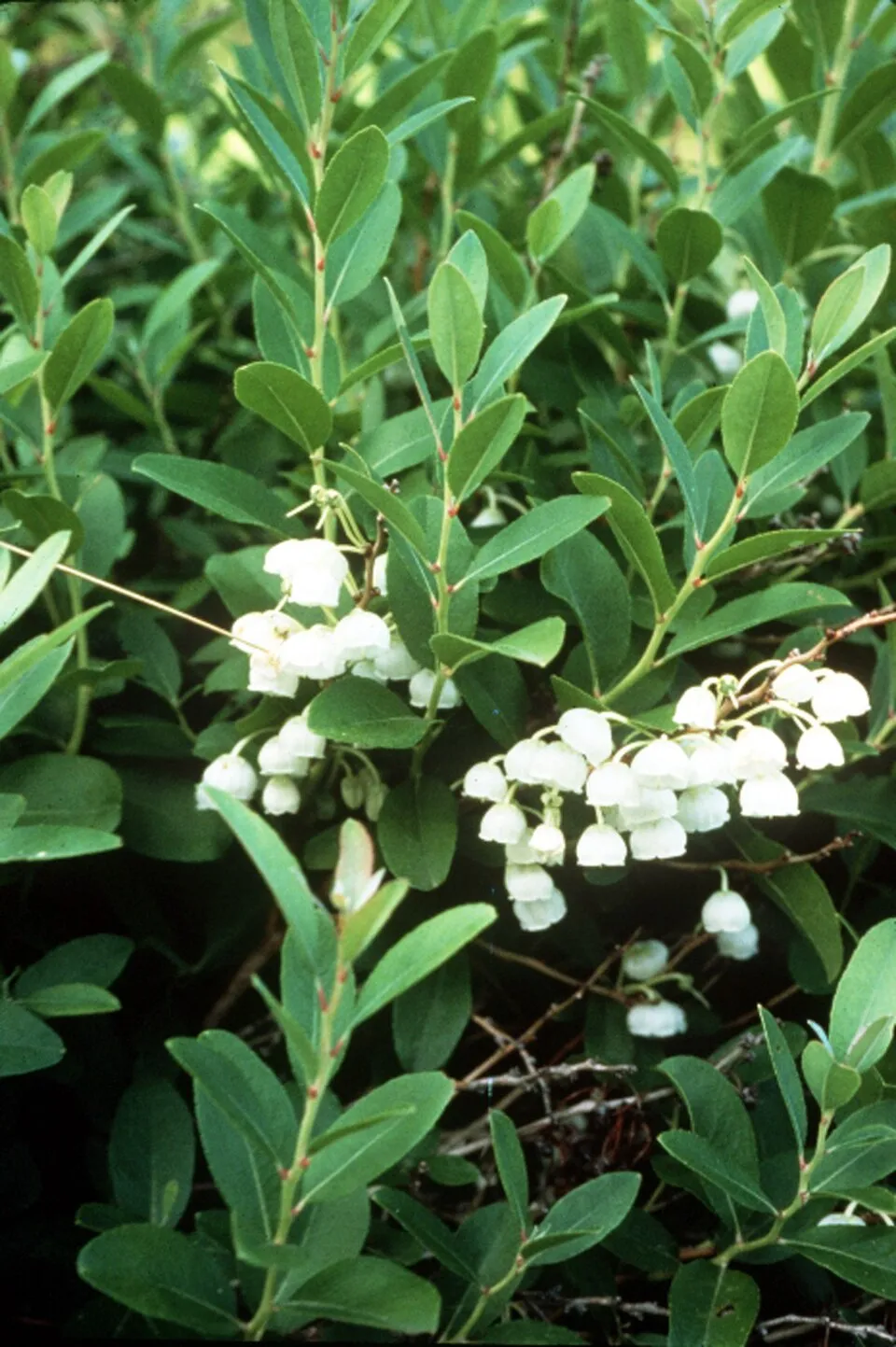
Zenobia pulverulenta, commonly known as Dusty Zenobia or Honeycup, is a captivating deciduous to semi-evergreen shrub belonging to the Ericaceae family, native to the southeastern United States. This graceful plant typically thrives in the moist, acidic soils of pine savannas, shrub bogs, and along the margins of ponds and swamps, extending its natural range from Virginia south to Georgia. It can reach an impressive height of up to 6 feet and spread about 5 feet wide, forming an attractive, bushy silhouette.
Its most distinctive feature is its foliage—oval to oblong leaves, measuring 2 to 4 inches in length, which are often covered in a glaucous, powdery-white bloom, giving them a striking silvery-blue appearance. In late spring to early summer, Zenobia adorns itself with clusters of fragrant, bell-shaped flowers. These pendulous, cream to white blooms, about 1 inch long, are arranged in elegant racemes, serving as a vital nectar source for a variety of pollinators, including native bees and butterflies.
The bark is smooth and gray-brown, providing a subtle contrast to the pale leaves. While generally deciduous in cooler USDA zones (6-7), it can retain its leaves as a semi-evergreen shrub in warmer southern climates. Zenobia pulverulenta prefers partial to full shade but can tolerate some sun exposure if soil moisture is consistently maintained, making it a unique and valuable addition to native plant landscapes.
Trusted Scientific References
1. Authoritative external sources for Zenobia pulverulenta
1.1 Wikipedia — Zenobia pulverulenta
1.2 Kew POWO (Plants of the World Online)
1.3 PubMed — peer-reviewed research
1.4 NCBI Taxonomy Browser
1.5 GBIF — Global Biodiversity
1.6Zenobia should be interpreted through verified botanical identity, practical care, and responsible safety language. This recovery note adds the missing context needed for a complete profile: match light to the plant's habit, use well-drained soil, water according to season, and avoid unsupported medicinal or edible claims. For publishing, the plant can be presented as a source-backed medicinal plant with clear care guidance, common problem diagnosis, and conservative safety wording.
1.1.Zenobia — Defining Traits
- ✓Deciduous to semi — evergreen shrub, typically growing 3 to 6 feet tall and wide.
- ✓Distinctive foliage with glaucous, powdery — white to bluish-green oval leaves.
- ✓Produces fragrant, white to cream, bell — shaped flowers in racemes during late spring to early summer.
- ✓Native to moist, — Native to moist, acidic habitats such as pine savannas and bogs in the southeastern United States.
- ✓Attracts various pollinators, — Attracts various pollinators, including bees and butterflies, contributing to local biodiversity.
- ✓Historically utilized by — Historically utilized by some indigenous communities for purported anti-inflammatory effects and skin soothing.
- ✓Phytochemical profile includes — Phytochemical profile includes beneficial flavonoids and phenolic acids, indicating antioxidant properties.
- ✓Valued in horticulture — Valued in horticulture for its unique ornamental qualities, especially its striking leaf color and delicate blooms.
- ✓Prefers partial to — Prefers partial to full shade and consistently moist, well-drained, acidic soil conditions.
- ✓Belongs to the — Belongs to the Ericaceae family, which includes other well-known medicinal and edible plants like blueberries.
1.2.Zenobia — Snapshot Summary
- ✓Zenobia pulverulenta, or Dusty Zenobia, is a distinctive deciduous to semi-evergreen shrub native to the southeastern US.
- ✓Known for its unique glaucous, powdery-white leaves and fragrant, bell-shaped white flowers.
- ✓Traditional uses by indigenous communities include topical application for anti-inflammatory and skin-soothing purposes.
- ✓Phytochemical analysis reveals the presence of flavonoids and phenolic acids, suggesting antioxidant potential.
- ✓Primarily valued as an ornamental plant due to its aesthetic appeal.
- ✓Internal medicinal use is not advised due to limited research and unknown toxicity.
2.Zenobia — Scientific Profile
3.Zenobia — Reference Facts
4.Zenobia — Plant Morphology
5.Zenobia — Where It Grows
6.Zenobia — Ethnobotanical Uses
7.Zenobia — Bioactive Constituents
- ✓Flavonoids — Key compounds like quercetin and kaempferol derivatives are present, acting as potent antioxidants and contributing to anti-inflammatory effects.
- ✓Phenolic Acids — Includes gallic acid and caffeic acid, known for their strong antioxidant, anti-inflammatory, and mild astringent properties.
- ✓Tannins — Both hydrolyzable and condensed tannins are likely present, contributing to the plant's astringent qualities and offering potential antimicrobial benefits.
- ✓Triterpenoids — While not extensively studied in Zenobia, related Ericaceae species often contain triterpenoids such as ursolic acid, which may have anti-inflammatory and protective effects.
- ✓Volatile Compounds — Minor amounts of terpenes and other aromatic compounds might be present, contributing to the plant's subtle fragrance and potentially offering mild therapeutic actions.
- ✓Glycosides — Flavonoid glycosides are anticipated, which enhance the solubility and bioavailability of their aglycone counterparts in biological systems.
- ✓Saponins — Some plants in the Ericaceae family contain saponins, which can have expectorant or anti-inflammatory properties, though their presence in Zenobia pulverulenta requires confirmation.
- ✓Minerals and Vitamins — Like all plants, Zenobia contains essential trace minerals and vitamins crucial for its metabolic processes, although these are not considered primary medicinal constituents.
8.Zenobia — What Research Suggests
- ✓Anti-inflammatory Support — Traditional uses suggest that decoctions of Zenobia pulverulenta may help alleviate localized inflammation, potentially due to the presence of flavonoids and phenolic acids.
- ✓Skin Soothing Properties — Indigenous communities historically applied preparations to soothe minor skin irritations, indicating potential emollient or calming effects on the epidermis.
- ✓Antioxidant Activity — The detected flavonoids and phenolic acids are well-known for their antioxidant capabilities, which may help combat oxidative stress at a cellular level.
- ✓Astringent Effects — Phenolic compounds, particularly tannins, could confer mild astringent properties, beneficial for minor cuts or scrapes by promoting tissue contraction and reducing bleeding.
- ✓Potential Antimicrobial Action — Some flavonoids and phenolic acids exhibit in vitro antimicrobial activity, suggesting a hypothetical role in preventing minor topical infections.
- ✓Minor Pain Relief — By addressing inflammation, the plant's compounds might offer mild, localized pain relief, particularly for superficial discomfort.
- ✓Wound Healing Aid — The combination of anti-inflammatory and astringent properties could support the natural wound healing process for superficial skin damage.
- ✓Circulatory Health (Hypothetical) — Certain flavonoids are associated with supporting capillary integrity and microcirculation, though this is speculative for Zenobia pulverulenta.
- ✓Immune System Modulation — Polyphenols can interact with immune pathways, potentially offering a subtle immunomodulatory effect, although specific research on Zenobia is lacking.
8.1.Zenobia — Conditions Traditionally Used For
9.Zenobia — Adverse Effects
9.1.Zenobia — Side Effects & Warnings
- ✓Skin Irritation — Direct contact with plant sap may cause mild dermatitis or allergic reactions in sensitive individuals.
- ✓Gastrointestinal Upset — Ingestion of any part of the plant is not recommended and could lead to symptoms such as nausea, vomiting, or diarrhea.
- ✓Allergic Reactions — Although rare, individuals sensitive to plants in the Ericaceae family may experience allergic responses like skin rashes or respiratory irritation.
- ✓Unknown Toxicity — Zenobia pulverulenta's internal toxicity profile is largely uncharacterized; thus, internal consumption carries significant unknown risks.
- ✓Medication Interactions — Due to the presence of phenolic compounds, there is a theoretical potential for interaction with medications, particularly anti-inflammatory or anticoagulant drugs, though no studies exist.
- ✓Photosensitivity — Some plant compounds can increase skin sensitivity to sunlight, though this specific effect has not been documented for Zenobia pulverulenta.
9.2.Zenobia — Safety Profile
- ✓Limited Research — The medicinal safety and efficacy of Zenobia pulverulenta in humans are not well-established through clinical studies.
- ✓Internal Use Prohibited — Internal consumption of Zenobia pulverulenta is strongly advised against due to the lack of toxicity data and potential unknown compounds.
- ✓Pregnancy and Lactation — Avoid use during pregnancy and breastfeeding periods due to the absence of safety information for these vulnerable populations.
- ✓Pediatric Use — Not recommended for use in children due to the lack of specific safety data and potential for adverse effects.
- ✓Allergic Sensitivity — Individuals with known allergies to other plants in the Ericaceae family (e.g., blueberries, rhododendrons) should exercise caution.
- ✓Professional Consultation — Always consult a healthcare professional, qualified herbalist, or toxicologist before considering any medicinal use of Zenobia pulverulenta.
- ✓Patch Test — Prior to extensive topical application, perform a patch test on a small, inconspicuous area of skin to check for adverse reactions.
10.Zenobia — Application Forms
- ✓Decoction (External) — Prepare a strong decoction from leaves or bark, simmered in water, for topical application to soothe minor skin irritations or localized inflammation.
- ✓Poultice (External) — Crush fresh Zenobia leaves and apply directly to affected skin areas as a poultice to potentially reduce swelling and discomfort.
- ✓Infused Oil (External) — Macerate dried leaves in a carrier oil (e.g., olive oil) for several weeks to create an infused oil for massage or topical skin conditioning.
- ✓Compress (External) — Soak a clean cloth in a cooled decoction and apply as a compress to minor burns, insect bites, or areas of superficial inflammation.
- ✓Herbal Bath (External) — Add a strong decoction to bathwater for a soothing soak, potentially beneficial for widespread minor skin discomfort.
- ✓Hypothetical Mouthwash/Gargle — A diluted, cooled decoction might be considered for a gargle or mouthwash to address oral inflammation, but only with extreme caution and professional guidance due to unknown internal toxicity.
- ✓Tincture (Internal, Not Recommended) — While theoretically possible to make an alcoholic extract, internal use is strongly discouraged due to insufficient safety data and potential toxicity.
11.Zenobia — Growing Guide
- ✓Soil Preference — Requires consistently moist, highly acidic, well-drained soil rich in organic matter, mimicking its native boggy or peaty habitats.
- ✓Light Requirements — Thrives best in partial to full shade; direct, intense afternoon sun can cause leaf scorch, especially in warmer climates.
- ✓Watering — Needs regular and consistent watering to keep the soil moist; it is highly intolerant of drought conditions once established.
- ✓Temperature Zones — Hardy in USDA Zones 6 through 9, behaving as deciduous in colder zones and semi-evergreen in the warmer southern regions.
- ✓Propagation — Can be propagated effectively through softwood cuttings taken in early summer, or by layering and division during the early spring.
- ✓Fertilization — Fertilize sparingly with an acid-loving plant formula if soil tests indicate nutrient deficiencies, typically in early spring.
- ✓Pruning — Minimal pruning is generally required; remove dead or damaged branches to maintain plant health and desired shape.
- ✓Pest and Disease — Generally resistant to major pests and diseases, but monitor for common shrub issues and address promptly.
Reviewed by the Flora Medical Global Botanical Review Panel
Multi-disciplinary editorial group · Botany · Ethnobotany · Herbal-medicine literature
Who reviewed this: This page was checked by the Flora Medical Global Botanical Review Panel — an in-house editorial group of botany graduates, ethnobotany researchers, and horticulture practitioners who collectively maintain our 7,000+ plant encyclopedia. Meet the team.
Our 4-step verification process
1. Taxonomic verification
Scientific names and synonyms cross-checked against Kew POWO, World Flora Online, and The Plant List.
2. Phytochemical & medicinal cross-reference
Active compounds, traditional uses, and reported activities are cross-referenced with PubMed, USDA Dr. Duke's database, and peer-reviewed ethnobotanical literature.
3. Conservation & distribution check
Distribution, ecology, and conservation status confirmed against GBIF occurrence records and the IUCN Red List.
4. Editorial & safety review
Every entry passes an editorial pass for clarity, originality, and safety notices (toxicity, contraindications, dosage caveats) before publication.
Last reviewed:
Important medical disclaimer: This content is for educational and research purposes only. It is not medical advice and is not a substitute for consultation with a licensed healthcare provider. Do not use any herb to self-treat a medical condition without professional guidance.
Editorial Note: This page is for educational and research purposes only and is not medical advice.
Written by: Flora Medical Global Editorial Team
Reviewed by: Flora Medical Global Botanical Review Panel
Last Updated: June 16, 2026





Zenobia — Comments & Community Reviews
Rate this plant