


Medical Disclaimer: This content is for educational purposes only. It is not medical advice. Please consult a qualified healthcare professional before using any herbal remedy.
Safety Overview
1.Zephyranthes — Botanical Snapshot
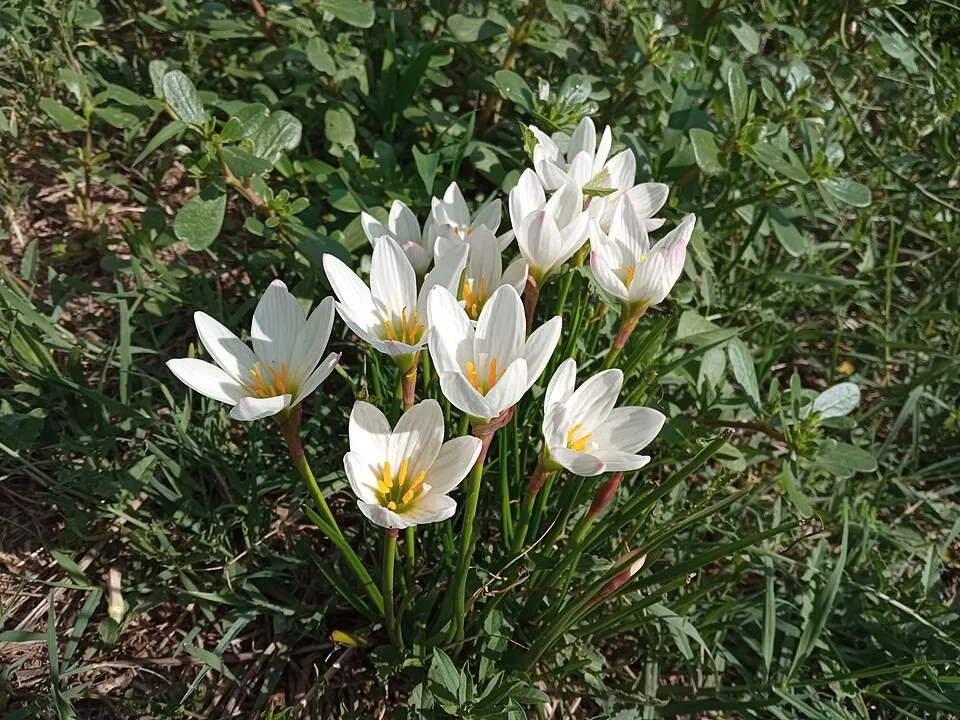
Zephyranthes candida, commonly referred to as Rain Lily, is a perennial bulbous plant that reaches a height of up to 30 centimeters. The leaves typically are long and linear, growing up to 20 centimeters long and about 1 centimeter wide with a glossy green appearance. This species produces striking white flowers characterized by a funnel shape, measuring approximately 5 to 7 centimeters in diameter, and resembling crocus blooms; these flowers usually emerge following rain, hence the common name. The flowering stalks, or scapes, are hollow and can reach the same height as the leaves, rising above them to display the flowers prominently.
The plant's bulbs are small, typically about 5 centimeters in diameter, and covered with a fibrous tunic. The natural habitat of Zephyranthes candida includes wet or poorly drained areas, often found in grasslands or open fields across regions in North America and parts of Central America. Taxonomically, it belongs to the family Amaryllidaceae, which encompasses a wide variety of bulbous flowering plants. Zephyranthes candida thrives in temperate climates and is notable for its resilience to drought.
This plant is not only aesthetically pleasing but has also made its mark in traditional medicine systems. Throughout different cultures, it has been recognized for its various applications in treating health issues.
Trusted Scientific References
1. Authoritative external sources for Zephyranthes candida
1.1 Wikipedia — Zephyranthes candida
1.2 Kew POWO (Plants of the World Online)
1.3 PubMed — peer-reviewed research
1.4 NCBI Taxonomy Browser
1.5 GBIF — Global Biodiversity
1.6Zephyranthes should be interpreted through verified botanical identity, practical care, and responsible safety language. This recovery note adds the missing context needed for a complete profile: match light to the plant's habit, use well-drained soil, water according to season, and avoid unsupported medicinal or edible claims. For publishing, the plant can be presented as a source-backed medicinal plant with clear care guidance, common problem diagnosis, and conservative safety wording.
1.1.Zephyranthes — Notable Characteristics
- ✓Height — Can grow up to 30 centimeters tall
- ✓Leaf Shape — Long, linear leaves up to 20 centimeters in length
- ✓Flower Color — Striking white, funnel-shaped flowers measuring 5 to 7 centimeters in diameter
- ✓Scape Structure — Hollow flower stalks that rise above the foliage
- ✓Bulb Size — Small bulbs around 5 centimeters in diameter
- ✓Natural Habitat — Prefers wet grasslands and open fields in North and Central America
- ✓Family — Part of the Amaryllidaceae family, which includes many bulbous plants
- ✓Drought Tolerance — Resilient to dry conditions once established
- ✓Pollinator Friendly — Attracts bees and butterflies with its blooms
- ✓Seasonal Blooming — Flowers typically appear after rainfall, contributing to its name
1.2.Zephyranthes — In Brief
- ✓Zephyranthes candida, or Rain Lily, is a perennial bulbous plant reaching heights of up to 30 centimeters, featuring long, glossy green leaves and stunning white, funnel-shaped flowers. Thriving in wet grasslands across North and Central America, it belongs to the Amaryllidaceae family. The plant has significant traditional medicinal uses due to its alkaloids and flavonoids, praised particularly in Ayurveda and Traditional Chinese Medicine for ailments like respiratory issues and gastrointestinal disturbances.
- ✓Care for this easy-to-grow plant includes ensuring well-drained soil and full sunlight, making it an excellent choice for aesthetically pleasing gardens and as a natural remedy in careful doses.
2.Zephyranthes — Botanical Identity
3.Zephyranthes — Vital Statistics
4.Zephyranthes — Physical Description
5.Zephyranthes — Ecological Habitat
6.Zephyranthes — Folk Medicine Applications
Agricultural Research Service, United States Department of Agriculture. United States Department of Agriculture (USDA). 05. ↑"Royal Horticultural Society: Find a Plant".
7.Zephyranthes — Phytochemistry
- ✓Alkaloids (lycorine, galanthamine, haemanthamine), flavonoids, terpenes
8.Zephyranthes — Scientific Evidence
- ✓Traditionally used for wound healing, anti-inflammatory purposes, and as an emetic.
- ✓Some studies suggest potential anticancer and antimicrobial properties.
8.1.Zephyranthes — Indications & Uses
9.Zephyranthes — Cautions & Contraindications
9.1.Zephyranthes — Reported Side Effects
- ✓Nausea, vomiting (in large doses)
9.2.Zephyranthes — Safety Overview
- ✓Contains alkaloids
- ✓Ingestion in large quantities may be toxic. Consult a healthcare professional before use.
10.Zephyranthes — Preparation Methods
- ✓Topical application for wounds, decoction for internal use (with caution and under supervision).
11.Zephyranthes — Garden Cultivation
- ✓Propagated by bulbs or seeds.
- ✓Plant bulbs 1 inch deep and 3-4 inches apart.
Reviewed by the Flora Medical Global Botanical Review Panel
Multi-disciplinary editorial group · Botany · Ethnobotany · Herbal-medicine literature
Who reviewed this: This page was checked by the Flora Medical Global Botanical Review Panel — an in-house editorial group of botany graduates, ethnobotany researchers, and horticulture practitioners who collectively maintain our 7,000+ plant encyclopedia. Meet the team.
Our 4-step verification process
1. Taxonomic verification
Scientific names and synonyms cross-checked against Kew POWO, World Flora Online, and The Plant List.
2. Phytochemical & medicinal cross-reference
Active compounds, traditional uses, and reported activities are cross-referenced with PubMed, USDA Dr. Duke's database, and peer-reviewed ethnobotanical literature.
3. Conservation & distribution check
Distribution, ecology, and conservation status confirmed against GBIF occurrence records and the IUCN Red List.
4. Editorial & safety review
Every entry passes an editorial pass for clarity, originality, and safety notices (toxicity, contraindications, dosage caveats) before publication.
Last reviewed:
Important medical disclaimer: This content is for educational and research purposes only. It is not medical advice and is not a substitute for consultation with a licensed healthcare provider. Do not use any herb to self-treat a medical condition without professional guidance.
Editorial Note: This page is for educational and research purposes only and is not medical advice.
Written by: Flora Medical Global Editorial Team
Reviewed by: Flora Medical Global Botanical Review Panel
Last Updated: June 16, 2026





Zephyranthes — Comments & Community Reviews
Rate this plant