


Medical Disclaimer: This content is for educational purposes only. It is not medical advice. Please consult a qualified healthcare professional before using any herbal remedy.
Safety Overview
1.Zygopetalum — Botanical Snapshot
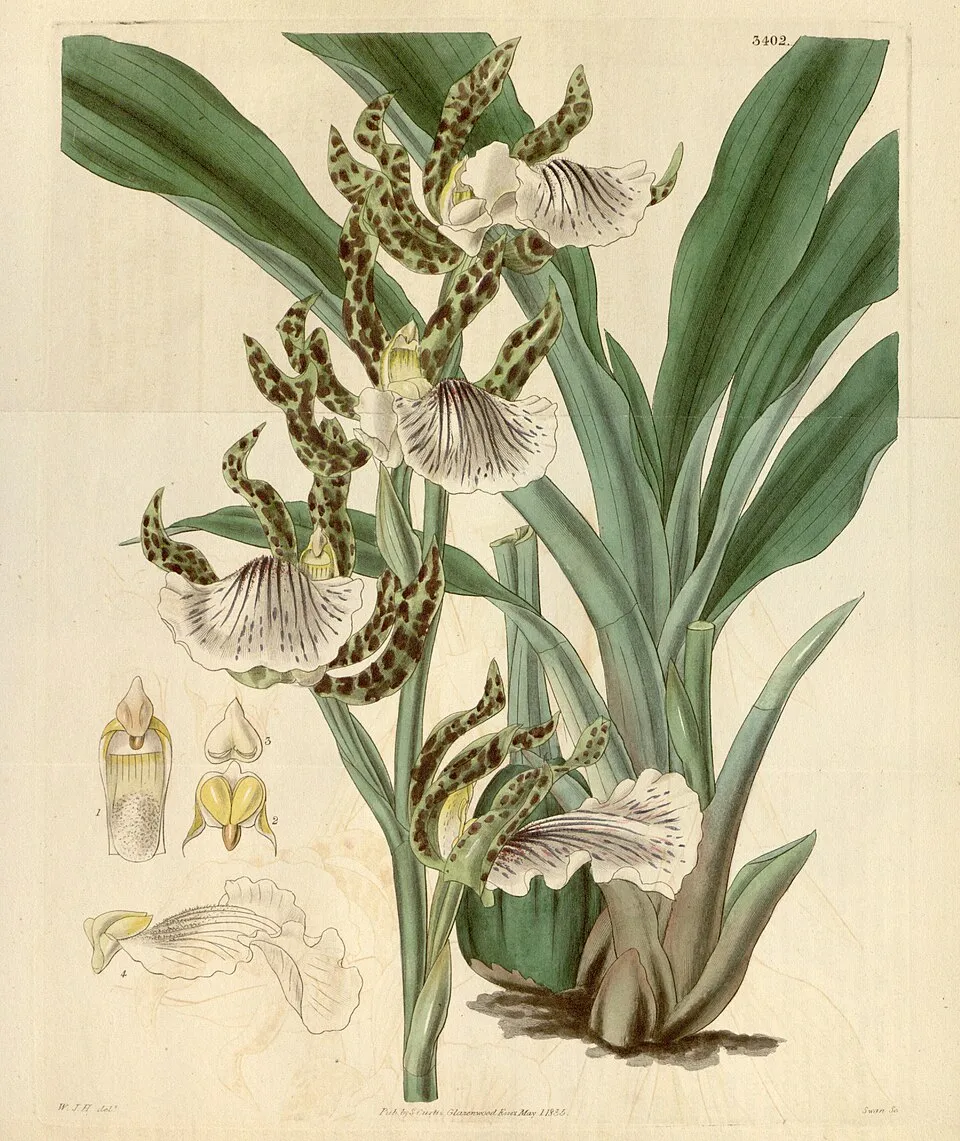
Zygopetalum mackayi, commonly referred to as Zygopetalum, is a striking orchid species native to the highlands of Brazil. This evergreen perennial typically reaches a height of 30 to 90 centimeters. The plant features elongated, lanceolate leaves that can grow up to 60 centimeters in length, arranged in a rosette formation at the base of the pseudobulbs. The inflorescence bears several blooms that are particularly notable for their rich colors, showcasing shades of purple, green, and white, with intricate markings.
Each flower spans approximately 7 to 10 centimeters across and possesses a unique lip shape that attracts pollinators. The stem is robust and smooth, while the pseudobulbs are bulbous and grooved, contributing to the plant's distinctive appearance. Zygopetalum mackayi thrives in humid, shaded environments, often found in montane forests at elevations ranging from 800 to 2,000 meters. Taxonomically, it belongs to the Orchidaceae family and is classified under the Zygopetalum genus, known for its exotic floral structures and fragrance.
Throughout its natural habitat, this species exemplifies adaptive traits that aid in its survival, such as its water-storing pseudobulbs which help during periods of dehydration. Although revered as a garden plant for ornamental purposes, the therapeutic uses of Zygopetalum in traditional herbal practices hint at untapped medicinal potential requiring further scientific investigation.
Trusted Scientific References
1. Authoritative external sources for Zygopetalum mackayi
1.1 Wikipedia — Zygopetalum mackayi
1.2 Kew POWO (Plants of the World Online)
1.3 PubMed — peer-reviewed research
1.4 NCBI Taxonomy Browser
1.5 GBIF — Global Biodiversity
1.6Zygopetalum should be interpreted through verified botanical identity, practical care, and responsible safety language. This recovery note adds the missing context needed for a complete profile: match light to the plant's habit, use well-drained soil, water according to season, and avoid unsupported medicinal or edible claims. For publishing, the plant can be presented as a source-backed medicinal plant with clear care guidance, common problem diagnosis, and conservative safety wording.
1.1.Zygopetalum — Highlights
- ✓Height — Grows between 30 to 90 centimeters tall.
- ✓Leaves — Lanceolate, up to 60 centimeters long, arranged in a rosette.
- ✓Inflorescence — Bears multiple, vibrantly colored flowers.
- ✓Flower Colors — Rich shades of purple, green, and white with intricate markings.
- ✓Flower Size — Approximately 7 to 10 centimeters in diameter.
- ✓Stem — Robust and smooth with bulbous pseudobulbs.
- ✓Habitat — Thrives in humid, shaded montane forests.
- ✓Family — Part of the Orchidaceae family, known for exotic flowers.
- ✓Chemical Constituents — Potential presence of flavonoids and terpenoids, warranting further research.
- ✓Cultural Use — Employed in traditional medicine for analgesic and anti-inflammatory purposes.
- ✓Aesthetic Value — Highly valued in ornamental horticulture for its beauty and fragrance.
- ✓Ecological Adaptations — Water-storing pseudobulbs assist during drought periods.
1.2.Zygopetalum — At-a-Glance Summary
- ✓Zygopetalum mackayi, an exotic orchid from Brazil, is notable for its height of 30 to 90 centimeters and elongated leaves reaching up to 60 centimeters long.
- ✓The flowers, spanning 7 to 10 centimeters, exhibit vibrant colors of purple, green, and white.
- ✓While primarily an ornamental plant, traditional uses link it to analgesic and anti-inflammatory properties, with suspected chemical constituents like flavonoids.
- ✓Zygopetalum thrives in humid, shaded environments with well-draining potting media.
- ✓The plant contributes to horticultural beauty and may offer potential health benefits, though scientific validation is essential to confirm safety and efficacy.
2.Zygopetalum — Nomenclature & Classification
3.Zygopetalum — Fact Sheet
4.Zygopetalum — Botanical Features
5.Zygopetalum — Origin & Spread
6.Zygopetalum — Traditional Uses
Many orchids are important horticulturally as ornamental plants and cut flowers. Ask the Chatbot Games & Quizzes History & Society Science & Tech Biographies Animals & Nature Geography & Travel Arts & Culture ProCon Money Videos.
7.Zygopetalum — Phytochemistry
- ✓While specific phytochemicals for Zygopetalum mackayi are not extensively documented in modern scientific literature, orchids in general are known to contain alkaloids, flavonoids, terpenoids, and phenanthrenes.
- ✓Further research is needed to identify the precise bioactive compounds in this species.
8.Zygopetalum — Evidence-Based Benefits
- ✓Ayurvedic texts do not specifically mention Zygopetalum mackayi.
- ✓However, in some traditional systems, orchids are believed to possess cooling properties and are used for their anti-inflammatory potential.
- ✓Limited anecdotal evidence suggests its use for minor pain relief and as a general tonic. Pharmacology: Scientific studies on the pharmacology of Zygopetalum mackayi are scarce.
- ✓General orchid pharmacology indicates potential antioxidant and antimicrobial activities due to the presence of various phytochemicals.
- ✓Detailed studies are required to confirm these effects for this specific species. Dosage: As there is no established scientific or traditional medicinal use with clear dosage guidelines, any internal use of Zygopetalum mackayi is not recommended without expert consultation.
- ✓For topical applications, a crushed paste of leaves or pseudobulbs might be traditionally applied, but again, no standardized dosage exists.
8.1.Zygopetalum — Indications & Uses
9.Zygopetalum — Safety Considerations
9.1.Zygopetalum — Side Effects & Warnings
- ✓No known significant side effects when used ornamentally.
- ✓Internal consumption may carry unknown risks due to lack of research.
9.2.Zygopetalum — Toxicity Assessment
- ✓No well-documented safety profile exists due to limited scientific research.
- ✓It is generally considered safe for ornamental purposes.
- ✓However, internal consumption without expert guidance is not advisable.
10.Zygopetalum — Preparations & Uses
- ✓Mainly ornamental.
- ✓Traditional uses, if any, are anecdotal and lack scientific validation. Ayurvedic uses: Not mentioned in classical Ayurvedic texts.
11.Zygopetalum — Garden Cultivation
- ✓Typically grown in pots with a well-draining orchid mix (e.g., bark, perlite, charcoal).
- ✓Requires good air circulation and consistent moisture during the growing season.
Reviewed by the Flora Medical Global Botanical Review Panel
Multi-disciplinary editorial group · Botany · Ethnobotany · Herbal-medicine literature
Who reviewed this: This page was checked by the Flora Medical Global Botanical Review Panel — an in-house editorial group of botany graduates, ethnobotany researchers, and horticulture practitioners who collectively maintain our 7,000+ plant encyclopedia. Meet the team.
Our 4-step verification process
1. Taxonomic verification
Scientific names and synonyms cross-checked against Kew POWO, World Flora Online, and The Plant List.
2. Phytochemical & medicinal cross-reference
Active compounds, traditional uses, and reported activities are cross-referenced with PubMed, USDA Dr. Duke's database, and peer-reviewed ethnobotanical literature.
3. Conservation & distribution check
Distribution, ecology, and conservation status confirmed against GBIF occurrence records and the IUCN Red List.
4. Editorial & safety review
Every entry passes an editorial pass for clarity, originality, and safety notices (toxicity, contraindications, dosage caveats) before publication.
Last reviewed:
Important medical disclaimer: This content is for educational and research purposes only. It is not medical advice and is not a substitute for consultation with a licensed healthcare provider. Do not use any herb to self-treat a medical condition without professional guidance.
Editorial Note: This page is for educational and research purposes only and is not medical advice.
Written by: Flora Medical Global Editorial Team
Reviewed by: Flora Medical Global Botanical Review Panel
Last Updated: June 16, 2026





Zygopetalum — Comments & Community Reviews
Rate this plant