

Medical Disclaimer: This content is for educational purposes only. It is not medical advice. Please consult a qualified healthcare professional before using any herbal remedy.
Safety Overview
1.Agapanthus Praecox — At a Glance
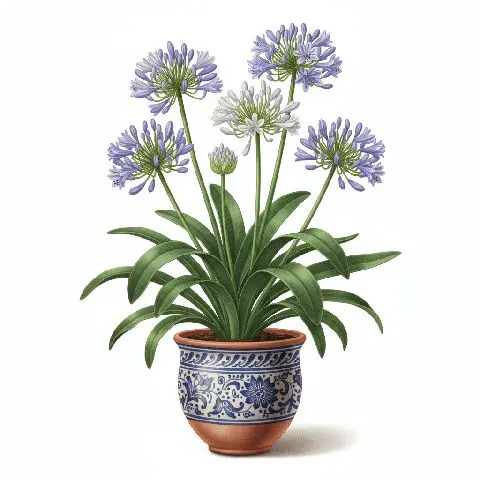
Agapanthus praecox, widely recognized as the Common Agapanthus or African Lily, is a resilient perennial herbaceous plant native to the eastern Cape of South Africa, thriving in its natural habitat of rocky grasslands and stony slopes. This adaptability underscores its robustness across diverse ecological settings. Its evocative name, derived from the Greek 'agape' (love) and 'anthos' (flower), fittingly captures its significant ornamental appeal. Morphologically, the plant forms dense, evergreen clumps of strap-like leaves, typically growing up to 50 cm in height.
Striking flowering stems emerge from these basal rosettes, reaching impressive heights of 0.8 to 1.5 meters, culminating in spherical umbels laden with numerous trumpet-shaped flowers. These blossoms, predominantly in shades of blue or white, grace gardens from early summer through late autumn. Beyond its indigenous range, Agapanthus praecox has been widely cultivated and naturalized in regions like Australia, New Zealand, and parts of Europe, valued for its hardiness and aesthetic contribution to resilient landscaping. Culturally, it holds deep significance among indigenous South African communities, particularly the Xhosa and Zulu peoples, who have historically employed its roots, leaves, and rhizomes in traditional medicinal practices and rituals.
These uses range from addressing respiratory conditions and heart ailments to spiritual practices for fertility and protection against natural phenomena like thunderstorms. While its traditional importance is well-established, contemporary pharmacological research is exploring the biological activities of Agapanthus praecox, identifying various beneficial compounds. However, these studies also consistently emphasize the critical need for caution due to the presence of potentially toxic saponins throughout the plant. Its inherent resistance to pests and diseases, coupled with minimal maintenance requirements, solidifies Agapanthus praecox's status as a popular and enduring ornamental plant in gardens globally.
Trusted Scientific References
1. Authoritative external sources for Agapanthus praecox
1.1 Wikipedia — Agapanthus praecox
1.2 Kew POWO (Plants of the World Online)
1.3 PubMed — peer-reviewed research
1.4 NCBI Taxonomy Browser
1.5 GBIF — Global Biodiversity
1.1.Agapanthus Praecox — Highlights
- ✓Evergreen perennial with strap — like leaves.
- ✓Produces striking blue or white trumpet — shaped flowers.
- ✓Native to the — Native to the Eastern Cape of South Africa.
- ✓Member of the — Member of the Amaryllidaceae family.
- ✓Culturally significant in — Culturally significant in indigenous South African communities.
- ✓Contains toxic saponins, — Contains toxic saponins, posing a health risk if ingested.
- ✓Highly valued ornamental — Highly valued ornamental plant for landscaping.
- ✓Drought — resistant once established.
- ✓Generally pest and disease — free.
- ✓Flowers freely in — Flowers freely in sunny positions and after division.
1.2.Agapanthus Praecox — In Brief
- ✓Native to South Africa, ornamental perennial with blue/white flowers.
- ✓Traditionally used by Xhosa and Zulu for various ailments and rituals.
- ✓Contains toxic steroidal saponins, causing haemolytic poisoning and oral ulceration.
- ✓Requires expert supervision for any medicinal application due to high toxicity.
- ✓Popular in horticulture for hardiness and low maintenance.
- ✓Cultivated globally, thrives in sunny, well-drained conditions.
2.Agapanthus Praecox — Scientific Identity
3.Agapanthus Praecox — Fact Sheet
4.Agapanthus Praecox — Botanical Description
5.Agapanthus Praecox — Origin & Spread
6.Agapanthus Praecox — Traditional Uses
7.Agapanthus Praecox — Chemical Profile
- ✓Saponins — Agapanthus praecox is notably rich in steroidal saponins, which are potent compounds responsible for its known toxicity, particularly haemolytic effects, but also show potential anti-inflammatory and cytotoxic activities in controlled studies.
- ✓Flavonoids — These polyphenolic compounds, such as quercetin and kaempferol derivatives, are common antioxidants and contribute to the plant's defense mechanisms, offering potential anti-inflammatory and free radical scavenging properties.
- ✓Phenolic Acids — Including compounds like gallic acid and caffeic acid, these are strong antioxidants and may contribute to antimicrobial and anti-inflammatory actions.
- ✓Glycosides — Various cardiac glycosides or related steroidal glycosides are characteristic of the Amaryllidaceae family, which can have significant effects on heart function, though specific compounds in Agapanthus praecox require further elucidation.
- ✓Alkaloids — While less prominent than saponins, some alkaloidal compounds may be present, contributing to diverse pharmacological effects, often with potent biological activity.
- ✓Terpenoids — Volatile organic compounds such as monoterpenes and sesquiterpenes contribute to the plant's aroma and may possess antimicrobial, anti-inflammatory, and insecticidal properties.
- ✓Phytosterols — Plant sterols like beta-sitosterol are structural components of cell membranes and are known for their cholesterol-lowering and anti-inflammatory effects.
- ✓Anthocyanins — These water-soluble pigments are responsible for the blue and purple hues of the flowers and are potent antioxidants, protecting against oxidative damage.
- ✓Tannins — Astringent compounds that can form complexes with proteins, often contributing to anti-inflammatory, antimicrobial, and wound-healing properties.
8.Agapanthus Praecox — Evidence-Based Benefits
- ✓Traditional Cardiac Support — Historically, Agapanthus praecox has been utilized in indigenous South African medicine for ailments related to the heart, suggesting a traditional cardiotonic or regulatory effect.
- ✓Stomachic Properties — In traditional practices, certain preparations were employed to support digestive health and alleviate stomach discomfort, indicating a stomachic action.
- ✓Respiratory Aid — Extracts from Agapanthus praecox have been traditionally used to address various respiratory conditions, potentially offering mucolytic or bronchodilatory effects.
- ✓Fertility and Reproductive Support — Among some indigenous communities, parts of the plant are ceremonially and medicinally used for promoting fertility and supporting reproductive health.
- ✓Ritualistic Protection — Beyond physical ailments, the plant holds cultural significance for protection against adverse events, such as thunderstorms, reflecting its role in spiritual and protective rituals.
- ✓Anti-inflammatory Potential — Preliminary phytochemical studies suggest the presence of compounds, including saponins, that might possess anti-inflammatory properties, though this requires careful consideration of toxicity.
- ✓Antimicrobial Activity — Research into plant extracts often reveals broad-spectrum antimicrobial activity, which may contribute to traditional uses in treating infections.
- ✓Diuretic Effects — Traditional applications for certain conditions could imply diuretic properties, aiding in fluid balance and renal function.
- ✓Analgesic Applications — In some traditional contexts, the plant may have been used for pain relief, pointing towards potential analgesic compounds.
- ✓Wound Healing — Topical applications of certain plant parts in traditional medicine sometimes suggest wound-healing or antiseptic properties.
- ✓Antioxidant Capacity — Like many plants, Agapanthus praecox likely contains phenolic compounds and flavonoids that contribute to antioxidant defense, protecting cells from oxidative stress.
- ✓Febrifuge Properties — Anecdotal traditional uses might include its application for reducing fever, indicating potential antipyretic actions.
8.1.Agapanthus Praecox — Conditions Traditionally Used For
9.Agapanthus Praecox — Safety & Side Effects
9.1.Agapanthus Praecox — Caution Notes
- ✓Oral Ulceration — Direct contact with the sap, particularly in the mouth, can cause severe ulceration and irritation.
- ✓Haemolytic Poisoning — Ingestion of plant parts, especially the rhizomes, is suspected to cause haemolytic poisoning in humans, leading to red blood cell destruction.
- ✓Gastrointestinal Distress — Consumption can lead to symptoms such as nausea, vomiting, abdominal pain, and diarrhea.
- ✓Skin Irritation — Dermal contact with the plant sap may cause contact dermatitis, redness, itching, and blistering in sensitive individuals.
- ✓Allergic Reactions — Individuals sensitive to plants in the Amaryllidaceae family may experience allergic responses.
- ✓Organ Damage — Prolonged or high-dose exposure, particularly internally, could potentially lead to liver or kidney damage due to toxic compounds.
9.2.Agapanthus Praecox — Safety Profile
- ✓High Toxicity Warning — All parts of Agapanthus praecox are considered toxic, primarily due to the presence of steroidal saponins.
- ✓Avoid Internal Consumption — Internal use is strongly discouraged without expert medical or herbalist guidance due to the risk of severe poisoning.
- ✓Keep Away from Children and Pets — Ensure the plant is inaccessible to young children and domestic animals who might ingest it accidentally.
- ✓Handle with Gloves — Wear protective gloves when handling the plant, especially when cutting or crushing, to prevent skin irritation from the sap.
- ✓Pregnant and Nursing Women — Contraindicated for use by pregnant or nursing women due to potential toxicity and lack of safety data.
- ✓Individuals with Pre-existing Conditions — Patients with cardiac, renal, or hepatic conditions should strictly avoid Agapanthus praecox.
- ✓Seek Medical Attention — In case of accidental ingestion or severe dermal exposure, immediate medical attention is crucial.
10.Agapanthus Praecox — Usage Guide
- ✓Traditional Rhizome Decoction — Historically, rhizomes were boiled to create decoctions for internal use, though modern application is highly cautioned due to toxicity.
- ✓Leaf Poultices — Fresh leaves were traditionally crushed and applied topically as poultices for various external ailments or injuries.
- ✓Root Preparations — Roots have been used in traditional remedies, sometimes macerated or infused, primarily for conditions like respiratory issues or fertility support.
- ✓Ceremonial Smudging — Dried plant parts, particularly leaves, might be used in traditional smudging or burning rituals for protection or spiritual cleansing.
- ✓Topical Sap Application (Extreme Caution) — The sap has been applied topically in some traditional contexts, but its severe ulcerogenic properties necessitate extreme caution and avoidance.
- ✓Tinctures (Expert Supervision) — In modern herbalism, highly diluted tinctures might be prepared under strict expert supervision for specific applications, given the plant's potent compounds.
- ✓Infusions (Limited Internal Use) — Infusions of leaves, while traditionally used, are generally not recommended for internal consumption without profound knowledge of safe dosages due to inherent toxicity.
11.Agapanthus Praecox — How to Grow
- ✓Soil Preference — Thrives in most soil types but prefers a light, very well-drained porous soil enriched with leaf-mould.
- ✓Moisture Requirements — Requires ample moisture during the active growing season but should be kept relatively dry during winter dormancy.
- ✓Light Conditions — Flowers most profusely when planted in a very sunny position, though it can tolerate partial shade.
- ✓Planting Depth — Rhizomes are best planted just below soil level; a gravel or stone chip mulch helps prevent excess moisture around the crown.
- ✓Drought Resistance — Once established, Agapanthus praecox exhibits good drought resistance, making it suitable for xeriscaping.
- ✓Division — Responds exceptionally well to division, which can be performed every 3-4 years to maintain vigor and promote abundant flowering.
- ✓Pest & Disease Resistance — Generally pest and disease-free, though it can harbor snails which typically feed on neighboring plants rather than the Agapanthus itself.
- ✓Maritime Suitability — Successfully grows in maritime gardens, demonstrating tolerance to coastal conditions.
Reviewed by the Flora Medical Global Botanical Review Panel
Multi-disciplinary editorial group · Botany · Ethnobotany · Herbal-medicine literature
Who reviewed this: This page was checked by the Flora Medical Global Botanical Review Panel — an in-house editorial group of botany graduates, ethnobotany researchers, and horticulture practitioners who collectively maintain our 7,000+ plant encyclopedia. Meet the team.
Our 4-step verification process
1. Taxonomic verification
Scientific names and synonyms cross-checked against Kew POWO, World Flora Online, and The Plant List.
2. Phytochemical & medicinal cross-reference
Active compounds, traditional uses, and reported activities are cross-referenced with PubMed, USDA Dr. Duke's database, and peer-reviewed ethnobotanical literature.
3. Conservation & distribution check
Distribution, ecology, and conservation status confirmed against GBIF occurrence records and the IUCN Red List.
4. Editorial & safety review
Every entry passes an editorial pass for clarity, originality, and safety notices (toxicity, contraindications, dosage caveats) before publication.
Last reviewed:
Important medical disclaimer: This content is for educational and research purposes only. It is not medical advice and is not a substitute for consultation with a licensed healthcare provider. Do not use any herb to self-treat a medical condition without professional guidance.
Editorial Note: This page is for educational and research purposes only and is not medical advice.
Written by: Flora Medical Global Editorial Team
Reviewed by: Flora Medical Global Botanical Review Panel
Last Updated: June 15, 2026





Agapanthus Praecox — Comments & Community Reviews
Rate this plant