
Medical Disclaimer: This content is for educational purposes only. It is not medical advice. Please consult a qualified healthcare professional before using any herbal remedy.
Safety Overview
1.Agastache Rugosa — Overview
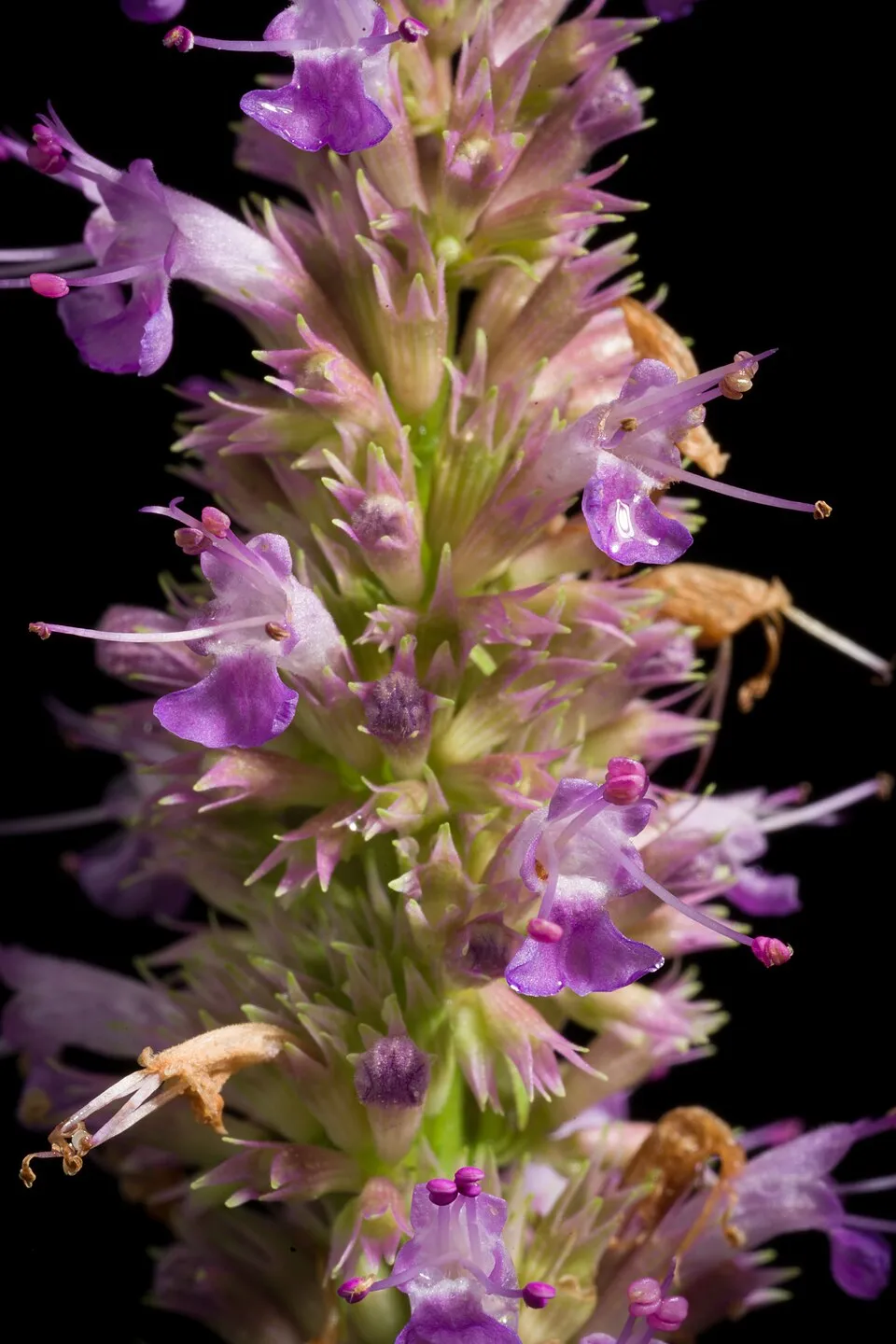
Agastache rugosa, commonly known as Korean Mint or Wrinkled Giant Hyssop, is a distinguished herbaceous perennial belonging to the Lamiaceae family. Native to East Asia, particularly Korea, China, and Japan, this aromatic plant is characterized by its upright, bushy growth habit, typically reaching heights of 60 to 120 cm. Its stems are square, a hallmark feature of the mint family, and are often flushed with purplish hues. The leaves are opposite, ovate-lanceolate, with serrated margins, and emit a strong, pleasant minty-anise scent when crushed.
They grow to about 5-10 cm in length, tapering to a pointed apex. From mid-summer to early autumn, Agastache rugosa produces dense, terminal spikes of small, tubular flowers, which can vary in color from lavender-blue to violet-purple, and occasionally white. These inflorescences are highly attractive to a wide array of pollinators, including bees and butterflies, making the plant a valuable addition to ecological gardens. Agastache rugosa thrives in full sun to partial shade and prefers well-drained, moderately fertile soil.
It exhibits good drought tolerance once established but benefits from consistent moisture. Its natural habitat includes open fields, forest edges, and disturbed areas, where it can form impressive colonies. Beyond its ornamental and ecological value, Agastache rugosa is deeply rooted in traditional East Asian medicinal practices, revered for its multifaceted therapeutic properties.
Trusted Scientific References
1. Authoritative external sources for Agastache rugosa
1.1 Wikipedia — Agastache rugosa
1.2 Kew POWO (Plants of the World Online)
1.3 PubMed — peer-reviewed research
1.4 NCBI Taxonomy Browser
1.5 GBIF — Global Biodiversity
1.6Agastache Rugosa should be interpreted through verified botanical identity, practical care, and responsible safety language. This recovery note adds the missing context needed for a complete profile: match light to the plant's habit, use well-drained soil, water according to season, and avoid unsupported medicinal or edible claims. For publishing, the plant can be presented as a source-backed garden plant with clear care guidance, common problem diagnosis, and conservative safety wording.
1.1.Agastache Rugosa — Standout Qualities
- ✓East Asian Origin — Native to Korea, China, and Japan, with a rich history in traditional medicine.
- ✓Aromatic Foliage — Emits a distinctive minty-anise scent when leaves are crushed.
- ✓Pollinator Magnet — Highly attractive to bees, butterflies, and other beneficial insects.
- ✓Lamiaceae Family — Shares characteristic square stems and opposite leaves with mints.
- ✓Medicinal Versatility — Valued for digestive, anti-inflammatory, and antimicrobial properties.
- ✓Culinary Herb — Used in various Asian cuisines for its unique flavor profile.
- ✓Ornamental Value — Produces attractive lavender-blue to violet-purple flower spikes.
- ✓Drought Tolerant — Once established, it can withstand periods of dry weather.
- ✓Rich in Phytochemicals — Contains a high concentration of flavonoids and phenolic acids.
- ✓Air Purifying Qualities — Contributes to improved air quality in urban landscapes.
1.2.Agastache Rugosa — Quick Summary
- ✓Agastache rugosa, or Korean Mint, is an aromatic East Asian perennial in the Lamiaceae family.
- ✓Traditionally used for digestive, anti-inflammatory, and antimicrobial benefits.
- ✓Rich in flavonoids, phenolic acids, and essential oils like methyl chavicol.
- ✓Cultivated for medicinal, culinary, and ornamental purposes.
- ✓Requires well-drained soil and full sun; attracts pollinators.
- ✓Caution advised for pregnant individuals and those on medication.
2.Agastache Rugosa — Scientific Profile
3.Agastache Rugosa — Reference Facts
4.Agastache Rugosa — Plant Morphology
5.Agastache Rugosa — Geographic Distribution
6.Agastache Rugosa — Ethnobotanical Uses
7.Agastache Rugosa — Bioactive Constituents
- ✓Flavonoids — Key compounds include acacetin, tilianin, and hesperidin, which contribute significantly to the plant's antioxidant, anti-inflammatory, and cardioprotective effects.
- ✓Phenolic Acids — Rosmarinic acid, caffeic acid, and chlorogenic acid are prominent, known for their powerful antioxidant and anti-inflammatory activities, crucial in cellular protection.
- ✓Essential Oils — The volatile fraction is rich in phenylpropanoids like methyl chavicol (estragole) and monoterpenes such as limonene, pulegone, and anethole, responsible for its distinctive aroma and antimicrobial properties.
- ✓Terpenoids — Beyond monoterpenes, other terpenoid compounds such as sesquiterpenes contribute to the plant's diverse pharmacological profile, including anti-inflammatory and potential anticancer activities.
- ✓Alkaloids — While less dominant than other classes, trace amounts of alkaloids may be present, contributing to specific physiological responses.
- ✓Glycosides — Various glycosidic compounds, including flavonoid glycosides, enhance the bioavailability and therapeutic efficacy of the primary active constituents.
- ✓Lignans — These compounds, often found in plant cell walls, may offer additional antioxidant and estrogenic modulating properties.
- ✓Polysaccharides — Complex carbohydrates present in the plant may contribute to its immunomodulatory effects, supporting overall immune system health.
- ✓Phytosterols — Plant sterols such as beta-sitosterol are found, known for their potential cholesterol-lowering and anti-inflammatory benefits.
8.Agastache Rugosa — Research Insights
- ✓Digestive Aid — Agastache rugosa has been traditionally utilized to alleviate various gastrointestinal discomforts, including indigestion, nausea, vomiting, and bloating, by promoting healthy digestive function.
- ✓Anti-inflammatory Properties — The plant contains compounds that help reduce inflammation throughout the body, making it beneficial for conditions like arthritis and inflammatory bowel issues.
- ✓Antimicrobial Action — Extracts of Agastache rugosa demonstrate activity against certain bacteria and fungi, contributing to its traditional use in treating minor infections and promoting general wellness.
- ✓Diuretic Effects — Historically, it has been employed as a mild diuretic, aiding in the removal of excess fluids from the body and supporting kidney function.
- ✓Skin Irritation Relief — Topically, its leaves have been applied to soothe skin irritations, rashes, and insect bites due owing to their anti-inflammatory and antiseptic qualities.
- ✓Antioxidant Support — Rich in phenolic compounds, Agastache rugosa exhibits potent antioxidant activity, helping to neutralize free radicals and protect cells from oxidative damage.
- ✓Cardioprotective Benefits — Emerging research suggests the plant may contribute to cardiovascular health through its antioxidant and anti-inflammatory effects, potentially supporting healthy blood circulation.
- ✓Anti-atherosclerotic Potential — Studies indicate that certain constituents can help inhibit the formation of atherosclerotic plaques, thus supporting arterial health.
- ✓Pain Management — In traditional medicine, Agastache rugosa was used to relieve various types of pain, including headaches and muscle aches, likely due to its anti-inflammatory and analgesic properties.
- ✓Hypertension Support — It has been traditionally used to help manage hypertension, though further research is needed to fully understand its mechanisms in blood pressure regulation.
- ✓Respiratory Relief — The aromatic vapors from Agastache rugosa are believed to help clear respiratory passages, offering relief from symptoms of colds and flu.
- ✓Stress and Anxiety Reduction — The pleasant aroma and mild sedative properties of its essential oils are often used in aromatherapy to promote relaxation and reduce mild stress.
8.1.Agastache Rugosa — Reported Uses
9.Agastache Rugosa — Adverse Effects
9.1.Agastache Rugosa — Caution Notes
- ✓Allergic Reactions — Individuals sensitive to the Lamiaceae family may experience skin irritation, rash, or respiratory symptoms.
- ✓Gastrointestinal Upset — High doses may lead to mild stomach discomfort, nausea, or diarrhea in sensitive individuals.
- ✓Drug Interactions — Potential interactions with blood-thinning medications or sedatives due to its properties; consult a healthcare provider.
- ✓Photosensitivity — While rare, some individuals might experience increased skin sensitivity to sunlight after topical application.
- ✓Pregnancy and Lactation — Lack of sufficient safety data; generally advised against use during pregnancy and breastfeeding.
- ✓Blood Sugar Levels — May potentially affect blood sugar; caution advised for diabetics or those on related medications.
9.2.Agastache Rugosa — Safety Overview
- ✓Consult Healthcare Professional — Always advise consultation with a doctor or qualified herbalist before starting any new herbal remedy, especially with existing medical conditions.
- ✓Patch Test — For topical applications, perform a patch test on a small skin area to check for allergic reactions before widespread use.
- ✓Avoid During Pregnancy/Lactation — Due to insufficient safety data, pregnant and breastfeeding women should refrain from using Agastache rugosa.
- ✓Children and Infants — Exercise caution and consult a pediatrician before administering to children, especially infants.
- ✓Pre-existing Conditions — Individuals with chronic diseases, particularly liver or kidney issues, should use with extreme caution.
- ✓Medication Interactions — Monitor for potential interactions with prescription medications, especially anticoagulants, sedatives, or blood pressure drugs.
- ✓Dosage Adherence — Adhere strictly to recommended dosages; excessive consumption may lead to adverse effects.
10.Agastache Rugosa — Application Forms
- ✓Herbal Tea Infusion — Steep 1-2 teaspoons of dried Agastache rugosa leaves and flowers in hot water for 5-10 minutes to create a soothing digestive or respiratory tea.
- ✓Tincture Preparation — Macerate fresh or dried plant material in high-proof alcohol for several weeks to extract compounds, then filter and use drops as directed.
- ✓Culinary Herb — Incorporate fresh leaves into salads, stir-fries, or use as a garnish for a unique minty-anise flavor, especially in Asian cuisine.
- ✓Topical Compress — Brew a strong infusion, allow it to cool, and apply a cloth soaked in the liquid to minor skin irritations or insect bites.
- ✓Essential Oil Diffusion — Use a few drops of Agastache rugosa essential oil in a diffuser to purify air, uplift mood, or alleviate respiratory congestion.
- ✓Herbal Poultice — Crush fresh leaves to form a paste and apply directly to localized areas for anti-inflammatory and soothing effects.
- ✓Herbal Bath — Add a strong infusion of the plant to bathwater for a relaxing and aromatic experience, beneficial for skin and stress relief.
- ✓Dried Herb for Potpourri — Utilize dried leaves and flowers in potpourri for their pleasant, long-lasting aroma, enhancing indoor air quality.
11.Agastache Rugosa — Growing Guide
- ✓Soil Preference — Agastache rugosa thrives in well-drained, moderately fertile soil enriched with organic matter; avoid heavy, waterlogged conditions.
- ✓Light Requirements — Plant in a location receiving full sun to partial shade, with full sun promoting more robust growth and abundant flowering.
- ✓Watering Schedule — Water regularly after planting to establish, then allow the soil to dry out between waterings, as it tolerates occasional drought.
- ✓Planting Time — Best planted in spring after the last frost, allowing ample time for root development before summer heat.
- ✓Spacing — Space plants about 30-45 cm apart to ensure good air circulation and prevent fungal issues as they mature.
- ✓Fertilization — A light application of balanced organic fertilizer in spring can enhance growth, but avoid over-fertilizing.
- ✓Pruning — Deadhead spent flowers to encourage continuous blooming and prune back in late fall or early spring to maintain shape and vigor.
- ✓Pest and Disease Management — Generally resistant to most pests and diseases, but ensure good air circulation to prevent powdery mildew in humid conditions.
Reviewed by the Flora Medical Global Botanical Review Panel
Multi-disciplinary editorial group · Botany · Ethnobotany · Herbal-medicine literature
Who reviewed this: This page was checked by the Flora Medical Global Botanical Review Panel — an in-house editorial group of botany graduates, ethnobotany researchers, and horticulture practitioners who collectively maintain our 7,000+ plant encyclopedia. Meet the team.
Our 4-step verification process
1. Taxonomic verification
Scientific names and synonyms cross-checked against Kew POWO, World Flora Online, and The Plant List.
2. Phytochemical & medicinal cross-reference
Active compounds, traditional uses, and reported activities are cross-referenced with PubMed, USDA Dr. Duke's database, and peer-reviewed ethnobotanical literature.
3. Conservation & distribution check
Distribution, ecology, and conservation status confirmed against GBIF occurrence records and the IUCN Red List.
4. Editorial & safety review
Every entry passes an editorial pass for clarity, originality, and safety notices (toxicity, contraindications, dosage caveats) before publication.
Last reviewed:
Important medical disclaimer: This content is for educational and research purposes only. It is not medical advice and is not a substitute for consultation with a licensed healthcare provider. Do not use any herb to self-treat a medical condition without professional guidance.
Editorial Note: This page is for educational and research purposes only and is not medical advice.
Written by: Flora Medical Global Editorial Team
Reviewed by: Flora Medical Global Botanical Review Panel
Last Updated: June 15, 2026





Agastache Rugosa — Comments & Community Reviews
Rate this plant