
Medical Disclaimer: This content is for educational purposes only. It is not medical advice. Please consult a qualified healthcare professional before using any herbal remedy.
Safety Overview
1.Agave Parryi — Introduction & Highlights
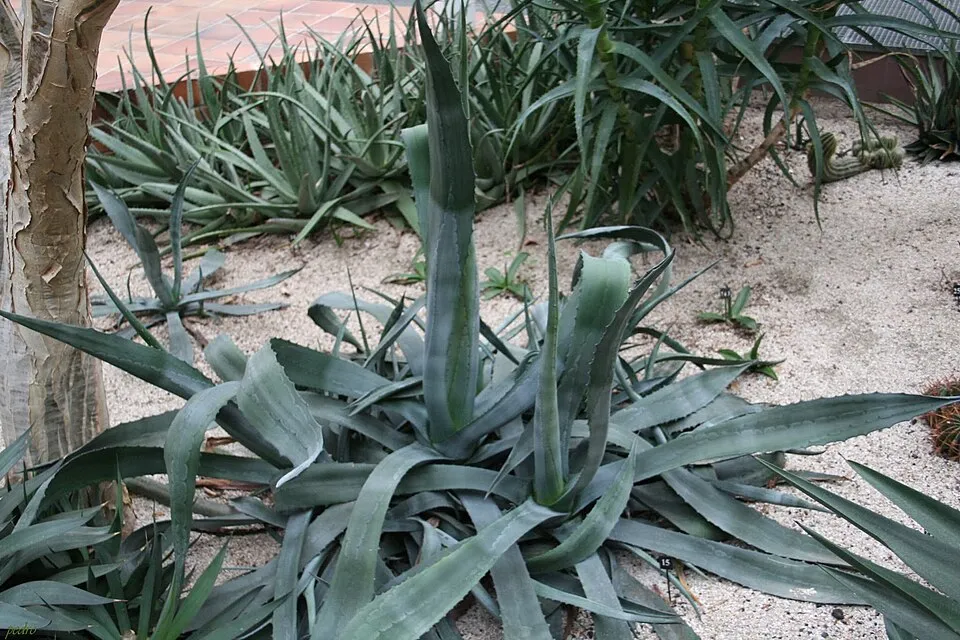
Agave parryi, commonly known as Parry's Agave or Century Plant, is a magnificent perennial succulent native to the arid and semi-arid regions of the southwestern United States and northern Mexico. Belonging to the Asparagaceae family (formerly Agavaceae), this plant forms a striking, dense rosette of thick, rigid, blue-green leaves.
Each lanceolate to ovate leaf is typically 30-60 cm long, featuring sharply serrated, reddish-brown margins and a formidable terminal spine that can be up to 3 cm long. The rosette itself can reach a diameter of 60-90 cm.
Agave parryi is monocarpic, meaning it flowers only once in its lifetime before dying. This event typically occurs after 10 to 30 years of vegetative growth, when it sends up an impressive, towering flower stalk (inflorescence) that can soar up to 6 meters (20 feet) tall.
This robust stalk is adorned with numerous side branches, each bearing clusters of hundreds of vibrant yellow flowers, often with reddish buds, attracting nectar-feeding bats and insects. After flowering and setting seed, the parent rosette gradually withers and dies, but often leaves behind a legacy of vegetative offshoots, or 'pups,' that emerge from its base, ensuring the plant's continuation.
Its preferred habitats include rocky slopes, mesas, and oak-juniper woodlands, thriving in elevations between 4,000 and 8,000 feet. Agave parryi is remarkably adaptable to extreme drought, intense sunlight, and well-drained, often nutrient-poor soils.
Its distribution spans across Arizona, New Mexico, and parts of Texas, extending into Chihuahua and Sonora in Mexico, making it a prominent and resilient feature of the desert landscape.
Trusted Scientific References
1. Authoritative external sources for Agave Parryi
1.1 Wikipedia — Agave Parryi
1.2 Kew POWO (Plants of the World Online)
1.3 PubMed — peer-reviewed research
1.4 NCBI Taxonomy Browser
1.5 GBIF — Global Biodiversity
1.6Agave Parryi should be interpreted through verified botanical identity, practical care, and responsible safety language. This recovery note adds the missing context needed for a complete profile: match light to the plant's habit, use well-drained soil, water according to season, and avoid unsupported medicinal or edible claims. For publishing, the plant can be presented as a source-backed garden plant with clear care guidance, common problem diagnosis, and conservative safety wording.
1.1.Agave Parryi — Key Features
- ✓Monocarpic Life Cycle — Flowers once after decades of growth, then the parent plant dies, often leaving offsets.
- ✓Rosette Growth Form — Forms a symmetrical, dense rosette of thick, blue-green, spiny leaves.
- ✓Impressive Inflorescence — Produces a magnificent flower stalk up to 20 feet (6 meters) tall.
- ✓Extreme Drought Tolerance — Highly adapted to arid environments, requiring minimal water.
- ✓Edible Core & Sap — Historically utilized for its sweet aguamiel and roasted, nutritious core.
- ✓Strong Fibers — Leaves yield durable fibers used for traditional crafts and textiles.
- ✓Ornamental Value — Highly valued in xeriscaping and desert gardens for its striking form.
- ✓Native to Southwest US & Mexico — Indigenous to Arizona, New Mexico, Texas, and northern Mexico.
- ✓'Pups' for Propagation — Readily produces vegetative offshoots that can be replanted.
- ✓Spiny Foliage — Leaves are armed with sharp marginal teeth and a prominent terminal spine.
1.2.Agave Parryi — In Brief
- ✓Agave parryi, or Parry's Agave, is a striking succulent known for its dense rosette and towering, monocarpic flower stalk.
- ✓Historically, it served as a vital food source, providing nutritious aguamiel and a sweet, fibrous roasted core to indigenous communities.
- ✓Its robust leaves yield strong fibers used for ropes, textiles, and other utilitarian purposes.
- ✓Highly drought-tolerant and prized in xeriscaping for its architectural beauty and low maintenance.
- ✓Requires careful handling due to sharp spines and potential skin irritants from its sap.
- ✓A symbol of resilience and adaptation in the arid landscapes of the American Southwest and Mexico.
2.Agave Parryi — Scientific Profile
3.Agave Parryi — Botanical Stats
4.Agave Parryi — Plant Morphology
5.Agave Parryi — Geographic Distribution
6.Agave Parryi — Ethnobotanical Uses
7.Agave Parryi — Bioactive Constituents
- ✓Fructans — Predominantly inulin-type fructans are stored in the plant's core and sap, acting as the primary carbohydrate reserve, contributing to its sweet taste and providing prebiotic benefits.
- ✓Steroidal Saponins — These triterpenoid glycosides are characteristic of Agave species, found in the leaves and roots, and may possess various biological activities, though specific medicinal applications for Agave parryi require further research.
- ✓Simple Sugars — Glucose, fructose, and sucrose are abundant in the aguamiel and the roasted core, serving as immediate energy sources and contributing to the plant's natural sweetness.
- ✓Dietary Fibers — Both soluble and insoluble fibers are present, especially in the thick, succulent leaves and core, essential for digestive health and providing structural integrity to the plant.
- ✓Flavonoids — A class of polyphenolic compounds found in various plant parts, contributing to antioxidant activity and potentially offering protective effects against oxidative stress.
- ✓Polysaccharides — Beyond fructans, other complex carbohydrates are present, contributing to the plant's structural components and energy storage.
- ✓Minerals — Agave parryi contains essential trace elements such as calcium, magnesium, potassium, and iron, contributing to its nutritional profile.
- ✓Organic Acids — Various organic acids may be present, influencing the plant's metabolism, flavor profile, and contributing to its overall chemical complexity.
- ✓Pectin — A soluble fiber found in the cell walls, contributing to the texture of the roasted core and potentially aiding digestion.
8.Agave Parryi — What Research Suggests
- ✓Sustained Energy Release — The complex carbohydrates and natural sugars present in Agave parryi's core and aguamiel (sap) historically provided a vital, slow-release energy source, crucial for indigenous populations facing strenuous conditions.
- ✓Digestive Fiber Source — The fibrous roasted core of Agave parryi, when consumed, contributes significant dietary fiber, which is essential for promoting healthy bowel function, regularity, and overall gastrointestinal well-being.
- ✓Natural Sweetener Alternative — Aguamiel, or 'honey water,' extracted from the plant, offers a natural, unrefined sweetening agent that, due to its fructan content, may support more balanced blood sugar levels compared to highly processed sugars.
- ✓Electrolyte Replenishment — The liquid aguamiel is a source of hydration and contains trace minerals, which historically contributed to maintaining electrolyte balance, particularly important in arid environments where the plant thrives.
- ✓Prebiotic Gut Support — Agave species are known for their fructans, particularly inulin-type fructans, which act as prebiotics to nourish beneficial gut bacteria, fostering a healthy and diverse microbiome.
- ✓Mineral & Vitamin Contribution — While not extensively studied for Agave parryi specifically, agaves generally provide a range of essential minerals (e.g., calcium, magnesium) and vitamins, contributing to overall dietary completeness.
- ✓Traditional Food Security — Historically, Agave parryi served as a crucial staple and famine food, offering substantial caloric and nutritional value that ensured survival and sustenance for indigenous communities in harsh desert conditions.
- ✓Culinary Adaptability — Its versatility in traditional preparations, from the sweet roasted 'meat' of its core to fermented beverages like pulque, underscores its importance in diverse diets and its role in meeting nutritional needs.
- ✓Hydration in Arid Climates — The water-rich sap and core provided a critical source of moisture, acting as a natural hydrator for people living in extremely dry regions.
8.1.Agave Parryi — Conditions Traditionally Used For
9.Agave Parryi — Adverse Effects
9.1.Agave Parryi — Warnings
- ✓Skin Irritation — Contact with the sap of Agave parryi can cause contact dermatitis, itching, or skin irritation in sensitive individuals due to the presence of calcium oxalate crystals or other irritating compounds.
- ✓Puncture Wounds — The plant's sharp terminal spines and marginal teeth on its rigid leaves pose a significant risk of painful puncture wounds, which can sometimes lead to localized infection if not properly cleaned.
- ✓Allergic Reactions — Although rare, individuals may experience allergic reactions to agave components, which could manifest as skin rashes, itching, or mild gastrointestinal upset upon ingestion.
- ✓Digestive Discomfort — Consuming large quantities of raw or improperly prepared agave parts, especially the fibrous core, might lead to gastrointestinal upset, gas, or bloating due to its complex carbohydrate and saponin content.
- ✓Blood Sugar Impact — While agave sugars are often considered to have a lower glycemic index, excessive consumption of aguamiel or roasted core can still elevate blood glucose levels, particularly in individuals with diabetes.
- ✓Oral Irritation — Chewing raw agave leaves or parts can cause irritation to the mouth and throat due to the presence of calcium oxalate crystals.
9.2.Agave Parryi — Clinical Safety Notes
- ✓External Caution — Always handle Agave parryi with robust protective gloves and eye protection to prevent skin contact with sap and injuries from its extremely sharp spines.
- ✓Internal Consumption — Only traditionally prepared parts, such as thoroughly roasted core or collected aguamiel, should be consumed; raw or unprepared plant sap should not be ingested due to potential irritants.
- ✓Pregnancy & Lactation — Due to limited specific research on Agave parryi's internal effects, pregnant and breastfeeding individuals should avoid consumption and consult a healthcare professional.
- ✓Children & Pets — Keep children and pets away from the plant to prevent accidental punctures or ingestion of irritating raw plant material, which can cause oral and digestive distress.
- ✓Pre-existing Conditions — Individuals with diabetes or blood sugar regulation issues should monitor their glucose levels closely if consuming agave products due to their natural sugar content.
- ✓Allergic Sensitivities — People with known allergies to plants in the Asparagaceae family or a history of contact dermatitis should exercise particular caution when handling or consuming Agave parryi.
- ✓Oral Health — Ensure roasted agave is chewed thoroughly and fibers discarded, as excessive fibrous material can be challenging to digest and potentially impact dental health.
10.Agave Parryi — How to Use
- ✓Aguamiel Extraction — The central bud of a mature Agave parryi is carefully removed, allowing the cavity to fill with sap, known as aguamiel, which is traditionally collected and consumed fresh as a sweet, nutritious beverage.
- ✓Roasted Core Preparation — The large, pineapple-like core (piña) of the agave is pit-roasted for several days, transforming its starches into sugars, yielding a sweet, fibrous 'meat' that can be chewed or pounded into cakes for long-term storage.
- ✓Fermented Beverage (Pulque) — Aguamiel, when collected, can be allowed to naturally ferment, producing pulque, a traditional alcoholic and probiotic beverage consumed by indigenous peoples.
- ✓Fiber Utilization — The robust, succulent leaves yield strong, durable fibers, historically processed and used for crafting ropes, twine, mats, sandals, baskets, and coarse textiles.
- ✓Traditional Food Source — Historically, Agave parryi served as a critical staple food, providing essential calories and nutrients, especially in times of scarcity, through its roasted core and sap.
- ✓Ornamental Planting — Due to its striking architectural form, beautiful blue-green foliage, and impressive flower stalk, Agave parryi is widely cultivated as an ornamental plant in xeriscape and desert gardens.
- ✓Landscaping Element — Its drought tolerance and low maintenance make it an excellent choice for sustainable landscaping in arid and semi-arid regions, providing visual interest and habitat.
11.Agave Parryi — Growth Requirements
- ✓Soil Preference — Agave parryi demands exceedingly well-draining, gritty, or sandy soils, ideally mimicking its native rocky desert environments; it tolerates a wide pH range from slightly acidic to moderately alkaline.
- ✓Sunlight Exposure — Requires full sun exposure to thrive, necessitating at least 6-8 hours of direct, intense sunlight daily for robust growth, proper coloration, and eventual flowering.
- ✓Watering Regime — Extremely drought-tolerant once established; water very sparingly, allowing the soil to dry out completely between waterings, and reduce frequency significantly during cooler or dormant months.
- ✓Temperature & Hardiness — Hardy to USDA zones 7-10, capable of tolerating cold temperatures down to 0-10°F (-18 to -12°C), but prefers hot, dry climates and protection from excessive winter moisture.
- ✓Propagation — Primarily propagated by removing the 'pups' or offsets that form around the base of the parent plant, which can be easily replanted once they develop roots.
- ✓Maintenance — Requires minimal care; remove dead or damaged lower leaves as needed and carefully manage the spent flower stalk after the plant dies; avoid over-fertilization.
- ✓Space Requirements — Provide ample space for the mature rosette, which can be quite wide, and consider the impressive height of the flower stalk when choosing a planting location.
Reviewed by the Flora Medical Global Botanical Review Panel
Multi-disciplinary editorial group · Botany · Ethnobotany · Herbal-medicine literature
Who reviewed this: This page was checked by the Flora Medical Global Botanical Review Panel — an in-house editorial group of botany graduates, ethnobotany researchers, and horticulture practitioners who collectively maintain our 7,000+ plant encyclopedia. Meet the team.
Our 4-step verification process
1. Taxonomic verification
Scientific names and synonyms cross-checked against Kew POWO, World Flora Online, and The Plant List.
2. Phytochemical & medicinal cross-reference
Active compounds, traditional uses, and reported activities are cross-referenced with PubMed, USDA Dr. Duke's database, and peer-reviewed ethnobotanical literature.
3. Conservation & distribution check
Distribution, ecology, and conservation status confirmed against GBIF occurrence records and the IUCN Red List.
4. Editorial & safety review
Every entry passes an editorial pass for clarity, originality, and safety notices (toxicity, contraindications, dosage caveats) before publication.
Last reviewed:
Important medical disclaimer: This content is for educational and research purposes only. It is not medical advice and is not a substitute for consultation with a licensed healthcare provider. Do not use any herb to self-treat a medical condition without professional guidance.
Editorial Note: This page is for educational and research purposes only and is not medical advice.
Written by: Flora Medical Global Editorial Team
Reviewed by: Flora Medical Global Botanical Review Panel
Last Updated: June 15, 2026





Agave Parryi — Comments & Community Reviews
Rate this plant