

Medical Disclaimer: This content is for educational purposes only. It is not medical advice. Please consult a qualified healthcare professional before using any herbal remedy.
Safety Overview
1.Akebia Quinata — Plant Snapshot
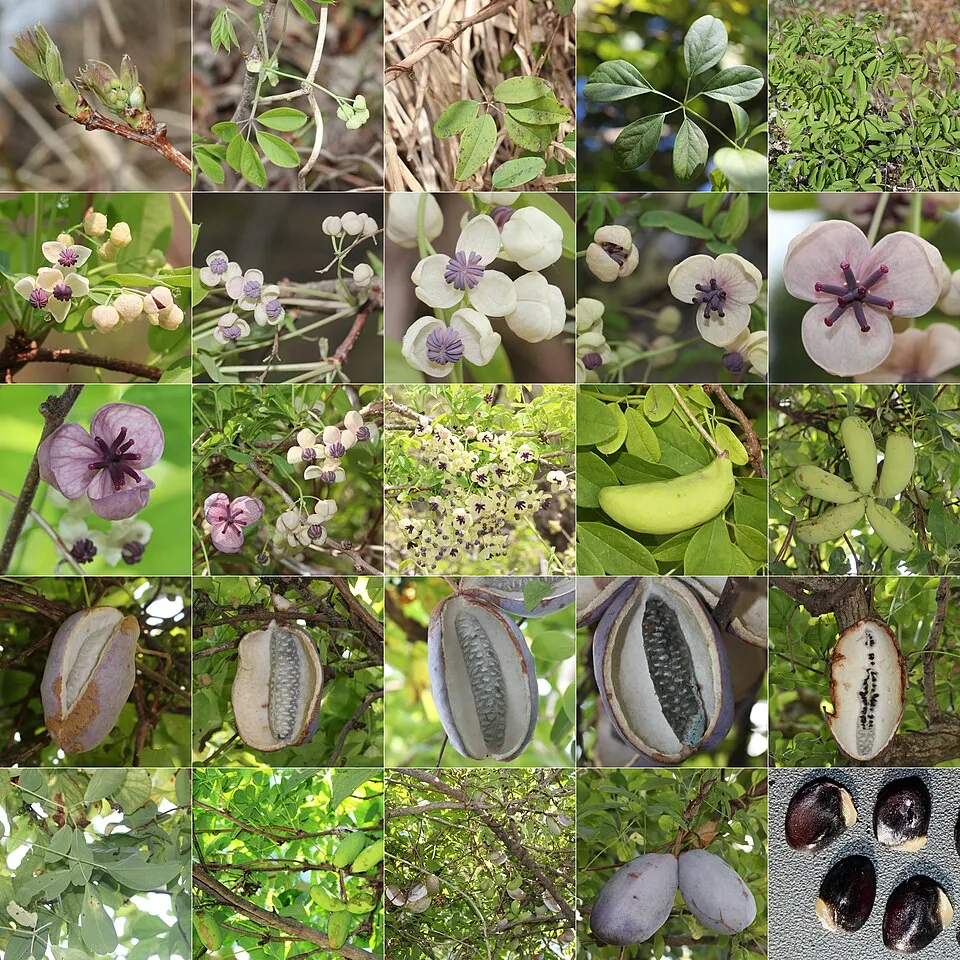
Akebia quinata, commonly known as Chocolate Vine, Five-leaf Akebia, or Raisin Vine, is a captivating deciduous to semi-evergreen woody twining vine belonging to the Lardizabalaceae family. Native to the temperate forests of Japan, China, and Korea, this vigorous plant is celebrated for its ornamental appeal and traditional medicinal uses. The vine can reach impressive lengths of up to 12 meters (40 feet), displaying graceful, palmately compound leaves, each typically comprising five ovate to lanceolate leaflets. These leaves emerge in spring, often accompanied by the plant's distinctive flowers.
Akebia quinata produces pendulous clusters of small, fragrant, reddish-purple flowers in early spring. While visually subtle, their delicate aroma, reminiscent of chocolate, gives the plant its popular common name. Following successful pollination, the vine develops large, sausage-shaped, purplish fruits that ripen in the fall, splitting open to reveal an edible, translucent white pulp embedded with numerous tiny black seeds. This species thrives in a variety of conditions, from full sun to deep shade, and tolerates a range of well-drained soils, including those that are poor or wet.
Its robust growth habit, however, leads to its classification as an invasive species in some regions, capable of outcompeting native vegetation if not managed through regular pruning. Despite its aggressive growth in certain environments, Akebia quinata remains a valuable plant for its aesthetic qualities, edible fruits, and documented ethnopharmacological properties.
Trusted Scientific References
1. Authoritative external sources for Akebia quinata
1.1 Wikipedia — Akebia quinata
1.2 Kew POWO (Plants of the World Online)
1.3 PubMed — peer-reviewed research
1.4 NCBI Taxonomy Browser
1.5 GBIF — Global Biodiversity
1.6Akebia Quinata should be interpreted through verified botanical identity, practical care, and responsible safety language. This recovery note adds the missing context needed for a complete profile: match light to the plant's habit, use well-drained soil, water according to season, and avoid unsupported medicinal or edible claims. For publishing, the plant can be presented as a source-backed garden plant with clear care guidance, common problem diagnosis, and conservative safety wording.
1.1.Akebia Quinata — Standout Qualities
- ✓Botanical Name — Akebia quinata (Chocolate Vine, Five-leaf Akebia).
- ✓Family — Lardizabalaceae.
- ✓Growth Habit — Deciduous to semi-evergreen woody twining vine, reaching up to 12 meters.
- ✓Leaves — Palmately compound with five leaflets, providing dense foliage.
- ✓Flowers — Fragrant, reddish-purple, pendulous clusters blooming in early spring, emitting a chocolate-like scent.
- ✓Fruit — Large, sausage-shaped, purplish, edible fruit with sweet, translucent pulp and black seeds.
- ✓Medicinal Parts — Primarily the dried stems (Akebiae caulis), also leaves and fruits.
- ✓Key Phytochemicals — Dominated by triterpenoid saponins and specific phenolic glycosides.
- ✓Traditional Uses — Prominent in Traditional Chinese Medicine for diuretic, anti-inflammatory, and neuroprotective effects.
- ✓Invasive Potential — Classified as invasive in some regions due to its vigorous growth and ability to outcompete native species.
1.2.Akebia Quinata — At-a-Glance Summary
- ✓Akebia quinata, or Chocolate Vine, is a woody vine from East Asia, known for its unique flowers and edible fruit.
- ✓Traditionally used in TCM as 'Mu Tong' for its diuretic, anti-inflammatory, and neuroprotective properties.
- ✓Rich in triterpenoid saponins and phenolic glycosides, contributing to its diverse medicinal actions.
- ✓Requires careful cultivation due to its vigorous, potentially invasive growth habit.
- ✓The fruit is edible, offering a sweet pulp, while stems are used in herbal preparations.
- ✓Caution is advised regarding dosage, potential drug interactions, and use during pregnancy.
2.Akebia Quinata — Systematic Position
3.Akebia Quinata — Botanical Stats
4.Akebia Quinata — Plant Morphology
5.Akebia Quinata — Where It Grows
6.Akebia Quinata — Cultural & Traditional Roles
7.Akebia Quinata — Bioactive Constituents
- ✓Triterpenoid Saponins — These are the dominant secondary metabolites, primarily responsible for many of Akebia quinata's biological activities, including diuretic, anti-inflammatory, and hepatoprotective effects. Key examples include mutongsaponin A, B, and D, which are structurally diverse and contribute to the plant's therapeutic profile.
- ✓Phenolic Glycosides — A significant class of compounds, with 2-(3,4-dihydroxyphenyl)-ethyl-O-β-D-glucopyranoside being a notable example found specifically in Akebia quinata. These compounds often contribute to antioxidant and anti-inflammatory activities.
- ✓Flavonoids — Present in various parts of the plant, flavonoids like quercetin and kaempferol derivatives contribute to antioxidant, anti-inflammatory, and potentially anticancer properties by scavenging free radicals and modulating cellular pathways.
- ✓Steroids — Including phytosterols, which play a role in plant structure and may offer health benefits such as cholesterol-lowering effects, though their specific medicinal contributions in Akebia quinata are less studied.
- ✓Organic Acids — Various organic acids are present, contributing to the plant's overall metabolic processes and potentially influencing its taste and preservative qualities, especially in the fruit.
- ✓Polysaccharides — These complex carbohydrates are often associated with immunomodulatory and prebiotic effects, supporting gut health and immune function.
- ✓Amino Acids — Essential and non-essential amino acids are components of the plant's proteins, crucial for its growth and development, and contributing to the nutritional value of the edible fruit.
- ✓Volatile Compounds — Although less prominent than in other aromatic plants, some volatile organic compounds contribute to the subtle fragrance of the flowers and may possess mild antimicrobial properties.
8.Akebia Quinata — Research Insights
- ✓Diuretic Effects — Extracts from Akebia quinata stems have demonstrated significant diuretic activity, promoting increased urine output and aiding in the elimination of excess fluids and toxins from the body.
- ✓Hepatoregenerative Properties — Studies suggest that compounds within Akebia quinata can support liver health and promote the regeneration of liver cells, potentially protecting against hepatic damage.
- ✓Neuroprotective Action — The plant exhibits neuroprotective effects, which may contribute to safeguarding neuronal cells from damage and supporting overall brain health.
- ✓Analgesic Activity — Akebia quinata has been traditionally used and scientifically investigated for its pain-relieving properties, offering potential as a natural analgesic.
- ✓Anti-inflammatory Benefits — Its rich phytochemical profile contributes to potent anti-inflammatory effects, which can help reduce swelling and discomfort associated with various inflammatory conditions.
- ✓Anti-obesity Potential — Research indicates that certain extracts of Akebia quinata may influence metabolic pathways, showing promise in anti-obesity strategies by modulating fat accumulation.
- ✓Ethanol Metabolism Influence — The plant has been observed to affect ethanol metabolism, suggesting potential applications in managing the physiological responses to alcohol consumption.
- ✓Antibacterial Properties — Akebia quinata extracts have demonstrated activity against various bacterial strains, indicating its potential in combating microbial infections.
- ✓Anticancer Effects — Investigations have revealed anticancer properties, particularly against liver and stomach cancer cell lines, pointing towards its potential in oncological research and therapy.
- ✓Antioxidant Support — The presence of phenolic compounds and other secondary metabolites provides robust antioxidant activity, protecting cells from oxidative stress and free radical damage.
- ✓Cardiovascular Health — Traditional uses and preliminary research suggest a role in supporting cardiovascular health, possibly through modulating blood pressure and circulation.
- ✓Skin Health — Historically, the plant has been applied topically for minor skin irritations and wounds, leveraging its anti-inflammatory and antiseptic qualities for dermatological benefits.
8.1.Akebia Quinata — Health Applications
9.Akebia Quinata — Risk Profile
9.1.Akebia Quinata — Possible Adverse Reactions
- ✓Gastrointestinal Upset — Some individuals may experience mild stomach discomfort, nausea, or diarrhea, especially with high doses.
- ✓Allergic Reactions — Sensitive individuals might develop allergic responses, such as skin rashes or itching.
- ✓Hypotension — Due to its diuretic effects, Akebia quinata may lower blood pressure, potentially interacting with antihypertensive medications.
- ✓Electrolyte Imbalance — Prolonged or excessive use as a diuretic could lead to imbalances in electrolytes, such as potassium.
- ✓Drug Interactions — Potential to interact with diuretics, blood pressure medications, or blood thinners, requiring careful medical supervision.
- ✓Kidney Concerns — While Akebia quinata is now the accepted 'Mu Tong' in pharmacopoeias to avoid the nephrotoxic Aristolochia, prolonged high doses still warrant caution in individuals with pre-existing kidney conditions.
- ✓Pregnancy and Lactation — Lack of sufficient safety data advises against its use during pregnancy and breastfeeding.
9.2.Akebia Quinata — Risk Assessment
- ✓Correct Identification is Crucial — Ensure proper identification of Akebia quinata to avoid confusion with other species, particularly those with similar traditional names but different safety profiles.
- ✓Adhere to Recommended Dosages — Always follow recommended dosages from qualified healthcare professionals or product labels to prevent adverse effects.
- ✓Consult a Healthcare Professional — Individuals with pre-existing medical conditions, especially kidney or heart issues, or those on medication, should consult a doctor before use.
- ✓Avoid During Pregnancy and Lactation — Due to insufficient research on safety, Akebia quinata is generally not recommended for pregnant or breastfeeding women.
- ✓Monitor for Allergic Reactions — Discontinue use immediately if any signs of allergic reaction, such as rash or difficulty breathing, occur.
- ✓Not for Long-Term Unsupervised Use — Prolonged use, particularly of diuretic preparations, should be supervised by a healthcare provider to prevent electrolyte imbalances.
- ✓Avoid if on Diuretics or Antihypertensives — Due to potential additive effects, concurrent use with prescription diuretics or blood pressure medications should be avoided or closely monitored by a physician.
10.Akebia Quinata — Application Forms
- ✓Herbal Decoctions — The dried stems (Akebiae caulis) are commonly prepared as a decoction by simmering in water, traditionally consumed orally for diuretic and anti-inflammatory purposes.
- ✓Tinctures — Extracts can be prepared as alcohol-based tinctures, allowing for concentrated dosing and longer shelf life, often used for systemic effects.
- ✓Poultices and Topical Applications — Crushed leaves or stem extracts may be prepared into poultices or washes for external application to minor wounds, skin irritations, or inflammatory conditions.
- ✓Edible Fruit Consumption — The ripe, sausage-shaped fruits are consumed fresh, valued for their sweet, translucent pulp. They can also be used in desserts, jams, or beverages.
- ✓Infusions — Dried leaves or flowers can be steeped in hot water to create an herbal infusion, though the stem is the primary medicinal part.
- ✓Culinary Use — Beyond fresh consumption, the fruit pulp can be incorporated into various culinary dishes, offering a unique flavor and nutritional benefits.
- ✓Traditional Chinese Medicine (TCM) Preparations — As 'Mu Tong,' Akebia stems are often combined with other herbs in complex TCM formulas to address conditions like edema, urinary difficulties, and lactation issues.
- ✓Standardized Extracts — Modern applications may involve standardized extracts, ensuring consistent potency and dosage for specific therapeutic benefits, often encapsulated or in liquid form.
11.Akebia Quinata — Propagation & Care
- ✓Site Selection — Akebia quinata thrives in a location with full sun to partial shade, though it tolerates deep shade. Ensure good air circulation to minimize fungal issues.
- ✓Soil Requirements — Plant in ordinary, well-drained soil. While adaptable, it prefers loamy soils enriched with organic matter for optimal growth.
- ✓Watering Regimen — Provide regular watering, especially during dry spells and in its establishment phase. Once mature, it tolerates drought conditions but benefits from consistent moisture.
- ✓Support Structure — As a vigorous twining vine, Akebia quinata requires a sturdy support system such as a trellis, arbor, fence, or mature tree to climb upon.
- ✓Pruning Practices — Prune heavily after flowering in early spring to manage its aggressive growth and maintain desired shape. Flowers appear on old wood, so prune strategically.
- ✓Fertilization — Fertilize annually in spring with a balanced, slow-release granular fertilizer or well-rotted compost to support its robust growth.
- ✓Invasive Management — Be aware of its invasive potential in some regions; consider containment methods or regular pruning to prevent it from overwhelming native plants or garden structures.
- ✓Propagation — Easily propagated from seeds, cuttings, or layering. Seeds require cold stratification for successful germination.
Reviewed by the Flora Medical Global Botanical Review Panel
Multi-disciplinary editorial group · Botany · Ethnobotany · Herbal-medicine literature
Who reviewed this: This page was checked by the Flora Medical Global Botanical Review Panel — an in-house editorial group of botany graduates, ethnobotany researchers, and horticulture practitioners who collectively maintain our 7,000+ plant encyclopedia. Meet the team.
Our 4-step verification process
1. Taxonomic verification
Scientific names and synonyms cross-checked against Kew POWO, World Flora Online, and The Plant List.
2. Phytochemical & medicinal cross-reference
Active compounds, traditional uses, and reported activities are cross-referenced with PubMed, USDA Dr. Duke's database, and peer-reviewed ethnobotanical literature.
3. Conservation & distribution check
Distribution, ecology, and conservation status confirmed against GBIF occurrence records and the IUCN Red List.
4. Editorial & safety review
Every entry passes an editorial pass for clarity, originality, and safety notices (toxicity, contraindications, dosage caveats) before publication.
Last reviewed:
Important medical disclaimer: This content is for educational and research purposes only. It is not medical advice and is not a substitute for consultation with a licensed healthcare provider. Do not use any herb to self-treat a medical condition without professional guidance.
Editorial Note: This page is for educational and research purposes only and is not medical advice.
Written by: Flora Medical Global Editorial Team
Reviewed by: Flora Medical Global Botanical Review Panel
Last Updated: June 15, 2026





Akebia Quinata — Comments & Community Reviews
Rate this plant