


Medical Disclaimer: This content is for educational purposes only. It is not medical advice. Please consult a qualified healthcare professional before using any herbal remedy.
Safety Overview
1.Alcea Rosea Nigra — Introduction & Highlights
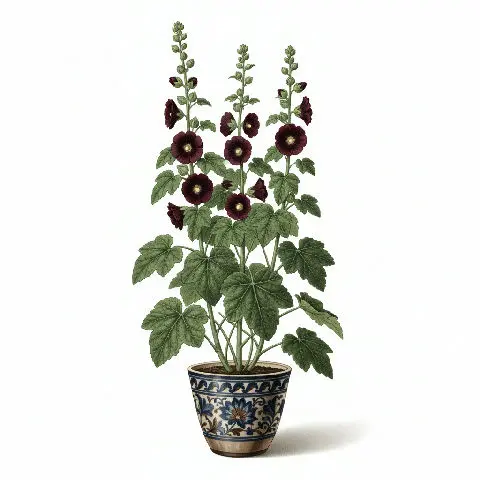
Alcea rosea nigra, commonly recognized as the Black Hollyhock, is a distinguished cultivar within the Malvaceae family, celebrated for its uniquely dark, almost velvety black-purple flowers. This specific variant stands out from its lighter-hued Alcea relatives due to its intense pigmentation, which has captivated botanists, horticulturists, and traditional practitioners for centuries. Indigenous to Asia, with its origins tracing back to the Eastern Mediterranean region and extending into Turkey and China, Alcea rosea nigra has been widely cultivated globally for its striking ornamental value and its long-standing medicinal applications. Its imposing, upright growth habit, frequently reaching impressive heights of 1.5 to 2.5 meters, establishes it as a prominent feature in cottage gardens and borders, where its dramatic blooms provide a rich, contrasting visual anchor.
The plant typically exhibits a biennial or short-lived perennial life cycle, forming a robust rosette of large, palmate leaves in its initial year, followed by the emergence of its spectacular flower stalks in the second year. The cup-shaped, single-petaled flowers, which can span 5-10 cm in diameter, possess a distinctive velvety texture. Beyond its aesthetic allure, Black Hollyhock holds a profound ethnobotanical legacy. In traditional European herbalism, Unani medicine, and various folk practices, the mucilage-rich flowers and leaves have been historically employed for their soothing, demulcent, and anti-inflammatory properties.
Modern pharmacological investigations are increasingly isolating and identifying the specific bioactive compounds responsible for these traditional uses, primarily focusing on anthocyanins, such as delphinidin and malvidin derivatives, which impart its characteristic dark color and contribute significant antioxidant activity, along with various polysaccharides that account for its notable demulcent effects. Its historical utility as a natural dye, yielding deep purplish-blue and gray pigments, further highlights its versatile nature. The plant thrives optimally in full sun exposure and well-drained soil conditions, positioning it as a relatively low-maintenance yet high-impact botanical specimen.
Trusted Scientific References
1. Authoritative external sources for Alcea rosea nigra
1.1 Wikipedia — Alcea rosea nigra
1.2 Kew POWO (Plants of the World Online)
1.3 PubMed — peer-reviewed research
1.4 NCBI Taxonomy Browser
1.5 GBIF — Global Biodiversity
1.1.Alcea Rosea Nigra — Key Features
- ✓Striking Dark Flowers — Alcea rosea nigra is renowned for its unusually deep, almost black, maroon-purple blooms.
- ✓Rich in Anthocyanins — The dark pigmentation is due to high concentrations of antioxidant anthocyanins.
- ✓Demulcent Properties — Abundant mucilage provides soothing effects for irritated tissues.
- ✓Anti — inflammatory Action — Research supports its ability to reduce inflammation pathways.
- ✓Potential Anticancer Activity — Exhibits cytotoxicity against various cancer cell lines in studies.
- ✓Traditional Herbal Remedy — Long history of use in European folk medicine and Unani for various ailments.
- ✓Tall Ornamental Plant — Grows to impressive heights, making a dramatic statement in gardens.
- ✓Biennial/Short — Lived Perennial — Establishes leaves in year one, flowers in year two.
- ✓Natural Dye Source — Historically used to produce purplish-blue and gray dyes.
- ✓Malvaceae Family Member — Shares characteristics with other mallows, including mucilage content.
1.2.Alcea Rosea Nigra — Snapshot Summary
- ✓Black Hollyhock is a dark-flowered Alcea cultivar with traditional medicinal uses.
- ✓Rich in anthocyanins and polysaccharides, offering antioxidant and demulcent benefits.
- ✓Modern research highlights significant anti-inflammatory and anticancer properties.
- ✓Historically used for respiratory, digestive, and skin ailments, and as a natural dye.
- ✓Cultivated for its ornamental beauty and relatively low-maintenance growth.
- ✓Requires caution for pregnant/lactating individuals and those on medications.
2.Alcea Rosea Nigra — Systematic Position
3.Alcea Rosea Nigra — Reference Facts
4.Alcea Rosea Nigra — Morphological Account
5.Alcea Rosea Nigra — Habitat & Distribution
6.Alcea Rosea Nigra — Historical Applications
7.Alcea Rosea Nigra — Secondary Metabolites
- ✓Anthocyanins — These are the primary pigments responsible for the dark color of Alcea rosea nigra flowers, notably delphinidin and malvidin derivatives, which exhibit significant antioxidant and anti-inflammatory activities.
- ✓Polysaccharides — Predominantly mucilage, these complex carbohydrates are found in high concentrations in the flowers and leaves, imparting demulcent, soothing, and protective properties to mucous membranes.
- ✓Flavonoids — Key compounds include various kaempferol derivatives, which are potent antioxidants and contribute to the plant's anti-inflammatory and potential anticancer effects by modulating cellular pathways.
- ✓Tocopherols — Notably α-Tocopherol, a form of Vitamin E, which is a powerful lipid-soluble antioxidant essential for protecting cell membranes from oxidative damage.
- ✓Phytol — Identified through GC-MS analysis in extracts, phytol is a diterpene alcohol known for its anti-inflammatory, antioxidant, and potential anticancer activities.
- ✓Phenolic Acids — A range of phenolic compounds, including caffeic acid and ferulic acid derivatives, contribute to the plant's overall antioxidant capacity and protective effects.
- ✓Tannins — Present in smaller amounts, tannins impart astringent properties, which can be beneficial in topical applications for minor wounds or as a gargle.
- ✓Saponins — These compounds contribute to the plant's expectorant properties and may possess hemolytic activity in higher concentrations, though generally safe in medicinal doses.
- ✓Volatile Oils — Trace amounts of volatile compounds contribute to the plant's subtle aroma and may possess minor antimicrobial or soothing effects.
- ✓Minerals and Vitamins — Contains essential trace minerals and vitamins in its plant tissues, contributing to its overall nutritional profile.
8.Alcea Rosea Nigra — Modern Studies
- ✓Anti-inflammatory Support — Alcea rosea nigra extracts have demonstrated significant anti-inflammatory activity, inhibiting protein denaturation, nitric oxide production, and downregulating inflammatory markers like COX-2 and NFκB.
- ✓Anticancer Potential — Research indicates potent cytotoxicity against various cancer cell lines (HCT116, HT29, SW480), inducing apoptosis by cleaving PARP and Caspase 3, suggesting its role in combating inflammation-associated colorectal cancer.
- ✓Demulcent Action — Rich in polysaccharides, the flowers and leaves provide a soothing, protective mucilage that can alleviate irritation in mucous membranes of the respiratory, digestive, and urinary tracts.
- ✓Antioxidant Properties — The high concentration of anthocyanins and tocopherols, particularly α-Tocopherol, contributes to robust antioxidant activity, protecting cells from oxidative stress and free radical damage.
- ✓Respiratory Relief — Traditionally used to soothe sore throats, coughs, and bronchitis due to its demulcent and expectorant qualities, helping to calm irritated airways and loosen phlegm.
- ✓Gastrointestinal Comfort — Its mucilaginous content can provide a protective layer to the gastrointestinal lining, potentially easing symptoms of indigestion, gastritis, and mild ulcers.
- ✓Urinary Tract Health — The demulcent effect extends to the urinary system, offering soothing relief for minor irritations or inflammation in the bladder and urethra.
- ✓Skin Emollient — Applied topically, the mucilage can act as an emollient, softening and soothing irritated skin, making it beneficial for minor cuts, burns, and inflammatory skin conditions.
- ✓Immune System Modulation — Certain compounds like flavonoids and polysaccharides may contribute to modulating immune responses, supporting overall immune function.
- ✓Natural Dye Source — Historically valued for its deep purplish-blue and gray pigments, Alcea rosea nigra flowers have been used as a natural dye for textiles and food.
- ✓Hepatoprotective Effects — Emerging studies suggest that the antioxidant and anti-inflammatory compounds may offer protective benefits to liver cells against damage.
- ✓Blood Sugar Regulation — Preliminary research indicates potential in modulating certain biochemical parameters that could be linked to blood sugar balance, though more studies are needed.
8.1.Alcea Rosea Nigra — Reported Uses
9.Alcea Rosea Nigra — Adverse Effects
9.1.Alcea Rosea Nigra — Side Effects & Warnings
- ✓Allergic Reactions — Rare skin irritation or contact dermatitis may occur in sensitive individuals when handling the plant or using topical preparations.
- ✓Gastrointestinal Upset — Excessive consumption of mucilaginous preparations might lead to mild bloating or loose stools in some individuals.
- ✓Pollen Allergies — Individuals sensitive to pollen from other Malvaceae family members or general plant pollens may experience allergic rhinitis.
- ✓Photosensitivity — While uncommon, some plant compounds can potentially increase skin sensitivity to sunlight in very susceptible individuals.
- ✓Drug Interactions — High doses of mucilage could theoretically interfere with the absorption of certain oral medications if taken simultaneously; separate administration by several hours.
- ✓Laxative Effect — Due to its mucilaginous content, very large quantities might have a mild laxative effect.
9.2.Alcea Rosea Nigra — Clinical Safety Notes
- ✓Pregnancy and Lactation — Insufficient data exists regarding its safety during pregnancy and breastfeeding; caution is advised, and use should be under medical supervision.
- ✓Children — Generally considered safe for external use and mild internal use in children, but dosage should be significantly reduced and supervised by a healthcare professional.
- ✓Known Allergies — Individuals with known allergies to plants in the Malvaceae family should exercise caution or avoid use.
- ✓Medication Interactions — As a demulcent, it may delay the absorption of other oral medications; take Alcea rosea nigra preparations at least 1-2 hours apart from other drugs.
- ✓Autoimmune Conditions — Due to potential immune-modulating effects, individuals with autoimmune diseases should consult a healthcare provider before use.
- ✓Dosage — Adhere to recommended dosages for preparations; excessive consumption may lead to mild gastrointestinal discomfort.
- ✓Quality Source — Ensure plant material is sourced from reputable suppliers to guarantee purity and absence of contaminants.
10.Alcea Rosea Nigra — Preparation & Dosage
- ✓Herbal Infusion (Tea) — Steep 1-2 teaspoons of dried Alcea rosea nigra flowers or leaves in hot water for 10-15 minutes; strain and drink to soothe respiratory or digestive irritation.
- ✓Decoction — For tougher plant parts or more concentrated extracts, gently simmer dried roots or denser leaves in water for 15-20 minutes, then strain and consume.
- ✓Poultice — Crush fresh or rehydrated dried leaves and flowers to form a paste; apply directly to skin irritations, minor burns, or insect bites for a soothing effect.
- ✓Gargle/Mouthwash — Prepare a strong infusion or decoction from the flowers and leaves; use as a gargle for sore throats or as a mouthwash for oral inflammation.
- ✓Syrups — Combine a concentrated decoction of Alcea rosea nigra with honey or glycerin to create a soothing syrup for coughs and respiratory discomfort.
- ✓Tincture — Macerate dried flowers and leaves in a high-proof alcohol solution for several weeks; strain and use the concentrated liquid in small doses.
- ✓Topical Oil Infusion — Infuse dried flowers in a carrier oil (e.g., olive, almond) over low heat for several hours or in the sun for weeks; use the oil for massages or skin applications.
- ✓Culinary Colorant — Fresh or dried flowers can be used to naturally color foods and beverages, such as desserts or drinks, due to their rich anthocyanin content.
11.Alcea Rosea Nigra — Growth Requirements
- ✓Site Selection — Choose a location with full sun exposure (at least 6-8 hours daily) for optimal flowering and growth of Alcea rosea nigra.
- ✓Soil Requirements — Prefers well-drained, fertile soil with a neutral to slightly alkaline pH (6.0-7.5); amend heavy clay soils with organic matter to improve drainage.
- ✓Planting — Sow seeds directly in late spring or early summer after the last frost, or start indoors 6-8 weeks before transplanting; space plants 60-90 cm apart.
- ✓Watering — Requires regular watering, especially during dry periods and while establishing; ensure soil remains consistently moist but not waterlogged to prevent root rot.
- ✓Support — Due to its towering height, provide staking or support to prevent the tall flower stalks from toppling over in strong winds or heavy rain.
- ✓Pest and Disease Management — Monitor for common hollyhock pests like rust fungus and spider mites; ensure good air circulation and avoid overhead watering to minimize fungal issues.
- ✓Fertilization — Apply a balanced, slow-release fertilizer in spring, or enrich the soil with compost annually to support vigorous growth and abundant blooms.
- ✓Deadheading — Remove spent flowers to encourage further blooming and prevent unwanted self-seeding, though some gardeners allow seeds to drop for successive generations.
Reviewed by the Flora Medical Global Botanical Review Panel
Multi-disciplinary editorial group · Botany · Ethnobotany · Herbal-medicine literature
Who reviewed this: This page was checked by the Flora Medical Global Botanical Review Panel — an in-house editorial group of botany graduates, ethnobotany researchers, and horticulture practitioners who collectively maintain our 7,000+ plant encyclopedia. Meet the team.
Our 4-step verification process
1. Taxonomic verification
Scientific names and synonyms cross-checked against Kew POWO, World Flora Online, and The Plant List.
2. Phytochemical & medicinal cross-reference
Active compounds, traditional uses, and reported activities are cross-referenced with PubMed, USDA Dr. Duke's database, and peer-reviewed ethnobotanical literature.
3. Conservation & distribution check
Distribution, ecology, and conservation status confirmed against GBIF occurrence records and the IUCN Red List.
4. Editorial & safety review
Every entry passes an editorial pass for clarity, originality, and safety notices (toxicity, contraindications, dosage caveats) before publication.
Last reviewed:
Important medical disclaimer: This content is for educational and research purposes only. It is not medical advice and is not a substitute for consultation with a licensed healthcare provider. Do not use any herb to self-treat a medical condition without professional guidance.
Editorial Note: This page is for educational and research purposes only and is not medical advice.
Written by: Flora Medical Global Editorial Team
Reviewed by: Flora Medical Global Botanical Review Panel
Last Updated: June 15, 2026





Alcea Rosea Nigra — Comments & Community Reviews
Rate this plant