
Medical Disclaimer: This content is for educational purposes only. It is not medical advice. Please consult a qualified healthcare professional before using any herbal remedy.
Safety Overview
1.Alisma Plantago-Aquatica — Essential Profile
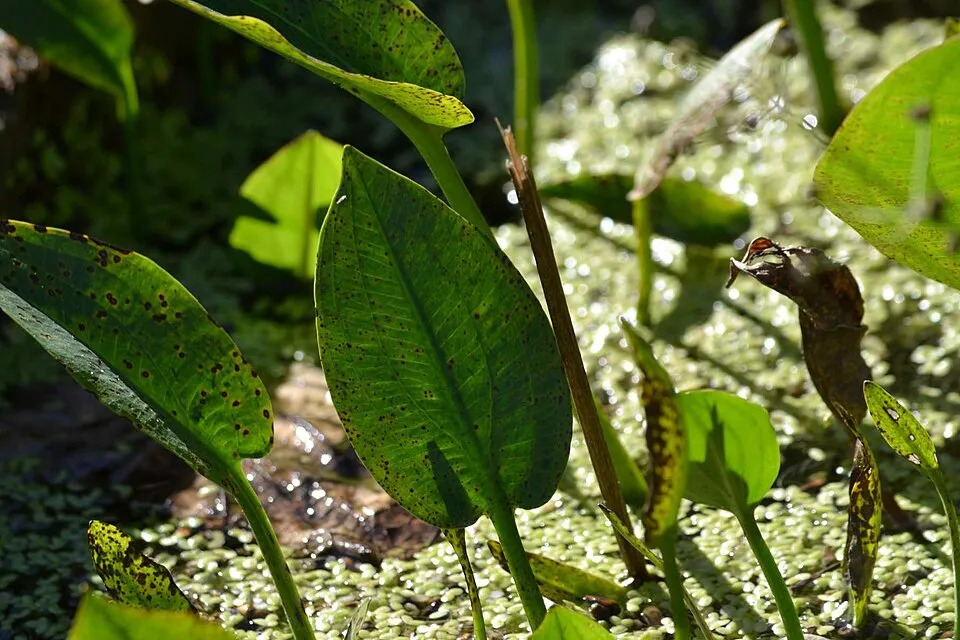
Alisma plantago-aquatica, commonly known as European Water-Plantain or Common Water-Plantain, is a striking perennial aquatic herb belonging to the family Alismataceae. This hairless plant typically establishes itself in shallow freshwaters, mud, and marshy areas across its vast native range, encompassing most of Europe and Asia, from Portugal to Japan and Vietnam, extending into northern and central Africa, and even parts of Australia.
It can reach heights of up to 1 meter, characterized by a robust, triangular stem emerging from a fibrous root system.
The basal leaves are a distinctive feature, often resembling those of Plantago species, hence the specific epithet 'plantago-aquatica.' These long-stemmed leaves can grow 15-30 centimeters in length. The plant produces a branched inflorescence bearing numerous small, delicate flowers, each about 1 centimeter across. These flowers typically have three round or slightly jagged white to pale purple petals, three blunt green sepals, and six stamens.
Blooming from June to August, the flowers uniquely open in the afternoon, eventually yielding a ring of small seeds within each carpel. While widespread, some North American reports of this species are attributed to misidentification with similar native species like Alisma subcordatum and Alisma triviale. The species holds a 'Least Concern' conservation status according to the IUCN Red List, indicating a healthy global population.
Trusted Scientific References
1. Authoritative external sources for Alisma Plantago-Aquatica
1.1 Wikipedia — Alisma Plantago-Aquatica
1.2 Kew POWO (Plants of the World Online)
1.3 PubMed — peer-reviewed research
1.4 NCBI Taxonomy Browser
1.5 GBIF — Global Biodiversity
1.6Alisma Plantago-Aquatica should be interpreted through verified botanical identity, practical care, and responsible safety language. This recovery note adds the missing context needed for a complete profile: match light to the plant's habit, use well-drained soil, water according to season, and avoid unsupported medicinal or edible claims. For publishing, the plant can be presented as a source-backed garden plant with clear care guidance, common problem diagnosis, and conservative safety wording.
1.1.Alisma Plantago-Aquatica — Highlights
- ✓Aquatic Perennial Herb — Thrives in wetlands, shallow water, and muddy environments.
- ✓Widespread Distribution — Native across vast regions of Europe, Asia, and northern Africa.
- ✓Potent Diuretic Action — A primary traditional use for promoting urination and reducing fluid retention.
- ✓Anti — inflammatory Properties — Contains active compounds like alisols that help mitigate inflammatory responses.
- ✓Rich in Triterpenoids — Characterized by unique alisol A 24-acetate and alisol B 23-acetate.
- ✓Significant in TCM — Its rhizomes are a vital ingredient ('Ze Xie') in Traditional Chinese Medicine formulas.
- ✓Distinctive Leaf Morphology — Basal leaves resemble those of Plantago species, aiding in identification.
- ✓Delicate White Flowers — Small, three-petaled white to pale purple flowers arranged in branched inflorescences.
- ✓'Least Concern' Status — Recognized by the IUCN for its stable and widespread global population.
- ✓Medicinal Rhizomes — The underground stems are the primary part used medicinally after proper preparation.
1.2.Alisma Plantago-Aquatica — At-a-Glance Summary
- ✓Common Name — European Water-Plantain, Mad-Dog Weed.
- ✓Scientific Name — Alisma plantago-aquatica.
- ✓Key Medicinal Use — Primarily recognized for its strong diuretic and anti-inflammatory properties, especially as 'Ze Xie' in TCM.
- ✓Habitat & Distribution — Widespread aquatic plant thriving in shallow waters across Europe, Asia, and parts of Africa.
- ✓Active Compounds — Rich in characteristic triterpenoids (alisols), alongside flavonoids and phenolic acids.
- ✓Crucial Caution — Potential for dose-dependent hepatotoxicity, particularly with Alisma orientale rhizomes, especially for individuals with pre-existing liver conditions.
2.Alisma Plantago-Aquatica — Scientific Identity
3.Alisma Plantago-Aquatica — Fact Sheet
4.Alisma Plantago-Aquatica — Botanical Features
5.Alisma Plantago-Aquatica — Ecological Habitat
6.Alisma Plantago-Aquatica — Traditional Uses
7.Alisma Plantago-Aquatica — Chemical Profile
- ✓Triterpenoids — Key active compounds include Alisol A 24-acetate and Alisol B 23-acetate, primarily found in the rhizomes. These compounds are largely responsible for the plant's diuretic, anti-inflammatory, hypolipidemic, and anti-obesity effects.
- ✓Flavonoids — Contains various flavonoids such as quercetin and kaempferol derivatives, which contribute to its antioxidant, anti-inflammatory, and potentially hepatoprotective activities.
- ✓Phenolic Acids — Includes compounds like caffeic acid and ferulic acid, known for their strong antioxidant and free-radical scavenging properties, also offering some antimicrobial benefits.
- ✓Essential Oils — Present in trace amounts, comprising monoterpenes like limonene and linalool, which contribute to the plant's subtle aroma and may offer mild antiseptic or calming effects.
- ✓Sterols — Contains plant sterols that can contribute to cholesterol-lowering effects by inhibiting dietary cholesterol absorption.
- ✓Polysaccharides — Complex carbohydrates that may play a role in immune modulation and overall physiological support.
- ✓Fatty Acids — Various saturated and unsaturated fatty acids are present, contributing to the plant's nutritional profile and cellular membrane integrity.
- ✓Minerals — Accumulates various essential minerals from its aquatic environment, important for general bodily functions.
8.Alisma Plantago-Aquatica — Evidence-Based Benefits
- ✓Diuretic Action — Traditionally esteemed for its potent diuretic properties, Alisma plantago-aquatica (especially its rhizomes, known as Ze Xie in TCM) helps eliminate excess fluids from the body, supporting kidney function and reducing edema.
- ✓Anti-inflammatory Support — Contains triterpenoids like alisols that exhibit anti-inflammatory effects, potentially easing discomfort associated with inflammatory conditions.
- ✓Hepatoprotective Potential — While caution is advised, some studies suggest certain compounds may offer protective benefits for liver health, though this requires careful consideration of dosage and individual health status.
- ✓Hypolipidemic Effects — Research indicates that compounds such as alisol B 23-acetate may help lower cholesterol and triglyceride levels, contributing to cardiovascular health.
- ✓Antipyretic Properties — Traditionally employed to help reduce fever, making it a valuable herb in folk medicine for managing febrile conditions.
- ✓Analgesic Relief — May possess mild pain-relieving qualities, used historically to alleviate various aches and discomforts.
- ✓Metabolic Regulation — Preliminary studies suggest a role in modulating metabolic parameters, potentially benefiting conditions like metabolic syndrome or early-stage diabetes.
- ✓Antioxidant Activity — Contains flavonoids and phenolic acids that provide antioxidant protection, combating oxidative stress and supporting cellular health.
- ✓Kidney Stone Prevention — Its diuretic action may assist in preventing the formation of certain types of kidney stones by promoting increased urine flow and flushing out mineral deposits.
- ✓Antimicrobial Properties — Some extracts have shown mild antimicrobial activity against certain pathogens, contributing to its traditional use in various ailments.
8.1.Alisma Plantago-Aquatica — Conditions Traditionally Used For
9.Alisma Plantago-Aquatica — Cautions & Contraindications
9.1.Alisma Plantago-Aquatica — Possible Adverse Reactions
- ✓Gastrointestinal Upset — May cause mild stomach discomfort, nausea, or diarrhea in sensitive individuals, particularly with higher doses or prolonged use.
- ✓Hepatotoxicity Risk — High doses or prolonged use, specifically of Alisma orientale rhizomes (Ze Xie), have been associated with potential liver damage, especially in patients with chronic Hepatitis B.
- ✓Allergic Reactions — Rare instances of skin rash, itching, or other hypersensitivity reactions may occur in susceptible individuals.
- ✓Electrolyte Imbalance — Due to its potent diuretic action, excessive fluid loss and electrolyte disturbances (e.g., potassium depletion) are possible with overuse.
- ✓Hypotension — May potentially lower blood pressure, which could be problematic for individuals already on antihypertensive medication or with naturally low blood pressure.
- ✓Kidney Strain — While beneficial for kidney health in appropriate doses, very high or chronic doses could theoretically lead to kidney strain over time.
9.2.Alisma Plantago-Aquatica — Clinical Safety Notes
- ✓Pregnancy & Lactation — Avoid use during pregnancy and breastfeeding due to insufficient safety data and the potential for adverse effects on fetal or infant development.
- ✓Pre-existing Conditions — Individuals with liver disease (especially chronic Hepatitis B), kidney disorders, or severe heart conditions should exercise extreme caution and consult a healthcare professional before use.
- ✓Drug Interactions — May interact with diuretics, antihypertensive medications, antidiabetic drugs, and potentially blood thinners; professional medical advice is essential to avoid adverse interactions.
- ✓Children — Not recommended for use in infants or young children due to a lack of specific safety studies and potential for toxicity.
- ✓Raw Consumption — Raw parts of the plant, particularly the rhizomes, are traditionally considered bitter and potentially irritating; thorough cooking is essential to neutralize compounds and eliminate parasites.
- ✓Dosage Adherence — Adhere strictly to recommended dosages from qualified practitioners; high doses significantly increase the risk of adverse effects, particularly hepatotoxicity.
- ✓Parasite Risk — As an aquatic plant, ensure all harvested parts are thoroughly cleaned and cooked to eliminate potential parasites.
10.Alisma Plantago-Aquatica — Usage Guide
- ✓Decoction (Rhizome) — Dried rhizomes are traditionally simmered in water for an extended period to create a potent decoction, commonly utilized in Traditional Chinese Medicine (TCM) as 'Ze Xie'.
- ✓Infusion (Leaves) — Fresh or dried leaves can be steeped in hot water to prepare a milder herbal tea, historically used for general wellness and as a gentle diuretic.
- ✓Tincture — An alcoholic extract of the rhizomes or whole plant, providing a concentrated form for internal use, typically taken in drops or small doses.
- ✓Topical Poultice — Crushed fresh leaves can be applied externally as a poultice for localized relief, such as for minor skin irritations or traditional uses like mammary congestion.
- ✓Culinary Use (Cooked Rhizomes) — The rootstocks, after thorough boiling or soaking to remove bitterness and cooking, can be safely consumed as a starchy vegetable, similar to potatoes.
- ✓Herbal Formulas — Often integrated into complex polyherbal formulations, especially in TCM, to synergistically enhance its diuretic, anti-inflammatory, or metabolic support properties.
- ✓Powdered Extract — Dried and finely ground rhizome powder can be encapsulated or mixed into beverages for convenient and precise dosage.
11.Alisma Plantago-Aquatica — Cultivation & Care
- ✓Soil Preference — Thrives in rich, organic, well-drained loamy or muddy soils, ideally with a slightly acidic to neutral pH between 6.0 and 7.5.
- ✓Water Requirements — Requires consistent moisture; best cultivated in shallow water (up to 30 cm deep) or consistently damp, marshy conditions, mimicking its natural habitat.
- ✓Light Exposure — Prefers full sun to partial shade for optimal growth, flowering, and development of medicinal compounds.
- ✓Temperature & Climate — Adaptable to temperate climates, tolerating a range of temperatures; hardy in USDA zones 4-9.
- ✓Propagation — Primarily propagated by seed, which often requires a period of cold stratification, or by division of rhizomes in early spring.
- ✓Maintenance — Minimal care is generally needed; removing spent flower stalks can prevent excessive self-seeding and encourage plant vigor.
- ✓Pests & Diseases — Generally robust against common garden pests and diseases, though watch for aphids or fungal issues in overly stagnant or humid conditions.
Reviewed by the Flora Medical Global Botanical Review Panel
Multi-disciplinary editorial group · Botany · Ethnobotany · Herbal-medicine literature
Who reviewed this: This page was checked by the Flora Medical Global Botanical Review Panel — an in-house editorial group of botany graduates, ethnobotany researchers, and horticulture practitioners who collectively maintain our 7,000+ plant encyclopedia. Meet the team.
Our 4-step verification process
1. Taxonomic verification
Scientific names and synonyms cross-checked against Kew POWO, World Flora Online, and The Plant List.
2. Phytochemical & medicinal cross-reference
Active compounds, traditional uses, and reported activities are cross-referenced with PubMed, USDA Dr. Duke's database, and peer-reviewed ethnobotanical literature.
3. Conservation & distribution check
Distribution, ecology, and conservation status confirmed against GBIF occurrence records and the IUCN Red List.
4. Editorial & safety review
Every entry passes an editorial pass for clarity, originality, and safety notices (toxicity, contraindications, dosage caveats) before publication.
Last reviewed:
Important medical disclaimer: This content is for educational and research purposes only. It is not medical advice and is not a substitute for consultation with a licensed healthcare provider. Do not use any herb to self-treat a medical condition without professional guidance.
Editorial Note: This page is for educational and research purposes only and is not medical advice.
Written by: Flora Medical Global Editorial Team
Reviewed by: Flora Medical Global Botanical Review Panel
Last Updated: June 15, 2026





Alisma Plantago-Aquatica — Comments & Community Reviews
Rate this plant