


Medical Disclaimer: This content is for educational purposes only. It is not medical advice. Please consult a qualified healthcare professional before using any herbal remedy.
Safety Overview
1.Allamanda Cathartica — Overview
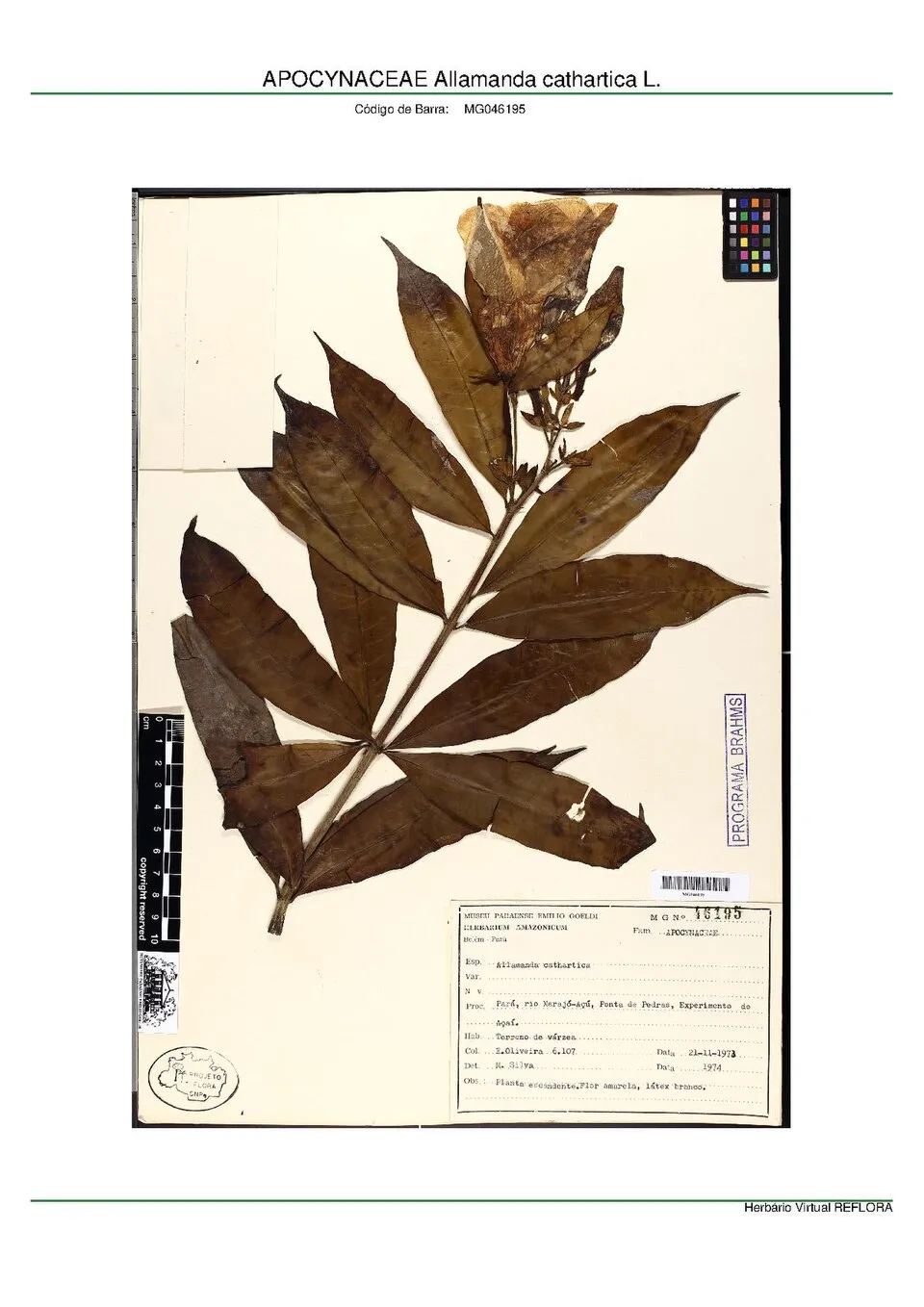
Allamanda cathartica, commonly known as the Golden Trumpet Vine or Yellow Bell, is a robust, evergreen shrub or climbing vine belonging to the Apocynaceae family. Native to the tropical regions of South America, particularly Brazil, it has become widely naturalized and cultivated in warm climates across the globe, including Central America, the Caribbean, and Southeast Asia. This ornamental plant can reach impressive heights of up to 6 meters, showcasing a vigorous growth habit.
Its leaves are typically elliptical to obovate, arranged either oppositely or in whorls of three to four, exhibiting a glossy, dark green hue. The most striking feature of Allamanda cathartica is its showy, bright yellow, trumpet-shaped flowers, which bloom profusely throughout the year in ideal conditions. These vibrant blossoms, often similar in size to the leaves, possess five distinct lobes and a prominent corolla tube.
Following successful pollination, the plant produces distinctive spiny, globose capsules as fruits, containing compressed, winged seeds. Allamanda cathartica thrives in its native habitats, often found in open fields, disturbed areas, and along riverbanks, preferring moist, well-drained soils.
Trusted Scientific References
1. Authoritative external sources for Allamanda Cathartica
1.1 Wikipedia — Allamanda Cathartica
1.2 Kew POWO (Plants of the World Online)
1.3 PubMed — peer-reviewed research
1.4 NCBI Taxonomy Browser
1.5 GBIF — Global Biodiversity
1.6Allamanda Cathartica should be interpreted through verified botanical identity, practical care, and responsible safety language. This recovery note adds the missing context needed for a complete profile: match light to the plant's habit, use well-drained soil, water according to season, and avoid unsupported medicinal or edible claims. For publishing, the plant can be presented as a source-backed garden plant with clear care guidance, common problem diagnosis, and conservative safety wording.
1.1.Allamanda Cathartica — Standout Qualities
- ✓Botanical Name — Allamanda cathartica
- ✓Common Names — Golden Trumpet Vine, Common Allamanda, Yellow Bell
- ✓Family — Apocynaceae (Dogbane Family)
- ✓Native Region — Tropical South America
- ✓Growth Habit — Robust climbing vine or shrub, reaching up to 6 meters
- ✓Flower Color — Bright, glossy yellow, trumpet-shaped
- ✓Medicinal Properties — Historically used as purgative, anti-inflammatory, analgesic, antimicrobial
- ✓Key Constituents — Flavonoids, alkaloids, iridoid lactones, terpenes
- ✓Toxicity Level — High; all plant parts are considered poisonous if ingested
- ✓Ornamental Value — Widely cultivated worldwide for its stunning floral display
1.2.Allamanda Cathartica — Concise Overview
- ✓Golden Trumpet Vine — A strikingly beautiful ornamental plant with vibrant yellow, trumpet-shaped flowers.
- ✓Traditional Medicinal Uses — Historically valued for its purgative, anti-inflammatory, and analgesic properties.
- ✓Rich Phytochemistry — Contains diverse compounds including flavonoids, alkaloids, terpenes, and iridoid lactones.
- ✓Potent Toxicity — All parts are considered toxic upon ingestion, especially the sap.
- ✓Strict Caution Advised — Not recommended for unsupervised internal use due to significant health risks.
- ✓Tropical Origin — Native to South America, thriving in warm, humid climates globally.
2.Allamanda Cathartica — Systematic Position
3.Allamanda Cathartica — Quick Facts
4.Allamanda Cathartica — Plant Morphology
5.Allamanda Cathartica — Geographic Distribution
6.Allamanda Cathartica — Historical Applications
7.Allamanda Cathartica — Active Compounds
- ✓Flavonoids — Key compounds like quercetin and kaempferol contribute to its potent antioxidant, anti-inflammatory, and cardioprotective actions.
- ✓Alkaloids — Diverse group including allamandin and catharticin, often responsible for the plant's purgative effects and potential toxicity, impacting the nervous system and gut motility.
- ✓Terpenes/Terpenoids — Such as ursolic acid and plumieride, contribute to the plant's anti-inflammatory, antimicrobial, and cytotoxic properties, influencing various cellular pathways.
- ✓Phenolic Compounds — Including tannins and gallic acid derivatives, provide strong antioxidant and astringent effects, contributing to wound healing and antimicrobial activity.
- ✓Iridoid Lactones — Specific to Apocynaceae, compounds like allamandin and allamdin are known for their cytotoxic, purgative, and anti-inflammatory activities.
- ✓Steroids — Plant sterols like beta-sitosterol are present, which may offer anti-inflammatory and cholesterol-lowering benefits.
- ✓Fatty Acids & Phospholipids — Essential structural components of cell membranes and precursors for various signaling molecules.
- ✓Volatile Compounds/Essential Oils — Contribute to the plant's distinct aroma and possess some antimicrobial and insecticidal properties.
- ✓Carbohydrates — Including sugars and mucilage, provide energy and can offer soothing effects on mucous membranes.
8.Allamanda Cathartica — Modern Studies
- ✓Anti-inflammatory — Extracts of Allamanda cathartica have demonstrated significant anti-inflammatory activity, potentially by modulating prostaglandin synthesis and inhibiting inflammatory mediators.
- ✓Analgesic — The plant exhibits pain-relieving properties, traditionally used to alleviate various aches and discomforts through mechanisms that may involve opioid receptor interactions or central nervous system effects.
- ✓Antimicrobial — Studies suggest Allamanda cathartica possesses broad-spectrum antimicrobial efficacy against certain bacteria, fungi, and viruses, attributed to its diverse phytochemical profile.
- ✓Digestive Support — Traditionally employed to address various gastrointestinal issues, it can help regulate digestive processes and alleviate discomfort.
- ✓Immunomodulatory — Certain compounds within the plant may influence immune responses, potentially enhancing or balancing the body's defense mechanisms.
- ✓Wound Healing — Applied topically, preparations from Allamanda cathartica can promote the healing of minor cuts, bruises, and skin abrasions by reducing inflammation and preventing infection.
- ✓Antioxidant Activity — Rich in phenolic compounds and flavonoids, the plant offers robust antioxidant protection, neutralizing free radicals and mitigating oxidative stress in the body.
- ✓Antipyretic — Traditional use includes reducing fever, suggesting compounds within the plant may help regulate body temperature.
- ✓Diuretic — Allamanda cathartica has been traditionally used to promote increased urine output, aiding in the detoxification process and supporting kidney function.
- ✓Laxative (Cathartic) — As indicated by its species name, the plant is a potent purgative, traditionally used to induce bowel movements and relieve severe constipation.
- ✓Anthelmintic — In some traditional systems, it is used to expel parasitic worms from the digestive tract.
- ✓Hypotensive — Preliminary research suggests potential blood pressure-lowering effects, although further study is needed.
8.1.Allamanda Cathartica — Health Applications
9.Allamanda Cathartica — Risk Profile
9.1.Allamanda Cathartica — Possible Adverse Reactions
- ✓Severe Gastrointestinal Distress — Ingestion can cause intense nausea, vomiting, abdominal cramps, and profuse diarrhea.
- ✓Cardiac Toxicity — Contains cardiac glycosides that can disrupt heart rhythm and function, leading to serious cardiovascular complications.
- ✓Central Nervous System Effects — Symptoms may include dizziness, confusion, lethargy, and in severe cases, seizures or coma.
- ✓Skin Irritation — Contact with the plant's milky sap can cause dermatitis, rashes, or allergic reactions in sensitive individuals.
- ✓Dehydration and Electrolyte Imbalance — Excessive purgative effects can lead to severe fluid loss and critical electrolyte disturbances.
- ✓Liver and Kidney Damage — Prolonged or high-dose exposure may result in adverse effects on liver and kidney function.
- ✓Ocular Irritation — Sap contact with eyes can cause pain, redness, and temporary vision impairment.
9.2.Allamanda Cathartica — Toxicity Assessment
- ✓Highly Toxic — All parts of Allamanda cathartica are considered toxic if ingested; it is not recommended for unsupervised internal use.
- ✓Contraindicated in Pregnancy/Lactation — Avoid use in pregnant or breastfeeding women due to potential abortifacient effects and risk of harm to infant.
- ✓Not for Children — Due to increased sensitivity and severe risk of toxicity, internal use is strictly contraindicated in children.
- ✓Pre-existing Conditions — Individuals with heart conditions, kidney disease, liver disorders, or severe gastrointestinal issues should absolutely avoid this plant.
- ✓External Use Caution — Exercise extreme caution with topical application; perform a patch test first to check for skin sensitivity or allergic reactions.
- ✓Professional Consultation Mandatory — Always seek guidance from a qualified medical herbalist or healthcare professional before any medicinal use.
- ✓Keep Out of Reach — Ensure the plant is inaccessible to children and pets to prevent accidental ingestion.
10.Allamanda Cathartica — How to Use
- ✓Leaf Infusion (Tea) — Dried or fresh leaves steeped in hot water for internal consumption, traditionally for digestive issues or cold symptoms (use with extreme caution due to toxicity).
- ✓Topical Poultice — Crushed fresh leaves or a paste made from them applied directly to minor cuts, bruises, or skin inflammations to aid healing and reduce swelling.
- ✓Decoction — Roots or bark boiled in water to create a stronger extract, traditionally used for more severe internal conditions or as a potent purgative (highly toxic, consult expert).
- ✓Tincture — Alcoholic extracts of leaves or other plant parts for concentrated medicinal preparations, allowing for precise dosing (expert supervision essential).
- ✓Ointment/Salve — Extracts or powdered plant material incorporated into a fatty base for localized external application on skin ailments or muscle pain.
- ✓Powdered Herb — Dried and finely ground plant material, which can be encapsulated or mixed with a carrier liquid for oral administration (only under strict professional guidance).
- ✓Bath Additive — Infusions can be added to bathwater for external benefits, such as soothing skin irritations or muscle aches.
11.Allamanda Cathartica — Growing Guide
- ✓Climate — Thrives in tropical and subtropical regions with warm temperatures and high humidity.
- ✓Soil — Prefers well-drained, fertile soil rich in organic matter, with a slightly acidic to neutral pH.
- ✓Sunlight — Requires full sun exposure for at least 6 hours daily to promote abundant flowering and robust growth.
- ✓Watering — Needs consistent and ample watering, especially during dry periods, but ensure excellent drainage to prevent root rot.
- ✓Propagation — Easily propagated from semi-hardwood stem cuttings or by seed, with cuttings being a more common and faster method.
- ✓Fertilization — Benefits from a balanced, slow-release granular fertilizer or liquid feed every 2-3 months during the growing season.
- ✓Pruning — Prune regularly to maintain desired shape, control vigorous growth, and encourage denser foliage and more prolific blooming.
- ✓Support — As a climbing vine, it requires a trellis, arbor, or other support structure to grow vertically.
Reviewed by the Flora Medical Global Botanical Review Panel
Multi-disciplinary editorial group · Botany · Ethnobotany · Herbal-medicine literature
Who reviewed this: This page was checked by the Flora Medical Global Botanical Review Panel — an in-house editorial group of botany graduates, ethnobotany researchers, and horticulture practitioners who collectively maintain our 7,000+ plant encyclopedia. Meet the team.
Our 4-step verification process
1. Taxonomic verification
Scientific names and synonyms cross-checked against Kew POWO, World Flora Online, and The Plant List.
2. Phytochemical & medicinal cross-reference
Active compounds, traditional uses, and reported activities are cross-referenced with PubMed, USDA Dr. Duke's database, and peer-reviewed ethnobotanical literature.
3. Conservation & distribution check
Distribution, ecology, and conservation status confirmed against GBIF occurrence records and the IUCN Red List.
4. Editorial & safety review
Every entry passes an editorial pass for clarity, originality, and safety notices (toxicity, contraindications, dosage caveats) before publication.
Last reviewed:
Important medical disclaimer: This content is for educational and research purposes only. It is not medical advice and is not a substitute for consultation with a licensed healthcare provider. Do not use any herb to self-treat a medical condition without professional guidance.
Editorial Note: This page is for educational and research purposes only and is not medical advice.
Written by: Flora Medical Global Editorial Team
Reviewed by: Flora Medical Global Botanical Review Panel
Last Updated: June 15, 2026





Allamanda Cathartica — Comments & Community Reviews
Rate this plant