

Medical Disclaimer: This content is for educational purposes only. It is not medical advice. Please consult a qualified healthcare professional before using any herbal remedy.
Safety Overview
1.Allium Aflatunense — Botanical Snapshot
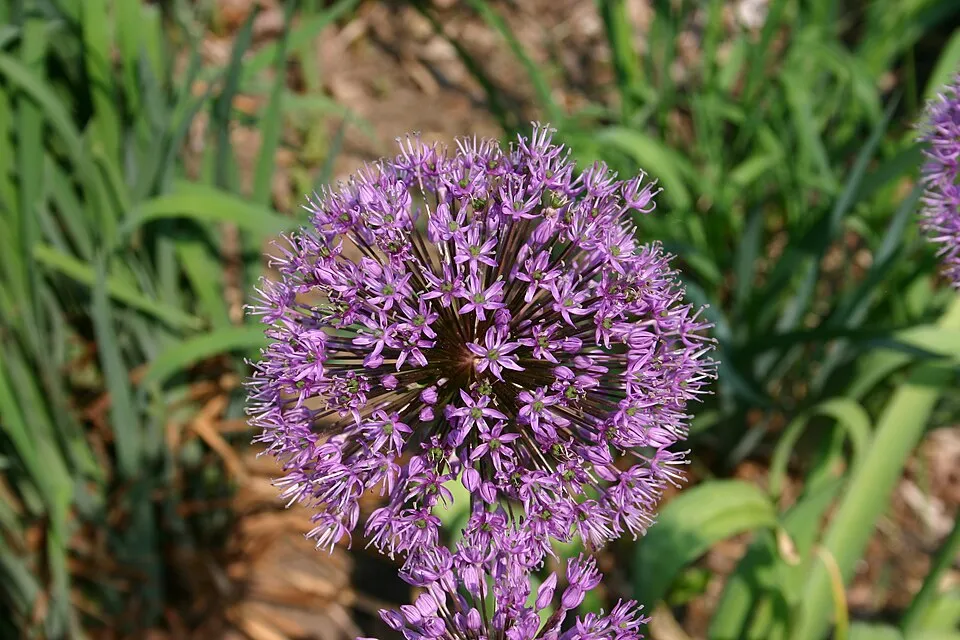
Allium aflatunense, commonly known as Ornamental Onion or Persian Onion, is a striking perennial flowering bulb belonging to the Amaryllidaceae family. Native to the mountainous regions of Central Asia, particularly from eastern Turkey to Afghanistan, this species is highly valued for its aesthetic appeal in horticultural settings. Morphologically, it emerges from a bulb, producing strap-like basal leaves that can reach up to 15 inches in length.
These leaves typically begin to senesce as the plant enters its flowering phase. The most distinctive feature of Allium aflatunense is its tall, leafless scapes, which can soar to heights of 30 to 60 inches, topped with large, spherical clusters (umbels) of vibrant lavender to purple flowers. These impressive inflorescences, often 4-6 inches in diameter, bloom in late spring to early summer, typically in May, providing a vivid display for two to three weeks, bridging the gap between spring bulbs and summer perennials.
The plant thrives in well-drained soils enriched with organic matter and prefers full sun to partial shade exposures. It exhibits a notable drought tolerance once established, making it suitable for various garden types including rock gardens, borders, and naturalized areas. Its robust nature and captivating bloom make Allium aflatunense a popular choice for ornamental cultivation, although its medicinal properties, shared with other Allium species, are also of interest in traditional herbal practices.
Trusted Scientific References
1. Authoritative external sources for Allium aflatunense
1.1 Wikipedia — Allium aflatunense
1.2 Kew POWO (Plants of the World Online)
1.3 PubMed — peer-reviewed research
1.4 NCBI Taxonomy Browser
1.5 GBIF — Global Biodiversity
1.6Allium Aflatunense should be interpreted through verified botanical identity, practical care, and responsible safety language. This recovery note adds the missing context needed for a complete profile: match light to the plant's habit, use well-drained soil, water according to season, and avoid unsupported medicinal or edible claims. For publishing, the plant can be presented as a source-backed garden plant with clear care guidance, common problem diagnosis, and conservative safety wording.
1.1.Allium Aflatunense — Notable Characteristics
- ✓Ornamental Value — Highly prized for its large, spherical clusters of vibrant purple flowers.
- ✓Central Asian Native — Originates from mountainous regions of Central Asia.
- ✓Amaryllidaceae Family — Belongs to the onion and garlic family.
- ✓Drought Tolerant — Exhibits good drought resistance once established.
- ✓Late Spring Blooms — Flowers in May, bridging seasonal garden gaps.
- ✓Antioxidant Rich — Contains flavonoids and vitamins known for antioxidant activity.
- ✓Anti — inflammatory Potential — Traditional uses point to its anti-inflammatory properties.
- ✓Immune Support — Reputed for its traditional role in boosting immunity.
- ✓Unique Aroma — Possesses the characteristic sulfurous aroma of the Allium genus.
- ✓Bulb Propagation — Primarily propagated through underground bulbs.
1.2.Allium Aflatunense — Quick Summary
- ✓Allium aflatunense is an ornamental onion from Central Asia, known for its striking purple flowers.
- ✓Possesses traditional medicinal properties, including anti-inflammatory, antioxidant, and immune-boosting effects.
- ✓Contains beneficial organosulfur compounds, flavonoids, and vitamins.
- ✓Requires well-drained soil and full sun; bulbs are planted in autumn.
- ✓Caution is advised for internal consumption due to 'low severity poison' characteristics.
- ✓Avoid use in pregnancy, with blood thinners, and keep away from pets.
2.Allium Aflatunense — Scientific Identity
3.Allium Aflatunense — Fact Sheet
4.Allium Aflatunense — Botanical Description
5.Allium Aflatunense — Native Range & Habitat
6.Allium Aflatunense — Heritage Uses
7.Allium Aflatunense — Chemical Profile
- ✓Organosulfur Compounds — Key to the Allium genus, these include alliin and its derivatives like allicin, which are responsible for many of the plant's characteristic aroma and medicinal properties, including antimicrobial and cardiovascular effects.
- ✓Flavonoids — Such as quercetin and kaempferol, these potent antioxidants contribute to the plant's anti-inflammatory and free-radical scavenging activities, protecting cells from oxidative damage.
- ✓Saponins — These triterpene glycosides are known for their hemolytic, hypocholesterolemic, and immune-modulating properties, potentially supporting cardiovascular and immune health.
- ✓Essential Oils — Volatile compounds that contribute to the plant's distinct aroma and may possess antimicrobial, anti-inflammatory, and insect-repellent qualities.
- ✓Vitamins — Contains Vitamin C (ascorbic acid), a crucial antioxidant and immune booster, and Vitamin A (in the form of carotenoid precursors), vital for vision and immune function.
- ✓Phenolic Acids — Including gallic acid and caffeic acid, these compounds exhibit antioxidant and anti-inflammatory activities, further enhancing the plant's protective effects.
- ✓Polysaccharides — Complex carbohydrates that can possess immunomodulatory effects, contributing to the plant's traditional use in boosting immunity.
- ✓Amino Acids — Building blocks of proteins, essential for various metabolic functions and overall cellular health, present in the plant's tissues.
- ✓Minerals — Contains various trace minerals vital for human health, though specific concentrations can vary depending on soil conditions and plant part.
- ✓Phytosterols — Plant compounds structurally similar to cholesterol, which may help support healthy cholesterol levels.
8.Allium Aflatunense — Evidence-Based Benefits
- ✓Anti-inflammatory Support — Allium aflatunense contains compounds that may help reduce inflammation throughout the body, potentially alleviating symptoms associated with inflammatory conditions.
- ✓Antioxidant Protection — Rich in antioxidants like flavonoids and Vitamin C, this plant helps combat oxidative stress by neutralizing free radicals, protecting cellular integrity.
- ✓Immune System Enhancement — Traditional uses suggest its ability to bolster the body's natural defenses, aiding in resistance against common infections and promoting overall immune health.
- ✓Digestive Health Aid — Historically used to soothe minor digestive discomforts, it may support a healthy gut microbiome and alleviate issues like indigestion or mild stomach upset.
- ✓Respiratory Symptom Relief — In traditional systems, Allium aflatunense has been applied to help clear respiratory passages and ease symptoms of colds, coughs, and other mild respiratory issues.
- ✓Cardiovascular Well-being — Similar to other Allium species, it may contribute to cardiovascular health by supporting healthy circulation and maintaining optimal blood pressure levels.
- ✓Antimicrobial Properties — Certain constituents within Allium species are known for their potential to inhibit the growth of various bacteria and fungi, offering a natural defense against pathogens.
- ✓Detoxification Support — The sulfur compounds present in Allium plants are often associated with supporting the body's natural detoxification pathways, aiding in the elimination of toxins.
- ✓Pain Management for Headaches — Traditional applications include its use in alleviating mild headaches, possibly due to its anti-inflammatory effects and ability to improve circulation.
- ✓Blood Sugar Regulation — Preliminary research on related Allium species suggests a potential role in supporting healthy blood sugar metabolism, though specific research on Allium aflatunense is limited.
8.1.Allium Aflatunense — Therapeutic Indications
9.Allium Aflatunense — Cautions & Contraindications
9.1.Allium Aflatunense — Side Effects & Warnings
- ✓Digestive Upset — Consumption, especially of raw bulbs or large quantities, can lead to gastrointestinal distress such as nausea, vomiting, diarrhea, or heartburn.
- ✓Allergic Reactions — Individuals sensitive to other Allium species (onions, garlic) may experience allergic responses, including skin irritation, dermatitis, or respiratory symptoms.
- ✓Blood Thinning — Compounds in Allium species can inhibit platelet aggregation, potentially increasing the risk of bleeding, especially in individuals on anticoagulant medications.
- ✓Bad Breath/Body Odor — The sulfur compounds responsible for its flavor and medicinal properties can also lead to noticeable breath and body odor.
- ✓Toxicity to Pets — Allium aflatunense is known to be toxic to animals, particularly dogs and cats, causing hemolytic anemia.
- ✓Hypotension — In susceptible individuals or at high doses, it may cause a drop in blood pressure, potentially interacting with antihypertensive drugs.
- ✓Drug Interactions — May interact with medications such as blood thinners, antidiabetic drugs, and certain medications metabolized by the liver.
9.2.Allium Aflatunense — Toxicity Assessment
- ✓Pregnancy and Lactation — Avoid use during pregnancy and breastfeeding due to insufficient safety data and potential for adverse effects.
- ✓Blood-Thinning Medications — Exercise extreme caution or avoid if taking anticoagulant or antiplatelet drugs due to increased bleeding risk.
- ✓Prior to Surgery — Discontinue use at least two weeks before any scheduled surgery to minimize the risk of excessive bleeding.
- ✓Allium Allergies — Individuals with known allergies to onions, garlic, or other Allium species should avoid contact and consumption.
- ✓Pet Safety — Keep Allium aflatunense plants and bulbs away from pets, as they are toxic and can cause serious health issues.
- ✓Dosage — Adhere strictly to recommended dosages and consult a healthcare professional, especially given its 'low severity poison characteristics' when consumed internally.
- ✓Children — Not recommended for use in children due to lack of specific safety studies.
10.Allium Aflatunense — Preparation Methods
- ✓Culinary Garnish (Leaves) — Young, tender leaves can be sparingly used as a mild onion-flavored garnish in salads or dishes, similar to chives, but with caution due to potential toxicity.
- ✓Herbal Tea (Leaves) — Dried leaves can be steeped to make a herbal tea, traditionally used for mild respiratory or digestive complaints, always in small, controlled amounts.
- ✓Decoction (Bulb) — In traditional systems, a decoction from the bulb might be prepared for specific medicinal purposes, but this requires expert guidance due to the plant's 'low severity poison' rating.
- ✓Tincture (Bulb/Leaves) — An alcoholic extract can be made from the bulb or leaves for concentrated medicinal use, strictly under professional herbalist supervision.
- ✓Poultice (Leaves) — Crushed leaves might be applied externally as a poultice for minor skin irritations or localized inflammation, avoiding open wounds.
- ✓Infused Oil (Flowers/Bulb) — Flowers or bulbs can be infused into a carrier oil for topical applications, such as massage for sore muscles, ensuring no internal consumption.
- ✓Capsules (Standardized Extract) — If commercial extracts become available, they would be consumed as per manufacturer or healthcare provider instructions, offering a standardized dose.
- ✓Traditional Culinary Spice — In some native regions, the plant might be used as a spice in small quantities, contributing unique flavor profiles to regional dishes.
11.Allium Aflatunense — Garden Cultivation
- ✓Plant bulbs 4-6 inches deep and 4-6 inches apart in the autumn for spring blooms.
- ✓Ensure well-drained soil, ideally enriched with organic matter, to prevent bulb rot.
- ✓Choose a location with full sun to partial shade for optimal growth and flowering.
- ✓Maintain even soil moisture during the active growing and blooming periods, but allow for drought tolerance in summer.
- ✓Fertilize with a balanced, slow-release granular fertilizer in early spring to support robust growth.
- ✓Avoid overcrowding with other plants, as Allium aflatunense prefers minimal competition.
- ✓Deadhead spent flowers to prevent self-seeding and redirect energy to bulb development.
- ✓Divide clumps every few years in late summer or early fall to maintain vigor and prevent overcrowding.
Reviewed by the Flora Medical Global Botanical Review Panel
Multi-disciplinary editorial group · Botany · Ethnobotany · Herbal-medicine literature
Who reviewed this: This page was checked by the Flora Medical Global Botanical Review Panel — an in-house editorial group of botany graduates, ethnobotany researchers, and horticulture practitioners who collectively maintain our 7,000+ plant encyclopedia. Meet the team.
Our 4-step verification process
1. Taxonomic verification
Scientific names and synonyms cross-checked against Kew POWO, World Flora Online, and The Plant List.
2. Phytochemical & medicinal cross-reference
Active compounds, traditional uses, and reported activities are cross-referenced with PubMed, USDA Dr. Duke's database, and peer-reviewed ethnobotanical literature.
3. Conservation & distribution check
Distribution, ecology, and conservation status confirmed against GBIF occurrence records and the IUCN Red List.
4. Editorial & safety review
Every entry passes an editorial pass for clarity, originality, and safety notices (toxicity, contraindications, dosage caveats) before publication.
Last reviewed:
Important medical disclaimer: This content is for educational and research purposes only. It is not medical advice and is not a substitute for consultation with a licensed healthcare provider. Do not use any herb to self-treat a medical condition without professional guidance.
Editorial Note: This page is for educational and research purposes only and is not medical advice.
Written by: Flora Medical Global Editorial Team
Reviewed by: Flora Medical Global Botanical Review Panel
Last Updated: June 15, 2026





Allium Aflatunense — Comments & Community Reviews
Rate this plant