
Medical Disclaimer: This content is for educational purposes only. It is not medical advice. Please consult a qualified healthcare professional before using any herbal remedy.
Safety Overview
1.Allium Giganteum — Essential Profile
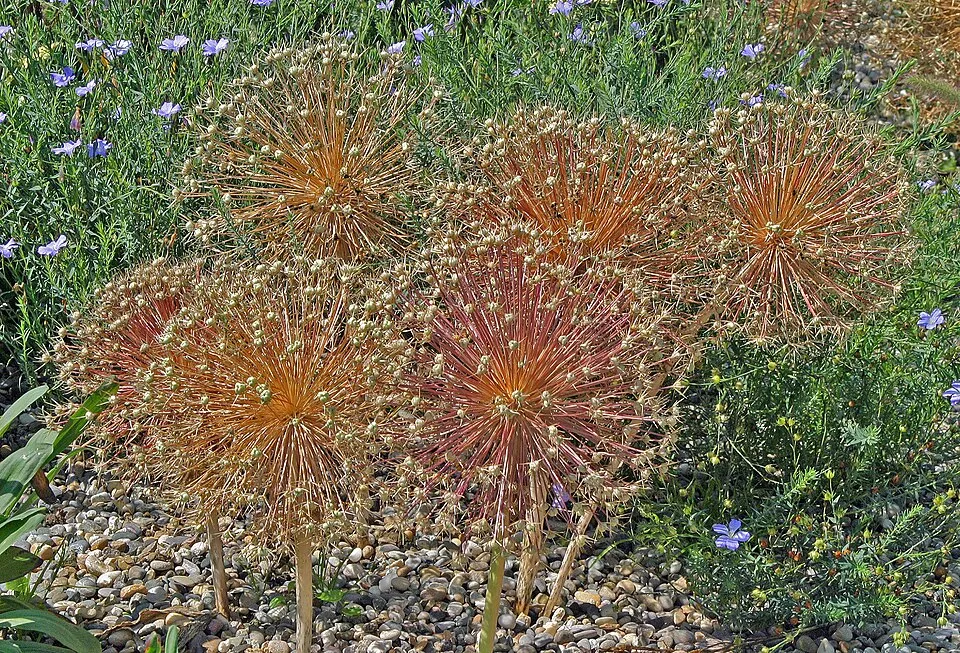
Allium giganteum, commonly known as Giant Allium or Ornamental Onion, is a striking perennial herbaceous plant native to central and southwestern Asia, specifically from Afghanistan to Turkey. As a prominent member of the Amaryllidaceae family, which also includes culinary staples like garlic and onions, it is renowned primarily for its dramatic ornamental value rather than direct culinary use. Morphologically, this bulbous plant emerges in spring with a rosette of broad, strap-like, glaucous green basal leaves that typically wither by the time the flowers fully open.
Its most distinctive feature is a towering, sturdy flower stalk, often reaching heights of 3 to 6 feet (1 to 1.8 meters), topped with a magnificent, dense spherical umbel. This impressive inflorescence, composed of hundreds of tiny, star-shaped purple or magenta flowers, can measure up to 8 inches (20 cm) in diameter, creating a spectacular display in late spring to early summer. Allium giganteum thrives in full sun and well-drained soil, preferring temperate climates.
Its robust nature and architectural form make it a popular choice for garden borders and cut flower arrangements globally, though its distribution as a wild species remains confined to its native range.
Trusted Scientific References
1. Authoritative external sources for Allium giganteum
1.1 Wikipedia — Allium giganteum
1.2 Kew POWO (Plants of the World Online)
1.3 PubMed — peer-reviewed research
1.4 NCBI Taxonomy Browser
1.5 GBIF — Global Biodiversity
1.6Allium Giganteum should be interpreted through verified botanical identity, practical care, and responsible safety language. This recovery note adds the missing context needed for a complete profile: match light to the plant's habit, use well-drained soil, water according to season, and avoid unsupported medicinal or edible claims. For publishing, the plant can be presented as a source-backed garden plant with clear care guidance, common problem diagnosis, and conservative safety wording.
1.1.Allium Giganteum — Highlights
- ✓Striking Ornamental Plant — Known for its dramatic height and large, spherical purple flower heads.
- ✓Allium Genus Member — Belongs to the same family as garlic, onions, and chives.
- ✓Rich in Organosulfur Compounds — Contains diallyl sulfides and other sulfur-containing compounds.
- ✓Potent Antioxidant — Exhibits strong free-radical scavenging capabilities.
- ✓Natural Antimicrobial — Possesses antibacterial and antifungal properties.
- ✓Supports Cardiovascular Health — May contribute to lower cholesterol and improved circulation.
- ✓Potential Anticancer Agent — Studied for its role in inhibiting cancer cell growth.
- ✓Anti — inflammatory Actions — Helps reduce systemic inflammation.
- ✓Attracts Pollinators — Flowers are highly attractive to bees and butterflies.
- ✓Low Maintenance — Relatively easy to grow in appropriate conditions.
1.2.Allium Giganteum — In Brief
- ✓Allium giganteum is a stunning ornamental with a tall, spherical purple flower head.
- ✓Member of the Allium genus, sharing medicinal properties with garlic and onions.
- ✓Rich in organosulfur compounds, providing antioxidant and antimicrobial benefits.
- ✓Potential support for cardiovascular health, immunity, and chronic disease prevention.
- ✓Requires full sun and well-drained soil for optimal growth.
- ✓Use with caution, especially for those on blood thinners or with Allium allergies.
2.Allium Giganteum — Nomenclature & Classification
3.Allium Giganteum — Key Data
4.Allium Giganteum — Botanical Description
5.Allium Giganteum — Ecological Habitat
6.Allium Giganteum — Traditional Uses
7.Allium Giganteum — Key Phytochemicals
- ✓Organosulfur Compounds — These are the primary active components, including diallyl disulfide (DADS), diallyl trisulfide (DATS), diallyl sulfide (DAS), dipropyl disulfide, dipropyl trisulfide, 1-propenylpropyl disulfide, allyl methyl disulfide, and dimethyl disulfide, responsible for most of the plant's medicinal properties and characteristic aroma.
- ✓Flavonoids — Compounds like quercetin and kaempferol are present, contributing to the plant's antioxidant and anti-inflammatory activities.
- ✓Saponins — These natural compounds offer potential benefits such as cholesterol-lowering effects and immune modulation.
- ✓Phenolic Acids — Various phenolic acids contribute to the overall antioxidant capacity of Allium giganteum.
- ✓Vitamins — Contains trace amounts of vitamins, including Vitamin C, which supports immune function, and B vitamins.
- ✓Minerals — Provides essential minerals that are vital for overall bodily functions.
- ✓Steroidal Glycosides — These compounds may contribute to the plant's diverse pharmacological effects.
- ✓Sulfoxides — Such as alliin, which is a precursor to allicin, forming when the plant tissue is damaged and contributing to its antimicrobial action.
8.Allium Giganteum — Evidence-Based Benefits
- ✓Antioxidant Activity — Allium giganteum, like other Allium species, is rich in organosulfur compounds and flavonoids, which exhibit potent antioxidant capabilities, combating oxidative stress and protecting cellular integrity.
- ✓Antimicrobial Properties — Its active compounds, such as diallyl sulfides, possess significant antibacterial and antifungal effects, supporting the body's defense against various pathogens.
- ✓Cardiovascular Health Support — Allium species are associated with promoting heart health by potentially reducing cholesterol levels, improving circulation, and regulating blood pressure.
- ✓Anticancer Potential — Research indicates that organosulfur compounds found in Alliums may inhibit the growth of cancer cells and induce apoptosis, offering a promising area for cancer prevention studies.
- ✓Anti-inflammatory Effects — The bioactive constituents in Allium giganteum contribute to reducing inflammation throughout the body, which is beneficial for conditions like arthritis.
- ✓Diabetes Management — Some Allium compounds have been shown to help regulate blood sugar levels, suggesting a role in supporting diabetes management and metabolic health.
- ✓Liver Protection — Allium species may aid in detoxifying the liver and protecting it from damage due to their antioxidant and anti-inflammatory actions.
- ✓Neuroprotective Benefits — The compounds may offer protection against neurological degeneration by reducing oxidative stress and inflammation in the brain.
- ✓Allergy Modulation — Certain constituents in Allium species might help modulate immune responses, potentially alleviating symptoms associated with allergic reactions.
- ✓Immune System Enhancement — Regular consumption or use of Allium-derived compounds can bolster the immune system, increasing resilience against infections and illnesses.
8.1.Allium Giganteum — Therapeutic Indications
9.Allium Giganteum — Safety Considerations
9.1.Allium Giganteum — Caution Notes
- ✓Digestive Upset — Consumption, especially of large amounts, may cause stomach discomfort, heartburn, or bad breath.
- ✓Allergic Reactions — Individuals sensitive to other Allium species (garlic, onion) may experience allergic reactions, including skin rashes, asthma, or anaphylaxis.
- ✓Blood Thinning — Compounds in Allium species can inhibit platelet aggregation, increasing the risk of bleeding, especially for those on anticoagulant medications.
- ✓Skin Irritation — Direct contact with crushed bulbs or sap can cause skin irritation or dermatitis in sensitive individuals.
- ✓Odor — A strong, lingering body odor or breath odor can occur after consuming Allium species.
- ✓Drug Interactions — May interact with certain medications, including antiplatelet drugs, NSAIDs, and potentially some HIV protease inhibitors.
9.2.Allium Giganteum — Clinical Safety Notes
- ✓Pregnancy and Lactation — Use during pregnancy and lactation should be approached with caution and medical supervision due to insufficient safety data for high doses.
- ✓Before Surgery — Discontinue use of Allium supplements at least two weeks prior to any scheduled surgery due to potential blood-thinning effects.
- ✓Anticoagulant Medication — Individuals taking blood thinners (e.g., warfarin, aspirin) should avoid medicinal doses of Allium giganteum due to increased bleeding risk.
- ✓Allium Allergy — Contraindicated in individuals with known allergies or hypersensitivity to Allium species.
- ✓Gastrointestinal Sensitivity — Use with caution in individuals with sensitive digestive systems, as it may exacerbate conditions like IBS or acid reflux.
- ✓Children — Avoid large medicinal doses in young children, as their systems may be more sensitive to potent compounds.
10.Allium Giganteum — Usage Guide
- ✓Bulb Consumption (Limited) — While primarily ornamental, the bulbs of Allium giganteum are technically edible, similar to other Alliums, though generally not preferred for culinary use due to pungency and texture; can be roasted or used sparingly.
- ✓Leaf Inclusion — Young, tender leaves can be chopped and added to salads or dishes for a mild onion-garlic flavor, though they are less commonly used than those of other Allium species.
- ✓Herbal Extracts — For medicinal purposes, extracts can be prepared from the bulbs, often concentrated into tinctures or capsules to harness the organosulfur compounds.
- ✓Essential Oils — Essential oils, rich in diallyl sulfides, can be distilled from Allium species, used in aromatherapy or topical applications (diluted).
- ✓Decoctions/Infusions — Dried bulb material can be steeped in hot water to create a decoction, though this method may degrade some volatile compounds.
- ✓Poultices — Crushed bulbs of Allium species have traditionally been used topically as poultices for minor skin infections or inflammatory conditions.
11.Allium Giganteum — How to Grow
- ✓Site Selection — Choose a location with full sun exposure and well-drained soil to prevent bulb rot.
- ✓Soil Preparation — Amend soil with organic matter to ensure fertility and good drainage; ideal pH is between 6.0 and 7.5.
- ✓Planting Bulbs — Plant large bulbs in autumn, about 6-8 inches deep and 8-12 inches apart, with the pointed end facing upwards.
- ✓Watering — Provide regular watering during active growth, especially during dry periods, but allow the soil to dry slightly between waterings.
- ✓Fertilization — Apply a balanced, slow-release granular fertilizer in early spring as new growth emerges, or top-dress with compost.
- ✓Support — Tall stalks may benefit from staking in windy areas to prevent breakage.
- ✓Deadheading — Remove spent flower heads to prevent self-seeding and redirect energy to bulb development, unless seeds are desired.
Reviewed by the Flora Medical Global Botanical Review Panel
Multi-disciplinary editorial group · Botany · Ethnobotany · Herbal-medicine literature
Who reviewed this: This page was checked by the Flora Medical Global Botanical Review Panel — an in-house editorial group of botany graduates, ethnobotany researchers, and horticulture practitioners who collectively maintain our 7,000+ plant encyclopedia. Meet the team.
Our 4-step verification process
1. Taxonomic verification
Scientific names and synonyms cross-checked against Kew POWO, World Flora Online, and The Plant List.
2. Phytochemical & medicinal cross-reference
Active compounds, traditional uses, and reported activities are cross-referenced with PubMed, USDA Dr. Duke's database, and peer-reviewed ethnobotanical literature.
3. Conservation & distribution check
Distribution, ecology, and conservation status confirmed against GBIF occurrence records and the IUCN Red List.
4. Editorial & safety review
Every entry passes an editorial pass for clarity, originality, and safety notices (toxicity, contraindications, dosage caveats) before publication.
Last reviewed:
Important medical disclaimer: This content is for educational and research purposes only. It is not medical advice and is not a substitute for consultation with a licensed healthcare provider. Do not use any herb to self-treat a medical condition without professional guidance.
Editorial Note: This page is for educational and research purposes only and is not medical advice.
Written by: Flora Medical Global Editorial Team
Reviewed by: Flora Medical Global Botanical Review Panel
Last Updated: June 15, 2026





Allium Giganteum — Comments & Community Reviews
Rate this plant