
Medical Disclaimer: This content is for educational purposes only. It is not medical advice. Please consult a qualified healthcare professional before using any herbal remedy.
Safety Overview
1.Allium Moly — Plant Snapshot
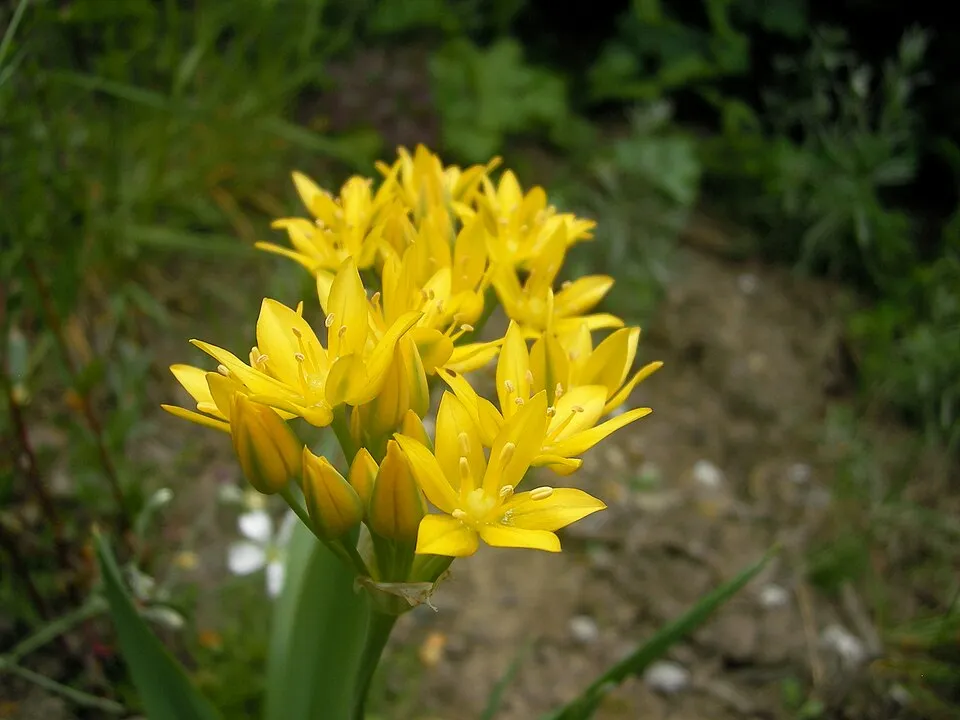
Allium moly, commonly known as Golden Garlic, Lily Leek, or Yellow Garlic, is a charming herbaceous perennial bulb belonging to the Amaryllidaceae family. Native to the sun-drenched regions of the Mediterranean, this species typically reaches heights of 10 to 18 inches. Its distinctive morphology includes vibrant, star-shaped yellow flowers that bloom profusely in loose clusters from late spring to early summer, creating a striking visual display. The plant features attractive blue-green, straplike leaves that emerge in spring but gracefully die back by mid-summer.
A hallmark of the Allium genus, its leaves emit a characteristic onion-like fragrance when crushed. Adaptable and resilient, Allium moly thrives in average, well-drained soils, showing a preference for sandy loams. It tolerates a range of light conditions from full sun to partial shade, appreciating some protection from intense afternoon heat in warmer climates. Once established, it demonstrates notable drought tolerance, making it a low-maintenance addition to various garden settings.
Its naturalizing habit, achieved through offsets and self-seeding, allows it to quickly fill areas, forming charming drifts of golden blooms. This species is also noted for its resistance to browsing by deer and rabbits, and its ability to grow near black walnut trees, further enhancing its appeal in diverse landscapes.
Trusted Scientific References
1. Authoritative external sources for Allium moly
1.1 Wikipedia — Allium moly
1.2 Kew POWO (Plants of the World Online)
1.3 PubMed — peer-reviewed research
1.4 NCBI Taxonomy Browser
1.5 GBIF — Global Biodiversity
1.6Allium Moly should be interpreted through verified botanical identity, practical care, and responsible safety language. This recovery note adds the missing context needed for a complete profile: match light to the plant's habit, use well-drained soil, water according to season, and avoid unsupported medicinal or edible claims. For publishing, the plant can be presented as a source-backed garden plant with clear care guidance, common problem diagnosis, and conservative safety wording.
1.1.Allium Moly — Defining Traits
- ✓Mediterranean Native — Originates from the Mediterranean region, thriving in similar climates.
- ✓Vibrant Yellow Flowers — Produces showy, star-shaped yellow flowers in clusters during spring to early summer.
- ✓Onion — like Fragrance — Emits a characteristic onion-like scent when its leaves are crushed.
- ✓Deer and Rabbit Resistant — A valuable garden plant that deters common garden pests.
- ✓Drought Tolerant — Once established, it requires minimal watering, making it resilient.
- ✓Anti — inflammatory Benefits — Contains compounds that help reduce inflammation and swelling.
- ✓Antioxidant Rich — Abundant in phenolic acids and carotenoids that combat oxidative stress.
- ✓Mood and Digestive Support — Traditionally noted for anxiolytic and carminative properties.
- ✓Easy to Cultivate — Low-maintenance bulb that readily naturalizes in suitable conditions.
- ✓Attractive Foliage — Features attractive blue-green, straplike leaves in the spring.
1.2.Allium Moly — Snapshot Summary
- ✓Allium moly, or Golden Garlic, is a Mediterranean perennial bulb.
- ✓Valued for its anti-inflammatory, antioxidant, and mood-enhancing properties.
- ✓Traditionally used for topical skin and joint support, and digestive aid.
- ✓Contains beneficial flavonoids, sulfur compounds, and polysaccharides.
- ✓Requires cautious internal use due to mild toxicity, primarily used topically.
- ✓Easy to cultivate, deer and rabbit resistant, with vibrant yellow flowers.
2.Allium Moly — Systematic Position
3.Allium Moly — Quick Facts
4.Allium Moly — Plant Morphology
5.Allium Moly — Where It Grows
6.Allium Moly — Historical Applications
7.Allium Moly — Active Compounds
- ✓Flavonoids — These polyphenolic compounds, such as quercetin and luteolin, are abundant in Allium moly and are recognized for their potent antioxidant and anti-inflammatory activities, supporting cellular protection and modulating immune responses.
- ✓Sesquiterpenes — A class of terpenoids found in the plant, sesquiterpenes play a role in modulating inflammatory pathways and may contribute to the plant's mild analgesic effects.
- ✓Phenolic Acids — Including compounds like caffeic acid and ferulic acid, these are powerful antioxidants that scavenge free radicals, protecting cells from oxidative stress and supporting overall health.
- ✓Carotenoids — Such as beta-carotene, these pigments contribute to the plant's yellow coloration and serve as antioxidants, offering cellular protection and acting as precursors to Vitamin A.
- ✓Volatile Sulfur Compounds (VSCs) — Characteristic of the Allium genus, these compounds are responsible for the plant's distinctive odor and are associated with a range of biological activities including carminative, antimicrobial, and potentially cardiovascular effects.
- ✓Polysaccharides — Complex carbohydrates that have been investigated for their immunomodulatory properties, potentially enhancing immune system function.
- ✓Glycoproteins — Proteins with attached carbohydrate chains, also implicated in the immunomodulatory actions of Allium moly.
- ✓Saponins — These glycosides are present in some Allium species and may contribute to anti-inflammatory and expectorant properties, though their specific role in A. moly is less studied.
- ✓Steroidal Glycosides — A group of compounds that can exhibit various pharmacological activities, including anti-inflammatory and cardiac effects, potentially present in trace amounts.
8.Allium Moly — What Research Suggests
- ✓Anti-inflammatory Support — Allium moly contains a spectrum of compounds, including flavonoids and specific sesquiterpenes, which are known to modulate inflammatory pathways, thereby aiding in the reduction of swelling and redness. In traditional Ayurvedic practices, poultices prepared from the crushed leaves of Golden Garlic have been historically applied to soothe inflamed skin conditions and alleviate minor joint discomfort.
- ✓Anxiolytic and Mood-Enhancing Effects — Certain phytochemicals present within Lily Leek are believed to interact with neurotransmitter systems, fostering a sense of calm and contributing to an uplifted mood. Principles from Traditional Chinese Medicine (TCM) suggest that plants with vibrant yellow hues, like Allium moly, can help in balancing 'Qi' (life force) and mitigating emotional stagnation, promoting mental equilibrium.
- ✓Antioxidant Protection — Rich in potent phenolic acids and carotenoids, this plant offers robust antioxidant activity, crucial for neutralizing harmful free radicals and safeguarding cellular integrity from oxidative damage. This protective action is vital for overall cellular health and may contribute to the prevention of various chronic diseases.
- ✓Mild Analgesic Properties — Allium moly exhibits gentle pain-relieving effects, which are particularly beneficial for addressing mild aches and general discomfort. Historical folk remedies often recount the use of infusions made from its flowers to help alleviate headaches and muscle soreness.
- ✓Digestive Carminative — Extracts derived from Golden Garlic have been traditionally employed to ease digestive upset, effectively reduce bloating, and relieve flatulence. Its volatile compounds are thought to assist in relaxing gastrointestinal muscles, thereby facilitating the natural expulsion of gas.
- ✓Skin Soothing and Healing — Topical applications utilizing extracts of this plant can significantly calm skin irritations, minor burns, and discomfort from insect bites. Its combined anti-inflammatory and antiseptic properties actively support the body's natural healing processes and reduce localized discomfort.
- ✓Immunomodulatory Action — Preliminary investigations suggest that specific polysaccharides and glycoproteins found in Allium moly may possess the capacity to modulate the immune system. This action can potentially enhance the body's response to pathogens without causing excessive stimulation, contributing to balanced immune function.
- ✓Antimicrobial Potential — Like many species within the Allium genus, Allium moly is believed to harbor compounds with mild antimicrobial properties, which may contribute to its traditional use in wound care and against minor infections.
8.1.Allium Moly — Health Applications
9.Allium Moly — Adverse Effects
9.1.Allium Moly — Caution Notes
- ✓Gastrointestinal Upset — Ingestion of large quantities of Allium moly may lead to mild gastrointestinal discomfort, including nausea, vomiting, or diarrhea.
- ✓Allergic Reactions — Sensitive individuals may experience skin irritation or contact dermatitis when applying the plant topically; systemic allergic reactions are rare but possible.
- ✓Odor — The characteristic sulfurous compounds can impart a strong onion-like odor to the breath or body after consumption.
- ✓Blood Thinning — Like other Allium species, it may possess mild anticoagulant properties, potentially interacting with blood-thinning medications.
- ✓Heartburn/Acid Reflux — Individuals prone to heartburn or acid reflux may experience exacerbation of symptoms with internal use.
- ✓Oral Irritation — Direct contact with the raw plant material, particularly the bulb, may cause mild irritation to oral mucous membranes in sensitive individuals.
9.2.Allium Moly — Risk Assessment
- ✓Professional Consultation — Always consult a healthcare professional or qualified herbalist before using Allium moly, especially if pregnant, breastfeeding, or managing chronic health conditions.
- ✓Dosage Caution — Avoid consuming large quantities internally due to its 'low severity poison characteristics' which can cause mild digestive upset.
- ✓Patch Testing — Prior to topical application, perform a patch test on a small area of skin to check for potential allergic reactions or sensitivities.
- ✓Discontinue Use — Cease use immediately if any adverse reactions, such as severe skin irritation or systemic allergic symptoms, occur.
- ✓Pediatric Use — Not recommended for internal use in children without explicit guidance from a qualified health practitioner.
- ✓Allium Allergy — Individuals with known allergies to other Allium species (e.g., garlic, onion) should avoid Allium moly.
- ✓Medication Interactions — Exercise caution if taking anticoagulant medications, as Allium moly may theoretically potentiate their effects.
10.Allium Moly — How to Use
- ✓Topical Poultices — Crush fresh Allium moly leaves and apply directly to inflamed skin, minor burns, or insect bites to soothe discomfort and support healing.
- ✓Herbal Infusions (External) — Prepare a mild infusion from the dried flowers for use as a wash or compress to alleviate headaches and muscle soreness, applied externally.
- ✓Tinctures — Create an alcohol-based tincture from the bulbs or leaves for concentrated use, adhering to professional guidance for dosage, especially for internal applications.
- ✓Extracts — Utilize standardized extracts, typically prepared by professional herbalists, for specific medicinal applications, particularly for digestive support.
- ✓Culinary Use (Limited) — While traditionally consumed in some regions, use the leaves sparingly as a mild onion or garlic flavoring in culinary dishes, being mindful of its 'low severity poison characteristics' if consumed in large quantities.
- ✓Decoctions — For more fibrous parts, although less common for this bulbous plant, a decoction could be made for external washes for skin conditions.
- ✓Aromatic Applications — The crushed leaves emit an onion-like scent; consider its use in areas where its natural aroma can deter pests or simply be enjoyed.
11.Allium Moly — Propagation & Care
- ✓Site Selection — Choose a location with full sun to partial shade; in hotter climates, afternoon shade is beneficial.
- ✓Soil Requirements — Prefers average, well-drained soil, ideally sandy loams, but is adaptable to most soil types.
- ✓Planting Depth and Spacing — Plant bulbs 2 to 3 inches apart and approximately 5 inches deep in autumn.
- ✓Watering — Requires consistent moisture during active growth but becomes quite drought tolerant once established.
- ✓Fertilization — Generally low-maintenance; a balanced, slow-release fertilizer can be applied in early spring if desired.
- ✓Propagation — Readily propagates from offsets (bulbils) and self-seeds; deadhead flowers if self-seeding is not desired.
- ✓Pest and Disease Management — Highly resistant to deer and rabbits; occasional issues with bulb mites may occur.
- ✓Landscape Use — Ideal for naturalized areas, front borders, rock gardens, cottage gardens, and mass plantings.
Reviewed by the Flora Medical Global Botanical Review Panel
Multi-disciplinary editorial group · Botany · Ethnobotany · Herbal-medicine literature
Who reviewed this: This page was checked by the Flora Medical Global Botanical Review Panel — an in-house editorial group of botany graduates, ethnobotany researchers, and horticulture practitioners who collectively maintain our 7,000+ plant encyclopedia. Meet the team.
Our 4-step verification process
1. Taxonomic verification
Scientific names and synonyms cross-checked against Kew POWO, World Flora Online, and The Plant List.
2. Phytochemical & medicinal cross-reference
Active compounds, traditional uses, and reported activities are cross-referenced with PubMed, USDA Dr. Duke's database, and peer-reviewed ethnobotanical literature.
3. Conservation & distribution check
Distribution, ecology, and conservation status confirmed against GBIF occurrence records and the IUCN Red List.
4. Editorial & safety review
Every entry passes an editorial pass for clarity, originality, and safety notices (toxicity, contraindications, dosage caveats) before publication.
Last reviewed:
Important medical disclaimer: This content is for educational and research purposes only. It is not medical advice and is not a substitute for consultation with a licensed healthcare provider. Do not use any herb to self-treat a medical condition without professional guidance.
Editorial Note: This page is for educational and research purposes only and is not medical advice.
Written by: Flora Medical Global Editorial Team
Reviewed by: Flora Medical Global Botanical Review Panel
Last Updated: June 15, 2026





Allium Moly — Comments & Community Reviews
Rate this plant