


Medical Disclaimer: This content is for educational purposes only. It is not medical advice. Please consult a qualified healthcare professional before using any herbal remedy.
Safety Overview
1.Almond Tree — Botanical Snapshot
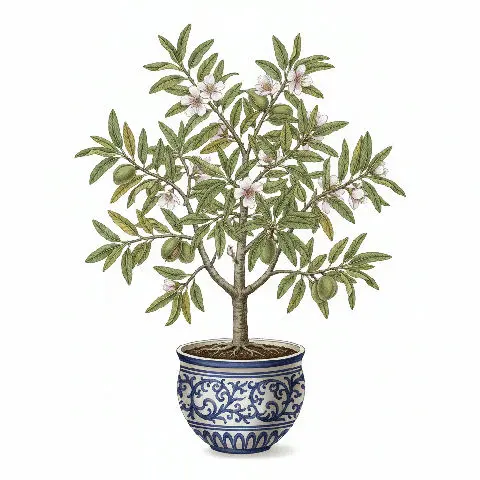
Prunus dulcis, commonly known as the almond tree, is a deciduous species belonging to the Rosaceae family, renowned globally for its highly nutritious and edible seeds. Native to the Middle East and South Asia, this ancient tree has been cultivated for over 5,000 years, with its significance rooted deeply in historical and economic contexts. The almond tree typically reaches a height of 4–10 meters, characterized by a robust trunk and an expansive, open canopy. Its leaves are distinctively lanceolate, finely serrated along the margins, and exhibit a vibrant bright green hue. These leaves emerge after the tree's delicate, often pale pink to white blossoms, which are among the earliest indicators of spring, blooming in late winter. These hermaphroditic flowers rely heavily on insect pollination, particularly by bees, making almond orchards crucial habitats for pollinator health. The fruit of Prunus dulcis is botanically classified as a drupe, maturing over several months.
It features a fuzzy green outer layer, the exocarp or hull, which naturally splits open at maturity to reveal the hard, woody endocarp, commonly known as the shell. Encased within this shell is the prized edible kernel. There are two primary varieties: sweet almond (P. dulcis var. dulcis) and bitter almond (P. dulcis var. amara).
Sweet almonds are the widely consumed type, cherished for their mild, nutty flavor and dense nutritional profile. Bitter almonds, while genetically similar, contain amygdalin, a cyanogenic glycoside. Upon hydrolysis, amygdalin releases hydrogen cyanide, rendering bitter almonds toxic if ingested raw in significant quantities. Historically, bitter almonds were used sparingly in traditional medicinal preparations and for flavoring after meticulous processing to eliminate their toxic compounds. Sweet almonds are a nutritional powerhouse, abundant in monounsaturated fats, high-quality protein, dietary fiber, vitamin E, magnesium, and a spectrum of other essential micronutrients. Contemporary scientific research consistently supports the traditional understanding of almonds' health benefits, including their role in enhancing cardiovascular health by lowering LDL cholesterol, improving blood sugar regulation in individuals with diabetes, and assisting in weight management through their satiety-promoting properties. Trusted Scientific References Authoritative external sources for Prunus dulcis : Wikipedia — Prunus dulcis Kew POWO (Plants of the World Online) PubMed — peer ...[CURRENT TEXT EXISTS: 2567 chars]
1.1.Almond Tree — Highlights
- ✓Rich in Monounsaturated Fats — Primarily oleic acid, beneficial for heart health.
- ✓High Protein Content — Supports muscle repair and satiety.
- ✓Excellent Source of Fiber — Aids digestion and blood sugar control.
- ✓Abundant in Vitamin E — A potent antioxidant protecting cells.
- ✓Contains Essential Minerals — Magnesium, calcium, potassium, phosphorus.
- ✓Versatile Culinary Use — From raw nuts to oil, milk, and flour.
- ✓Ancient Medicinal History — Valued in Ayurvedic, Persian, and Unani traditions.
- ✓Supports Skin and Hair Health — Especially almond oil.
- ✓Pollinator — Dependent — Almond orchards are crucial for bee populations.
- ✓Distinct Sweet vs. Bitter Varieties — With significant safety implications.
1.2.Almond Tree — Snapshot Summary
- ✓Prunus dulcis is a nutritional powerhouse, rich in healthy fats, protein, and fiber.
- ✓Supports cardiovascular health, blood sugar control, and cognitive function.
- ✓Valued in Ayurveda for nourishing skin, hair, and balancing Vata dosha.
- ✓Contains vital antioxidants like Vitamin E and beneficial phytosterols.
- ✓Sweet almonds are safe and widely consumed; bitter almonds are toxic raw.
- ✓Essential for a balanced diet, offering satiety and various micronutrients.
2.Almond Tree — Botanical Identity
3.Almond Tree — Key Data
4.Almond Tree — Botanical Description
5.Almond Tree — Ecological Habitat
6.Almond Tree — Heritage Uses
7.Almond Tree — Phytochemistry
- ✓Monounsaturated Fatty Acids — Primarily oleic acid (~65%), which is beneficial for cardiovascular health and contributes to the oil's stability and nourishing qualities.
- ✓Polyunsaturated Fatty Acids — Including linoleic acid (Omega-6, ~20%), essential for maintaining skin barrier function and overall cellular health.
- ✓Vitamin E (Alpha-Tocopherol) — A powerful lipid-soluble antioxidant that protects cell membranes from oxidative damage and supports immune function.
- ✓Phytosterols — Compounds like beta-sitosterol, which compete with cholesterol absorption in the gut, thereby aiding in maintaining healthy lipid profiles.
- ✓Flavonoids — Such as quercetin and kaempferol, possessing significant anti-inflammatory and free-radical scavenging activities.
- ✓Phenolic Acids — Including caffeic acid and p-coumaric acid, contributing to the almond's overall antioxidant capacity.
- ✓Proteins and Amino Acids — Approximately 21% protein, providing essential amino acids like arginine, which plays a role in nitric oxide production and circulation.
- ✓Dietary Fiber — Both soluble and insoluble fibers, crucial for digestive health, blood sugar regulation, and promoting satiety.
- ✓Minerals — Rich in magnesium, potassium, calcium, phosphorus, and zinc, vital for numerous physiological functions including bone health and nerve transmission.
- ✓Cyanogenic Glycosides — Amygdalin is present in bitter almonds (Prunus dulcis var. amara), which can release hydrogen cyanide upon hydrolysis, making them toxic if consumed raw.
8.Almond Tree — Scientific Evidence
- ✓Cardiovascular Health Support — Regular consumption of Prunus dulcis, particularly its monounsaturated fats and phytosterols, significantly contributes to reducing LDL (bad) cholesterol levels, thereby promoting overall heart health and arterial flexibility.
- ✓Blood Sugar Regulation — Almonds have been shown to help moderate postprandial blood glucose spikes, making them a beneficial dietary component for individuals managing type 2 diabetes by improving insulin sensitivity.
- ✓Skin and Hair Nourishment — Topical application of almond oil (Prunus dulcis oil) is widely recognized in traditional systems like Ayurveda for its emollient properties, aiding in the hydration of dry, flaky skin conditions such as eczema and enhancing hair strength and luster.
- ✓Cognitive Function Enhancement — The presence of healthy fats, vitamin E, and arginine in almonds supports cerebral blood flow and provides antioxidant protection, potentially contributing to improved memory recall and overall brain health.
- ✓Digestive System Support — The dietary fiber content in almonds assists in promoting healthy bowel movements and can alleviate Vata-related constipation, while almond milk offers a gentle, soothing effect on Pitta-dominant digestive discomfort.
- ✓Antioxidant Protection — Rich in alpha-tocopherol (Vitamin E) and various flavonoids, almonds provide potent antioxidant activity, protecting cellular membranes from oxidative stress and free radical damage.
- ✓Weight Management Aid — Due to their high fiber and protein content, almonds promote satiety, helping to reduce overall calorie intake and supporting healthy weight management strategies.
- ✓Bone Health — Almonds supply essential minerals like magnesium, phosphorus, and calcium, which are crucial for maintaining strong bones and preventing conditions like osteoporosis.
- ✓Muscle and Energy Boost — As a good source of protein and healthy fats, almonds provide sustained energy and support muscle repair and growth, making them an excellent snack for active individuals.
8.1.Almond Tree — Indications & Uses
9.Almond Tree — Cautions & Contraindications
9.1.Almond Tree — Side Effects & Warnings
- ✓Allergic Reactions — Almonds are common allergens, potentially causing symptoms ranging from mild itching, hives, and swelling to severe anaphylaxis in sensitive individuals.
- ✓Gastrointestinal Upset — Excessive intake due to high fiber and fat content can lead to bloating, gas, stomach cramps, or loose stools.
- ✓Oxalate Content — Moderate levels of oxalates may pose a concern for individuals prone to kidney stones, advising moderation in consumption.
- ✓Weight Gain — As almonds are calorie-dense, overconsumption without adjusting overall caloric intake can contribute to unintended weight gain.
- ✓Interactions with Anticoagulants — The vitamin E in almond oil could theoretically affect blood clotting in individuals taking anticoagulant medications, though significant interactions are rare.
- ✓Bitter Almond Toxicity — Raw bitter almonds contain amygdalin, which converts to cyanide; ingestion can be highly toxic and potentially fatal.
9.2.Almond Tree — Safety Overview
- ✓Nut Allergies — Individuals with known tree nut allergies must strictly avoid almonds and almond-derived products due to the risk of severe allergic reactions.
- ✓Portion Control — Due to their high caloric and fat content, moderate consumption is advised, typically 20-30 grams per day, especially for those managing weight.
- ✓Infants and Toddlers — Introduce ground almonds or almond butter in very small quantities under pediatric guidance to assess for allergies and prevent choking hazards.
- ✓Pregnancy and Breastfeeding — Generally considered safe in moderate amounts; however, consult a healthcare provider to rule out allergies or specific dietary concerns.
- ✓Kidney Stones — Individuals with a history of kidney stones should consume almonds in moderation due to their oxalate content.
- ✓Gallbladder Issues — Those with gallbladder conditions should exercise caution with high-fat foods like almonds, as they may exacerbate symptoms.
- ✓Medication Interactions — Consult a healthcare professional if taking anticoagulant medications, as high vitamin E intake could theoretically interact, though typically not clinically significant with dietary amounts.
10.Almond Tree — Usage Guide
- ✓Raw Kernels — Consume 20-30 grams (approximately 6-8 nuts) daily as a healthy snack for general health benefits, including blood sugar control and nutrient intake.
- ✓Soaked Almonds — Soaking almonds overnight can improve digestibility and nutrient absorption; peel the skin before consumption for some individuals.
- ✓Roasted Almonds — Enjoy roasted almonds as a flavorful snack, but opt for dry-roasted or lightly salted versions to avoid excessive fat or sodium intake.
- ✓Almond Oil (Cold-Pressed) — Use internally (5-10 mL daily in smoothies, dressings, or teas) for cardiovascular and digestive support, or externally for skin and hair massage.
- ✓Almond Milk — Prepare by soaking nuts, blending with water, and straining; a creamy, dairy-free alternative for beverages, cereals, and cooking.
- ✓Almond Flour/Meal — Incorporate into baking for gluten-free recipes or use as a thickening agent in sauces and gravies.
- ✓Almond Butter — A nutritious spread for toast or fruit, providing healthy fats, protein, and fiber; choose varieties with minimal added sugars or oils.
- ✓Almond Powder — Mix into facial masks or body scrubs for cosmetic benefits, or sprinkle over dishes as a nutritional supplement.
11.Almond Tree — Garden Cultivation
- ✓Climate Requirement — Almond trees thrive in Mediterranean-like climates, requiring mild, wet winters and long, hot, dry summers for optimal growth and fruit development.
- ✓Soil Preference — Well-draining, deep, loamy soils with a pH between 6.0 and 7.0 are ideal for successful almond cultivation.
- ✓Pollination — Most almond varieties are self-incompatible, necessitating cross-pollination by different cultivars, primarily facilitated by bees during early spring bloom.
- ✓Watering — Consistent and adequate water supply is crucial, especially during critical growth stages like bloom, fruit set, and kernel development, though mature trees exhibit some drought tolerance.
- ✓Harvesting — Occurs typically in late summer or early autumn when the green hull splits open; nuts are mechanically shaken from trees or hand-picked.
- ✓Post-Harvest Processing — After harvesting, almonds are sun-dried to reduce moisture content to approximately 6%, which is essential for preventing mold growth and extending shelf life.
- ✓Pruning — Regular pruning is vital for maintaining tree structure, promoting air circulation, enhancing sunlight penetration, and encouraging consistent fruit production.
Reviewed by the Flora Medical Global Botanical Review Panel
Multi-disciplinary editorial group · Botany · Ethnobotany · Herbal-medicine literature
Who reviewed this: This page was checked by the Flora Medical Global Botanical Review Panel — an in-house editorial group of botany graduates, ethnobotany researchers, and horticulture practitioners who collectively maintain our 7,000+ plant encyclopedia. Meet the team.
Our 4-step verification process
1. Taxonomic verification
Scientific names and synonyms cross-checked against Kew POWO, World Flora Online, and The Plant List.
2. Phytochemical & medicinal cross-reference
Active compounds, traditional uses, and reported activities are cross-referenced with PubMed, USDA Dr. Duke's database, and peer-reviewed ethnobotanical literature.
3. Conservation & distribution check
Distribution, ecology, and conservation status confirmed against GBIF occurrence records and the IUCN Red List.
4. Editorial & safety review
Every entry passes an editorial pass for clarity, originality, and safety notices (toxicity, contraindications, dosage caveats) before publication.
Last reviewed:
Important medical disclaimer: This content is for educational and research purposes only. It is not medical advice and is not a substitute for consultation with a licensed healthcare provider. Do not use any herb to self-treat a medical condition without professional guidance.
Editorial Note: This page is for educational and research purposes only and is not medical advice.
Written by: Flora Medical Global Editorial Team
Reviewed by: Flora Medical Global Botanical Review Panel
Last Updated: June 15, 2026





Almond Tree — Comments & Community Reviews
Rate this plant