


Medical Disclaimer: This content is for educational purposes only. It is not medical advice. Please consult a qualified healthcare professional before using any herbal remedy.
Safety Overview
1.Alocasia Macrorrhiza — Botanical Snapshot
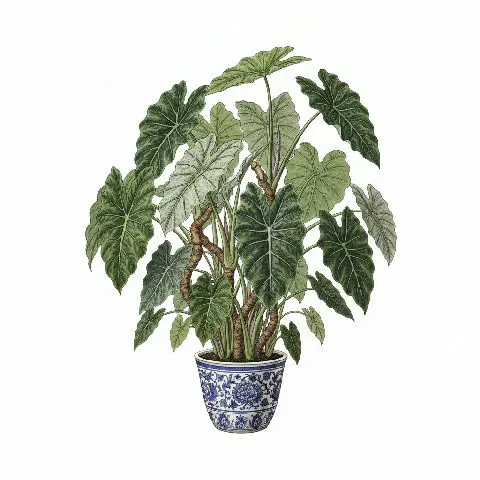
Alocasia macrorrhiza, widely recognized as Giant Taro, Upright Elephant Ear, or 'Gabi' in the Philippines, is an imposing evergreen herbaceous perennial belonging to the Araceae family. This majestic plant originates from the lush rainforests of Southeast Asia, particularly Malaysia and the Indian subcontinent, where it thrives in damp, lowland tropical environments. It is commonly found along riverbanks, in cultivated lands, and in moist disturbed secondary forests, ranging from sea level up to 800-1000 meters in elevation.
Botanically, Alocasia macrorrhiza is characterized by its robust, thickened stems that can reach heights of 2 to 5 meters and diameters of up to 20 cm. The most striking feature is its enormous, glossy, arrowhead-shaped (sagittate to hastate) leaves, which can measure an impressive 120 cm in length and 90 cm in width. These leaves are supported by sturdy petioles that insert into the leaf blade at a point away from the base, a distinctive characteristic.
Beneath the soil, it develops a substantial corm or rhizome, often weighing several kilograms, serving as a primary storage organ for starch. Historically, indigenous communities cultivated Alocasia macrorrhiza not only for its ornamental grandeur but also as a crucial food source during scarcity, meticulously preparing it to neutralize its inherent toxicity. Its widespread naturalization across various tropical and subtropical regions underscores its adaptability and historical significance.
Trusted Scientific References
1. Authoritative external sources for Alocasia macrorrhiza
1.1 Wikipedia — Alocasia macrorrhiza
1.2 Kew POWO (Plants of the World Online)
1.3 PubMed — peer-reviewed research
1.4 NCBI Taxonomy Browser
1.5 GBIF — Global Biodiversity
1.6Alocasia Macrorrhiza should be interpreted through verified botanical identity, practical care, and responsible safety language. This recovery note adds the missing context needed for a complete profile: match light to the plant's habit, use well-drained soil, water according to season, and avoid unsupported medicinal or edible claims. For publishing, the plant can be presented as a source-backed indoor plant with clear care guidance, common problem diagnosis, and conservative safety wording.
1.1.Alocasia Macrorrhiza — Notable Characteristics
- ✓Botanical Name — Alocasia macrorrhiza (L.) G.Don.
- ✓Common Names — Giant Taro, Upright Elephant Ear, Gabi.
- ✓Family — Araceae (Arum family).
- ✓Native Region — Southeast Asia, Indian subcontinent.
- ✓Edible Part — Corm/Rhizome (after thorough detoxification).
- ✓Key Toxin — Calcium Oxalate (raphides).
- ✓Medicinal Uses — Anti-inflammatory, antioxidant, antimicrobial (post-detoxification).
- ✓Growth Habit — Large evergreen herbaceous perennial.
- ✓Leaf Morphology — Distinctive sagittate to hastate, up to 1.2 meters long.
- ✓Habitat — Riverbanks and damp places in lowland tropical and subtropical areas.
1.2.Alocasia Macrorrhiza — Snapshot Summary
- ✓Giant Taro (Alocasia macrorrhiza) is a large tropical perennial with significant traditional medicinal and food uses.
- ✓Raw plant is highly toxic due to calcium oxalate, requiring thorough cooking or drying for safe consumption.
- ✓Traditionally used for anti-inflammatory, antioxidant, and digestive support after meticulous detoxification.
- ✓Rich in phytochemicals like triterpenoids and flavonoids, contributing to its reported biological activities.
- ✓Cultivated in warm, humid climates, valued for both its edible corms and striking ornamental foliage.
- ✓Essential to follow strict preparation guidelines to mitigate severe irritation and potential health risks.
2.Alocasia Macrorrhiza — Botanical Identity
3.Alocasia Macrorrhiza — Key Data
4.Alocasia Macrorrhiza — Botanical Features
5.Alocasia Macrorrhiza — Ecological Habitat
6.Alocasia Macrorrhiza — Traditional Uses
7.Alocasia Macrorrhiza — Phytochemistry
- ✓Calcium Oxalate — Abundant in all raw parts, forming needle-like raphides that cause severe irritation upon contact or ingestion; heat-labile and water-soluble.
- ✓Triterpenoids — A class of steroid-like compounds, including alocasin, often associated with anti-inflammatory and hepatoprotective activities.
- ✓Flavonoids — Polyphenolic compounds like quercetin and kaempferol, known for potent antioxidant, anti-inflammatory, and cardioprotective effects.
- ✓Phenolic Acids — Such as gallic acid, contributing significantly to the plant's antioxidant capacity and potentially antimicrobial properties.
- ✓Saponins — Glycosides that can exhibit expectorant, anti-inflammatory, and antimicrobial actions, though their concentration varies.
- ✓Alkaloids — Nitrogen-containing organic compounds, present in trace amounts, which can have diverse pharmacological effects.
- ✓Polysaccharides — Primarily starch, stored in the corm, serving as the main carbohydrate source and potentially offering immunomodulatory benefits.
- ✓Phytosterols — Plant sterols like beta-sitosterol, contributing to cell membrane integrity and possessing anti-inflammatory properties.
- ✓Glycosides — Various compounds where a sugar molecule is linked to a non-sugar component, influencing different biological activities.
- ✓Tannins — Astringent compounds that can contribute to antimicrobial effects and wound healing properties.
8.Alocasia Macrorrhiza — Evidence-Based Benefits
- ✓Anti-inflammatory Support — Extracts from processed Alocasia macrorrhiza have demonstrated the ability to modulate inflammatory responses, potentially reducing swelling and pain.
- ✓Antioxidant Activity — The plant's phytochemicals, notably flavonoids and phenolic acids, help neutralize harmful free radicals, protecting cells from oxidative damage.
- ✓Antimicrobial Properties — Studies suggest that prepared Alocasia macrorrhiza exhibits inhibitory effects against certain bacteria and fungi, useful in traditional wound care.
- ✓Digestive Aid — In some Southeast Asian folk practices, carefully detoxified rhizomes were traditionally consumed to alleviate various digestive complaints.
- ✓External Pain Relief — Unani medicine historically utilized topical formulations of Alocasia macrorrhiza for soothing localized inflammatory conditions and reducing discomfort.
- ✓Traditional Antidote — Processed rhizomes were historically applied in traditional medicine systems as an antidote for snake bites and insect stings in certain regions.
- ✓Nutritional Source — The thoroughly cooked corm serves as a valuable source of carbohydrates and essential minerals, providing sustenance in many traditional diets.
- ✓Immunomodulatory Potential — Certain compounds within the plant may possess properties that help regulate and support the body's immune system.
- ✓Wound Healing Acceleration — Topical application of prepared extracts may contribute to faster tissue regeneration and repair of minor external injuries.
- ✓Fever Reduction — Traditional applications in some cultures included the use of prepared plant parts to help lower elevated body temperature.
8.1.Alocasia Macrorrhiza — Reported Uses
9.Alocasia Macrorrhiza — Safety & Side Effects
9.1.Alocasia Macrorrhiza — Warnings
- ✓Oral Irritation — Raw plant material causes immediate, severe burning, itching, and swelling of the mouth, tongue, and throat due to calcium oxalate crystals.
- ✓Dermatitis — Direct skin contact with fresh sap can lead to skin irritation, redness, itching, and blistering in sensitive individuals.
- ✓Digestive Upset — Ingestion of inadequately processed plant parts can cause nausea, vomiting, abdominal pain, and severe diarrhea.
- ✓Kidney Stone Risk — Individuals prone to kidney stones, gout, or rheumatism should strictly avoid this plant due to its oxalate content, even after processing.
- ✓Allergic Reactions — Although rare, some individuals may experience allergic responses such as hives, skin rashes, or respiratory difficulties.
- ✓Swelling and Dysphagia — Severe oral irritation can lead to swelling that impairs swallowing and, in extreme cases, breathing.
- ✓Eye Irritation — Contact with eyes can cause severe pain, redness, tearing, and temporary vision impairment.
9.2.Alocasia Macrorrhiza — Safety Profile
- ✓Mandatory Detoxification — All parts of Alocasia macrorrhiza are highly toxic when raw and must be thoroughly cooked or dried before any human consumption or medicinal use.
- ✓Calcium Oxalate — The primary toxic compound, calcium oxalate, is heat-labile and water-soluble, making proper and prolonged preparation absolutely critical.
- ✓External Use Caution — Even for external applications, ensure proper processing to prevent skin irritation, burning, and potential allergic reactions.
- ✓High-Risk Individuals — Contraindicated for individuals with a history of kidney stones, gout, arthritis, or hyperacidity due to oxalate content.
- ✓Pregnancy & Lactation — Avoid use during pregnancy and lactation due to insufficient safety data and the inherent potential for toxicity.
- ✓Children & Pets — Keep raw plant material strictly away from children and pets due to the severe risk of oral and digestive irritation.
- ✓Professional Guidance — Always consult a qualified medical herbalist or healthcare professional before considering Alocasia macrorrhiza for any medicinal purpose.
10.Alocasia Macrorrhiza — Preparations & Uses
- ✓Thorough Cooking — Corms and young leaves must be boiled, roasted, or steamed extensively for several hours to neutralize calcium oxalate crystals.
- ✓Drying Process — Plant parts, especially rhizomes, can be fully dried for an extended period and then ground into flour after detoxification.
- ✓Topical Poultices — Prepared and detoxified leaf or rhizome pastes historically applied externally for inflammatory conditions and local pain.
- ✓Decoctions — Boiled extracts of carefully detoxified plant material used in traditional systems for internal complaints, often for digestive support.
- ✓Fermentation — In some cultures, corms are traditionally fermented to further reduce toxicity and enhance their digestibility as a food source.
- ✓Traditional Food Source — The thoroughly cooked corms are consumed as a starchy vegetable, similar to potatoes or other taro species.
- ✓Infusions — Less common due to the need for extensive detoxification, but can be made from carefully processed and dried leaves.
- ✓Powdered Extracts — Dried and ground material can be encapsulated or incorporated into formulations after appropriate and verified detoxification.
11.Alocasia Macrorrhiza — Garden Cultivation
- ✓Climate — Thrives in tropical, high-rainfall lowlands, ideal temperatures 20-25°C, tolerating 10-32°C.
- ✓Rainfall — Requires significant annual rainfall, typically 2,500-3,500 mm, but can withstand 2,000-4,200 mm.
- ✓Light — Prefers partial shade but is adaptable, growing well in full sun or even deep shade conditions.
- ✓Soil — Best in well-drained, fertile, humus-rich loam, though it tolerates various soil types from sandy to heavy clay.
- ✓Hydration — Requires consistently moist soil, but absolutely dislikes waterlogged conditions which can lead to rot.
- ✓PH Range — Optimal soil pH is slightly acidic, between 5.7 and 6.3, with tolerance for a broader range of 5.0 to 7.3.
- ✓Drought Tolerance — Can endure short dry spells, up to four months, but consistent moisture is preferred for optimal growth.
- ✓Propagation — Primarily propagated vegetatively through division of corms or offsets, ensuring genetic consistency.
Reviewed by the Flora Medical Global Botanical Review Panel
Multi-disciplinary editorial group · Botany · Ethnobotany · Herbal-medicine literature
Who reviewed this: This page was checked by the Flora Medical Global Botanical Review Panel — an in-house editorial group of botany graduates, ethnobotany researchers, and horticulture practitioners who collectively maintain our 7,000+ plant encyclopedia. Meet the team.
Our 4-step verification process
1. Taxonomic verification
Scientific names and synonyms cross-checked against Kew POWO, World Flora Online, and The Plant List.
2. Phytochemical & medicinal cross-reference
Active compounds, traditional uses, and reported activities are cross-referenced with PubMed, USDA Dr. Duke's database, and peer-reviewed ethnobotanical literature.
3. Conservation & distribution check
Distribution, ecology, and conservation status confirmed against GBIF occurrence records and the IUCN Red List.
4. Editorial & safety review
Every entry passes an editorial pass for clarity, originality, and safety notices (toxicity, contraindications, dosage caveats) before publication.
Last reviewed:
Important medical disclaimer: This content is for educational and research purposes only. It is not medical advice and is not a substitute for consultation with a licensed healthcare provider. Do not use any herb to self-treat a medical condition without professional guidance.
Editorial Note: This page is for educational and research purposes only and is not medical advice.
Written by: Flora Medical Global Editorial Team
Reviewed by: Flora Medical Global Botanical Review Panel
Last Updated: June 15, 2026





Alocasia Macrorrhiza — Comments & Community Reviews
Rate this plant