
Medical Disclaimer: This content is for educational purposes only. It is not medical advice. Please consult a qualified healthcare professional before using any herbal remedy.
Safety Overview
1.Alocasia Melo — Overview
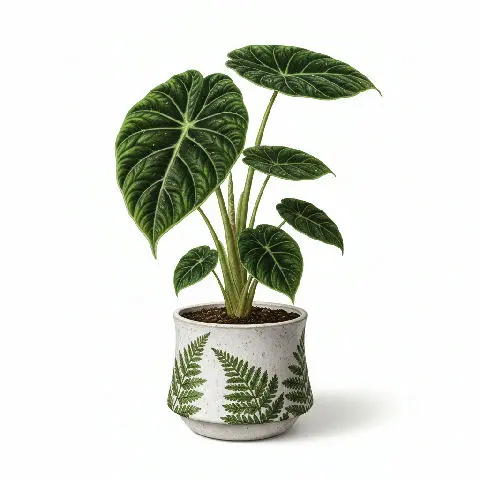
Alocasia melo, commonly known as 'Melo Alocasia' or 'Melo Elephant Ear', is a highly prized and distinctive cultivar within the genus Alocasia, renowned for its extraordinary foliage texture. Believed to originate from the biodiverse rainforests of Borneo, its exact natural discovery and classification are relatively recent. Unlike many smooth-leaved Alocasia species, A. melo features deeply ridged, almost reptilian-like leaves, a characteristic that inspired its 'Melo' epithet, reminiscent of a melon's textured rind.
This unique morphology makes Alocasia melo a sought-after specimen for indoor plant enthusiasts. Botanically, it belongs to the Araceae family, a vast group of monocotyledonous flowering plants that includes numerous ornamental and food crops. The plant typically exhibits a compact growth habit, making it well-suited for container cultivation. Its robust, heart-shaped leaves can grow substantially, displaying a rich, dark green hue on the upper surface, often with a subtle metallic sheen, contrasted by a lighter, silvery-green underside.
The petioles, or leaf stalks, are stout and can range in color from green to purplish-brown, providing a subtle accent to the dramatic foliage. It's important to note that, like most Alocasia species, A. melo contains calcium oxalate crystals, rendering it unsuitable for direct consumption and primarily valued for its ornamental appeal.
Trusted Scientific References
1. Authoritative external sources for Alocasia melo
1.1 Wikipedia — Alocasia melo
1.2 Kew POWO (Plants of the World Online)
1.3 PubMed — peer-reviewed research
1.4 NCBI Taxonomy Browser
1.5 GBIF — Global Biodiversity
1.6Alocasia Melo should be interpreted through verified botanical identity, practical care, and responsible safety language. This recovery note adds the missing context needed for a complete profile: match light to the plant's habit, use well-drained soil, water according to season, and avoid unsupported medicinal or edible claims. For publishing, the plant can be presented as a source-backed indoor plant with clear care guidance, common problem diagnosis, and conservative safety wording.
1.1.Alocasia Melo — Key Features
- ✓Common Name — Alocasia Melo, Melo Elephant Ear
- ✓Scientific Name — Alocasia melo
- ✓Family — Araceae
- ✓Origin — Borneo (likely)
- ✓Foliage — Uniquely textured, deeply ridged, almost reptilian leaves
- ✓Color — Rich, deep green with a metallic sheen on the upper surface
- ✓Toxicity — High, due to calcium oxalate crystals in all plant parts
- ✓Primary Use — Highly valued ornamental houseplant
- ✓Growth Habit — Compact, suitable for indoor cultivation
- ✓Humidity Requirement — Thrives in high humidity environments
- ✓Leaf Shape — Robust, heart-shaped leaves
- ✓Petiole Color — Stout petioles ranging from green to purplish-brown
1.2.Alocasia Melo — Quick Summary
- ✓Alocasia melo is a highly ornamental plant known for its unique, textured foliage.
- ✓It belongs to the Araceae family and is native to Borneo.
- ✓The plant contains calcium oxalate crystals, making all parts toxic if ingested.
- ✓Alocasia melo itself has no documented traditional medicinal uses.
- ✓The broader Alocasia genus, however, is studied for various traditional and pharmacological activities.
- ✓Primarily cultivated as a striking houseplant, requiring specific care for optimal growth.
2.Alocasia Melo — Scientific Profile
3.Alocasia Melo — Quick Facts
4.Alocasia Melo — Plant Morphology
5.Alocasia Melo — Where It Grows
6.Alocasia Melo — Historical Applications
7.Alocasia Melo — Secondary Metabolites
- ✓Calcium Oxalate Crystals — Present throughout Alocasia melo and the genus, these needle-like crystals cause severe irritation upon ingestion or contact, acting as the primary toxic agent.
- ✓Glycosides (Alocasia Genus) — Various glycosides are found in Alocasia species, including alocasgenoside B, which has shown promise in preliminary anti-cancer research.
- ✓Flavonoids (Alocasia Genus) — Polyphenolic compounds like flavonoids are present in the leaves of many Alocasia species, contributing to antioxidant and anti-inflammatory activities.
- ✓Saponins (Alocasia Genus) — These triterpenoid glycosides are found in the genus, often associated with anti-inflammatory, antimicrobial, and hemolytic properties.
- ✓Alkaloids (Alocasia Genus) — Nitrogen-containing organic compounds that contribute to the diverse pharmacological activities observed in other Alocasia species, such as antinociceptive effects.
- ✓Tannins (Alocasia Genus) — Present in some Alocasia species, tannins are known for their astringent properties and contribute to antioxidant defense.
- ✓Steroids (Alocasia Genus) — Various steroidal compounds have been isolated from the Alocasia genus, though their specific bioactivities are still under investigation.
- ✓Carbohydrates (Alocasia Genus) — Starches and other carbohydrates are significant components, especially in the corms of edible Alocasia species, providing energy.
- ✓Phenolic Compounds (Alocasia Genus) — Beyond flavonoids, other phenolic acids and derivatives are found, contributing to antioxidant and protective effects.
- ✓Proteins and Amino Acids (Alocasia Genus) — Essential for plant function and found in varying concentrations across different Alocasia species.
8.Alocasia Melo — Modern Studies
- ✓Ornamental Value — Alocasia melo is primarily cultivated for its exceptional aesthetic appeal and unique foliage, serving as a striking ornamental houseplant.
- ✓No Documented Traditional Medicinal Use for A. melo — It is crucial to note that Alocasia melo itself has no documented traditional medicinal applications due to its recent discovery and inherent toxicity.
- ✓Anti-cancer Potential (Alocasia Genus) — Research on various Alocasia species suggests potential anti-cancer properties, with compounds like alocasgenoside B under investigation for their cytotoxic effects.
- ✓Antidiabetic Activity (Alocasia Genus) — Some Alocasia species have been traditionally used and are being studied for their ability to help regulate blood glucose levels.
- ✓Antioxidant Effects (Alocasia Genus) — Phytochemicals found in the genus, such as flavonoids, exhibit antioxidant activity, which helps combat oxidative stress.
- ✓Anti-inflammatory Properties (Alocasia Genus) — Traditional uses of certain Alocasia species for swellings and modern studies indicate anti-inflammatory potential, likely due to saponins and flavonoids.
- ✓Antimicrobial and Antifungal Activity (Alocasia Genus) — Extracts from various Alocasia species have demonstrated inhibitory effects against a range of bacteria and fungi.
- ✓Antiparasitic Action (Alocasia Genus) — Studies on the Alocasia genus have reported antiparasitic activities, including antiprotozoal and anthelminthic effects.
- ✓Hepatoprotective Effects (Alocasia Genus) — Some species within the Alocasia genus are being explored for their potential to protect liver cells from damage.
- ✓Traditional External Application (Alocasia Genus) — Historically, certain Alocasia species have been used externally as poultices for boils, snake bites, and skin ailments, after specific processing to mitigate toxicity.
8.1.Alocasia Melo — Health Applications
9.Alocasia Melo — Precautions & Warnings
9.1.Alocasia Melo — Reported Side Effects
- ✓Oral and Pharyngeal Irritation — Ingestion of Alocasia melo causes immediate, intense burning, swelling, and pain in the mouth, throat, and tongue due to calcium oxalate crystals.
- ✓Digestive Upset — Symptoms like nausea, vomiting, and abdominal pain can occur if parts of the plant are ingested.
- ✓Skin Irritation — Direct contact with the sap can cause skin redness, itching, and irritation, especially for sensitive individuals.
- ✓Eye Irritation — Contact with eyes can lead to severe pain, redness, and swelling.
- ✓Difficulty Swallowing and Breathing — Severe swelling of the throat from ingestion can impede breathing and make swallowing difficult, requiring immediate medical attention.
- ✓Pet Toxicity — Highly toxic to pets; ingestion can cause similar oral irritation, vomiting, and signs of distress in animals.
9.2.Alocasia Melo — Risk Assessment
- ✓Keep Out of Reach — Always keep Alocasia melo plants out of reach of children and pets to prevent accidental ingestion.
- ✓Wear Gloves — Use gloves when handling the plant, especially during repotting, pruning, or propagation, to avoid skin contact with the sap.
- ✓Not for Internal Use — Emphasize that Alocasia melo is strictly an ornamental plant and should never be consumed or used in food preparation.
- ✓Avoid Eye Contact — Prevent sap from coming into contact with eyes; rinse immediately with plenty of water if exposure occurs.
- ✓Seek Medical Attention — In case of ingestion or severe skin/eye exposure, seek immediate medical advice or contact a poison control center.
- ✓No Self-Medication — Do not attempt to use Alocasia melo for any traditional or modern medicinal purposes, as it is toxic and lacks documented safe use.
- ✓Inform Others — Educate family members and visitors about the plant's toxicity and necessary precautions.
10.Alocasia Melo — How to Use
- ✓Ornamental Display — Alocasia melo is primarily used as an indoor ornamental plant, valued for its distinctive foliage and aesthetic appeal.
- ✓NOT for Consumption — Due to the presence of irritating calcium oxalate crystals, Alocasia melo is not safe for direct internal consumption by humans or pets.
- ✓External Traditional Use (Alocasia Genus) — In some traditional medicine systems, certain Alocasia species (not A. melo) are used externally as processed poultices for skin conditions like boils or swelling, only after rigorous detoxification.
- ✓Horticultural Specimen — Cultivated by plant collectors and enthusiasts as a prized specimen in aroid collections and botanical gardens.
- ✓Air Purification (General Plant Benefit) — Like many houseplants, Alocasia melo may contribute to improving indoor air quality, though not its primary medicinal use.
- ✓Educational Tool — Used in botanical studies and plant education to demonstrate unique leaf textures and the diversity of the Araceae family.
- ✓Handling Precautions — Always handle Alocasia melo with gloves to avoid skin irritation from its sap, especially when pruning or repotting.
11.Alocasia Melo — Propagation & Care
- ✓Light — Provide bright, indirect light; direct sunlight can scorch the unique foliage of Alocasia melo.
- ✓Watering — Keep soil consistently moist but never soggy; allow the top inch to dry out slightly between waterings to prevent root rot.
- ✓Humidity — Alocasia melo thrives in high humidity (70-80%); consider using a humidifier or pebble tray, especially indoors.
- ✓Soil — Use a well-draining, airy potting mix rich in organic matter, such as a blend of coco coir, perlite, and orchid bark.
- ✓Temperature — Maintain warm temperatures, ideally between 18-29°C (65-85°F); avoid cold drafts and sudden temperature drops.
- ✓Fertilizing — Feed with a balanced liquid fertilizer diluted to half strength every 2-4 weeks during the growing season (spring and summer).
- ✓Propagation — Propagate Alocasia melo primarily through rhizome division during repotting, ensuring each section has a growth point.
- ✓Pest Management — Regularly inspect for common houseplant pests like spider mites and mealybugs; treat promptly with appropriate organic solutions.
Reviewed by the Flora Medical Global Botanical Review Panel
Multi-disciplinary editorial group · Botany · Ethnobotany · Herbal-medicine literature
Who reviewed this: This page was checked by the Flora Medical Global Botanical Review Panel — an in-house editorial group of botany graduates, ethnobotany researchers, and horticulture practitioners who collectively maintain our 7,000+ plant encyclopedia. Meet the team.
Our 4-step verification process
1. Taxonomic verification
Scientific names and synonyms cross-checked against Kew POWO, World Flora Online, and The Plant List.
2. Phytochemical & medicinal cross-reference
Active compounds, traditional uses, and reported activities are cross-referenced with PubMed, USDA Dr. Duke's database, and peer-reviewed ethnobotanical literature.
3. Conservation & distribution check
Distribution, ecology, and conservation status confirmed against GBIF occurrence records and the IUCN Red List.
4. Editorial & safety review
Every entry passes an editorial pass for clarity, originality, and safety notices (toxicity, contraindications, dosage caveats) before publication.
Last reviewed:
Important medical disclaimer: This content is for educational and research purposes only. It is not medical advice and is not a substitute for consultation with a licensed healthcare provider. Do not use any herb to self-treat a medical condition without professional guidance.
Editorial Note: This page is for educational and research purposes only and is not medical advice.
Written by: Flora Medical Global Editorial Team
Reviewed by: Flora Medical Global Botanical Review Panel
Last Updated: June 15, 2026





Alocasia Melo — Comments & Community Reviews
Rate this plant