
Medical Disclaimer: This content is for educational purposes only. It is not medical advice. Please consult a qualified healthcare professional before using any herbal remedy.
Safety Overview
1.Alocasia Tiny Dancer — Overview
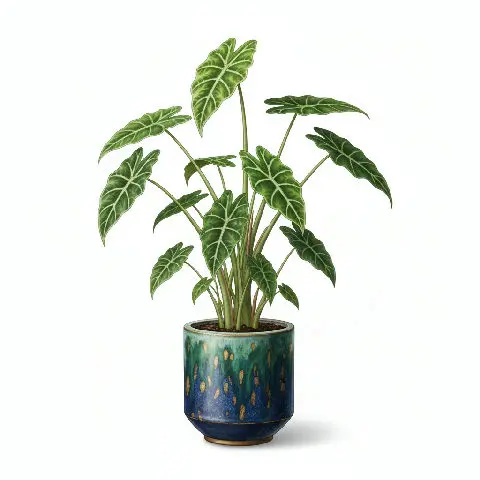
Alocasia 'Tiny Dancer' is an exquisite hybrid cultivar within the genus Alocasia, captivating enthusiasts with its distinctive morphology. This artificial hybrid was meticulously developed by Alocasia breeder LariAnn Garner of Aroidia Research, resulting from a cross between Alocasia brisbanensis and Alocasia odora 'Californian'. Its evocative name, 'Tiny Dancer', perfectly encapsulates its graceful, almost animated appearance, characterized by slender petioles supporting elegantly curled, cup-like leaves that seem to sway. While many Alocasia species are celebrated for their expansive, often dramatically patterned foliage, 'Tiny Dancer' offers a more refined, sculptural, and whimsical aesthetic.
The broader Alocasia genus boasts a rich biogeographical history, predominantly thriving in the tropical and subtropical rainforests of Southeast Asia, extending from India to New Guinea and parts of Australia, often as understory flora. The parent species of 'Tiny Dancer' contribute to this diverse genetic heritage. Historically, indigenous cultures across these regions have utilized native Alocasia species for various traditional medicinal applications, albeit with paramount caution due to the pervasive presence of irritating calcium oxalate crystals, necessitating specific preparation methods to mitigate toxicity. Alocasia 'Tiny Dancer' itself typically reaches a compact height of 30-60 cm, rendering it an ideal specimen for indoor cultivation.
Its most striking features are its glossy, dark green leaves, which are deeply cupped and appear as miniature green chalices. These unique leaves are borne on remarkably long, upright, and slender petioles, ranging in color from reddish-brown to green, often displaying subtle striping or mottling, which collectively create its signature 'dancing' silhouette. Like other Alocasia, it grows from an underground corm, serving as a vital storage organ for nutrients and water.
Trusted Scientific References
1. Authoritative external sources for Alocasia tiny dancer
1.1 Wikipedia — Alocasia tiny dancer
1.2 Kew POWO (Plants of the World Online)
1.3 PubMed — peer-reviewed research
1.4 NCBI Taxonomy Browser
1.5 GBIF — Global Biodiversity
1.1.Alocasia Tiny Dancer — Standout Qualities
- ✓Hybrid Cultivar — A modern horticultural creation, a cross between Alocasia brisbanensis and Alocasia odora 'Californian'.
- ✓Distinctive Foliage — Glossy, dark green leaves that are deeply cupped or curled, resembling miniature chalices.
- ✓Slender, Upright Petioles — Long, delicate stems that give the plant its characteristic 'dancing' or swaying appearance.
- ✓Compact Size — Typically grows 30-60 cm tall, making it suitable for indoor environments.
- ✓Ornamental Value — Primarily cultivated for its unique aesthetic appeal as a houseplant.
- ✓Toxicity — Contains calcium oxalate crystals in all parts, rendering it toxic if ingested and irritating upon contact.
- ✓Aroid Family Member — Belongs to the Araceae family, known for its diverse and often toxic species.
- ✓Corm — Based Growth — Grows from an underground corm, which stores nutrients and water.
- ✓High Humidity Lover — Thrives in environments with consistent high humidity, typical of its tropical lineage.
- ✓Unique Name — 'Tiny Dancer' aptly describes its delicate, graceful, and almost sculptural form.
1.2.Alocasia Tiny Dancer — Snapshot Summary
- ✓Alocasia 'Tiny Dancer' is a unique ornamental hybrid, not for medicinal use.
- ✓Characterized by slender stems and curled, cup-shaped leaves, resembling a 'dancing' form.
- ✓All parts of the plant are toxic due to calcium oxalate crystals, causing irritation upon contact or ingestion.
- ✓Requires bright, indirect light, high humidity, and consistent moisture for optimal growth.
- ✓Primarily cultivated as a striking indoor houseplant, ideal for terrariums.
- ✓Handle with gloves and keep out of reach of children and pets.
2.Alocasia Tiny Dancer — Systematic Position
3.Alocasia Tiny Dancer — Reference Facts
4.Alocasia Tiny Dancer — Morphological Account
5.Alocasia Tiny Dancer — Where It Grows
6.Alocasia Tiny Dancer — Ethnobotanical Uses
7.Alocasia Tiny Dancer — Bioactive Constituents
- ✓The phytochemistry of the Alocasia genus, including its hybrids, is dominated by compounds related to its defense mechanisms and basic plant metabolism:
- ✓Calcium Oxalate Crystals — Predominantly present as insoluble needle-like raphides, these crystals are the primary cause of irritation and toxicity upon ingestion or contact.
- ✓Flavonoids — A diverse group of polyphenolic compounds, often responsible for antioxidant activity and plant pigmentation, found in various plant parts.
- ✓Phenolic Acids — Simple phenolic compounds contributing to antioxidant and antimicrobial properties, such as caffeic acid and ferulic acid derivatives.
- ✓Alkaloids — While not as prominent as in some other plant families, certain Alocasia species may contain trace amounts of nitrogenous organic compounds with potential pharmacological activity.
- ✓Saponins — Glycosides that can form a soapy lather in water, potentially contributing to defense against pests and having some traditional medicinal applications in other plants.
- ✓Steroids/Triterpenoids — Plant steroids and triterpenes that play roles in plant growth, defense, and may exhibit anti-inflammatory or cytotoxic activities.
- ✓Cyanogenic Glycosides — Some species within the Araceae family, including Alocasia, may contain compounds that release hydrogen cyanide upon enzymatic hydrolysis, adding to their toxicity profile.
- ✓Lectins — Proteins that bind to carbohydrates, potentially involved in plant defense and sometimes exhibiting immunomodulatory or toxic effects in animals.
8.Alocasia Tiny Dancer — Modern Studies
- ✓Traditional applications observed in various Alocasia species, with extreme caution regarding Alocasia 'Tiny Dancer' due to its hybrid nature and inherent toxicity:
- ✓Anti-inflammatory Support — Certain Alocasia species have been traditionally used topically to alleviate localized inflammation, though the mechanism is not fully elucidated and direct application of 'Tiny Dancer' is not advised.
- ✓Analgesic Properties — Historically, poultices from processed Alocasia rhizomes were applied externally to soothe pain from sprains or arthritic conditions in some cultures.
- ✓Wound Healing — Traditional preparations of Alocasia species, after careful detoxification, have been used externally on minor cuts and wounds to promote healing and prevent infection.
- ✓Antifungal Activity — Extracts from some Alocasia species have shown in vitro antifungal properties, suggesting potential against superficial fungal infections.
- ✓Insect Bite Relief — Indigenous communities sometimes used processed Alocasia leaves as a topical application to reduce irritation and swelling from insect stings and bites.
- ✓Digestive Aid (External) — In some traditional systems, warm compresses made from processed Alocasia corms were applied to the abdomen to address digestive discomfort, never for internal consumption.
- ✓Skin Condition Management — Certain Alocasia species were traditionally used for external application to manage various skin conditions, including rashes and boils, requiring extensive processing to neutralize oxalates.
- ✓Diuretic Effects — Limited traditional accounts suggest some Alocasia species, when properly detoxified, were used to promote urination, though this is not a recommended modern practice.
- ✓Anthelmintic Use — Historically, specific Alocasia preparations were used in some traditional medicine systems to expel intestinal parasites, strictly under expert supervision due to toxicity.
8.1.Alocasia Tiny Dancer — Reported Uses
9.Alocasia Tiny Dancer — Adverse Effects
9.1.Alocasia Tiny Dancer — Reported Side Effects
- ✓Oral Irritation — Ingestion causes immediate burning, swelling, and pain in the mouth, throat, and digestive tract due to calcium oxalate.
- ✓Skin Dermatitis — Direct contact with sap can lead to skin irritation, itching, redness, and swelling in sensitive individuals.
- ✓Ocular Damage — Contact with eyes can cause severe pain, redness, swelling, and temporary vision impairment.
- ✓Gastrointestinal Distress — Nausea, vomiting, diarrhea, and abdominal pain can occur if ingested.
- ✓Respiratory Issues — Swelling of the throat and tongue can potentially obstruct airways, leading to difficulty breathing.
- ✓Systemic Toxicity — While rare from typical exposure, large ingestions could lead to more severe systemic effects.
- ✓Allergic Reactions — Sensitive individuals may experience allergic responses beyond direct irritation.
9.2.Alocasia Tiny Dancer — Risk Assessment
- ✓High Toxicity — All parts of Alocasia 'Tiny Dancer' are considered toxic due to insoluble calcium oxalate crystals; never ingest.
- ✓External Contact — Wear gloves when handling to prevent skin irritation; wash hands thoroughly after contact.
- ✓Keep Away from Children & Pets — Ensure the plant is placed out of reach to prevent accidental ingestion by curious individuals or animals.
- ✓Emergency Protocol — In case of ingestion, seek immediate medical attention or contact a poison control center.
- ✓Eye Protection — Avoid rubbing eyes after handling the plant; rinse eyes thoroughly with water if contact occurs.
- ✓Cooking/Processing — Traditional methods for detoxifying Alocasia species for consumption are complex and vary, and are NOT recommended for this ornamental hybrid.
- ✓Veterinary Care — If a pet ingests any part of the plant, consult a veterinarian immediately.
10.Alocasia Tiny Dancer — Application Forms
- ✓Ornamental Cultivation — Alocasia 'Tiny Dancer' is exclusively cultivated as an indoor ornamental plant, cherished for its unique aesthetic in homes and offices.
- ✓Terrarium Inclusion — Its compact size and preference for high humidity make it an excellent candidate for enclosed terrariums or small greenhouses.
- ✓Aesthetic Grouping — Often grouped with other houseplants to create visually appealing arrangements, enhancing indoor decor.
- ✓Handling Precautions — Always wear protective gloves when handling the plant, especially during repotting or pruning, to avoid skin irritation from calcium oxalate.
- ✓Pet and Child Safety — Keep Alocasia 'Tiny Dancer' out of reach of children and pets due to its inherent toxicity if ingested.
- ✓Atmospheric Humidification — Can be placed on a pebble tray with water or near a humidifier to meet its high humidity requirements.
- ✓Decorative Potting — Best displayed in decorative pots that complement its unique form, ensuring good drainage is provided.
- ✓Pest Monitoring — Regularly inspect leaves for common houseplant pests like spider mites and mealybugs, treating promptly if detected.
11.Alocasia Tiny Dancer — Growing Guide
- ✓Light Requirement — Prefers bright, indirect light; direct sun can scorch leaves.
- ✓Soil Composition — Thrives in rich, well-draining yet moisture-retentive soil, such as an aroid mix.
- ✓Watering Schedule — Keep soil consistently moist but never soggy; reduce frequency in winter.
- ✓Temperature & Humidity — Ideal temperatures are 18-24°C (65-75°F) with high humidity (50%+).
- ✓Fertilization — Feed with a balanced liquid fertilizer diluted to half strength every 2-3 weeks during spring and summer.
- ✓Pruning & Maintenance — Remove old, yellowing leaves to maintain appearance; pruning is not otherwise required.
- ✓Repotting — Repot every 1-2 years in spring when roots emerge from drainage holes, choosing a pot 2-3 inches larger.
- ✓Propagation — Easily propagated by dividing corms from a mature plant, placing them in moist sphagnum moss until roots develop.
Reviewed by the Flora Medical Global Botanical Review Panel
Multi-disciplinary editorial group · Botany · Ethnobotany · Herbal-medicine literature
Who reviewed this: This page was checked by the Flora Medical Global Botanical Review Panel — an in-house editorial group of botany graduates, ethnobotany researchers, and horticulture practitioners who collectively maintain our 7,000+ plant encyclopedia. Meet the team.
Our 4-step verification process
1. Taxonomic verification
Scientific names and synonyms cross-checked against Kew POWO, World Flora Online, and The Plant List.
2. Phytochemical & medicinal cross-reference
Active compounds, traditional uses, and reported activities are cross-referenced with PubMed, USDA Dr. Duke's database, and peer-reviewed ethnobotanical literature.
3. Conservation & distribution check
Distribution, ecology, and conservation status confirmed against GBIF occurrence records and the IUCN Red List.
4. Editorial & safety review
Every entry passes an editorial pass for clarity, originality, and safety notices (toxicity, contraindications, dosage caveats) before publication.
Last reviewed:
Important medical disclaimer: This content is for educational and research purposes only. It is not medical advice and is not a substitute for consultation with a licensed healthcare provider. Do not use any herb to self-treat a medical condition without professional guidance.
Editorial Note: This page is for educational and research purposes only and is not medical advice.
Written by: Flora Medical Global Editorial Team
Reviewed by: Flora Medical Global Botanical Review Panel
Last Updated: June 15, 2026





Alocasia Tiny Dancer — Comments & Community Reviews
Rate this plant