
Medical Disclaimer: This content is for educational purposes only. It is not medical advice. Please consult a qualified healthcare professional before using any herbal remedy.
Safety Overview
1.Alocasia Zebrina — Introduction & Highlights
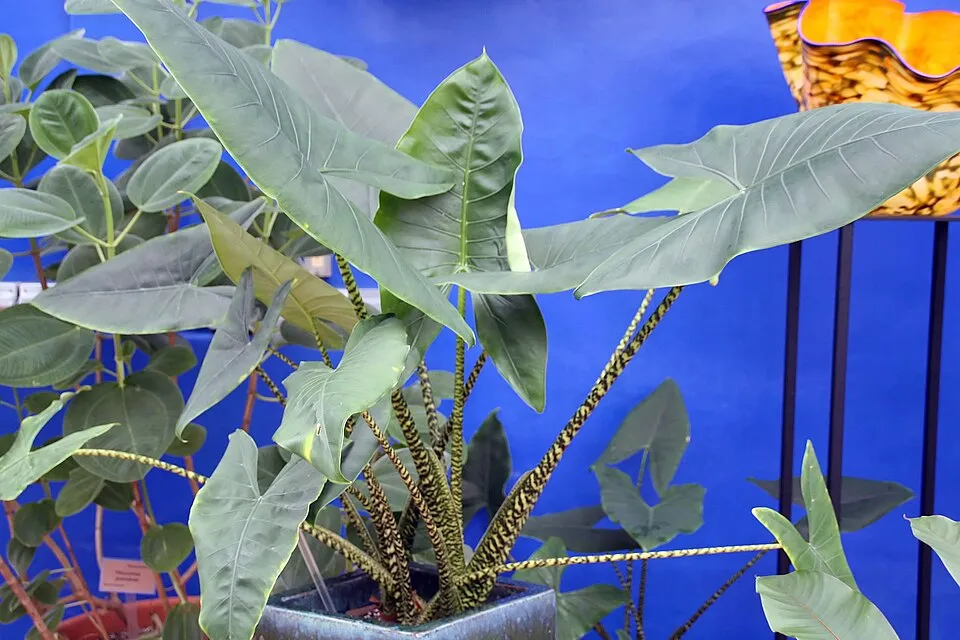
Alocasia zebrina, commonly recognized as the Zebra Plant or Elephant Ear, is a visually striking perennial herbaceous plant belonging to the Araceae family. Native to the lush tropical rainforests of Southeast Asia, specifically the island of Luzon in the Philippines, it thrives in the warm, humid, and shaded conditions of the forest understory. Its most distinctive morphological feature, from which its common and scientific names derive, are the elongated, erect petioles (leaf stalks) adorned with prominent, zebra-like dark stripes against a lighter green background.
These unique patterns set Alocasia zebrina apart, making it a highly prized ornamental plant globally. The plant produces large, glossy, sagittate (arrowhead-shaped) leaves that can reach up to 60 cm in length, typically presenting a rich dark green hue with conspicuous venation. While Alocasia zebrina is primarily cultivated for its aesthetic appeal, the broader Alocasia genus, distributed across Asia, Southeast Asia, and Australia, is known for its biodiversity and ecological role in tropical ecosystems, contributing to understory biomass and influencing local microclimates.
Taxonomically, it is part of a large genus with over 100 species, many of which share similar growth habits and environmental preferences.
Trusted Scientific References
1. Authoritative external sources for Alocasia zebrina
1.1 Wikipedia — Alocasia zebrina
1.2 Kew POWO (Plants of the World Online)
1.3 PubMed — peer-reviewed research
1.4 NCBI Taxonomy Browser
1.5 GBIF — Global Biodiversity
1.6Alocasia Zebrina should be interpreted through verified botanical identity, practical care, and responsible safety language. This recovery note adds the missing context needed for a complete profile: match light to the plant's habit, use well-drained soil, water according to season, and avoid unsupported medicinal or edible claims. For publishing, the plant can be presented as a source-backed indoor plant with clear care guidance, common problem diagnosis, and conservative safety wording.
1.1.Alocasia Zebrina — Key Features
- ✓Distinctive Zebra — Striped Petioles — The most recognizable feature, giving the plant its common name.
- ✓Large, Sagittate Leaves — Glossy, dark green, arrowhead-shaped leaves with prominent venation.
- ✓Tropical Aroid — Belongs to the Araceae family, known for its unique inflorescence structure.
- ✓Native to Southeast Asia — Specifically originating from the tropical rainforests of Luzon, Philippines.
- ✓Highly Sought — After Ornamental — Prized globally for its exotic and decorative appeal.
- ✓Perennial Herbaceous Plant — Grows year-round in suitable warm, humid conditions.
- ✓Understory Dweller — Naturally found in shaded, humid environments beneath taller canopy trees.
- ✓Contains Calcium Oxalate — All parts are toxic if ingested raw, causing severe irritation.
- ✓Rhizomatous Growth Habit — Spreads via underground rhizomes, forming clumps.
- ✓Elephant Ear Designation — Common name shared with other large-leaved Alocasia and Colocasia species.
1.2.Alocasia Zebrina — In Brief
- ✓Alocasia zebrina is a striking ornamental plant known for its zebra-striped petioles.
- ✓Native to the Philippines, it thrives in tropical, humid, shaded environments.
- ✓All parts contain toxic calcium oxalate, requiring extreme caution and rigorous processing for any traditional use.
- ✓Research on the broader Alocasia genus suggests potential anti-inflammatory, antioxidant, and antidiabetic properties.
- ✓Specific medicinal uses for A. zebrina are largely undocumented; benefits are extrapolated from the genus.
- ✓It is primarily valued as an aesthetic houseplant, not a direct medicinal herb.
2.Alocasia Zebrina — Taxonomic Classification
3.Alocasia Zebrina — Botanical Stats
4.Alocasia Zebrina — Structural Profile
5.Alocasia Zebrina — Where It Grows
6.Alocasia Zebrina — Ethnobotanical Uses
7.Alocasia Zebrina — Bioactive Constituents
- ✓Calcium Oxalate — Present in all parts of Alocasia zebrina, this compound forms sharp, needle-like crystals (raphides) that cause severe irritation upon contact or ingestion, necessitating extensive processing for traditional consumption.
- ✓Flavonoids — A diverse group of polyphenolic compounds, such as quercetin derivatives, known for their antioxidant, anti-inflammatory, and potentially antidiabetic properties, found in the leaves and stems.
- ✓Saponins — Glycosides that produce a frothy lather in water, observed in various Alocasia species, which may contribute to immunomodulatory and other biological activities.
- ✓Alkaloids — Nitrogen-containing organic compounds with diverse pharmacological effects, present in trace amounts and under investigation for their potential medicinal value in the genus.
- ✓Terpenoids — A large and diverse class of organic chemicals, including monoterpenes and sesquiterpenes, which often contribute to anti-inflammatory, antimicrobial, and aromatic properties.
- ✓Phenolic Compounds — Beyond flavonoids, other phenolic acids like gallic acid and caffeic acid derivatives are present, acting as potent antioxidants and contributing to the plant's defense mechanisms.
- ✓Glycosides — Various glycosidic compounds, including specific steroidal glycosides like alocasgenoside B, identified in the Alocasia genus for their potential cytotoxic (anti-cancer) effects.
- ✓Polysaccharides — Complex carbohydrates found in the tuberous roots, contributing to their nutritional value after processing and potentially offering immunomodulatory benefits.
- ✓Starches — The primary carbohydrate storage in the corms and rhizomes, providing a caloric source in traditional diets after thorough detoxification.
8.Alocasia Zebrina — Research Insights
- ✓Potential Anti-inflammatory — Compounds found in Alocasia species, such as flavonoids and terpenoids, may contribute to reducing inflammation, though specific research on Alocasia zebrina is limited.
- ✓Antioxidant Support — The presence of phenolic compounds and other phytochemicals in the Alocasia genus suggests potential antioxidant activity, helping to neutralize free radicals and protect cells.
- ✓Traditional Antidiabetic Use — Across various indigenous practices, some Alocasia species have been traditionally employed to manage blood sugar levels, hinting at potential antidiabetic or antihyperglycemic effects.
- ✓Antimicrobial Properties — Extracts from certain Alocasia species have shown activity against various bacteria and fungi, suggesting a role in traditional remedies for infections.
- ✓Antinociceptive (Pain-Relieving) Effects — Indigenous uses for pain relief indicate that components within the Alocasia genus might possess analgesic properties.
- ✓Hepatoprotective Potential — Some Alocasia species have been investigated for their ability to protect liver cells from damage, possibly due to antioxidant and anti-inflammatory actions.
- ✓Wound Healing Applications — Traditionally, processed Alocasia plant parts have been applied topically to aid in the healing of boils and other skin afflictions, likely due to their antimicrobial and soothing properties.
- ✓Potential Anti-cancer Activity — Research on the Alocasia genus has identified compounds like alocasgenoside B with cytotoxic properties, warranting further investigation into their anti-cancer potential, though not specific to A. zebrina.
- ✓Antiparasitic Effects — Studies on various Alocasia species have indicated potential activity against certain parasites, suggesting a traditional role in addressing parasitic infections.
8.1.Alocasia Zebrina — Health Applications
9.Alocasia Zebrina — Precautions & Warnings
9.1.Alocasia Zebrina — Reported Side Effects
- ✓Oral and Throat Irritation — Raw Alocasia zebrina causes immediate and severe burning, stinging, and swelling of the mouth, tongue, and throat due to calcium oxalate crystals.
- ✓Difficulty Swallowing and Breathing — Swelling in the throat can lead to dysphagia (difficulty swallowing) and, in severe cases, airway obstruction.
- ✓Skin Irritation — Contact with sap can cause skin redness, itching, and irritation, especially for sensitive individuals.
- ✓Gastrointestinal Distress — Ingestion can lead to nausea, vomiting, abdominal pain, and diarrhea.
- ✓Eye Irritation — Sap contact with eyes can cause pain, redness, and temporary vision disturbances.
- ✓Allergic Reactions — Rare instances of more severe allergic responses, including anaphylaxis, cannot be ruled out.
9.2.Alocasia Zebrina — Safety Overview
- ✓NEVER Consume Raw — Alocasia zebrina is highly toxic when raw due to calcium oxalate; thorough and specific processing is required for any traditional food or medicinal use of related species.
- ✓Keep Away from Children and Pets — Ensure the plant is out of reach to prevent accidental ingestion, which can lead to severe health consequences.
- ✓Handle with Gloves — When handling the plant, especially during repotting or pruning, wear gloves to prevent skin irritation from the sap.
- ✓Avoid Contact with Eyes — If sap comes into contact with eyes, flush immediately with plenty of water and seek medical attention.
- ✓Not for Pregnant or Nursing Individuals — Due to insufficient safety data, pregnant and nursing women should avoid all contact and potential exposure.
- ✓Individuals with Allergies — Those with known sensitivities to plants in the Araceae family should exercise extreme caution.
- ✓Consult a Healthcare Professional — Before considering any traditional or modern medicinal application of Alocasia species, always consult a qualified medical expert.
10.Alocasia Zebrina — Preparation & Dosage
- ✓Ornamental Display — Primarily cultivated as an indoor houseplant or outdoor ornamental in tropical climates for its striking foliage.
- ✓Traditional Tuber Processing — If used traditionally (for other Alocasia species), tubers require extensive boiling, roasting, or fermentation to neutralize toxic calcium oxalate crystals before consumption.
- ✓Topical Poultices — After proper detoxification, crushed or macerated plant parts of related species have been applied externally for skin ailments like boils or insect bites.
- ✓Decoctions for External Use — Prepared from processed rhizomes of related species, used as washes or soaks for inflammatory conditions, strictly avoiding internal use without expert guidance.
- ✓Avoid Raw Consumption — Due to high levels of calcium oxalate, Alocasia zebrina and other Alocasia species should NEVER be consumed raw.
- ✓Expert Consultation — Any consideration of medicinal use, even for related species, must be under the strict guidance of a qualified medical herbalist or healthcare professional.
- ✓Indigenous Food Source (After Processing) — Historically, tuberous parts of some Alocasia species served as a famine food or staple after rigorous detoxification methods to render them edible.
11.Alocasia Zebrina — Growing Guide
- ✓Light — Prefers bright, indirect light; direct sunlight can scorch its delicate leaves.
- ✓Soil — Requires well-draining, rich, and airy potting mix, often incorporating perlite or orchid bark.
- ✓Watering — Keep soil consistently moist but not waterlogged; allow the top inch to dry between waterings.
- ✓Humidity — Thrives in high humidity (60-80%); misting, pebble trays, or humidifiers are beneficial.
- ✓Temperature — Maintain warm temperatures between 18-29°C (65-85°F); sensitive to cold drafts.
- ✓Fertilization — Feed with a balanced liquid fertilizer every 2-4 weeks during the growing season (spring/summer).
- ✓Propagation — Primarily propagated by dividing rhizomes or separating offsets (corms) during repotting.
- ✓Pests & Diseases — Watch for spider mites, mealybugs, and fungal issues like root rot from overwatering.
Reviewed by the Flora Medical Global Botanical Review Panel
Multi-disciplinary editorial group · Botany · Ethnobotany · Herbal-medicine literature
Who reviewed this: This page was checked by the Flora Medical Global Botanical Review Panel — an in-house editorial group of botany graduates, ethnobotany researchers, and horticulture practitioners who collectively maintain our 7,000+ plant encyclopedia. Meet the team.
Our 4-step verification process
1. Taxonomic verification
Scientific names and synonyms cross-checked against Kew POWO, World Flora Online, and The Plant List.
2. Phytochemical & medicinal cross-reference
Active compounds, traditional uses, and reported activities are cross-referenced with PubMed, USDA Dr. Duke's database, and peer-reviewed ethnobotanical literature.
3. Conservation & distribution check
Distribution, ecology, and conservation status confirmed against GBIF occurrence records and the IUCN Red List.
4. Editorial & safety review
Every entry passes an editorial pass for clarity, originality, and safety notices (toxicity, contraindications, dosage caveats) before publication.
Last reviewed:
Important medical disclaimer: This content is for educational and research purposes only. It is not medical advice and is not a substitute for consultation with a licensed healthcare provider. Do not use any herb to self-treat a medical condition without professional guidance.
Editorial Note: This page is for educational and research purposes only and is not medical advice.
Written by: Flora Medical Global Editorial Team
Reviewed by: Flora Medical Global Botanical Review Panel
Last Updated: June 15, 2026





Alocasia Zebrina — Comments & Community Reviews
Rate this plant