


Medical Disclaimer: This content is for educational purposes only. It is not medical advice. Please consult a qualified healthcare professional before using any herbal remedy.
Safety Overview
1.Alpinia Officinarum — Plant Snapshot
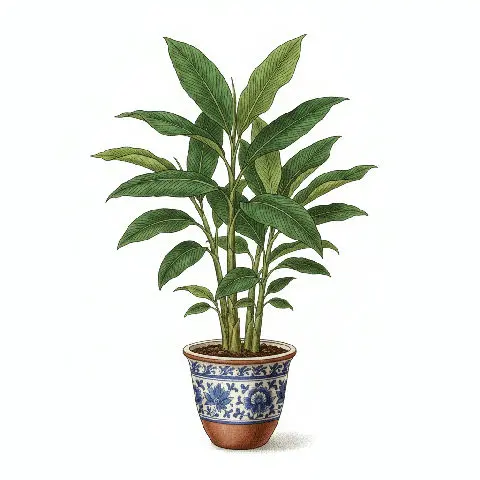
Alpinia officinarum, commonly known as Lesser Galangal or Small Galangal, is a resilient perennial herbaceous plant belonging to the Zingiberaceae family, which notably includes other well-known culinary and medicinal plants like ginger and turmeric. This species is indigenous to the verdant, tropical and subtropical regions of Southeast Asia, particularly thriving in southern China and Taiwan. It prefers well-drained, fertile soils rich in organic matter and flourishes under conditions of partial shade, though it can tolerate more sun.
Morphologically, Alpinia officinarum typically reaches heights of up to 1.5 meters, characterized by its distinctive lanceolate leaves, which can extend to lengths of 30-60 cm and exhibit a vibrant, glossy green surface. The plant produces striking white flowers, often adorned with subtle red streaks, which are elegantly grouped in terminal inflorescences emerging from the leaf axils. Following the flowering period, small, round, reddish-orange fruits develop, each containing seeds vital for the plant's natural propagation.
The rhizome, the primary part utilized for its potent medicinal and culinary properties, is notably smaller and more reddish-brown in hue compared to its larger relative, Greater Galangal (Alpinia galanga). It is highly prized for its pungent, peppery flavor and distinctively aromatic qualities, making it a valuable botanical resource across various cultures.
Trusted Scientific References
1. Authoritative external sources for Alpinia officinarum
1.1 Wikipedia — Alpinia officinarum
1.2 Kew POWO (Plants of the World Online)
1.3 PubMed — peer-reviewed research
1.4 NCBI Taxonomy Browser
1.5 GBIF — Global Biodiversity
1.6Alpinia Officinarum should be interpreted through verified botanical identity, practical care, and responsible safety language. This recovery note adds the missing context needed for a complete profile: match light to the plant's habit, use well-drained soil, water according to season, and avoid unsupported medicinal or edible claims. For publishing, the plant can be presented as a source-backed medicinal plant with clear care guidance, common problem diagnosis, and conservative safety wording.
1.1.Alpinia Officinarum — Standout Qualities
- ✓Indigenous to Southeast — Indigenous to Southeast Asia, particularly southern China and Taiwan.
- ✓Member of the — Member of the Zingiberaceae family, closely related to ginger.
- ✓The rhizome is — The rhizome is the primary medicinal and culinary component.
- ✓Characterized by a — Characterized by a pungent, peppery, and aromatic flavor profile.
- ✓Possesses significant anti — inflammatory and antioxidant activities.
- ✓Traditionally used to — Traditionally used to support digestion and alleviate respiratory issues.
- ✓Contains a rich — Contains a rich array of bioactive compounds, including flavonoids and diarylheptanoids.
- ✓Demonstrated antimicrobial, antiemetic, — Demonstrated antimicrobial, antiemetic, and hepatoprotective effects.
- ✓Utilized in ancient — Utilized in ancient traditional medicine systems like TCM and Ayurveda.
- ✓Also employed as — Also employed as a natural food preservative due to its antisepsis compounds.
1.2.Alpinia Officinarum — In Brief
- ✓Lesser Galangal (Alpinia officinarum) is a potent medicinal spice from the ginger family.
- ✓Renowned for its warming, digestive, anti-inflammatory, and antimicrobial properties.
- ✓Rich in bioactive compounds, especially flavonoids (galangin) and diarylheptanoids.
- ✓Extensively used in Traditional Chinese Medicine and Ayurvedic practices for centuries.
- ✓Modern research validates its antioxidant, hepatoprotective, and antitubercular potential.
- ✓Requires careful consideration regarding dosage and potential interactions with medications or specific health conditions.
2.Alpinia Officinarum — Systematic Position
3.Alpinia Officinarum — Quick Facts
4.Alpinia Officinarum — Structural Profile
5.Alpinia Officinarum — Geographic Distribution
6.Alpinia Officinarum — Historical Applications
7.Alpinia Officinarum — Active Compounds
- ✓Diarylheptanoids — Key compounds such as galangol, responsible for the plant's characteristic piquancy and contributing significantly to its antimicrobial, anti-inflammatory, and antitubercular properties.
- ✓Flavonoids — Including galangin and kaempferide, these are potent antioxidants and anti-inflammatory agents, also exhibiting antiapoptotic and hepatoprotective activities.
- ✓Volatile Oils — Comprise compounds like 1,8-cineole, alpha-pinene, linalool, methyl cinnamate, and sesquiterpenes, which impart the plant's aromatic qualities and contribute to its antimicrobial effects.
- ✓Phenylpropanoids — A diverse group of secondary metabolites that contribute to Alpinia officinarum's wide range of pharmacological actions, including antioxidant and anti-inflammatory benefits.
- ✓Diterpenoids — These compounds are involved in the plant's defense mechanisms and have been identified for their various biological activities, though less dominant than diarylheptanoids.
- ✓Lignans — Present in the rhizome, lignans contribute to the overall phytochemical complexity and potential health benefits, often associated with antioxidant properties.
- ✓Naphtha — Identified as a primary antisepsis compound within the rhizome, playing a role in its traditional use as a biopreservative.
- ✓Phenolic Compounds — A broad category encompassing many of the aforementioned flavonoids and other constituents, largely responsible for the plant's robust antioxidant capacity and protective effects.
8.Alpinia Officinarum — Modern Studies
- ✓Anti-inflammatory Action — Contains powerful compounds like galangin and diarylheptanoids that modulate inflammatory pathways, effectively reducing swelling and pain.
- ✓Digestive Aid — Traditionally revered for its ability to alleviate stomachache, dyspepsia, and 'cold' related vomiting by promoting qi circulation and warming the digestive system.
- ✓Antimicrobial Properties — Extracts and volatile oils demonstrate significant activity against various bacteria (e.g., Bacillus cereus, S. aureus, E. coli) and certain fungi, attributed to its diverse phytochemicals.
- ✓Antioxidant Support — Rich in flavonoids and phenolic compounds, Alpinia officinarum actively scavenges free radicals, thereby mitigating oxidative stress and cellular damage.
- ✓Hepatoprotective Effects — Research indicates that rhizome extracts can protect liver cells from damage, restoring normal liver architecture and function, possibly through antiapoptotic and free radical scavenging mechanisms.
- ✓Antiemetic Action — Historically utilized to suppress nausea and vomiting, especially those associated with gastrointestinal discomfort or motion sickness.
- ✓Analgesic (Pain-Relieving) Effects — Its potent anti-inflammatory constituents contribute to its efficacy in alleviating various types of pain, including muscular and arthritic discomfort.
- ✓Antitumor Potential — Studies highlight cytotoxic properties against certain cancer cell lines and its capacity to modulate enzymes involved in carcinogenesis, suggesting potential as a chemopreventive agent.
- ✓Respiratory System Support — In traditional systems like Ayurveda, it is employed for respiratory ailments, providing relief from coughs and congestion due to its warming and expectorant qualities.
- ✓Antispasmodic Activity — Helps to relax smooth muscles, offering relief from cramps and spasms, particularly within the gastrointestinal tract.
- ✓Cardiovascular Health Support — May exhibit antihyperlipidemic effects, contributing to the management of lipid levels and promoting overall cardiovascular well-being.
- ✓Antitubercular Efficacy — Specific diarylheptanoids isolated from Alpinia officinarum have shown potent in vitro and in vivo antitubercular effects against Mycobacterium tuberculosis strains.
8.1.Alpinia Officinarum — Conditions Traditionally Used For
9.Alpinia Officinarum — Adverse Effects
9.1.Alpinia Officinarum — Caution Notes
- ✓Gastric Discomfort — High doses may lead to mild stomach upset, heartburn, or acid reflux in sensitive individuals due to its warming and stimulating properties.
- ✓Allergic Reactions — Although rare, some individuals may experience allergic responses such as skin rashes, itching, or hives upon consumption or topical application.
- ✓Blood Thinning Interactions — As with other Zingiberaceae, it may possess mild anticoagulant effects, potentially interacting with blood-thinning medications.
- ✓Pregnancy and Lactation — Generally advised against during pregnancy and lactation without professional medical consultation due to insufficient safety data.
- ✓Over-Stimulation — Its warming nature might exacerbate 'heat' conditions in individuals predisposed to such imbalances in traditional medicine contexts.
- ✓Skin Irritation — Direct application of fresh rhizome or concentrated essential oil to sensitive skin can cause irritation or contact dermatitis.
- ✓Drug Metabolism — Potential to affect the metabolism of certain medications via cytochrome P450 enzymes, though more research is needed.
9.2.Alpinia Officinarum — Risk Assessment
- ✓General Food Safety — Alpinia officinarum is widely recognized as safe when used as a culinary spice in typical food amounts.
- ✓Medical Consultation — Always consult a healthcare professional before using Lesser Galangal medicinally, especially for chronic conditions or if on other medications.
- ✓Pregnancy and Breastfeeding — Avoid therapeutic use during pregnancy and lactation unless specifically advised and supervised by a qualified healthcare provider.
- ✓Allergy Awareness — Discontinue use immediately if any signs of allergic reaction, such as rash or itching, occur.
- ✓Gastrointestinal Sensitivity — Individuals with gastric ulcers, gastritis, or severe acid reflux should use with caution, starting with low doses.
- ✓Medication Interactions — Exercise caution if taking anticoagulant or antiplatelet medications, as galangal may theoretically potentiate their effects.
- ✓Dosage Adherence — Adhere strictly to recommended dosages; excessive intake can lead to adverse effects, particularly gastrointestinal irritation.
10.Alpinia Officinarum — How to Use
- ✓Culinary Spice — Fresh or dried rhizomes are widely used in Southeast Asian cuisines to flavor curries, soups, stews, and marinades, imparting a pungent, peppery, and citrusy note.
- ✓Traditional Decoction — Dried rhizome slices are boiled in water to create a medicinal tea or decoction, commonly used in TCM and Ayurveda for digestive and respiratory issues.
- ✓Infusion — For a milder preparation, crushed or sliced fresh rhizome can be steeped in hot water for a soothing herbal infusion.
- ✓Powdered Form — Dried rhizomes are ground into a fine powder, which can be encapsulated, mixed into beverages, or incorporated into culinary dishes for convenience.
- ✓Tinctures and Extracts — Alcoholic or hydroalcoholic extracts provide a concentrated form of the plant's bioactive compounds for medicinal purposes.
- ✓Topical Application — In some traditional practices, the rhizome may be prepared as a poultice or liniment for external application to soothe localized pain or inflammation.
- ✓Essential Oil — The distilled essential oil can be used in aromatherapy or diluted for topical application, though less common than the whole rhizome.
- ✓Biopreservative — Historically used to preserve foods, such as oranges, due to its natural antisepsis compounds like naphtha.
11.Alpinia Officinarum — Growing Guide
- ✓Climate Preference — Thrives in tropical to subtropical climates with high humidity and consistent warmth.
- ✓Soil Requirements — Prefers well-drained, fertile loamy soils rich in organic matter for optimal growth.
- ✓Light Conditions — Best grown in partial shade, though it can tolerate full sun in cooler, humid environments if adequately watered.
- ✓Propagation — Primarily propagated through rhizome division, where sections of the mature rhizome with at least one 'eye' or bud are planted.
- ✓Watering Regimen — Requires consistent and ample moisture, especially during the growing season, but must avoid waterlogging to prevent rhizome rot.
- ✓Fertilization — Benefits from regular applications of organic fertilizers or compost to maintain soil fertility and support vigorous growth.
- ✓Harvesting — Rhizomes are typically harvested after 1-2 years of growth, when they have reached a desirable size and potency.
- ✓Pest and Disease Management — Generally robust, but watchful monitoring for common ginger pests and fungal diseases in overly wet conditions is recommended.
Reviewed by the Flora Medical Global Botanical Review Panel
Multi-disciplinary editorial group · Botany · Ethnobotany · Herbal-medicine literature
Who reviewed this: This page was checked by the Flora Medical Global Botanical Review Panel — an in-house editorial group of botany graduates, ethnobotany researchers, and horticulture practitioners who collectively maintain our 7,000+ plant encyclopedia. Meet the team.
Our 4-step verification process
1. Taxonomic verification
Scientific names and synonyms cross-checked against Kew POWO, World Flora Online, and The Plant List.
2. Phytochemical & medicinal cross-reference
Active compounds, traditional uses, and reported activities are cross-referenced with PubMed, USDA Dr. Duke's database, and peer-reviewed ethnobotanical literature.
3. Conservation & distribution check
Distribution, ecology, and conservation status confirmed against GBIF occurrence records and the IUCN Red List.
4. Editorial & safety review
Every entry passes an editorial pass for clarity, originality, and safety notices (toxicity, contraindications, dosage caveats) before publication.
Last reviewed:
Important medical disclaimer: This content is for educational and research purposes only. It is not medical advice and is not a substitute for consultation with a licensed healthcare provider. Do not use any herb to self-treat a medical condition without professional guidance.
Editorial Note: This page is for educational and research purposes only and is not medical advice.
Written by: Flora Medical Global Editorial Team
Reviewed by: Flora Medical Global Botanical Review Panel
Last Updated: June 15, 2026





Alpinia Officinarum — Comments & Community Reviews
Rate this plant