


Medical Disclaimer: This content is for educational purposes only. It is not medical advice. Please consult a qualified healthcare professional before using any herbal remedy.
Safety Overview
1.Alpinia Purpurata — Overview
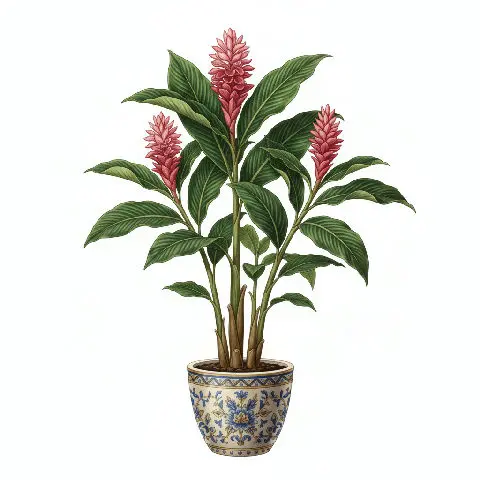
Alpinia purpurata, commonly known as Red Ginger, Ostrich Plume, or Pink Cone Ginger, is an iconic tropical perennial from the family Zingiberaceae, renowned for its striking ornamental value. Native to the Maluku Islands and the southwest Pacific, particularly New Caledonia and Vanuatu, its vibrant inflorescences have led to its widespread cultivation across tropical and subtropical regions globally, including Hawaii, the Caribbean, and Central America. The plant typically grows from robust, horizontal rhizomes, sending up tall, erect, leafy stems that can reach heights of 1.5 to 3 meters.
Its leaves are large, broadly lanceolate, a rich dark green, and possess a glossy texture, arranged alternately along the stem, contributing to its lush, tropical appearance. The most distinctive feature of Red Ginger is its showy, cone-like terminal inflorescence, composed of numerous waxy, bright red to deep pink bracts. These bracts are modified leaves that protect the plant's true flowers, which are small, inconspicuous, and white, emerging delicately from between the vibrant bracts.
While primarily celebrated for its aesthetic appeal in landscapes and as a popular cut flower, Alpinia purpurata also holds traditional significance in its native cultures, where parts of the plant have been historically utilized for minor medicinal applications and as a source of natural dyes. Its introduction to other regions was largely driven by its ornamental charm, spreading through maritime trade and colonial horticultural interests.
Trusted Scientific References
1. Authoritative external sources for Alpinia purpurata
1.1 Wikipedia — Alpinia purpurata
1.2 Kew POWO (Plants of the World Online)
1.3 PubMed — peer-reviewed research
1.4 NCBI Taxonomy Browser
1.5 GBIF — Global Biodiversity
1.6Alpinia Purpurata should be interpreted through verified botanical identity, practical care, and responsible safety language. This recovery note adds the missing context needed for a complete profile: match light to the plant's habit, use well-drained soil, water according to season, and avoid unsupported medicinal or edible claims. For publishing, the plant can be presented as a source-backed garden plant with clear care guidance, common problem diagnosis, and conservative safety wording.
1.1.Alpinia Purpurata — Key Features
- ✓Striking ornamental value with bright red — pink inflorescences.
- ✓Rhizomatous perennial belonging — Rhizomatous perennial belonging to the Zingiberaceae (ginger) family.
- ✓Native to the — Native to the Maluku Islands and Southwest Pacific, widely cultivated globally.
- ✓Large, glossy, lanceolate — Large, glossy, lanceolate dark green leaves.
- ✓Showy bracts are — Showy bracts are modified leaves, containing small, inconspicuous white flowers.
- ✓Traditionally used topically for anti — inflammatory and skin-healing purposes.
- ✓Source of natural — Source of natural dyes in some indigenous cultures.
- ✓Prefers warm, humid climates with well — draining soil and partial shade.
- ✓Popular as a cut flower due to long — lasting blooms.
- ✓Contains various phytochemicals, — Contains various phytochemicals, including flavonoids and terpenoids.
1.2.Alpinia Purpurata — Quick Summary
- ✓Red Ginger is a tropical ornamental plant, native to the Pacific islands.
- ✓Known for its vibrant red-pink bracts, used in floristry and landscaping.
- ✓Possesses traditional uses for skin ailments and inflammation in native cultures.
- ✓Contains potential anti-inflammatory and antioxidant phytochemicals.
- ✓Requires warm, humid conditions and partial shade for optimal growth.
- ✓Internal medicinal use is not recommended due to limited scientific study.
2.Alpinia Purpurata — Systematic Position
3.Alpinia Purpurata — Reference Facts
4.Alpinia Purpurata — Morphological Account
5.Alpinia Purpurata — Where It Grows
6.Alpinia Purpurata — Historical Applications
7.Alpinia Purpurata — Bioactive Constituents
- ✓Flavonoids — Compounds like quercetin and kaempferol derivatives are likely present, contributing to antioxidant and anti-inflammatory activities.
- ✓Terpenoids — Various monoterpenes and sesquiterpenes, which are common in the Zingiberaceae family, may impart aromatic and potential antimicrobial properties.
- ✓Diarylheptanoids — Similar to other Alpinia species, Alpinia purpurata may contain diarylheptanoids, known for their significant anti-inflammatory and antioxidant actions.
- ✓Phenolic Acids — Caffeic acid and ferulic acid, often found in plants, contribute to antioxidant capacity and may have protective cellular effects.
- ✓Essential Oils — The plant likely contains volatile compounds in its leaves and rhizomes, contributing to its aroma and potential antimicrobial or insect-repellent properties.
- ✓Saponins — These compounds can have foaming properties and have been associated with various biological activities, including anti-inflammatory and immune-modulating effects.
- ✓Tannins — Present in many plants, tannins offer astringent properties, which could support traditional uses for skin ailments and wound healing.
- ✓Glycosides — Various glycosides, sugar-bound compounds, may be present, potentially influencing the plant's overall biological activity and stability of other constituents.
8.Alpinia Purpurata — What Research Suggests
- ✓Anti-inflammatory Properties — Traditionally, the rhizomes and leaves of Alpinia purpurata have been crushed and applied topically in poultices to alleviate inflammation, particularly for skin irritations and minor aches.
- ✓Antioxidant Activity — Phytochemical studies suggest the presence of compounds that exhibit antioxidant effects, potentially protecting cells from oxidative stress and free radical damage.
- ✓Antimicrobial Potential — Extracts from Alpinia purpurata have shown preliminary in vitro antimicrobial activity against certain bacteria and fungi, supporting its use in traditional remedies for infections.
- ✓Pain Relief — In some Pacific island traditions, preparations of Red Ginger were used to help soothe localized pain, possibly due to its anti-inflammatory and analgesic compounds.
- ✓Skin Healing — Topical applications of Alpinia purpurata leaves or rhizomes were traditionally employed to aid in the healing of minor cuts, wounds, and various skin ailments, promoting tissue repair.
- ✓Fever Reduction — Anecdotal evidence from traditional medicine systems suggests that certain preparations might have mild antipyretic effects, helping to reduce fever.
- ✓Digestive Aid — While less documented for A. purpurata specifically, other Alpinia species are known for digestive benefits, suggesting a potential, albeit unconfirmed, role in soothing digestive discomfort.
- ✓Natural Dye Source — Beyond medicinal uses, the vibrant bracts of Red Ginger have been utilized to extract natural dyes, highlighting its multi-faceted traditional utility.
8.1.Alpinia Purpurata — Reported Uses
9.Alpinia Purpurata — Precautions & Warnings
9.1.Alpinia Purpurata — Caution Notes
- ✓Skin Irritation — Direct contact with sap or concentrated extracts may cause mild skin irritation or allergic reactions in sensitive individuals.
- ✓Allergic Reactions — As with any plant, individuals sensitive to the Zingiberaceae family may experience allergic symptoms like itching or rash.
- ✓Gastrointestinal Upset — Oral consumption, though rare and not recommended, could potentially lead to mild digestive discomfort.
- ✓Photosensitivity — Some plant compounds can increase skin sensitivity to sunlight, though not widely reported for Alpinia purpurata.
- ✓Interaction with Medications — Hypothetically, high doses might interact with blood-thinning or anti-inflammatory drugs, though specific data is lacking.
- ✓Contamination Risk — Improperly harvested or processed plant material can harbor contaminants, emphasizing the need for clean sourcing.
- ✓Dosage Unknown — Lack of scientific studies means safe and effective internal dosages are undefined and not recommended.
9.2.Alpinia Purpurata — Toxicity Assessment
- ✓Pregnancy and Lactation — Avoid use during pregnancy and breastfeeding due to insufficient safety data and lack of traditional internal use.
- ✓Children — Not recommended for use in children, especially internally, due to limited safety information.
- ✓Pre-existing Conditions — Individuals with chronic health conditions should consult a healthcare professional before any medicinal use.
- ✓Drug Interactions — Exercise caution if taking medications, especially anticoagulants or anti-inflammatory drugs; consult a doctor.
- ✓Topical Use Caution — Always perform a patch test on a small skin area before widespread topical application to check for sensitivity.
- ✓Internal Use Not Recommended — Due to lack of extensive research and established safety profiles, internal consumption is generally not advised.
- ✓Identification — Ensure correct plant identification; misidentification could lead to adverse effects from other plant species.
10.Alpinia Purpurata — Application Forms
- ✓Topical Poultices — Crushed fresh leaves or rhizomes can be applied directly to the skin as a poultice for inflammation, minor cuts, or skin irritations.
- ✓Infusions for Skin Washes — Dried leaves can be steeped in hot water to create an infusion, cooled, and used as a gentle wash for irritated skin.
- ✓Decoctions for External Use — Simmering rhizomes in water yields a decoction, traditionally used in baths or compresses for localized pain or swelling.
- ✓Essential Oil Extraction (Research) — While not a common home practice, research explores essential oil extraction from leaves and rhizomes for aromatic and potential therapeutic applications.
- ✓Herbal Teas (Limited Traditional Use) — In some very localized traditions, mild infusions of leaves might be consumed, but this is not widespread or extensively documented.
- ✓Natural Dye Preparation — The vibrant red bracts can be processed to extract natural dyes for textiles or crafts, reflecting traditional non-medicinal uses.
- ✓Floral Arrangements — The most common modern use involves cutting the vibrant inflorescences for long-lasting tropical flower arrangements.
- ✓Ornamental Landscaping — Planted directly in the ground in suitable climates for its striking visual appeal in gardens and public spaces.
11.Alpinia Purpurata — Growing Guide
- ✓Climate Preference — Thrives in tropical and subtropical climates, preferring warm temperatures and high humidity, typically above 10°C (50°F).
- ✓Light Requirements — Prefers partial shade to indirect light; too much direct, intense sun can scorch leaves, while too little can reduce flowering.
- ✓Soil Conditions — Requires rich, well-draining soil with ample organic matter; a slightly acidic to neutral pH (6.0-7.0) is ideal.
- ✓Watering — Needs consistently moist soil, but not waterlogged, especially during active growth periods; reduce watering in cooler, dormant seasons.
- ✓Propagation — Primarily propagated by dividing the rhizomes, ensuring each section has at least one 'eye' or bud for new growth.
- ✓Fertilization — Benefits from regular feeding with a balanced, slow-release fertilizer during the growing season to support lush foliage and abundant blooms.
- ✓Pruning — Remove spent flower stalks and old, yellowing leaves to encourage new growth and maintain plant vigor.
- ✓Pest and Disease Management — Generally robust, but watch for common tropical pests like mealybugs or spider mites; ensure good air circulation to prevent fungal issues.
Reviewed by the Flora Medical Global Botanical Review Panel
Multi-disciplinary editorial group · Botany · Ethnobotany · Herbal-medicine literature
Who reviewed this: This page was checked by the Flora Medical Global Botanical Review Panel — an in-house editorial group of botany graduates, ethnobotany researchers, and horticulture practitioners who collectively maintain our 7,000+ plant encyclopedia. Meet the team.
Our 4-step verification process
1. Taxonomic verification
Scientific names and synonyms cross-checked against Kew POWO, World Flora Online, and The Plant List.
2. Phytochemical & medicinal cross-reference
Active compounds, traditional uses, and reported activities are cross-referenced with PubMed, USDA Dr. Duke's database, and peer-reviewed ethnobotanical literature.
3. Conservation & distribution check
Distribution, ecology, and conservation status confirmed against GBIF occurrence records and the IUCN Red List.
4. Editorial & safety review
Every entry passes an editorial pass for clarity, originality, and safety notices (toxicity, contraindications, dosage caveats) before publication.
Last reviewed:
Important medical disclaimer: This content is for educational and research purposes only. It is not medical advice and is not a substitute for consultation with a licensed healthcare provider. Do not use any herb to self-treat a medical condition without professional guidance.
Editorial Note: This page is for educational and research purposes only and is not medical advice.
Written by: Flora Medical Global Editorial Team
Reviewed by: Flora Medical Global Botanical Review Panel
Last Updated: June 15, 2026





Alpinia Purpurata — Comments & Community Reviews
Rate this plant