


Medical Disclaimer: This content is for educational purposes only. It is not medical advice. Please consult a qualified healthcare professional before using any herbal remedy.
Safety Overview
1.Alternanthera Indoor — Plant Snapshot
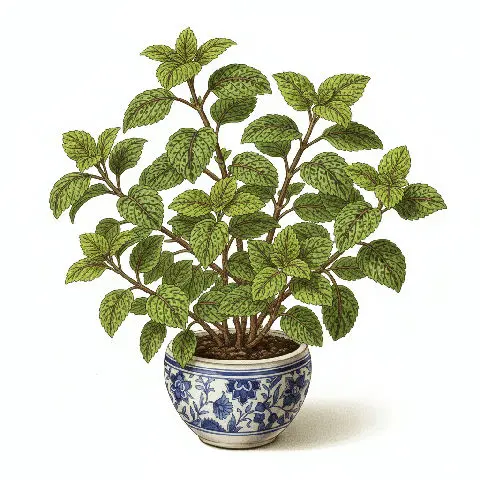
Alternanthera ficoidea, commonly known as Alternanthera Indoor, Joseph's Coat, or Bloodleaf, is a striking herbaceous perennial belonging to the Amaranthaceae family. Native to South America, particularly Brazil, it is widely cultivated globally as an ornamental plant, prized for its exceptionally vibrant and diverse foliage. The plant typically exhibits a compact, bushy, and sprawling growth habit, reaching heights of 6-12 inches (15-30 cm) and spreading up to 2 feet (60 cm).
Its leaves are ovate to lance-shaped, arranged oppositely along the stems, and display a spectacular array of colors including various shades of green, red, purple, bronze, yellow, and orange, often with intricate variegation or contrasting venation. The small, inconspicuous white or cream-colored flowers are borne in dense, globe-like clusters in the leaf axils, though they are rarely the primary attraction. Adaptable and relatively low-maintenance, Alternanthera ficoidea thrives in warm, humid conditions and is frequently utilized in temperate climates as an annual groundcover, an edging plant, or most popularly, as a decorative houseplant, adding continuous visual interest to indoor and outdoor landscapes.
Its resilience to heat and drought, once established, further contributes to its widespread horticultural appeal.
Trusted Scientific References
1. Authoritative external sources for Alternanthera ficoidea
1.1 Wikipedia — Alternanthera ficoidea
1.2 Kew POWO (Plants of the World Online)
1.3 PubMed — peer-reviewed research
1.4 NCBI Taxonomy Browser
1.5 GBIF — Global Biodiversity
1.6Alternanthera Indoor should be interpreted through verified botanical identity, practical care, and responsible safety language. This recovery note adds the missing context needed for a complete profile: match light to the plant's habit, use well-drained soil, water according to season, and avoid unsupported medicinal or edible claims. For publishing, the plant can be presented as a source-backed indoor plant with clear care guidance, common problem diagnosis, and conservative safety wording.
1.1.Alternanthera Indoor — Standout Qualities
- ✓Exceptionally vibrant and — Exceptionally vibrant and variegated foliage in shades of red, purple, green, yellow, and bronze.
- ✓Compact, bushy, and — Compact, bushy, and sprawling growth habit, ideal for various horticultural applications.
- ✓Easy to cultivate — Easy to cultivate as an indoor houseplant, annual groundcover, or container plant.
- ✓Contains a rich — Contains a rich profile of beneficial phytochemicals, including betacyanins and flavonoids.
- ✓Exhibits potential antioxidant, anti — inflammatory, and antimicrobial properties in preliminary research.
- ✓Demonstrates good heat — Demonstrates good heat and drought tolerance once established in outdoor settings.
- ✓Readily propagated from — Readily propagated from stem cuttings, making it easy to multiply.
- ✓Generally resistant to — Generally resistant to major pests and diseases, simplifying maintenance.
- ✓Known by several — Known by several common names, including Joseph's Coat, Bloodleaf, and Calico Plant.
- ✓Adds continuous visual — Adds continuous visual interest and a splash of color to any indoor or outdoor setting.
1.2.Alternanthera Indoor — Quick Summary
- ✓Alternanthera ficoidea, or Joseph's Coat, is a popular ornamental plant known for its striking, colorful foliage.
- ✓It is rich in phytochemicals like betacyanins and flavonoids, demonstrating potential antioxidant and anti-inflammatory activities in preliminary in vitro studies.
- ✓Primarily valued for its aesthetic appeal in horticulture; direct, evidence-based medicinal uses in humans are not widely established.
- ✓Traditionally, the plant has been used as a natural dye and occasionally as a food colorant in various cultures.
- ✓While generally safe for ornamental purposes, internal consumption for medicinal benefits is not recommended without further scientific validation and guidance.
2.Alternanthera Indoor — Taxonomic Classification
3.Alternanthera Indoor — Quick Facts
4.Alternanthera Indoor — Plant Morphology
5.Alternanthera Indoor — Habitat & Distribution
6.Alternanthera Indoor — Ethnobotanical Uses
7.Alternanthera Indoor — Bioactive Constituents
- ✓Betacyanins — These nitrogen-containing pigments are responsible for the vibrant red, purple, and orange hues in Alternanthera ficoidea, acting as potent antioxidants and radical scavengers.
- ✓Flavonoids — Key compounds include kaempferol and quercetin, known for their significant antioxidant, anti-inflammatory, and cardioprotective properties.
- ✓Triterpenes — A diverse group of compounds, often present in plants, that can exhibit various biological activities including anti-inflammatory and adaptogenic effects.
- ✓Phytosterols — Plant sterols such as beta-sitosterol are found, contributing to cell membrane structure and potentially offering cholesterol-lowering benefits.
- ✓Saponins — These glycosides are common in the Amaranthaceae family and can possess hemolytic, anti-inflammatory, and immune-modulating properties.
- ✓Phenolic Acids — Compounds like caffeic acid and ferulic acid contribute to the plant's overall antioxidant capacity and may have photoprotective effects.
- ✓Carotenoids — Present in trace amounts, particularly in green and yellow cultivars, these pigments act as antioxidants and precursors to Vitamin A.
- ✓Minerals — The plant contains essential trace minerals such as potassium, calcium, and magnesium, vital for various physiological functions.
- ✓Glycosides — Various compounds linked to sugar molecules, which can enhance the solubility and bioavailability of active phytochemicals.
8.Alternanthera Indoor — Modern Studies
- ✓Antioxidant Support — Preliminary in vitro studies suggest that the rich content of betacyanins and flavonoids in Alternanthera ficoidea contributes to significant free radical scavenging activity, which may help combat oxidative stress.
- ✓Anti-inflammatory Potential — Extracts have shown potential to modulate inflammatory pathways in cell culture models, indicating a possible role in reducing inflammation, though human studies are lacking.
- ✓Antimicrobial Activity — Research has indicated that Alternanthera ficoidea extracts possess some inhibitory effects against certain bacterial strains, suggesting potential for natural antimicrobial applications.
- ✓Natural Pigment Source — Historically and in some traditional cultures, the plant's vibrant betacyanin pigments have been utilized as natural dyes for textiles and as safe food colorants.
- ✓Cellular Protection — The combined antioxidant properties of its phytochemicals may offer protective effects against cellular damage caused by environmental stressors.
- ✓Cardiovascular Health (Hypothetical) — Flavonoids like quercetin and kaempferol, found in the plant, are generally associated with supporting cardiovascular function and integrity.
- ✓Immunomodulatory Effects (Speculative) — The presence of diverse phytochemicals could theoretically contribute to modulating immune responses, a common property of many plant compounds.
- ✓Skin Health (Topical Research) — Given its anti-inflammatory and antioxidant profile, extracts might be explored for topical applications to soothe minor skin irritations or protect against environmental damage.
- ✓Metabolic Support (Exploratory) — Flavonoids are known to influence various metabolic processes, and while not studied for this plant, it presents an area of potential future research.
8.1.Alternanthera Indoor — Reported Uses
9.Alternanthera Indoor — Adverse Effects
9.1.Alternanthera Indoor — Caution Notes
- ✓Allergic Contact Dermatitis — Direct handling of the plant sap may cause mild skin irritation or allergic reactions in sensitive individuals.
- ✓Gastric Upset — Ingestion of large quantities, though not commonly consumed, could potentially lead to mild digestive discomfort, nausea, or diarrhea.
- ✓Photosensitivity (Theoretical) — Some plant compounds can increase skin sensitivity to sunlight, a theoretical risk not specifically documented for Alternanthera ficoidea.
- ✓Interaction with Medications — Hypothetical risk if consumed medicinally, especially with anticoagulants or blood pressure medications, due to flavonoid content.
- ✓Accidental Ingestion by Pets/Children — While generally considered low toxicity, ingestion by curious pets or children could lead to mild gastrointestinal symptoms.
- ✓Pigment Staining — The vibrant betacyanin pigments can temporarily stain skin, clothing, or surfaces upon direct contact.
9.2.Alternanthera Indoor — Safety Profile
- ✓General Safety — Alternanthera ficoidea is generally considered safe for ornamental cultivation and casual handling, with no widespread reports of severe toxicity.
- ✓Ingestion Caution — Internal medicinal use is not recommended due to a lack of comprehensive human safety studies and established therapeutic dosages.
- ✓Pregnant and Nursing Women — Avoid medicinal consumption during pregnancy or lactation, as sufficient safety data for these populations is unavailable.
- ✓Children and Pets — Keep ornamental plants out of reach of young children and pets to prevent accidental ingestion, although severe poisoning is unlikely.
- ✓Allergic Individuals — Individuals with known plant allergies should exercise caution when handling to mitigate potential skin reactions.
- ✓Dosage Unknown — No scientifically established safe or effective medicinal dosage for human consumption exists, underscoring the need for caution.
10.Alternanthera Indoor — Application Forms
- ✓Ornamental Cultivation — Primarily grown as a vibrant houseplant for interior decoration or as an annual groundcover, border plant, or container filler in gardens.
- ✓Natural Dye Extraction — Traditionally, leaves and stems are processed to extract betacyanin pigments, used as natural dyes for fabrics and as a food coloring agent.
- ✓Topical Poultice (Exploratory) — In some preliminary research contexts, extracts might be considered for topical applications in poultices or creams, leveraging potential anti-inflammatory properties for skin.
- ✓Research Extracts — Aqueous or ethanolic extracts are prepared for laboratory studies to analyze phytochemical content and assess bioactivities like antioxidant or antimicrobial effects.
- ✓Food Colorant (Limited Traditional Use) — In certain indigenous practices, small amounts of the plant might be used to impart natural color to food items, particularly where its non-toxicity as a pigment is recognized.
- ✓Horticultural Edging — Its compact, colorful nature makes it an excellent choice for creating vibrant edges along garden beds or pathways.
- ✓Mixed Container Plantings — Frequently incorporated into mixed planters and hanging baskets to provide contrasting texture and continuous splashes of color.
11.Alternanthera Indoor — Propagation & Care
- ✓Light Requirements — Thrives in bright, indirect light indoors; outdoors, it prefers full sun to partial shade, with brighter light enhancing foliage color.
- ✓Soil Composition — Requires organically rich, consistently moist, and well-drained soil with a slightly acidic to neutral pH (6.0-7.0).
- ✓Watering Schedule — Keep soil consistently moist, but avoid waterlogging; allow the top inch of soil to dry slightly between waterings, especially indoors.
- ✓Temperature and Humidity — Prefers warm temperatures between 18-28°C (65-82°F) and benefits from moderate to high humidity, making it ideal for tropical climates or indoor environments.
- ✓Propagation Methods — Easily propagated from stem tip cuttings (about 4-6 inches long) placed in water or moist potting mix; can also be grown from seed.
- ✓Pruning and Maintenance — Pinch back regularly to promote a bushier growth habit and prevent legginess, especially for container plants and groundcovers.
- ✓Fertilization — Feed monthly during the active growing season (spring and summer) with a balanced liquid fertilizer diluted to half strength, reducing frequency in winter.
- ✓Pest and Disease Management — Generally robust, but monitor for common houseplant pests like spider mites, mealybugs, or aphids; rarely suffers from serious diseases.
Reviewed by the Flora Medical Global Botanical Review Panel
Multi-disciplinary editorial group · Botany · Ethnobotany · Herbal-medicine literature
Who reviewed this: This page was checked by the Flora Medical Global Botanical Review Panel — an in-house editorial group of botany graduates, ethnobotany researchers, and horticulture practitioners who collectively maintain our 7,000+ plant encyclopedia. Meet the team.
Our 4-step verification process
1. Taxonomic verification
Scientific names and synonyms cross-checked against Kew POWO, World Flora Online, and The Plant List.
2. Phytochemical & medicinal cross-reference
Active compounds, traditional uses, and reported activities are cross-referenced with PubMed, USDA Dr. Duke's database, and peer-reviewed ethnobotanical literature.
3. Conservation & distribution check
Distribution, ecology, and conservation status confirmed against GBIF occurrence records and the IUCN Red List.
4. Editorial & safety review
Every entry passes an editorial pass for clarity, originality, and safety notices (toxicity, contraindications, dosage caveats) before publication.
Last reviewed:
Important medical disclaimer: This content is for educational and research purposes only. It is not medical advice and is not a substitute for consultation with a licensed healthcare provider. Do not use any herb to self-treat a medical condition without professional guidance.
Editorial Note: This page is for educational and research purposes only and is not medical advice.
Written by: Flora Medical Global Editorial Team
Reviewed by: Flora Medical Global Botanical Review Panel
Last Updated: June 15, 2026





Alternanthera Indoor — Comments & Community Reviews
Rate this plant