


Medical Disclaimer: This content is for educational purposes only. It is not medical advice. Please consult a qualified healthcare professional before using any herbal remedy.
Safety Overview
1.Amelanchier Lamarckii — Introduction & Highlights
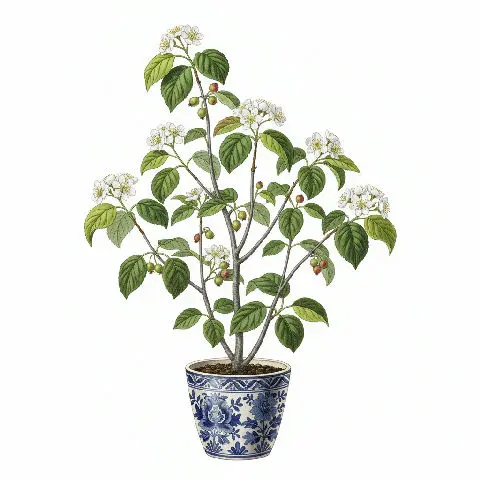
Amelanchier lamarckii, commonly recognized as Juneberry, Serviceberry, or Shadbush, is an exquisite deciduous shrub or small tree within the Rosaceae family, renowned for its significant ornamental value and delectable edible fruits. While frequently termed 'Lamarck's Serviceberry,' its precise taxonomic origin remains a subject of ongoing botanical debate. Current theories suggest it may be a natural hybrid, potentially between Amelanchier laevis and another closely related species, or perhaps a distinct cultivated variant that journeyed from North America to Europe as early as the 17th century. It has since extensively naturalized across a wide expanse of Western and Central Europe, flourishing in diverse habitats such as woodland edges, hedgerows, and open parklands, thereby enriching local biodiversity.
Morphologically, Amelanchier lamarckii typically presents as a slender, often multi-stemmed plant, reaching heights of 3 to 6 meters, though some mature specimens can grow taller. Its seasonal display is particularly captivating: early spring heralds a profusion of delicate white, star-shaped flowers arranged in graceful racemes, appearing just before the leaves fully unfurl, providing a vital early nectar source for pollinators. The young foliage emerges with a distinctive coppery or bronzed hue, gradually maturing into a vibrant green throughout summer. Autumn brings a spectacular transformation, with leaves turning brilliant fiery reds and oranges.
The small, pea-sized berries, which ripen from red to a deep purple-black in early summer, possess a sweet, mildly apple-like flavor and are highly prized by wildlife and humans alike. The leaves are elliptical to obovate and finely serrated along their margins, contributing to the plant's overall aesthetic appeal.
Trusted Scientific References
1. Authoritative external sources for Amelanchier lamarckii
1.1 Wikipedia — Amelanchier lamarckii
1.2 Kew POWO (Plants of the World Online)
1.3 PubMed — peer-reviewed research
1.4 NCBI Taxonomy Browser
1.5 GBIF — Global Biodiversity
1.1.Amelanchier Lamarckii — Key Features
- ✓Deciduous Shrub/Small Tree — Multi-stemmed growth habit, reaching 3-6 meters.
- ✓White Spring Flowers — Delicate, star-shaped blossoms in racemes before leaves.
- ✓Edible Purple — Black Berries — Sweet, apple-like flavor, ripening in early summer.
- ✓Stunning Autumn Foliage — Fiery red and orange seasonal color.
- ✓Bronze New Leaves — Distinctive coppery hue on emerging foliage.
- ✓North American Origin — Though widely naturalized in Europe.
- ✓High Antioxidant Content — Particularly in the ripe fruits.
- ✓Attracts Pollinators and Wildlife — Important early nectar source and food for birds.
- ✓Cold Hardy — Tolerant of temperate climates (USDA Zones 4-8).
- ✓Rosaceae Family Member — Related to apples, pears, and cherries.
1.2.Amelanchier Lamarckii — In Brief
- ✓Edible Berries — Sweet, nutritious fruits rich in antioxidants.
- ✓Ornamental Value — Stunning spring flowers and vibrant autumn foliage.
- ✓Adaptable Growth — Thrives in various temperate climates and soil types.
- ✓Rich in Antioxidants — High in anthocyanins, supporting overall health.
- ✓Low Maintenance — Generally easy to grow and pest-resistant.
- ✓Wildlife Friendly — Provides food for birds and pollinators.
2.Amelanchier Lamarckii — Scientific Profile
3.Amelanchier Lamarckii — Quick Facts
4.Amelanchier Lamarckii — Structural Profile
5.Amelanchier Lamarckii — Habitat & Distribution
6.Amelanchier Lamarckii — Historical Applications
7.Amelanchier Lamarckii — Secondary Metabolites
- ✓Anthocyanins — Responsible for the deep purple-black color of the berries, these powerful antioxidants include cyanidin-3-galactoside and delphinidin derivatives, offering protection against oxidative stress.
- ✓Flavonoids — Key compounds such as quercetin, kaempferol, and their glycosides are present, contributing to the plant's anti-inflammatory and antioxidant activities.
- ✓Phenolic Acids — Chlorogenic acid and other hydroxycinnamic acids are found, known for their antioxidant, anti-inflammatory, and potential antidiabetic properties.
- ✓Tannins — Present in the bark and leaves, these astringent compounds include condensed tannins (proanthocyanidins) which may have antimicrobial and anti-inflammatory effects.
- ✓Vitamin C (Ascorbic Acid) — Abundant in the berries, Vitamin C is a vital antioxidant and immune system booster.
- ✓Vitamin K — Found in the fruits, Vitamin K plays a crucial role in blood clotting and bone metabolism.
- ✓Dietary Fiber — The berries are a significant source of both soluble and insoluble fiber, essential for digestive health and blood sugar regulation.
- ✓Minerals — Essential minerals such as iron, potassium, manganese, and magnesium are present in the fruits, contributing to various physiological functions.
- ✓Sugars — Fructose, glucose, and sucrose are the primary sugars in the ripe berries, providing natural sweetness and energy.
- ✓Carotenoids — Minor amounts of carotenoids, precursors to Vitamin A, may be present, contributing to vision health and antioxidant capacity.
8.Amelanchier Lamarckii — Modern Studies
- ✓Antioxidant Properties — Amelanchier lamarckii berries are rich in anthocyanins and other phenolic compounds, which act as potent antioxidants, helping to neutralize free radicals and reduce oxidative stress in the body.
- ✓Anti-inflammatory Effects — The flavonoids present in Juneberry fruits may contribute to anti-inflammatory actions, potentially alleviating symptoms associated with chronic inflammatory conditions.
- ✓Cardiovascular Support — Regular consumption of Amelanchier berries, due to their antioxidant and fiber content, may support cardiovascular health by helping to manage cholesterol levels and improve blood vessel function.
- ✓Digestive Health Enhancement — The high dietary fiber content in the berries of Amelanchier lamarckii promotes healthy digestion, aids in regular bowel movements, and supports a balanced gut microbiome.
- ✓Immune System Boost — Rich in Vitamin C, the berries can contribute to a robust immune system, enhancing the body's ability to defend against infections and illnesses.
- ✓Bone Health Contribution — Juneberry fruits contain Vitamin K and certain minerals, which are important cofactors in bone metabolism and may contribute to maintaining bone density.
- ✓Vision Health Support — The anthocyanins responsible for the berries' deep color are also known to support eye health, potentially improving night vision and protecting against age-related macular degeneration.
- ✓Blood Sugar Regulation — Preliminary studies on related Amelanchier species suggest that certain compounds might assist in moderating blood sugar responses, although more specific research on A. lamarckii is needed.
- ✓Nutritional Density — Beyond specific compounds, Amelanchier lamarckii berries offer a broad spectrum of essential vitamins and minerals, including iron, manganese, and magnesium, contributing to overall nutritional well-being.
- ✓Skin Health Benefits — The antioxidants in the berries can help protect skin cells from environmental damage and promote a healthy complexion, contributing to anti-aging effects.
8.1.Amelanchier Lamarckii — Reported Uses
9.Amelanchier Lamarckii — Precautions & Warnings
9.1.Amelanchier Lamarckii — Possible Adverse Reactions
- ✓Allergic Reactions — Sensitive individuals may experience allergic reactions to Amelanchier lamarckii, manifesting as skin irritation or digestive upset.
- ✓Digestive Discomfort — Excessive consumption of fresh berries, particularly unripe ones, may lead to mild gastrointestinal discomfort such as bloating or diarrhea due to high fiber content.
- ✓Seed Toxicity (Minor) — While generally safe, the seeds contain small amounts of cyanogenic glycosides, which in very large quantities could potentially be harmful, though negligible in typical consumption.
- ✓Pesticide Residues — Berries from conventionally grown plants may contain pesticide residues; always wash thoroughly or choose organic.
- ✓Drug Interactions — No well-documented interactions, but caution is advised for individuals on blood-thinning medications due to Vitamin K content, or diabetes medication due to potential blood sugar effects.
9.2.Amelanchier Lamarckii — Clinical Safety Notes
- ✓General Consumption — Amelanchier lamarckii berries are widely considered safe for consumption when ripe and in moderation.
- ✓Pregnancy and Lactation — Due to limited specific research, pregnant and breastfeeding women should consult a healthcare professional before consuming medicinal quantities.
- ✓Children — Berries are generally safe for children in typical food amounts, but moderation is advised, and supervision during foraging is recommended.
- ✓Individuals with Allergies — Those with known allergies to other Rosaceae family members (e.g., apples, cherries) should exercise caution.
- ✓Seed Ingestion — While generally safe, avoid consuming very large quantities of seeds due to trace amounts of cyanogenic glycosides.
- ✓Wild Harvesting — Ensure proper identification of Amelanchier lamarckii when wild harvesting to avoid consuming potentially toxic look-alikes.
- ✓Medicinal Doses — For any therapeutic use of bark or leaves, professional guidance is strongly recommended as research is limited and traditional uses are not well-defined for this specific species.
10.Amelanchier Lamarckii — Preparation & Dosage
- ✓Fresh Consumption — Ripe Amelanchier lamarckii berries are delicious eaten fresh directly from the plant, offering a sweet, apple-like flavor.
- ✓Jams and Jellies — The berries are excellent for making homemade jams, jellies, and preserves, often combined with other fruits.
- ✓Baked Goods — Incorporate Juneberry fruits into pies, tarts, muffins, crumbles, and other desserts for a unique flavor and nutritional boost.
- ✓Sauces and Syrups — Cooked berries can be processed into flavorful sauces for meats or desserts, or reduced into syrups for pancakes and drinks.
- ✓Dried Berries — Dehydrated Amelanchier lamarckii berries can be stored and used as a healthy snack, in trail mixes, or added to cereals.
- ✓Herbal Infusions (Bark) — Traditionally, bark from Amelanchier species has been used to make mild infusions, though specific medicinal application for A. lamarckii is not well-documented and should be approached with caution.
- ✓Wine and Liqueurs — The sweet berries can be fermented to produce unique fruit wines or infused into spirits for liqueurs.
- ✓Frozen Storage — Berries freeze well and can be stored for extended periods, allowing for year-round culinary use.
11.Amelanchier Lamarckii — Growth Requirements
- ✓Site Selection — Prefers full sun to partial shade for optimal fruit production and autumn color, though it tolerates a range of light conditions.
- ✓Soil Requirements — Thrives in well-drained, moist, slightly acidic to neutral soils (pH 6.0-7.0); tolerates clay and sandy soils.
- ✓Watering — Requires consistent moisture, especially during establishment and dry periods; avoid waterlogging.
- ✓Propagation — Can be propagated by seed (requires cold stratification), softwood cuttings in summer, or hardwood cuttings in winter.
- ✓Pruning — Prune in late winter or early spring to remove dead, damaged, or crossing branches, and to maintain desired shape and size.
- ✓Fertilization — Generally low-maintenance, but a balanced slow-release fertilizer can be applied in spring for young plants or poor soils.
- ✓Pest and Disease Resistance — Generally robust, but can be susceptible to cedar-apple rust, powdery mildew, and borers in stressed conditions.
- ✓Hardiness — Highly cold-hardy, typically thriving in USDA Zones 4-8.
Reviewed by the Flora Medical Global Botanical Review Panel
Multi-disciplinary editorial group · Botany · Ethnobotany · Herbal-medicine literature
Who reviewed this: This page was checked by the Flora Medical Global Botanical Review Panel — an in-house editorial group of botany graduates, ethnobotany researchers, and horticulture practitioners who collectively maintain our 7,000+ plant encyclopedia. Meet the team.
Our 4-step verification process
1. Taxonomic verification
Scientific names and synonyms cross-checked against Kew POWO, World Flora Online, and The Plant List.
2. Phytochemical & medicinal cross-reference
Active compounds, traditional uses, and reported activities are cross-referenced with PubMed, USDA Dr. Duke's database, and peer-reviewed ethnobotanical literature.
3. Conservation & distribution check
Distribution, ecology, and conservation status confirmed against GBIF occurrence records and the IUCN Red List.
4. Editorial & safety review
Every entry passes an editorial pass for clarity, originality, and safety notices (toxicity, contraindications, dosage caveats) before publication.
Last reviewed:
Important medical disclaimer: This content is for educational and research purposes only. It is not medical advice and is not a substitute for consultation with a licensed healthcare provider. Do not use any herb to self-treat a medical condition without professional guidance.
Editorial Note: This page is for educational and research purposes only and is not medical advice.
Written by: Flora Medical Global Editorial Team
Reviewed by: Flora Medical Global Botanical Review Panel
Last Updated: June 15, 2026





Amelanchier Lamarckii — Comments & Community Reviews
Rate this plant