


Medical Disclaimer: This content is for educational purposes only. It is not medical advice. Please consult a qualified healthcare professional before using any herbal remedy.
Safety Overview
1.Amorpha Canescens — Botanical Snapshot
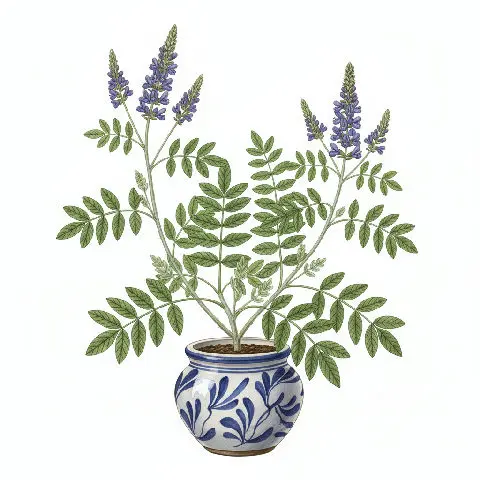
Amorpha canescens, universally known as Leadplant, is a resilient perennial subshrub native to the vast tallgrass prairies of North America. A distinguished member of the pea family, Fabaceae, it is easily recognized by its distinctive silvery-green, pinnately compound leaves which are densely covered in fine, lead-colored hairs, giving the plant its common name. Typically reaching a height of 1 to 3 feet, this plant produces striking dense spikes of small, vibrant purple flowers, each characterized by a single petal and conspicuous bright orange anthers that extend beyond the bloom.
Its robust architecture is supported by a remarkably deep, branching woody taproot system, which not only anchors the plant firmly but also grants it exceptional drought tolerance, allowing it to thrive in arid conditions. Leadplant is widely distributed across the central and eastern United States and parts of Canada, ranging from Montana eastward to Michigan, and south to New Mexico and Louisiana, as well as into Manitoba and Ontario. It flourishes in full sun to partial shade, adapting to a variety of soil types from somewhat acidic to alkaline, and even tolerating some salinity.
This species is an indicator of well-managed rangelands, demonstrating resistance to fire and moderate grazing pressures, and plays a crucial ecological role in its native habitats.
Trusted Scientific References
1. Authoritative external sources for Amorpha canescens
1.1 Wikipedia — Amorpha canescens
1.2 Kew POWO (Plants of the World Online)
1.3 PubMed — peer-reviewed research
1.4 NCBI Taxonomy Browser
1.5 GBIF — Global Biodiversity
1.6Amorpha Canescens should be interpreted through verified botanical identity, practical care, and responsible safety language. This recovery note adds the missing context needed for a complete profile: match light to the plant's habit, use well-drained soil, water according to season, and avoid unsupported medicinal or edible claims. For publishing, the plant can be presented as a source-backed garden plant with clear care guidance, common problem diagnosis, and conservative safety wording.
1.1.Amorpha Canescens — Highlights
- ✓Silvery — green, pinnately compound leaves, lending the plant its common name 'Leadplant'.
- ✓Distinctive dense spikes — Distinctive dense spikes of small, deep purple flowers with bright orange anthers.
- ✓A robust member — A robust member of the Fabaceae (pea) family, native to North American tallgrass prairies.
- ✓Possesses an extensive, — Possesses an extensive, deep taproot system, contributing to its exceptional drought tolerance.
- ✓Contains amorphin, a — Contains amorphin, a natural rotenoid compound with documented insecticidal properties.
- ✓Abundant in health — benefiting flavonoids, including quercetin and kaempferol derivatives.
- ✓Exhibits nitrogen — fixing capabilities through root nodules, enhancing soil fertility.
- ✓Holds significant ethnobotanical — Holds significant ethnobotanical value, with various traditional uses by Native American tribes.
- ✓Highly effective for — Highly effective for erosion control and a key species in prairie restoration efforts.
- ✓Provides valuable forage — Provides valuable forage for wildlife and acts as a significant floral resource for pollinators.
1.2.Amorpha Canescens — At-a-Glance Summary
- ✓North American native prairie shrub known for its distinctive silvery foliage and vibrant purple flowers.
- ✓Contains insecticidal rotenoids, notably amorphin, making it a strong candidate for natural biopesticide development.
- ✓Rich in beneficial flavonoids, offering significant antioxidant and potential anti-inflammatory properties.
- ✓Traditionally valued by various Native American tribes for a range of medicinal uses, including treating pinworms and skin conditions.
- ✓Plays a crucial ecological role by fixing nitrogen in the soil and providing excellent erosion control.
- ✓Requires specific seed stratification for cultivation and thrives in drought-tolerant, sunny environments.
2.Amorpha Canescens — Botanical Identity
3.Amorpha Canescens — Fact Sheet
4.Amorpha Canescens — Botanical Description
5.Amorpha Canescens — Ecological Habitat
6.Amorpha Canescens — Folk Medicine Applications
7.Amorpha Canescens — Phytochemistry
- ✓Rotenoids — Amorphin is the most notable compound in this class, alongside amorphol, known for their potent insecticidal activity by inhibiting mitochondrial complex I in pests.
- ✓Flavonoids — Key constituents include derivatives of quercetin and kaempferol, which are largely responsible for the plant's observed antioxidant and potential anti-inflammatory properties.
- ✓Isoflavonoids — Beyond the rotenoids, other isoflavonoid structures are present, contributing to the plant's overall phytochemical defense mechanisms and biological activities.
- ✓Terpenoids — These compounds, common in the Fabaceae family, contribute to the plant's aroma and play roles in plant defense and ecological interactions.
- ✓Saponins — Glycosidic compounds that can exhibit emulsifying characteristics and have been associated with various biological actions, including antifungal effects.
- ✓Tannins — Astringent polyphenolic compounds found in Leadplant, which may contribute to its traditional uses in wound healing and possess antimicrobial and antioxidant effects.
- ✓Alkaloids — While less studied in Amorpha canescens, nitrogen-containing alkaloids can occur in plants and often possess diverse pharmacological activities.
- ✓Phenolic Acids — Simple phenolic compounds such as gallic acid, which complement the antioxidant and anti-inflammatory actions of flavonoids within the plant's extract.
- ✓Carbohydrates — Essential structural and storage polysaccharides that are fundamental for plant metabolism, growth, and energy reserves.
- ✓Fatty Acids — Integral components of plant cell membranes and energy storage, contributing to the overall nutritional and biochemical profile.
8.Amorpha Canescens — Scientific Evidence
- ✓Insecticidal Properties — The plant's rotenoids, particularly amorphin, effectively disrupt mitochondrial respiration in various insects, positioning Leadplant as a promising natural biopesticide against agricultural pests.
- ✓Antioxidant Activity — Rich flavonoid content, including quercetin and kaempferol derivatives, contributes to significant in vitro free radical scavenging capabilities, offering potential cellular protection.
- ✓Anti-inflammatory Potential — Flavonoids and other phenolic compounds suggest a capacity to modulate inflammatory pathways, which may be beneficial for reducing systemic inflammation, although human studies are needed.
- ✓Anthelmintic Effects (Traditional) — Historically, some Native American tribes utilized a tea made from Leadplant leaves to treat ailments such as pinworms, indicating traditional antiparasitic action.
- ✓Dermatological Aid (Traditional) — Applied as a poultice, the plant was traditionally used by indigenous peoples for treating skin conditions like eczema, open wounds, and cuts, suggesting soothing or antiseptic qualities.
- ✓Rheumatism and Neuralgia Relief (Traditional) — Traditional applications for alleviating symptoms of rheumatism and neuralgia point to potential analgesic or anti-arthritic properties.
- ✓Soil Enrichment — Its symbiotic relationship with nitrogen-fixing bacteria in root nodules significantly enhances soil fertility, indirectly supporting healthier growth of surrounding vegetation, including other medicinal crops.
- ✓Erosion Control — The extensive, deep branching root system of Amorpha canescens is highly effective in stabilizing soil, making it an invaluable plant for erosion prevention and ecological restoration projects.
- ✓Wildlife Support — Leadplant serves as a critical food resource for a diverse array of pollinating insects and is a palatable forage for various wildlife species and livestock, contributing to ecosystem health.
- ✓Potential Biopesticide Development — The distinct insecticidal action of amorphin provides a foundation for developing natural, environmentally friendlier alternatives to synthetic chemical pesticides for sustainable agriculture.
8.1.Amorpha Canescens — Health Applications
9.Amorpha Canescens — Cautions & Contraindications
9.1.Amorpha Canescens — Reported Side Effects
- ✓Potential Toxicity (Rotenoids) — While amorphin is generally considered less toxic than synthetic rotenone, high concentrations could potentially affect non-target organisms, including mammals, by inhibiting mitochondrial respiration.
- ✓Allergic Reactions — Individuals with sensitivities to plants in the Fabaceae family may experience contact dermatitis or respiratory irritation upon exposure to Leadplant.
- ✓Gastrointestinal Upset — Ingestion of large amounts of plant material, especially raw, might lead to mild digestive disturbances due to the presence of various phytochemicals.
- ✓Hypothetical Drug Interactions — Due to the presence of active compounds, there is a theoretical potential for interaction with medications, particularly those affecting mitochondrial function or metabolic pathways.
- ✓Photoallergic Sensitivity — Although not specifically documented for Leadplant, some plant compounds can induce increased skin sensitivity to sunlight in susceptible individuals.
- ✓Livestock Overconsumption — While palatable, excessive grazing by livestock might lead to adverse effects, though it is generally considered safe in moderate amounts.
9.2.Amorpha Canescens — Safety Profile
- ✓Generally Non-Toxic (External) — Traditional topical applications for skin ailments suggest a low risk of adverse reactions for most individuals when used externally.
- ✓Internal Use Caution — Due to the presence of rotenoids, internal consumption of Leadplant, especially in concentrated forms, should be approached with extreme caution and only under expert guidance.
- ✓Pregnant/Nursing Women — Use of Amorpha canescens is contraindicated in pregnant or nursing women due to insufficient safety data and the presence of potentially active compounds.
- ✓Children — Not recommended for use in infants or young children without the explicit recommendation and supervision of a qualified healthcare professional.
- ✓Pre-existing Conditions — Individuals with compromised mitochondrial function, respiratory conditions, or other sensitive health issues should avoid exposure or consumption.
- ✓Professional Consultation — Always seek advice from a qualified medical herbalist or healthcare provider before incorporating Leadplant into any medicinal regimen.
- ✓Ecological Safety — Amorpha canescens poses no known environmental concerns when grown in its native habitats and contributes positively to local biodiversity.
10.Amorpha Canescens — Preparation Methods
- ✓Traditional Herbal Tea — Native American tribes historically prepared a medicinal tea by steeping Leadplant leaves in hot water, consumed for internal ailments such as pinworms.
- ✓Topical Poultice — Crushed or macerated plant material, particularly leaves, was applied externally as a poultice to soothe skin conditions, treat eczema, and aid in healing open wounds and cuts.
- ✓Smoking Mixture (Ethnobotanical) — Certain indigenous groups blended dried Leadplant leaves with buffalo fat for ceremonial or recreational smoking purposes.
- ✓Botanical Extracts — For scientific research and potential pharmaceutical development, plant material can be subjected to solvent extraction (e.g., ethanol, methanol) to isolate specific active compounds like rotenoids and flavonoids.
- ✓Biopesticide Formulations — Isolated amorphin or crude extracts can be formulated into natural insecticidal sprays, offering an eco-friendly option for agricultural pest management.
- ✓Ecological Restoration Planting — Amorpha canescens is widely used in prairie restoration projects, planted directly for its ability to prevent soil erosion and improve soil quality through nitrogen fixation.
- ✓Landscape Ornamental — Due to its attractive silvery foliage, showy purple flowers, and drought tolerance, Leadplant is cultivated as an ornamental shrub in native plant gardens and sustainable landscapes.
11.Amorpha Canescens — Garden Cultivation
- ✓Seedbed Preparation — A firm, weed-free seedbed is crucial for successful establishment of Leadplant.
- ✓Seeding Depth & Rate — Seeds should be planted at a shallow depth of 1/4 to 3/16 inch, with a rate of 20 to 30 pure live seeds (PLS) per square foot for solid stands.
- ✓Stratification — Seeds require stratification; this can be achieved by fall sowing for natural winter stratification, or by soaking in 82-93°C water for 12 hours followed by a moist chill at 5°C for 30 days.
- ✓Inoculation — Prior to planting, seeds must be inoculated with the appropriate Rhizobium bacteria to facilitate effective nitrogen fixation.
- ✓Propagation — While primarily seed-propagated, Leadplant can also be grown from greenwood or hardwood cuttings, though transplanting success in prairie restorations is often limited.
- ✓Soil & Sun Requirements — The plant thrives in full sun to partial shade and is adaptable to a wide range of soil conditions, from slightly acidic to alkaline, including those with some salinity.
- ✓Water & Fire Tolerance — Its deep taproot system confers excellent drought tolerance, and the plant demonstrates resilience to fire, making it well-suited for prairie ecosystems.
- ✓Management — During establishment, grazing should be withheld, and weeds controlled by mowing above seedlings; mature plants should be grazed or mowed conservatively after dormancy.
Reviewed by the Flora Medical Global Botanical Review Panel
Multi-disciplinary editorial group · Botany · Ethnobotany · Herbal-medicine literature
Who reviewed this: This page was checked by the Flora Medical Global Botanical Review Panel — an in-house editorial group of botany graduates, ethnobotany researchers, and horticulture practitioners who collectively maintain our 7,000+ plant encyclopedia. Meet the team.
Our 4-step verification process
1. Taxonomic verification
Scientific names and synonyms cross-checked against Kew POWO, World Flora Online, and The Plant List.
2. Phytochemical & medicinal cross-reference
Active compounds, traditional uses, and reported activities are cross-referenced with PubMed, USDA Dr. Duke's database, and peer-reviewed ethnobotanical literature.
3. Conservation & distribution check
Distribution, ecology, and conservation status confirmed against GBIF occurrence records and the IUCN Red List.
4. Editorial & safety review
Every entry passes an editorial pass for clarity, originality, and safety notices (toxicity, contraindications, dosage caveats) before publication.
Last reviewed:
Important medical disclaimer: This content is for educational and research purposes only. It is not medical advice and is not a substitute for consultation with a licensed healthcare provider. Do not use any herb to self-treat a medical condition without professional guidance.
Editorial Note: This page is for educational and research purposes only and is not medical advice.
Written by: Flora Medical Global Editorial Team
Reviewed by: Flora Medical Global Botanical Review Panel
Last Updated: June 15, 2026





Amorpha Canescens — Comments & Community Reviews
Rate this plant