
Medical Disclaimer: This content is for educational purposes only. It is not medical advice. Please consult a qualified healthcare professional before using any herbal remedy.
Safety Overview
1.Konjac — Plant Snapshot
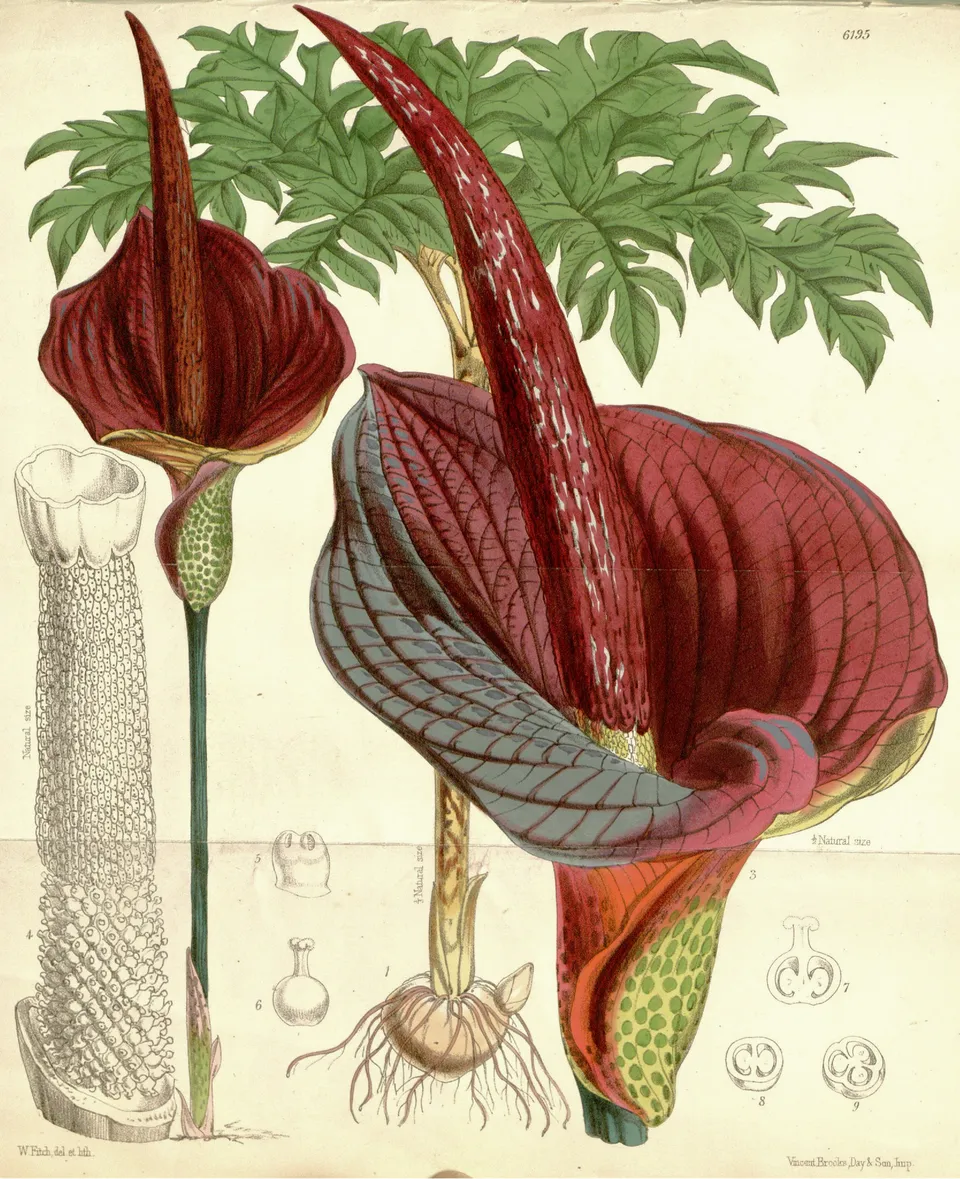
Amorphophallus konjac, commonly known as konjac, konnyaku, or elephant yam, is a remarkable perennial herb belonging to the Araceae family. This fascinating plant thrives in warm subtropical to tropical regions across eastern Asia, encompassing countries such as Japan, China, Korea, and various parts of Southeast Asia. It is characterized by its substantial corm, which can mature to weigh several kilograms and serves as a rich reservoir of glucomannan, a highly beneficial dietary fiber. Historically, konjac has been cultivated for over 1500 years, primarily for its edible corm, which is meticulously processed into diverse food products, notably konnyaku blocks and shirataki noodles.
The cultural significance of Amorphophallus konjac is profound, particularly in Japan, where it is celebrated for its low-calorie content and its versatility in vegetarian and vegan cuisines. Morphologically, the konjac plant features a single, large, deeply lobed leaf that unfurls to resemble an umbrella, supported by a distinctive mottled green-brown stalk, adding to its ornamental appeal. Its unique flowering structure emerges before the leaf, comprising a striking purplish-brown spathe that envelops a spadix, which emits a strong, characteristic odor designed to attract specific pollinators. In addition to its culinary prominence, konjac has been a significant component in Traditional Chinese Medicine (TCM) for centuries.
Ancient texts, such as the 'Shennong Ben Cao Jing', documented its applications for detoxification, dispelling phlegm, and activating blood circulation. Modern scientific research has increasingly corroborated many of these traditional uses, highlighting the potential of konjac glucomannan in areas such as weight management, glycemic control, and overall digestive health. The plant's adaptability to various growing conditions and its relatively low environmental impact further underscore its economic and ecological importance. Amorphophallus konjac truly represents a unique intersection of culinary tradition and medicinal application, deeply rooted in a rich historical and botanical context.
Trusted Scientific References
1. Authoritative external sources for Amorphophallus konjac
1.1 Wikipedia — Amorphophallus konjac
1.2 Kew POWO (Plants of the World Online)
1.3 PubMed — peer-reviewed research
1.4 NCBI Taxonomy Browser
1.5 GBIF — Global Biodiversity
1.1.Konjac — Key Features
- ✓Rich in Konjac Glucomannan (KGM) — A powerful soluble dietary fiber.
- ✓Excellent Gel — Forming Capabilities — Creates a feeling of fullness and slows digestion.
- ✓Low in Calories and Carbohydrates — Ideal for weight management and low-carb diets.
- ✓Significant Prebiotic Properties — Nourishes beneficial gut bacteria for digestive health.
- ✓Supports Blood Sugar Regulation — Helps stabilize glucose levels after meals.
- ✓Aids in Cholesterol Reduction — Contributes to healthier lipid profiles.
- ✓Versatile Culinary Ingredient — Used in noodles, jellies, and as a thickener.
- ✓Traditional Medicinal Plant — Valued in TCM for detoxification and other uses.
- ✓Sustainable and Adaptable Crop — Grown in various subtropical and tropical regions.
- ✓Promotes Satiety — Helps control appetite and reduce overall food intake.
1.2.Konjac — In Brief
- ✓Amorphophallus konjac, or Konjac, is an East Asian perennial herb known for its corm.
- ✓Its primary active component is Konjac Glucomannan (KGM), a soluble dietary fiber.
- ✓Widely recognized for its benefits in weight management, blood sugar control, and gut health.
- ✓A versatile culinary ingredient, especially popular in low-calorie and vegan foods like shirataki noodles.
- ✓Crucial to consume with adequate water to prevent choking hazards and digestive issues.
- ✓Utilized for centuries in Traditional Chinese Medicine for detoxification and various ailments.
2.Konjac — Taxonomic Classification
3.Konjac — Reference Facts
4.Konjac — Structural Profile
5.Konjac — Habitat & Distribution
6.Konjac — Cultural & Traditional Roles
7.Konjac — Active Compounds
- ✓Konjac Glucomannan (KGM) — This is the primary active component, a high molecular weight, water-soluble dietary fiber composed of β-(1→4) linked D-glucose and D-mannose units, known for its exceptional viscosity and gel-forming capabilities.
- ✓Starch — While purified konjac flour is predominantly KGM, the raw corm contains significant amounts of starch, serving as an energy reserve for the plant.
- ✓Proteins — The corm contains a small percentage of proteins, contributing to its nutritional profile, though not a primary medicinal constituent.
- ✓Fats — Minimal amounts of fatty acids are present in the konjac corm, typically negligible in processed products.
- ✓Minerals — The plant's corm is a source of various essential minerals, including calcium, iron, potassium, and phosphorus, vital for human physiological functions.
- ✓Vitamins — Trace amounts of B vitamins (such as B6, niacin, folate) and Vitamin A precursors can be found, contributing to its overall nutritional value.
- ✓Flavonoids — These phenolic compounds are present in trace amounts, offering antioxidant and potential anti-inflammatory properties.
- ✓Alkaloids — Minor quantities of various alkaloids may be present, though their specific pharmacological roles in konjac are not yet fully elucidated.
- ✓Saponins — Some research indicates the presence of saponins, which are natural compounds with potential health benefits, including cholesterol-lowering effects.
8.Konjac — Research Insights
- ✓Weight Management — Konjac glucomannan (KGM) absorbs water and expands in the stomach, promoting a feeling of fullness and reducing overall calorie intake.
- ✓Blood Glucose Stabilization — The viscous nature of KGM slows down the absorption of glucose from the digestive tract, helping to regulate postprandial blood sugar levels, beneficial for individuals with diabetes.
- ✓Lipid Profile Enhancement — KGM can bind to bile acids in the gut, leading to increased excretion and a subsequent reduction in plasma cholesterol levels, particularly LDL-C.
- ✓Gut Health Improvement — As a powerful prebiotic fiber, KGM ferments in the colon, fostering the growth of beneficial gut bacteria and supporting a healthy microbiome.
- ✓Constipation Relief — The bulk-forming properties of KGM increase stool volume and soften its consistency, facilitating easier bowel movements and alleviating constipation.
- ✓Anti-inflammatory Effects — Emerging evidence suggests KGM possesses anti-inflammatory properties, potentially aiding in the management of inflammatory conditions like inflammatory bowel disease.
- ✓Immune-Regulatory Effects — Research indicates KGM may modulate immune responses, contributing to improved immune function and overall resilience.
- ✓Detoxification Support (TCM) — Historically, Konjac was used in Traditional Chinese Medicine to assist the body's natural detoxification processes.
- ✓Tumor Suppression Potential — Studies, particularly on colorectal cancer, suggest KGM may have anti-proliferative effects and support gut barrier function, a traditional use in tumor suppression.
- ✓Respiratory and Skin Disorder Management (TCM) — Traditional Chinese Medicine utilized Konjac for its properties in addressing respiratory ailments and various skin conditions.
8.1.Konjac — Therapeutic Indications
9.Konjac — Risk Profile
9.1.Konjac — Warnings
- ✓Gastrointestinal Discomfort — Common side effects can include bloating, gas, abdominal pain, and diarrhea due to its high fiber content.
- ✓Constipation — Paradoxically, if not consumed with sufficient water, konjac can exacerbate or cause constipation.
- ✓Choking Hazard — Products like konjac jelly or dry glucomannan powder can pose a choking risk if not chewed thoroughly or consumed with inadequate liquid.
- ✓Esophageal Obstruction — In rare cases, especially with dry capsules or poorly hydrated products, konjac can swell and cause blockage in the esophagus.
- ✓Medication Interactions — Glucomannan can reduce the absorption of orally administered medications, requiring a separation of dosage times.
- ✓Hypoglycemia Risk — For individuals with diabetes on medication, konjac may lower blood sugar too much, necessitating careful monitoring.
- ✓Allergic Reactions — Although rare, some individuals may experience allergic reactions to konjac, including skin rashes or respiratory issues.
9.2.Konjac — Risk Assessment
- ✓Consume with Ample Water — Always take konjac supplements with a large glass of water (at least 240ml) to ensure proper hydration and prevent choking or obstruction.
- ✓Consult Healthcare Professional — Individuals with pre-existing medical conditions, especially diabetes or dysphagia, or those on medication, should consult a doctor before use.
- ✓Avoid in Dysphagia — Konjac products are contraindicated for individuals with difficulty swallowing or esophageal abnormalities due to the risk of obstruction.
- ✓Pregnancy and Lactation — Due to insufficient research on safety, pregnant and breastfeeding women should avoid konjac supplements.
- ✓Children — Konjac supplements should be used with caution in children and only under strict medical supervision.
- ✓Monitor Blood Sugar — Diabetics using konjac must closely monitor their blood glucose levels to prevent hypoglycemia, especially if also on blood sugar-lowering medications.
- ✓Separate Medication Dosing — Take oral medications at least one hour before or four hours after konjac to prevent reduced absorption.
10.Konjac — Preparation & Dosage
- ✓Konjac Flour/Powder — The corm is dried and ground into a fine flour, which is the base for most konjac products and supplements.
- ✓Shirataki Noodles — Made from konjac flour and water, these translucent, low-calorie noodles are a popular pasta alternative in Asian cuisines.
- ✓Konnyaku Blocks — A firm, gelatinous food product made from konjac flour, often used in stews, hot pots, and oden in Japanese cuisine.
- ✓Dietary Supplements — Purified glucomannan is available in capsule, tablet, or powder form, primarily for weight management and digestive health.
- ✓Ample Water Intake — When consuming konjac supplements, it is critical to take them with a large glass (240ml or more) of water to prevent choking or esophageal obstruction.
- ✓Thickening Agent — Konjac flour can be used as a natural, calorie-free thickening agent in soups, sauces, and desserts.
- ✓Traditional Decoctions — In TCM, the prepared corm or powder was sometimes boiled into decoctions for internal medicinal use.
- ✓Topical Applications — Historically, konjac preparations were applied externally as poultices or pastes for certain skin conditions.
11.Konjac — Growth Requirements
- ✓Climate Preference — Amorphophallus konjac thrives in warm subtropical to tropical climates with ample humidity and temperatures generally between 20-30°C.
- ✓Soil Requirements — It necessitates well-drained, fertile, loose soil rich in organic matter, with a slightly acidic to neutral pH (5.5-7.0) to prevent corm rot.
- ✓Propagation — Primarily propagated from smaller corms (cormels) or by dividing larger corms, ensuring each piece has an 'eye' or bud for growth.
- ✓Planting — Corms are typically planted in spring, at a depth of 5-10 cm, with adequate spacing (30-50 cm apart) to allow for corm expansion.
- ✓Water and Nutrients — Requires consistent moisture, especially during the growing season, but is highly susceptible to waterlogging. Moderate fertilization supports healthy corm development.
- ✓Light Conditions — Prefers partial shade, especially in regions with intense summer sun, though it can tolerate full sun if provided with sufficient moisture.
- ✓Harvesting — Corms are typically harvested after 2-3 years, once the foliage dies back in late autumn, indicating maturity and maximal glucomannan content.
- ✓Pest and Disease Management — Vigilance against corm rot, nematodes, and fungal diseases is crucial, often requiring good drainage and crop rotation.
Reviewed by the Flora Medical Global Botanical Review Panel
Multi-disciplinary editorial group · Botany · Ethnobotany · Herbal-medicine literature
Who reviewed this: This page was checked by the Flora Medical Global Botanical Review Panel — an in-house editorial group of botany graduates, ethnobotany researchers, and horticulture practitioners who collectively maintain our 7,000+ plant encyclopedia. Meet the team.
Our 4-step verification process
1. Taxonomic verification
Scientific names and synonyms cross-checked against Kew POWO, World Flora Online, and The Plant List.
2. Phytochemical & medicinal cross-reference
Active compounds, traditional uses, and reported activities are cross-referenced with PubMed, USDA Dr. Duke's database, and peer-reviewed ethnobotanical literature.
3. Conservation & distribution check
Distribution, ecology, and conservation status confirmed against GBIF occurrence records and the IUCN Red List.
4. Editorial & safety review
Every entry passes an editorial pass for clarity, originality, and safety notices (toxicity, contraindications, dosage caveats) before publication.
Last reviewed:
Important medical disclaimer: This content is for educational and research purposes only. It is not medical advice and is not a substitute for consultation with a licensed healthcare provider. Do not use any herb to self-treat a medical condition without professional guidance.
Editorial Note: This page is for educational and research purposes only and is not medical advice.
Written by: Flora Medical Global Editorial Team
Reviewed by: Flora Medical Global Botanical Review Panel
Last Updated: June 15, 2026





Konjac — Comments & Community Reviews
Rate this plant