
Medical Disclaimer: This content is for educational purposes only. It is not medical advice. Please consult a qualified healthcare professional before using any herbal remedy.
Safety Overview
1.Anaphalis Margaritacea — Essential Profile
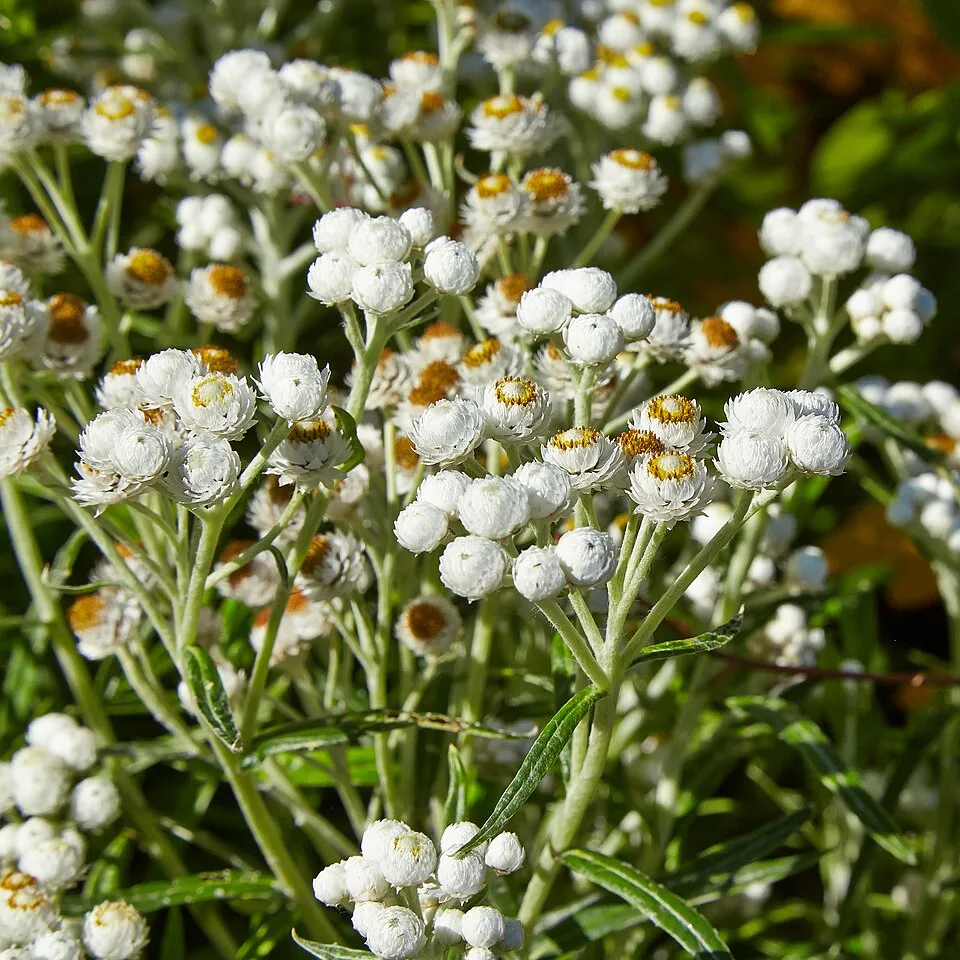
Anaphalis margaritacea, commonly known as Pearly Everlasting, is a distinctive herbaceous perennial belonging to the Asteraceae family. This resilient wildflower typically reaches heights of 30 to 90 centimeters, characterized by its slender, often woolly stems. Its lanceolate leaves are arranged alternately, presenting a soothing grey-green hue on the upper surface and a dense, white-woolly indumentum on the underside, a feature shared with its cottony stems.
The plant’s most striking characteristic is its inflorescence, which consists of clusters of small, compact flower heads. Each head is enveloped by numerous pearly-white, membranous involucral bracts, which give the plant its common name and persist long after the central yellowish disk flowers have matured and withered, making it ideal for dried arrangements. Anaphalis margaritacea is widely distributed across most of North America, excluding the humid southeastern regions.
It thrives in well-drained, often rocky, stony, or clay-rich soils, commonly found in mountain meadows, prairies, fallow fields, and disturbed areas like roadsides and clear-cuts. Adaptable to full sun or light shade, it demonstrates a notable tolerance for cool conditions and higher elevations, showcasing its robust nature and ecological versatility within its native range.
Trusted Scientific References
1. Authoritative external sources for Anaphalis Margaritacea
1.1 Wikipedia — Anaphalis Margaritacea
1.2 Kew POWO (Plants of the World Online)
1.3 PubMed — peer-reviewed research
1.4 NCBI Taxonomy Browser
1.5 GBIF — Global Biodiversity
1.6Anaphalis Margaritacea should be interpreted through verified botanical identity, practical care, and responsible safety language. This recovery note adds the missing context needed for a complete profile: match light to the plant's habit, use well-drained soil, water according to season, and avoid unsupported medicinal or edible claims. For publishing, the plant can be presented as a source-backed garden plant with clear care guidance, common problem diagnosis, and conservative safety wording.
1.1.Anaphalis Margaritacea — Highlights
- ✓Botanical Name — Anaphalis margaritacea
- ✓Common Names — Pearly Everlasting, Western Pearly Everlasting
- ✓Plant Family — Asteraceae (Sunflower Family)
- ✓Growth Habit — Herbaceous perennial, typically 30-90 cm tall
- ✓Distinctive Flowers — Pearl-white, papery bracts surrounding yellow disk flowers
- ✓Traditional Uses — Respiratory support, anti-rheumatic, wound healing, digestive aid
- ✓Key Constituents — Flavonoids, Terpenoids, Essential Oils, Phenolic Acids
- ✓Habitat — Dry, well-drained soils in meadows, prairies, and open woodlands
- ✓Energetics — Cool/Dry (as per traditional herbalism)
- ✓Foraging Note — Best harvested mid-summer before full bloom for drying
1.2.Anaphalis Margaritacea — In Brief
- ✓Pearly Everlasting (Anaphalis margaritacea) is a North American native perennial known for its distinctive white, pearl-like flower bracts.
- ✓Traditionally used by Native Americans for respiratory issues, rheumatic pain, wound healing, and digestive complaints.
- ✓Rich in flavonoids, terpenes, and essential oils, contributing to its anti-inflammatory, antiseptic, and expectorant actions.
- ✓Valued in herbal medicine for soothing colds, easing congestion, supporting joint health, and promoting skin repair.
- ✓Cultivated for its hardiness, adaptability to diverse soils, and preference for full sun to light shade conditions.
2.Anaphalis Margaritacea — Scientific Identity
3.Anaphalis Margaritacea — Vital Statistics
4.Anaphalis Margaritacea — Physical Description
5.Anaphalis Margaritacea — Native Range & Habitat
6.Anaphalis Margaritacea — Heritage Uses
7.Anaphalis Margaritacea — Key Phytochemicals
- ✓Flavonoids — Key compounds like quercetin and kaempferol derivatives contribute significantly to its antioxidant, anti-inflammatory, and antihistamine actions, supporting cellular health and immune responses.
- ✓Terpenoids — Various sesquiterpenes and diterpenes are present, imparting anti-inflammatory, antimicrobial, and potentially expectorant properties, contributing to respiratory and pain relief.
- ✓Essential Oils — A complex mixture of volatile monoterpenes and sesquiterpenes provides the plant's characteristic mild, sweet, woodsy aroma and contributes to its antiseptic and expectorant effects.
- ✓Phenolic Acids — Compounds such as caffeic acid and chlorogenic acid are known for their potent antioxidant and anti-inflammatory activities, protecting against oxidative stress.
- ✓Tannins — These astringent compounds are responsible for the plant's tissue-toning effects, beneficial for wound healing, reducing excessive mucus, and managing diarrhea.
- ✓Phytosterols — Plant sterols contribute to the plant's anti-inflammatory profile, helping to modulate immune responses and reduce swelling.
- ✓Polysaccharides — Certain complex carbohydrates may offer immunomodulatory benefits, supporting the body's natural defense mechanisms.
- ✓Glycosides — Various glycosidic compounds may be present, contributing to a range of therapeutic actions including cardiovascular support or anti-inflammatory effects, depending on the specific aglycone.
8.Anaphalis Margaritacea — Evidence-Based Benefits
- ✓Respiratory Support — Acts as an expectorant and antihistamine, helping to clear congested airways, reduce excessive mucus discharge, and alleviate symptoms of colds, flu, and seasonal allergies.
- ✓Anti-inflammatory Action — Possesses anti-inflammatory properties that may reduce swelling and pain, particularly beneficial for conditions like stiff, rheumatic joints and various inflammatory responses.
- ✓Astringent Properties — Functions as an astringent, aiding in the tightening of tissues, which can be useful for reducing excess mucus in the digestive tract, managing diarrhea, and promoting wound closure.
- ✓Antiseptic Qualities — Exhibits antiseptic activity, contributing to the prevention of infection in wounds, sores, boils, and blisters, thereby supporting cleaner and quicker healing.
- ✓Diaphoretic Effect — Promotes perspiration, making it valuable in traditional use for breaking fevers with chills and releasing body aches associated with colds and influenza.
- ✓Digestive Aid — Traditionally used to address digestive complaints such as excess stomach mucus, ulcer conditions, and food poisoning, likely due to its cooling and astringent nature.
- ✓Wound Healing — Applied topically as a vulnerary, it facilitates the healing of skin lesions, boils, and blisters by encouraging tissue regeneration and providing antiseptic protection.
- ✓Anti-rheumatic Relief — Utilized in poultices and steam baths to alleviate the pain and stiffness associated with rheumatism and arthritis, improving range of motion.
- ✓Sedative Potential — Some traditional uses suggest a mild sedative effect, contributing to overall comfort and relaxation, especially during illness.
- ✓Antiviral and Antibacterial — Contains compounds that may offer antiviral and antibacterial properties, supporting the body's defense against various pathogens.
8.1.Anaphalis Margaritacea — Reported Uses
9.Anaphalis Margaritacea — Safety Considerations
9.1.Anaphalis Margaritacea — Reported Side Effects
- ✓Allergic Reactions — Individuals sensitive to the Asteraceae family (e.g., ragweed, chamomile) may experience allergic contact dermatitis or other hypersensitivity reactions.
- ✓Gastrointestinal Upset — High doses or prolonged internal use might lead to mild stomach discomfort, nausea, or diarrhea in sensitive individuals.
- ✓Photosensitivity — While rare, some Asteraceae species can cause photosensitivity; caution is advised, especially with extensive topical use.
- ✓Drug Interactions — Theoretical risk of interaction with blood-thinning medications if coumarin-like compounds are present, though not commonly reported for this plant.
- ✓Respiratory Irritation — Inhaling herbal smoke, even traditionally, can irritate respiratory passages and is generally not recommended for modern therapeutic use.
9.2.Anaphalis Margaritacea — Safety Profile
- ✓Pregnancy and Lactation — Due to insufficient safety data, pregnant and breastfeeding individuals should avoid internal use of Pearly Everlasting without professional medical guidance.
- ✓Allergic Individuals — Persons with known allergies to the Asteraceae family should exercise caution and perform a patch test before topical application.
- ✓Children — Administer to children only under the supervision of a qualified healthcare practitioner, typically at reduced dosages.
- ✓Medication Interactions — Consult a healthcare provider if taking prescription medications, especially blood thinners, to rule out potential interactions.
- ✓Dosage and Duration — Adhere to recommended dosages and avoid prolonged internal use without professional advice, as long-term safety studies are limited.
- ✓External Use — Topical applications are generally considered safer, but always test on a small skin area first.
10.Anaphalis Margaritacea — Usage Guide
- ✓Herbal Tea/Infusion — Prepare by steeping 1-2 teaspoons of dried leaves and flowers in hot water for 10-15 minutes; consumed for respiratory and digestive support.
- ✓Herbal Steam — Add dried Pearly Everlasting to a bowl of hot water and inhale the steam, often used to clear sinus congestion and respiratory discomfort.
- ✓Poultice/Compress — Crush fresh or rehydrated dried plant material to form a paste, apply directly to the skin for wound care, boils, or rheumatic joints.
- ✓Tincture — Macerate fresh or dried aerial parts in an alcohol-based solvent for several weeks to extract medicinal compounds, taken orally in small doses.
- ✓Infused Oil — Gently heat dried plant material in a carrier oil (e.g., olive oil) for several hours or infuse over weeks to create a topical oil for anti-inflammatory and vulnerary applications.
- ✓Herbal Bath/Sauna — Add a strong infusion or dried plant material to bathwater or use in a steam bath to promote perspiration and alleviate body aches and stiffness.
- ✓Herbal Smoke (Traditional) — Historically smoked for respiratory complaints; however, modern use typically favors non-combustion methods due to lung health concerns.
11.Anaphalis Margaritacea — Cultivation & Care
- ✓Soil Preference — Thrives in a variety of well-drained soils, including rocky, sandy, or clay-rich compositions, demonstrating high adaptability to less fertile conditions.
- ✓Light Requirements — Prefers full sun exposure but can tolerate light shade, making it suitable for various garden aspects.
- ✓Water Needs — Once established, Anaphalis margaritacea is notably drought-tolerant, requiring minimal supplemental irrigation.
- ✓Climate Adaptability — Hardy perennial that thrives in temperate zones and tolerates cool conditions, often found at higher elevations.
- ✓Propagation — Can be propagated effectively from seeds, which benefit from cold stratification, or by division of mature clumps in spring or fall.
- ✓Harvesting — Best harvested in mid-summer, ideally before the flower buds fully mature, to preserve its vibrant color and aromatic qualities for drying.
- ✓Maintenance — Requires minimal maintenance; deadheading spent flowers can encourage a tidier appearance, though it self-seeds readily.
Reviewed by the Flora Medical Global Botanical Review Panel
Multi-disciplinary editorial group · Botany · Ethnobotany · Herbal-medicine literature
Who reviewed this: This page was checked by the Flora Medical Global Botanical Review Panel — an in-house editorial group of botany graduates, ethnobotany researchers, and horticulture practitioners who collectively maintain our 7,000+ plant encyclopedia. Meet the team.
Our 4-step verification process
1. Taxonomic verification
Scientific names and synonyms cross-checked against Kew POWO, World Flora Online, and The Plant List.
2. Phytochemical & medicinal cross-reference
Active compounds, traditional uses, and reported activities are cross-referenced with PubMed, USDA Dr. Duke's database, and peer-reviewed ethnobotanical literature.
3. Conservation & distribution check
Distribution, ecology, and conservation status confirmed against GBIF occurrence records and the IUCN Red List.
4. Editorial & safety review
Every entry passes an editorial pass for clarity, originality, and safety notices (toxicity, contraindications, dosage caveats) before publication.
Last reviewed:
Important medical disclaimer: This content is for educational and research purposes only. It is not medical advice and is not a substitute for consultation with a licensed healthcare provider. Do not use any herb to self-treat a medical condition without professional guidance.
Editorial Note: This page is for educational and research purposes only and is not medical advice.
Written by: Flora Medical Global Editorial Team
Reviewed by: Flora Medical Global Botanical Review Panel
Last Updated: June 15, 2026





Anaphalis Margaritacea — Comments & Community Reviews
Rate this plant