
Medical Disclaimer: This content is for educational purposes only. It is not medical advice. Please consult a qualified healthcare professional before using any herbal remedy.
Safety Overview
1.Androcymbium Melanthioides — Essential Profile
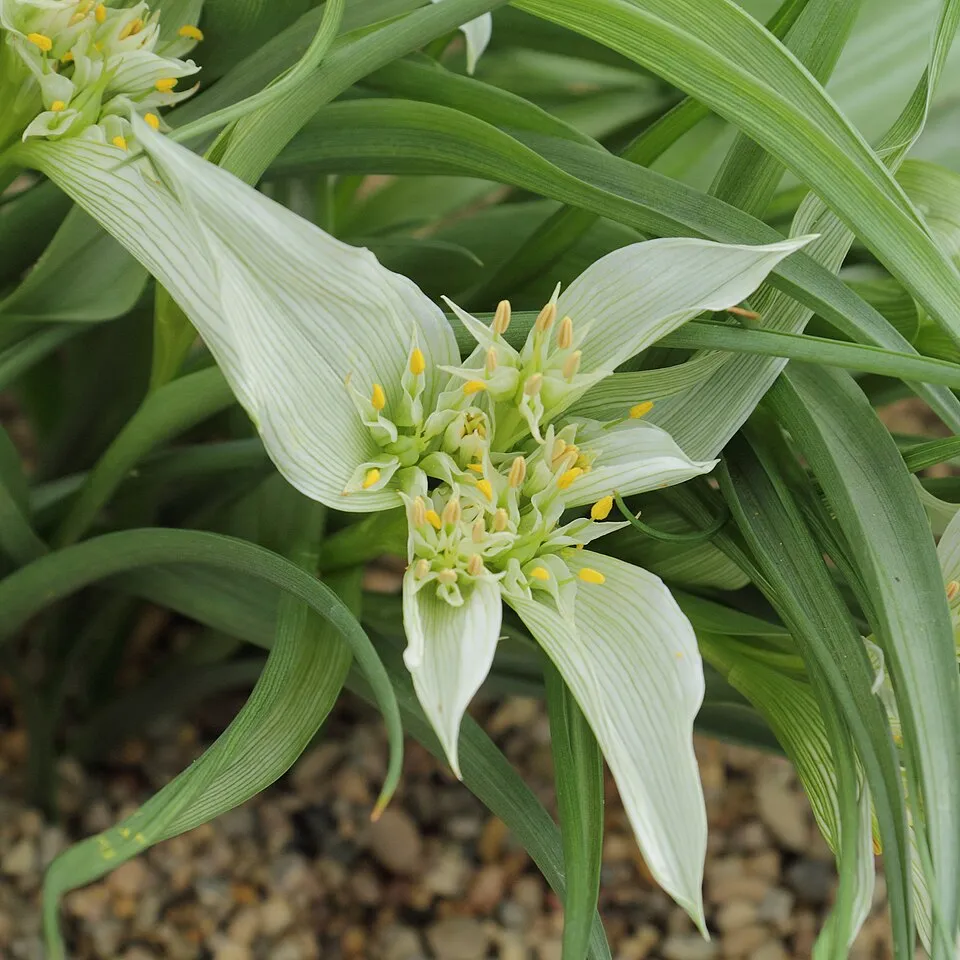
Androcymbium melanthioides, often recognized as the Autumn Lily or Cape Lily, is a captivating geophyte species within the Colchicaceae family. This distinctive plant is indigenous to the winter rainfall regions of the Cape Provinces in South Africa, thriving in its unique climatic conditions. It emerges from a subterranean corm, which is an enlarged, modified stem serving as a storage organ. The plant typically presents a basal rosette of leaves, which can vary from lanceolate to linear in shape, frequently exhibiting a glaucous (bluish-green) or subtly hairy texture.
The most striking characteristic of Androcymbium melanthioides is its inflorescence, which remarkably appears in late autumn or early winter, often preceding the full development of its foliage. The flowers are densely clustered, forming an often head-like arrangement atop a short, robust scape or flower stalk. Each flower is bisexual, possessing six tepals (three petals and three sepals that are morphologically indistinguishable). These tepals are typically white, though they can sometimes display delicate tinges of pink or purple, often recurving at their tips and featuring a prominent central keel.
The stamens are conspicuous, and the superior ovary matures into a capsule that contains numerous minute seeds. A fascinating adaptation to its arid environment, the plant retreats to its underground corm during the dry summer months, entering a period of dormancy, only to re-emerge with the onset of the rejuvenating autumn rains.
Trusted Scientific References
1. Authoritative external sources for Androcymbium Melanthioides
1.1 Wikipedia — Androcymbium Melanthioides
1.2 Kew POWO (Plants of the World Online)
1.3 PubMed — peer-reviewed research
1.4 NCBI Taxonomy Browser
1.5 GBIF — Global Biodiversity
1.6Androcymbium Melanthioides should be interpreted through verified botanical identity, practical care, and responsible safety language. This recovery note adds the missing context needed for a complete profile: match light to the plant's habit, use well-drained soil, water according to season, and avoid unsupported medicinal or edible claims. For publishing, the plant can be presented as a source-backed garden plant with clear care guidance, common problem diagnosis, and conservative safety wording.
1.1.Androcymbium Melanthioides — Distinguishing Points
- ✓Geophyte Morphology — Grows from a corm, an underground storage stem.
- ✓Autumn/Winter Flowering — Inflorescence appears before or with developing leaves in cooler months.
- ✓Endemic to South Africa — Originates specifically from the Cape Provinces.
- ✓Colchicaceae Family — Belongs to a family known for its toxic alkaloid content.
- ✓Highly Toxic — Contains lethal levels of colchicine and related alkaloids.
- ✓Traditional Medicinal Use — Historically used by indigenous communities for various ailments.
- ✓Anti — inflammatory Properties — Traditionally applied for reducing swelling and pain.
- ✓Analgesic Effects — Valued in traditional medicine for its pain-relieving qualities.
- ✓Distinctive Inflorescence — Flowers are clustered, often head-like, with recurved tepals.
- ✓Dormancy Adaptation — Survives dry summers by retreating to its corm.
1.2.Androcymbium Melanthioides — In Brief
- ✓Androcymbium melanthioides is a geophyte native to South Africa's Cape Provinces.
- ✓Known for its late autumn flowering from a corm.
- ✓Possesses traditional medicinal uses for pain, inflammation, and skin conditions.
- ✓Contains highly toxic tropolone alkaloids, including lethal colchicine.
- ✓Medicinal use is extremely dangerous and strictly contraindicated for self-medication.
- ✓Requires precise care for cultivation, including full sun and a dry summer dormancy.
2.Androcymbium Melanthioides — Scientific Identity
3.Androcymbium Melanthioides — Vital Statistics
4.Androcymbium Melanthioides — Physical Description
5.Androcymbium Melanthioides — Native Range & Habitat
6.Androcymbium Melanthioides — Folk Medicine Applications
7.Androcymbium Melanthioides — Key Phytochemicals
- ✓Tropolone Alkaloids — This family is notoriously rich in tropolone alkaloids, with colchicine being the most prominent and highly toxic compound. Colchicine acts as a potent antimitotic agent, interfering with microtubule formation.
- ✓Colchicine — A highly toxic alkaloid found in the corms, responsible for the plant's severe toxicity. It inhibits cell division and can be lethal in small doses.
- ✓Demecolcine — Another tropolone alkaloid, structurally similar to colchicine but generally considered less potent, though still highly toxic. It also exhibits antimitotic activity.
- ✓Colchicoside — A glycosidic derivative of colchicine, often present in the plant. It is a precursor to colchicine and possesses similar, albeit often milder, pharmacological activities.
- ✓Flavonoids — Various flavonoid compounds may be present, contributing to antioxidant and potentially mild anti-inflammatory properties, but are overshadowed by the alkaloid content.
- ✓Saponins — These glycosides might be found in trace amounts, potentially contributing to some traditional uses but also increasing irritation.
- ✓Phytosterols — Plant sterols could be present, known for their potential anti-inflammatory and cholesterol-lowering effects, though not the primary active compounds in this plant.
- ✓Organic Acids — Various organic acids are typically found in plant tissues, playing roles in primary metabolism and potentially contributing to pH regulation.
8.Androcymbium Melanthioides — Pharmacological Findings
- ✓Anti-inflammatory Properties — Traditionally, the corms of Androcymbium melanthioides have been used to reduce inflammation, particularly in cases of rheumatic pain, by indigenous communities.
- ✓Analgesic Effects — This plant is recognized in traditional medicine for its pain-relieving capabilities, applied topically and consumed internally to alleviate discomfort.
- ✓Wound Healing Support — Poultices made from crushed corms have been historically applied to wounds and sores to promote healing and prevent infection.
- ✓Skin Infection Treatment — The topical application of corm preparations was employed to address various skin infections, leveraging perceived antimicrobial properties.
- ✓Rheumatic Pain Alleviation — Decoctions or infusions from the corm were traditionally ingested to mitigate the pain and swelling associated with rheumatic conditions.
- ✓Respiratory Aid — Some traditional accounts suggest the use of Androcymbium melanthioides in treating coughs and other respiratory ailments, though mechanisms are not fully elucidated.
- ✓General Pain Management — Beyond specific conditions, the plant was utilized as a general remedy for various forms of body aches and pains in traditional contexts.
- ✓Swelling Reduction — Its traditional use as an anti-inflammatory agent also extended to reducing localized swelling from injuries or inflammatory conditions.
- ✓Topical Antiseptic Action — The application of corm preparations to skin lesions was believed to offer a mild antiseptic effect, contributing to wound care.
- ✓Detoxification Support — In some traditional practices, certain preparations were thought to aid in internal cleansing processes, though this requires significant scientific validation.
8.1.Androcymbium Melanthioides — Health Applications
9.Androcymbium Melanthioides — Cautions & Contraindications
9.1.Androcymbium Melanthioides — Warnings
- ✓Severe Gastrointestinal Distress — Ingestion leads to acute symptoms like nausea, vomiting, severe abdominal pain, and profuse diarrhea.
- ✓Bone Marrow Suppression — Colchicine can cause a decrease in the production of blood cells, leading to anemia, leukopenia, and thrombocytopenia.
- ✓Multi-organ Failure — High doses can result in liver damage, kidney failure, cardiovascular collapse, and respiratory depression.
- ✓Neurological Symptoms — May include muscle weakness, ascending paralysis, and peripheral neuropathy.
- ✓Hair Loss — A common side effect of colchicine poisoning is alopecia.
- ✓Myopathy — Muscle pain and weakness can develop, sometimes leading to rhabdomyolysis.
- ✓Potentially Fatal — Even small amounts of the corm can be lethal due to its highly toxic alkaloid content.
9.2.Androcymbium Melanthioides — Safety Overview
- ✓HIGHLY TOXIC — Androcymbium melanthioides contains lethal tropolone alkaloids, particularly colchicine, making it extremely dangerous for consumption.
- ✓NOT FOR INTERNAL USE — Ingestion of any part of the plant, especially the corm, is strictly contraindicated and can be fatal.
- ✓PREGNANCY AND LACTATION — Absolutely contraindicated due to severe teratogenic and abortifacient potential.
- ✓CHILDREN — Never administer to children; even minimal exposure can be deadly.
- ✓LIVER AND KIDNEY IMPAIRMENT — Individuals with pre-existing liver or kidney conditions are at heightened risk of toxicity due to impaired metabolism and excretion of alkaloids.
- ✓DRUG INTERACTIONS — Potential for severe interactions with numerous medications, particularly those affecting liver enzymes or bone marrow.
- ✓EXPERT SUPERVISION ONLY — Any traditional use must be under the direct and highly specialized guidance of experienced traditional healers who understand its extreme dangers.
- ✓DERMAL ABSORPTION RISK — Topical application carries a risk of systemic absorption, necessitating extreme caution.
10.Androcymbium Melanthioides — Usage Guide
- ✓Topical Poultices — Crushed corms were traditionally prepared into poultices and applied directly to the skin for wounds, sores, and inflammatory conditions. EXTREME CAUTION IS ADVISED due to rapid dermal absorption of toxins.
- ✓Internal Decoctions — Historically, decoctions (boiled extracts) of the corm were consumed for rheumatic pain and respiratory issues. THIS IS HIGHLY DANGEROUS and NOT RECOMMENDED due to lethal toxicity.
- ✓Infusions — Infusions (steeped extracts) were also used internally in traditional contexts, similar to decoctions. Again, THIS PRACTICE IS LETHAL AND NOT TO BE ATTEMPTED.
- ✓Traditional Preparation by Experts — Any historical internal use was strictly under the guidance of highly experienced traditional practitioners who understood the inherent dangers and precise detoxification methods, if any.
- ✓NO SELF-MEDICATION — Due to the extreme toxicity, Androcymbium melanthioides should NEVER be used for self-medication in any form.
- ✓External Use with Caution — Even external application should be approached with extreme caution due to the risk of systemic absorption of toxic compounds.
- ✓Avoid Ingestion at All Costs — Ingestion of any part of this plant, especially the corm, is highly toxic and potentially fatal.
11.Androcymbium Melanthioides — Garden Cultivation
- ✓Replicate Native Habitat — Androcymbium melanthioides requires specific conditions mimicking its South African winter rainfall region for successful growth.
- ✓Well-Drained Soil — Plant corms in highly porous, sandy-loam soil mixtures to prevent waterlogging, which can lead to rot.
- ✓Full Sun Exposure — Ensure the plant receives ample direct sunlight throughout its active growing season for optimal development.
- ✓Precise Watering Schedule — Water regularly during the autumn and winter growing period, allowing the soil to dry slightly between waterings.
- ✓Dry Dormant Period — Crucially, provide a completely dry period during summer dormancy after the foliage naturally dies back.
- ✓Protect from Frost — While adapted to winter rainfall, severe or prolonged frost can damage the corms.
- ✓Propagation by Cormlets — Propagate primarily by separating offsets or 'cormlets' that form around the parent corm during dormancy.
- ✓Avoid Over-fertilization — A light application of a balanced, slow-release fertilizer at the start of the growing season is sufficient.
Reviewed by the Flora Medical Global Botanical Review Panel
Multi-disciplinary editorial group · Botany · Ethnobotany · Herbal-medicine literature
Who reviewed this: This page was checked by the Flora Medical Global Botanical Review Panel — an in-house editorial group of botany graduates, ethnobotany researchers, and horticulture practitioners who collectively maintain our 7,000+ plant encyclopedia. Meet the team.
Our 4-step verification process
1. Taxonomic verification
Scientific names and synonyms cross-checked against Kew POWO, World Flora Online, and The Plant List.
2. Phytochemical & medicinal cross-reference
Active compounds, traditional uses, and reported activities are cross-referenced with PubMed, USDA Dr. Duke's database, and peer-reviewed ethnobotanical literature.
3. Conservation & distribution check
Distribution, ecology, and conservation status confirmed against GBIF occurrence records and the IUCN Red List.
4. Editorial & safety review
Every entry passes an editorial pass for clarity, originality, and safety notices (toxicity, contraindications, dosage caveats) before publication.
Last reviewed:
Important medical disclaimer: This content is for educational and research purposes only. It is not medical advice and is not a substitute for consultation with a licensed healthcare provider. Do not use any herb to self-treat a medical condition without professional guidance.
Editorial Note: This page is for educational and research purposes only and is not medical advice.
Written by: Flora Medical Global Editorial Team
Reviewed by: Flora Medical Global Botanical Review Panel
Last Updated: June 15, 2026





Androcymbium Melanthioides — Comments & Community Reviews
Rate this plant