
Medical Disclaimer: This content is for educational purposes only. It is not medical advice. Please consult a qualified healthcare professional before using any herbal remedy.
Safety Overview
1.Angelica Archangelica — Overview
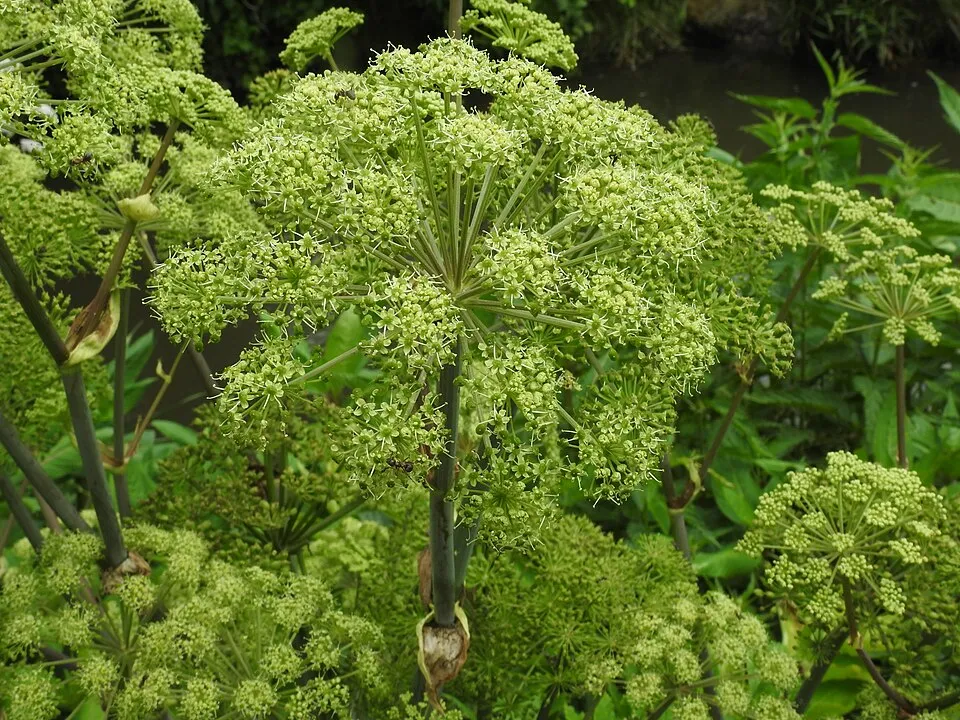
Angelica archangelica, commonly known as Garden Angelica or Wild Celery, is a majestic biennial herb belonging to the Apiaceae family (formerly Umbelliferae). This impressive plant typically reaches heights of 1 to 2.5 meters, characterized by its stout, hollow, grooved stems that are often tinged with purple. Its large, bright green leaves are bipinnate or tripinnate, deeply divided into numerous leaflets with serrated margins, giving it a lush, fern-like appearance.
In its second year, Angelica archangelica produces large, compound umbels of small, greenish-white flowers that bloom in mid-summer, attracting a variety of pollinators. These flowers eventually develop into flattened, elliptical fruits (schizocarps) containing the seeds. The root system is robust and fleshy, often conical, and exudes a strong, aromatic scent when cut.
Native to northern Europe, Greenland, and parts of Russia, Angelica archangelica thrives in cool, moist environments such as damp meadows, riverbanks, and woodland clearings. Its distinctive aroma, arising from its essential oil content, is a hallmark of the species, making it easily identifiable. Taxonomically, it is classified within a diverse family renowned for its aromatic and often medicinal members, including carrots, parsley, and dill.
Trusted Scientific References
1. Authoritative external sources for Angelica archangelica
1.1 Wikipedia — Angelica archangelica
1.2 Kew POWO (Plants of the World Online)
1.3 PubMed — peer-reviewed research
1.4 NCBI Taxonomy Browser
1.5 GBIF — Global Biodiversity
1.6Angelica Archangelica should be interpreted through verified botanical identity, practical care, and responsible safety language. This recovery note adds the missing context needed for a complete profile: match light to the plant's habit, use well-drained soil, water according to season, and avoid unsupported medicinal or edible claims. For publishing, the plant can be presented as a source-backed garden plant with clear care guidance, common problem diagnosis, and conservative safety wording.
1.1.Angelica Archangelica — Key Features
- ✓Botanical Powerhouse — A majestic biennial herb known for its impressive size and aromatic profile.
- ✓Northern European Origin — Thrives in cool, moist climates across its native distribution.
- ✓Digestive Dynamo — Highly effective in alleviating various digestive discomforts like bloating and gas.
- ✓Respiratory Reliever — Acts as a potent expectorant, aiding in the treatment of coughs and colds.
- ✓Immune Modulator — Traditionally used to support overall vitality and bolster immune function.
- ✓Phytochemical Diversity — Contains a rich array of compounds including furanocoumarins, coumarins, and essential oils.
- ✓Unique Aromatic Profile — Its distinctive scent makes it a prized ingredient in liqueurs and confectionery.
- ✓Photosensitivity Warning — A crucial safety consideration due to increased skin sensitivity to sunlight.
- ✓Women's Health Ally — Historically employed to address menstrual irregularities and associated discomforts.
- ✓Research Interest — Continues to be a subject of scientific inquiry for its antioxidant, anti-inflammatory, and antimicrobial potential.
1.2.Angelica Archangelica — Snapshot Summary
- ✓Angelica archangelica — A tall, aromatic European herb cherished for its diverse medicinal and culinary uses.
- ✓Digestive & Respiratory Aid — Renowned for soothing indigestion, flatulence, coughs, and bronchitis.
- ✓Rich Phytochemicals — Contains furanocoumarins, coumarins, and essential oils responsible for its effects.
- ✓Photosensitivity Warning — Users must protect skin from sun exposure due to increased light sensitivity.
- ✓Contraindicated for Pregnancy — Should not be used by pregnant or breastfeeding individuals.
- ✓Traditional & Modern Uses — Valued in folk medicine and explored for antioxidant and anti-inflammatory properties.
2.Angelica Archangelica — Scientific Profile
3.Angelica Archangelica — Reference Facts
4.Angelica Archangelica — Morphological Account
5.Angelica Archangelica — Where It Grows
6.Angelica Archangelica — Cultural & Traditional Roles
7.Angelica Archangelica — Secondary Metabolites
- ✓Phellandrene — A monoterpene that contributes to the plant's aromatic properties and may have antispasmodic and carminative effects.
- ✓Cineole — An essential oil component known for its expectorant and antimicrobial properties, often found in respiratory remedies.
- ✓Pinene — Another monoterpene contributing to the aroma, with potential anti-inflammatory and bronchodilating effects.
- ✓Umbelliferone — A coumarin derivative that exhibits antioxidant and anti-inflammatory activities.
- ✓Artemetin — A flavonoid with potential anti-inflammatory and antioxidant benefits.
- ✓Angelicin — A furanocoumarin that may possess photosensitizing properties and has been studied for its potential therapeutic effects.
- ✓Imperatorin — A furanocoumarin with documented anti-inflammatory, antimicrobial, and potential anticancer activities.
- ✓Isoimperatorin — Another furanocoumarin with similar biological activities to imperatorin, including anti-inflammatory and antioxidant effects.
- ✓Psoralen — A furocoumarin that is known for its photosensitizing properties and has been used in photochemotherapy.
- ✓Essential Oils — A complex mixture of volatile compounds including monoterpenes and sesquiterpenes, responsible for the characteristic aroma and many of the plant's medicinal properties.
- ✓Flavonoids — Such as quercetin and kaempferol, which are potent antioxidants and possess anti-inflammatory properties.
- ✓Coumarins — A class of compounds including umbelliferone and psoralen, known for their anticoagulant, anti-inflammatory, and antioxidant effects.
- ✓Organic Acids — Including valeric acid and angelic acid, which may contribute to the plant's digestive and sedative properties.
8.Angelica Archangelica — Research Insights
- ✓Digestive Aid — Angelica archangelica has a long history of use in traditional medicine for its carminative properties, helping to relieve bloating, gas, and indigestion. It stimulates digestive secretions, promoting better breakdown of food and easing discomfort after meals.
- ✓Expectorant Properties — The plant is recognized for its ability to loosen and expel mucus from the respiratory tract, making it beneficial for coughs, bronchitis, and other respiratory ailments. It helps to thin phlegm, allowing for easier clearance from the lungs and airways.
- ✓Antispasmodic Effects — Angelica archangelica can help to relax smooth muscles, which is useful in alleviating spasms in the digestive system, uterus, and respiratory tract. This makes it effective for conditions like menstrual cramps and irritable bowel syndrome (IBS) symptoms.
- ✓Diaphoretic Action — It promotes sweating, which can be beneficial in reducing fever during colds and flu. By inducing perspiration, it helps the body to cool down and eliminate toxins.
- ✓Appetite Stimulant — Traditionally used to improve appetite, especially in cases of loss of appetite due to illness or stress. Its bitter compounds stimulate the digestive system, leading to increased hunger.
- ✓Antimicrobial Activity — Studies suggest that certain compounds in Angelica archangelica possess antimicrobial properties, potentially inhibiting the growth of bacteria and fungi. This can contribute to its use in treating infections.
- ✓Anti-inflammatory Effects — Research indicates that the plant may possess anti-inflammatory properties, helping to reduce inflammation in various parts of the body. This could be beneficial for conditions associated with chronic inflammation.
- ✓Nervous System Support — In some traditional practices, it has been used to calm the nerves and reduce anxiety. Its mild sedative effects may contribute to relaxation and improved sleep quality.
- ✓Detoxification Support — Often considered a tonic for the body, it is believed to support the liver and kidneys in their detoxification processes, aiding in the elimination of waste products.
- ✓Circulatory Health — Some traditional uses suggest it may improve blood circulation, potentially due to its stimulating effects on the body.
- ✓Wound Healing — Historically, external applications of Angelica archangelica have been used to promote wound healing and prevent infection due to its antiseptic properties.
- ✓Menstrual Regulation — Traditionally used to help regulate menstrual cycles and alleviate associated discomforts like cramps and heavy bleeding.
- ✓Liver Protection — Preliminary research suggests potential hepatoprotective effects, meaning it might help protect the liver from damage caused by toxins.
- ✓Antioxidant Properties — The presence of various phenolic compounds contributes to its antioxidant capacity, helping to combat oxidative stress caused by free radicals in the body.
8.1.Angelica Archangelica — Conditions Traditionally Used For
9.Angelica Archangelica — Risk Profile
9.1.Angelica Archangelica — Side Effects & Warnings
- ✓Angelica archangelica can cause photosensitivity, meaning increased sensitivity to sunlight, particularly in individuals with fair skin.
- ✓This can lead to exaggerated sunburn reactions.
- ✓In rare cases, allergic reactions or digestive upset may occur, especially with high doses.
9.2.Angelica Archangelica — Safety Overview
- ✓Due to its photosensitizing properties, individuals taking Angelica archangelica should exercise caution and protect their skin from direct sun exposure.
- ✓It is generally considered safe when used in recommended culinary or medicinal amounts, but pregnant or breastfeeding women and individuals with bleeding disorders or diabetes should consult a healthcare professional before use.
10.Angelica Archangelica — Preparation & Dosage
- ✓Herbal Tea/Infusion — Dried roots or leaves steeped in hot water for 10-15 minutes to aid digestion or soothe respiratory discomfort.
- ✓Tincture — An alcohol extract of the roots or seeds, offering a concentrated form for internal use, typically dosed in drops.
- ✓Decoction — Roots are simmered in water for 20-30 minutes to extract more robust compounds, often used for stronger medicinal effects.
- ✓Culinary Spice — Young stems and petioles can be candied, and leaves used to flavor various dishes, jams, and especially liqueurs.
- ✓Poultice — Crushed fresh leaves or roots can be applied topically as a poultice for minor skin irritations or muscle aches.
- ✓Essential Oil — Steam-distilled from the roots or seeds, used in aromatherapy or diluted for topical application, but with caution due to photosensitivity.
- ✓Encapsulated Powder — Dried and ground root material encapsulated for convenient, standardized oral dosage as a dietary supplement.
- ✓Infused Oil — Roots infused in a carrier oil can be used topically for massage or skin applications, again with photosensitivity precautions.
11.Angelica Archangelica — Growing Guide
- ✓Soil Preference — Thrives in deep, moist, well-draining soil that is rich in organic matter, with a slightly acidic to neutral pH.
- ✓Sun Exposure — Prefers full sun to partial shade, especially in warmer climates where some afternoon shade can prevent scorching.
- ✓Watering — Requires consistent moisture; regular watering is essential, particularly during dry spells, but avoid waterlogging to prevent root rot.
- ✓Propagation — Best propagated by fresh seeds sown directly into the garden in early spring or late autumn, as viability decreases rapidly.
- ✓Fertilization — Benefit from a balanced organic fertilizer application every few weeks during the active growing season to support its vigorous growth.
- ✓Spacing — Due to its large size, plants should be spaced at least 2 to 3 feet (60-90 cm) apart to allow for proper development and air circulation.
- ✓Harvest — Roots are typically harvested in the autumn of the first year or the spring of the second year before the plant flowers, when their medicinal potency is highest.
Reviewed by the Flora Medical Global Botanical Review Panel
Multi-disciplinary editorial group · Botany · Ethnobotany · Herbal-medicine literature
Who reviewed this: This page was checked by the Flora Medical Global Botanical Review Panel — an in-house editorial group of botany graduates, ethnobotany researchers, and horticulture practitioners who collectively maintain our 7,000+ plant encyclopedia. Meet the team.
Our 4-step verification process
1. Taxonomic verification
Scientific names and synonyms cross-checked against Kew POWO, World Flora Online, and The Plant List.
2. Phytochemical & medicinal cross-reference
Active compounds, traditional uses, and reported activities are cross-referenced with PubMed, USDA Dr. Duke's database, and peer-reviewed ethnobotanical literature.
3. Conservation & distribution check
Distribution, ecology, and conservation status confirmed against GBIF occurrence records and the IUCN Red List.
4. Editorial & safety review
Every entry passes an editorial pass for clarity, originality, and safety notices (toxicity, contraindications, dosage caveats) before publication.
Last reviewed:
Important medical disclaimer: This content is for educational and research purposes only. It is not medical advice and is not a substitute for consultation with a licensed healthcare provider. Do not use any herb to self-treat a medical condition without professional guidance.
Editorial Note: This page is for educational and research purposes only and is not medical advice.
Written by: Flora Medical Global Editorial Team
Reviewed by: Flora Medical Global Botanical Review Panel
Last Updated: June 15, 2026





Angelica Archangelica — Comments & Community Reviews
Rate this plant