


Medical Disclaimer: This content is for educational purposes only. It is not medical advice. Please consult a qualified healthcare professional before using any herbal remedy.
Safety Overview
1.Annona Squamosa — Introduction & Highlights
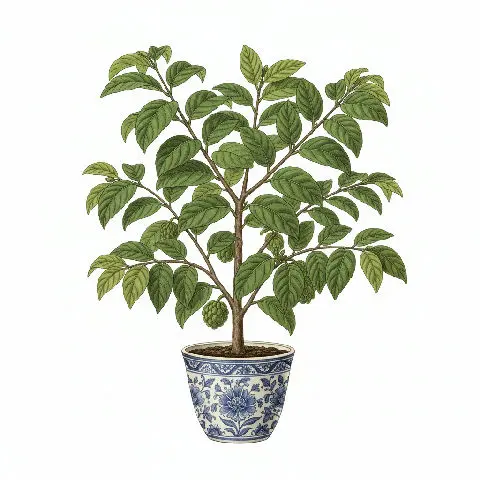
Annona squamosa, widely recognized as sugar-apple, custard apple, or Sitaphal in various regions, is a prominent fruit-bearing tree within the Annonaceae family, which notably includes other well-known species like soursop and cherimoya. Its origins trace back to the tropical Americas, most likely the West Indies, where indigenous populations cultivated it centuries before European contact. The tree's journey across continents began in the 16th century, introduced to Asia, particularly India and Southeast Asia, by Spanish and Portuguese traders, quickly becoming naturalized and culturally significant. Morphologically, Annona squamosa is a small, typically deciduous to semi-evergreen tree, usually growing to a height of 3 to 6 meters.
Its most distinctive feature is its unique fruit—segmented and resembling a pinecone, with a knobby, often glaucous green skin that matures to a yellowish or brownish hue. Inside, the creamy white, aromatic flesh encases numerous hard, shiny dark brown or black seeds. From a phytochemical standpoint, A. squamosa is remarkably rich, containing a diverse array of bioactive compounds.
Extensive research has isolated acetogenins (such as annonacin), various alkaloids (including aporphine and protoberberine types), flavonoids, and essential oils. These compounds underpin its long-standing traditional medicinal applications and are currently being investigated for their pronounced antidiabetic, antioxidant, antiparasitic, antimalarial, antimicrobial, hepatoprotective, and notably, anticancer properties.
Trusted Scientific References
1. Authoritative external sources for Annona squamosa
1.1 Wikipedia — Annona squamosa
1.2 Kew POWO (Plants of the World Online)
1.3 PubMed — peer-reviewed research
1.4 NCBI Taxonomy Browser
1.5 GBIF — Global Biodiversity
1.6Annona Squamosa should be interpreted through verified botanical identity, practical care, and responsible safety language. This recovery note adds the missing context needed for a complete profile: match light to the plant's habit, use well-drained soil, water according to season, and avoid unsupported medicinal or edible claims. For publishing, the plant can be presented as a source-backed garden plant with clear care guidance, common problem diagnosis, and conservative safety wording.
1.1.Annona Squamosa — Key Features
- ✓Tropical Fruit Tree — Native to the Americas, widely cultivated in tropical and subtropical regions globally.
- ✓Sweet, Segmented Fruit — Distinctive pinecone-like fruit with creamy, aromatic, sweet white flesh.
- ✓Rich Phytochemical Profile — Abundant in acetogenins, alkaloids, flavonoids, and essential oils.
- ✓Traditional Medicine Staple — Utilized in Ayurveda, Unani, and other folk medicine systems for centuries.
- ✓Potent Antioxidant Properties — Offers significant protection against oxidative stress due due to flavonoid content.
- ✓Promising Anticancer Research — Acetogenins show strong cytotoxic effects against various cancer cell lines in preclinical studies.
- ✓Antidiabetic and Antimicrobial Effects — Demonstrated efficacy in managing blood sugar and combating microbial infections.
- ✓Contains Neurotoxic Acetogenins — Seeds and leaves contain compounds that can be neurotoxic if ingested in high amounts.
- ✓Versatile Culinary Use — Enjoyed fresh, in beverages, desserts, and other sweet preparations.
- ✓Adaptable Cultivation — Relatively easy to grow in suitable warm climates, making it a popular backyard fruit tree.
1.2.Annona Squamosa — In Brief
- ✓Annona squamosa, or sugar-apple, is a tropical fruit tree known for its sweet, segmented fruit and rich medicinal history.
- ✓It contains potent bioactive compounds like acetogenins, flavonoids, and alkaloids with diverse pharmacological properties.
- ✓Traditionally used in Ayurveda and Unani for conditions ranging from diabetes to parasitic infections.
- ✓Modern research supports its antioxidant, antidiabetic, antimicrobial, and potential anticancer activities.
- ✓Caution is advised regarding the toxic seeds and potential neurotoxicity from concentrated extracts, necessitating professional guidance.
2.Annona Squamosa — Taxonomic Classification
3.Annona Squamosa — Reference Facts
4.Annona Squamosa — Plant Morphology
5.Annona Squamosa — Geographic Distribution
6.Annona Squamosa — Ethnobotanical Uses
7.Annona Squamosa — Secondary Metabolites
- ✓Annonaceous Acetogenins — Key compounds like annonacin, squamocin, annotemoyin-1, annotemoyin-2, and coumarinoligins are found primarily in seeds and leaves, known for potent cytotoxic and pesticidal activities.
- ✓Alkaloids — Aporphine and protoberberine types, such as anonaine and reticuline, are present in various plant parts, contributing to hypotensive and antimicrobial actions.
- ✓Flavonoids — Compounds like quercetin, rutin, and kaempferol are abundant, particularly in leaves and fruit, providing significant antioxidant, anti-inflammatory, and antidiabetic effects.
- ✓Phenolic Acids — Gallic acid, caffeic acid, and chlorogenic acid are present, contributing to the plant's overall antioxidant and anti-inflammatory properties.
- ✓Essential Oils — The leaves and fruit contain volatile compounds such as linalool, borneol, eugenol, farnesol, and geraniol, which impart characteristic aroma and exhibit antimicrobial and insecticidal activities.
- ✓Tannins — Found in the bark and leaves, tannins contribute to astringent, antimicrobial, and antioxidant properties.
- ✓Glycosides — Cholesteryl glucopyranoside is an example isolated from the seeds, demonstrating antibacterial and cytotoxic effects.
- ✓Terpenoids — Various diterpenes and triterpenes are present, offering diverse biological activities including anti-inflammatory and potential anticancer properties.
- ✓Fatty Acids — The seed oil is rich in beneficial fatty acids, contributing to its nutritional value and some biological activities, though whole seeds are toxic.
- ✓Vitamins and Minerals — The fruit is a good source of Vitamin C, B vitamins, potassium, and magnesium, supporting general nutritional health.
8.Annona Squamosa — Modern Studies
- ✓Antidiabetic Properties — Extracts from Annona squamosa leaves and bark have shown potential in lowering blood glucose levels, possibly by improving insulin sensitivity and inhibiting carbohydrate-digesting enzymes.
- ✓Antioxidant Activity — Rich in flavonoids and phenolic compounds, the plant exhibits strong antioxidant capabilities, helping to neutralize free radicals and protect cells from oxidative damage.
- ✓Anticancer Potential — Research highlights the presence of annonaceous acetogenins, particularly annonacin and squamocin, which demonstrate potent cytotoxic activity against various cancer cell lines by inhibiting mitochondrial complex I.
- ✓Antimicrobial Effects — Various parts of the sugar-apple tree, including leaves and bark, possess antimicrobial properties, effective against certain bacteria and fungi, supporting traditional uses for infections.
- ✓Anti-inflammatory Action — Flavonoids and other phytochemicals in Annona squamosa contribute to its anti-inflammatory effects, which can help alleviate pain and swelling.
- ✓Antiparasitic Benefits — Traditionally, the leaves and seeds have been used to combat parasitic infections, with studies supporting their efficacy against certain parasites.
- ✓Hepatoprotective Activity — Some compounds in the plant have shown protective effects on the liver, helping to mitigate damage from toxins and support liver function.
- ✓Digestive Aid — The fruit's fiber content promotes healthy digestion and can help prevent constipation, while traditional preparations address various gastrointestinal discomforts.
- ✓Skin Health Support — Topically, poultices made from the leaves are traditionally used for boils, wounds, and skin infections due to their antiseptic and anti-inflammatory properties.
- ✓Insecticidal Properties — Extracts from the seeds and leaves are known for their natural insecticidal activity, traditionally used as a natural pesticide and for treating head lice.
8.1.Annona Squamosa — Conditions Traditionally Used For
9.Annona Squamosa — Risk Profile
9.1.Annona Squamosa — Side Effects & Warnings
- ✓Neurological Toxicity — Excessive or prolonged consumption of Annona squamosa seeds or highly concentrated leaf extracts containing annonaceous acetogenins may potentially contribute to atypical parkinsonism-like neurological disorders.
- ✓Skin Irritation — Direct contact with fresh seed extracts or sap from certain plant parts can cause skin irritation or allergic reactions in sensitive individuals.
- ✓Gastrointestinal Discomfort — Consuming large quantities of the fruit, especially unripe, may lead to mild gastrointestinal upset due to its fiber content or certain compounds.
- ✓Hypotensive Effects — Some compounds found in Annona squamosa may have blood pressure-lowering effects, potentially interacting with antihypertensive medications.
- ✓Eye Irritation — Contact with seed powder or sap, particularly in the eyes, can cause severe irritation and inflammation.
- ✓Drug Interactions — Potential interactions exist with antidiabetic medications due to the plant's hypoglycemic activity, and with CNS depressants due to alkaloid content.
- ✓Seed Toxicity — Ingesting the seeds is toxic due to high concentrations of acetogenins and other compounds, posing a risk of poisoning.
9.2.Annona Squamosa — Safety Overview
- ✓Pregnancy and Lactation — Use is generally not recommended during pregnancy or lactation due to insufficient safety data and potential effects of certain compounds.
- ✓Children — Internal use in young children should be avoided due to the lack of safety studies and the potential for toxicity, especially from non-fruit parts.
- ✓Seed Ingestion — Annona squamosa seeds are highly toxic and should never be ingested; ensure fruits are deseeded before consumption, particularly for children.
- ✓Professional Consultation — Always consult a healthcare professional or qualified medical herbalist before using Annona squamosa for medicinal purposes, especially if pregnant, nursing, or on medication.
- ✓Moderate Fruit Consumption — While the ripe fruit is generally safe for consumption, moderation is advised, and excessive intake should be avoided.
- ✓External Use Caution — Exercise caution when using plant extracts topically, performing a patch test first to check for skin sensitivity or allergic reactions.
- ✓Neurotoxicity Risk — Be aware of the potential neurotoxicity associated with high doses of acetogenins, particularly from concentrated extracts or non-fruit parts, and avoid prolonged, high-dose usage.
10.Annona Squamosa — How to Use
- ✓Fresh Fruit Consumption — The most common method, consuming the ripe fruit directly for its sweet, creamy flesh, often chilled.
- ✓Juices and Smoothies — The fruit pulp can be blended into refreshing juices, smoothies, and milkshakes, providing a nutritious beverage.
- ✓Herbal Teas and Infusions — Dried Annona squamosa leaves are steeped in hot water to prepare teas, traditionally used for digestive issues or as a general tonic.
- ✓Decoctions — Bark or root pieces are boiled in water to create potent decoctions, used traditionally for various ailments including fever and inflammation.
- ✓Topical Poultices — Crushed fresh leaves or a paste made from them can be applied externally as a poultice for skin conditions like boils, wounds, or insect bites.
- ✓Seed Oil Extraction — Seeds can be pressed to extract oil, which is traditionally used for its insecticidal properties, but internal use is not recommended due to toxicity.
- ✓Culinary Additions — The fruit pulp can be incorporated into desserts, ice creams, jams, jellies, and other sweet preparations.
- ✓Insect Repellent — Extracts from leaves or seeds are sometimes used as a natural insect repellent or pesticide in agricultural settings.
11.Annona Squamosa — Growing Guide
- ✓Climate Preference — Annona squamosa thrives in tropical and subtropical climates, requiring warm temperatures and high humidity.
- ✓Soil Requirements — Prefers well-drained, sandy loam to clay loam soils with a pH range of 6.0-7.0, and can tolerate a variety of soil types.
- ✓Sunlight Exposure — Requires full sun exposure for optimal growth and fruit production, though young plants may benefit from partial shade in extremely hot regions.
- ✓Watering Regimen — Needs consistent moisture, especially during flowering and fruiting, but is sensitive to waterlogging; established trees show some drought tolerance.
- ✓Propagation Techniques — Commonly propagated from seeds, which germinate in 3-4 weeks, or by grafting for faster fruiting and improved cultivar characteristics.
- ✓Fertilization — Benefits from regular application of balanced fertilizers, particularly nitrogen, phosphorus, and potassium, during growing seasons.
- ✓Pruning Practices — Light pruning is recommended to shape the tree, remove dead or diseased branches, and encourage better air circulation and fruit development.
- ✓Pest and Disease Management — Generally robust, but can be susceptible to mealybugs, fruit flies, and anthracnose; integrated pest management is advised.
Reviewed by the Flora Medical Global Botanical Review Panel
Multi-disciplinary editorial group · Botany · Ethnobotany · Herbal-medicine literature
Who reviewed this: This page was checked by the Flora Medical Global Botanical Review Panel — an in-house editorial group of botany graduates, ethnobotany researchers, and horticulture practitioners who collectively maintain our 7,000+ plant encyclopedia. Meet the team.
Our 4-step verification process
1. Taxonomic verification
Scientific names and synonyms cross-checked against Kew POWO, World Flora Online, and The Plant List.
2. Phytochemical & medicinal cross-reference
Active compounds, traditional uses, and reported activities are cross-referenced with PubMed, USDA Dr. Duke's database, and peer-reviewed ethnobotanical literature.
3. Conservation & distribution check
Distribution, ecology, and conservation status confirmed against GBIF occurrence records and the IUCN Red List.
4. Editorial & safety review
Every entry passes an editorial pass for clarity, originality, and safety notices (toxicity, contraindications, dosage caveats) before publication.
Last reviewed:
Important medical disclaimer: This content is for educational and research purposes only. It is not medical advice and is not a substitute for consultation with a licensed healthcare provider. Do not use any herb to self-treat a medical condition without professional guidance.
Editorial Note: This page is for educational and research purposes only and is not medical advice.
Written by: Flora Medical Global Editorial Team
Reviewed by: Flora Medical Global Botanical Review Panel
Last Updated: June 15, 2026





Annona Squamosa — Comments & Community Reviews
Rate this plant