


Medical Disclaimer: This content is for educational purposes only. It is not medical advice. Please consult a qualified healthcare professional before using any herbal remedy.
Safety Overview
1.Anogeissus — Essential Profile
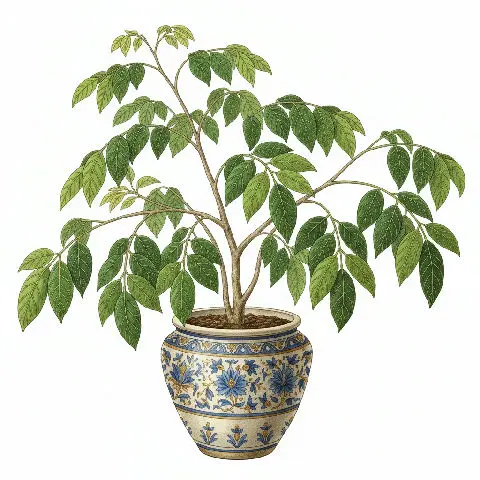
Anogeissus latifolia, widely recognized by its common names such as button tree, dhaura, bakli, Axlewood, Indian Gum Tree, or Gum Ghatti, is a significant deciduous tree belonging to the Combretaceae family. This species is indigenous to the Indian subcontinent, thriving across diverse regions of India, Nepal, Sri Lanka, Myanmar, and Thailand. Morphologically, Anogeissus latifolia is a robust tree capable of reaching impressive heights of up to 30 meters.
It features a sturdy trunk enveloped in dark brown to grayish bark, which characteristically develops deep fissures with age. Its broad leaves are typically ovate to elliptical, measuring between 5 to 10 cm in length, and are arranged alternately along the stem. The tree produces small, subtly yellowish-white flowers, which bloom in dense clusters during the monsoon season, serving as a vital attractant for various pollinators.
Following flowering, it yields woody capsules, each containing one to two seeds, efficiently dispersed by both wind and local fauna.
This species demonstrates remarkable resilience, flourishing predominantly in dry deciduous forests and exhibiting excellent adaptation to arid environments, thereby playing a crucial role in its native ecosystems. Beyond its ecological significance, Anogeissus latifolia holds considerable economic value; its durable wood is highly prized for construction, furniture manufacturing, and crafting tool handles. Culturally, the tree's leaves and bark are integral to traditional practices, often incorporated into rituals and utilized as natural preservatives.
Historically, various parts, including the bark, leaves, and galls, have been central to traditional medicine systems, notably Ayurveda, owing to their rich therapeutic properties. The high tannin content within Anogeissus latifolia has established it as a valuable remedy for numerous ailments, underscoring its enduring cultural and medicinal importance. Furthermore, its capacity to thrive in nutrient-poor soils enhances its utility in ecological restoration and agroforestry projects, fostering biodiversity and supporting local wildlife.
Trusted Scientific References
1. Authoritative external sources for Anogeissus latifolia
1.1 Wikipedia — Anogeissus latifolia
1.2 Kew POWO (Plants of the World Online)
1.3 PubMed — peer-reviewed research
1.4 NCBI Taxonomy Browser
1.5 GBIF — Global Biodiversity
1.1.Anogeissus — Highlights
- ✓Deciduous Tree — Sheds leaves seasonally, typical of its habitat.
- ✓Native to Indian Subcontinent — Found across India, Nepal, Sri Lanka, Myanmar, and Thailand.
- ✓Rich in Tannins — High concentration of tannins, notably ellagic acid, contributing to its astringent properties.
- ✓Diverse Traditional Uses — Utilized in Ayurveda and folk medicine for various ailments.
- ✓Multiple Pharmacological Activities — Demonstrated anti-inflammatory, antioxidant, antimicrobial, and antidiabetic effects.
- ✓Ecological Importance — Key species in dry deciduous forests, adapted to arid environments.
- ✓Durable Wood — Highly valued for construction, furniture, and tool handles due to its strength.
- ✓Distinct Bark — Features dark brown to grayish, fissured bark.
- ✓Source of Gum Ghatti — Produces a natural gum exudate with industrial and medicinal uses.
- ✓Supports Biodiversity — Contributes to ecosystem health and supports local wildlife.
1.2.Anogeissus — At-a-Glance Summary
- ✓Anogeissus latifolia, or Dhaura, is a prominent deciduous tree native to the Indian subcontinent.
- ✓Rich in tannins, flavonoids, and other phytochemicals, offering diverse medicinal benefits.
- ✓Traditionally used in Ayurveda for antidiarrheal, anti-inflammatory, and hepatoprotective effects.
- ✓Exhibits significant antioxidant, antimicrobial, and anti-diabetic properties in modern studies.
- ✓Requires careful dosing, as it shows dose-dependent toxicity, particularly via certain administration routes.
- ✓Its wood is economically valuable, and the tree plays a vital ecological role in dry deciduous forests.
2.Anogeissus — Botanical Identity
3.Anogeissus — Vital Statistics
4.Anogeissus — Physical Description
5.Anogeissus — Origin & Spread
6.Anogeissus — Heritage Uses
7.Anogeissus — Chemical Profile
- ✓Proteins and Carbohydrates — Essential macronutrients found in various plant parts, contributing to the plant's structural integrity and metabolic processes.
- ✓Sugars — Includes arabinose, galactose, mannose, xylose, rhamnose, and glucuronic acid, which are components of the plant's cell walls and gums, notably Gum Ghatti.
- ✓Minerals — Contains important elements like magnesium and calcium salts, especially those of ghattic acid, crucial for various physiological functions.
- ✓Alkaloids — Nitrogen-containing organic compounds with diverse pharmacological activities, often acting on the nervous system or exhibiting antimicrobial effects.
- ✓Flavonoids — A large group of plant secondary metabolites known for their strong antioxidant, anti-inflammatory, and cardioprotective properties.
- ✓Phenols — Broad category of compounds including phenolic acids and tannins, responsible for significant antioxidant, astringent, and antimicrobial activities.
- ✓Terpenoids — A diverse class of organic chemicals derived from five-carbon isoprene units, contributing to the plant's aroma, defense mechanisms, and exhibiting anti-inflammatory and anticancer properties.
- ✓Sterols — Plant sterols are structurally similar to cholesterol and can have hypolipidemic effects, also playing roles in membrane structure and signaling.
- ✓Saponins — Glycosides that form a stable foam in water, known for their detergent properties and potential to lower cholesterol, as well as antimicrobial activity.
- ✓Tannins — High concentrations of tannins, particularly hydrolyzable tannins like ellagic acid, are responsible for the plant's astringent, antioxidant, and antidiarrheal properties.
- ✓Coumarins — Aromatic organic compounds known for their anticoagulant, anti-inflammatory, and antimicrobial activities.
- ✓Quinine — While more famously associated with Cinchona, the presence of quinone structures or related compounds could contribute to anti-malarial or antimicrobial effects.
8.Anogeissus — Pharmacological Findings
- ✓Antidiarrheal Properties — Traditionally, Anogeissus latifolia has been used in Ayurveda to manage diarrheal conditions, with its high tannin content contributing to astringent effects that help reduce fluid secretion and inflammation in the gut.
- ✓Anti-inflammatory Effects — Research indicates that compounds within Anogeissus latifolia, particularly flavonoids and phenolic acids, possess potent anti-inflammatory properties, which may help alleviate various inflammatory conditions.
- ✓Antioxidant Activity — The rich profile of polyphenols, including ellagic acid, provides significant antioxidant benefits, protecting cells from oxidative stress and free radical damage.
- ✓Anti-diabetic Potential — Studies suggest that extracts from Anogeissus latifolia may help regulate blood glucose levels, making it a promising agent in the management of diabetes through improved insulin sensitivity or reduced glucose absorption.
- ✓Antimicrobial Action — Various parts of the plant exhibit broad-spectrum antimicrobial activity against bacteria and fungi, attributed to its diverse phytochemicals that disrupt microbial cell functions.
- ✓Hepatoprotective Benefits — Anogeissus latifolia has demonstrated protective effects on the liver, potentially safeguarding against toxin-induced damage and supporting overall liver function through its antioxidant and anti-inflammatory mechanisms.
- ✓Wound Healing — Applied topically or internally, the plant's extracts promote faster wound healing by accelerating tissue regeneration, reducing infection risk, and exhibiting astringent properties.
- ✓Anti-parasitic Properties — Traditional uses and some studies highlight its efficacy against certain parasites, suggesting its potential in treating parasitic infections.
- ✓Hypolipidemic Effects — Components of Anogeissus latifolia may contribute to lowering elevated lipid levels in the blood, thus supporting cardiovascular health.
- ✓Astringent Qualities — The high tannin concentration makes it an effective astringent, useful in tightening tissues, reducing bleeding, and treating conditions like hemorrhoids or excessive secretions.
- ✓Digestive Support — Beyond antidiarrheal effects, it can aid overall digestive health by toning the digestive tract and potentially reducing discomfort.
8.1.Anogeissus — Therapeutic Indications
9.Anogeissus — Safety & Side Effects
9.1.Anogeissus — Warnings
- ✓Gastrointestinal Upset — High tannin content may cause constipation, stomach irritation, or nausea in sensitive individuals or with excessive doses.
- ✓Allergic Reactions — Rare instances of skin rash or hypersensitivity reactions may occur in susceptible individuals.
- ✓Drug Interactions — Potential to interfere with the absorption of certain medications due to its tannin content, which can bind to other compounds.
- ✓Liver Toxicity (Dose-Dependent) — While generally hepatoprotective, very high doses, particularly when administered intraperitoneally, have shown dose-dependent toxicity in animal studies.
- ✓Pregnancy and Lactation — Lack of sufficient safety data advises against use during pregnancy and breastfeeding.
- ✓Blood Sugar Levels — May affect blood glucose; caution advised for individuals on anti-diabetic medications to avoid hypoglycemia.
- ✓Kidney Considerations — In individuals with pre-existing kidney conditions, high doses of tannins might exacerbate issues, though this is not well-documented for Anogeissus latifolia specifically.
9.2.Anogeissus — Risk Assessment
- ✓Consult Healthcare Professional — Always consult with a qualified medical herbalist or doctor before starting any herbal treatment, especially if you have underlying health conditions.
- ✓Adhere to Recommended Dosage — Use Anogeissus latifolia within prescribed dosages, as higher amounts may lead to adverse effects, particularly dose-dependent toxicity.
- ✓Quality Sourcing — Ensure the plant material is sourced from reputable suppliers to guarantee purity and absence of contaminants.
- ✓Short-Term Use — For internal use, consider short to medium-term regimens unless otherwise advised by a professional, especially due to high tannin content.
- ✓Avoid During Pregnancy/Lactation — Due to insufficient safety data, pregnant and lactating women should avoid its use.
- ✓Monitor for Allergic Reactions — Discontinue use immediately if any signs of allergic reaction, such as rash or difficulty breathing, appear.
- ✓Children and Infants — Not recommended for use in children and infants without professional medical supervision due to limited safety research.
10.Anogeissus — Usage Guide
- ✓Decoction of Bark — The bark is commonly boiled in water to create a potent decoction, traditionally used for treating diarrhea, dysentery, and other gastrointestinal ailments.
- ✓Leaf Infusion — Dried or fresh leaves can be steeped in hot water to prepare an infusion, often consumed for its anti-inflammatory and antioxidant benefits.
- ✓Powdered Bark/Leaves — Dried plant material, particularly the bark or leaves, can be finely powdered and taken orally, or mixed with water to form a paste for topical application.
- ✓Topical Paste/Poultice — A paste made from crushed leaves or bark powder is applied directly to wounds, skin infections, or inflamed areas to promote healing and reduce swelling.
- ✓Gum Ghatti Collection — The natural gum exudate, known as Gum Ghatti, is collected from the bark and used in traditional remedies as an emulsifier and demulcent.
- ✓Gargle/Mouthwash — A diluted decoction of the bark can be used as a gargle for sore throats, gum infections, or as a general oral antiseptic due to its astringent properties.
- ✓Traditional Ayurvedic Preparations — Incorporated into complex polyherbal formulations in Ayurveda for conditions like diabetes, liver disorders, and chronic inflammation.
- ✓Wood Ash Application — In some folk traditions, the ash from the burnt wood might be used for specific external applications, though this is less common for internal medicinal use.
11.Anogeissus — Cultivation & Care
- ✓Climate — Thrives in tropical and subtropical regions, requiring warm temperatures and tolerating dry conditions.
- ✓Soil — Adaptable to a wide range of soils, including poor, shallow, and rocky soils, but prefers well-drained loamy or sandy-loamy types.
- ✓Propagation — Primarily propagated by seeds, which require scarification or soaking to improve germination rates; can also be grown from stem cuttings.
- ✓Watering — Highly drought-tolerant once established, requiring minimal irrigation; young plants need regular watering for initial growth.
- ✓Sunlight — Prefers full sun exposure for optimal growth and development, crucial for photosynthesis.
- ✓Pests and Diseases — Generally resistant to major pests and diseases, though young saplings may be susceptible to browsing by herbivores.
- ✓Spacing — For forestry or agroforestry, trees should be spaced adequately to allow for canopy development and root expansion, typically 4-6 meters apart.
- ✓Harvesting — Bark and leaves are harvested carefully to ensure tree health, often through sustainable methods like coppicing or selective branch removal.
Reviewed by the Flora Medical Global Botanical Review Panel
Multi-disciplinary editorial group · Botany · Ethnobotany · Herbal-medicine literature
Who reviewed this: This page was checked by the Flora Medical Global Botanical Review Panel — an in-house editorial group of botany graduates, ethnobotany researchers, and horticulture practitioners who collectively maintain our 7,000+ plant encyclopedia. Meet the team.
Our 4-step verification process
1. Taxonomic verification
Scientific names and synonyms cross-checked against Kew POWO, World Flora Online, and The Plant List.
2. Phytochemical & medicinal cross-reference
Active compounds, traditional uses, and reported activities are cross-referenced with PubMed, USDA Dr. Duke's database, and peer-reviewed ethnobotanical literature.
3. Conservation & distribution check
Distribution, ecology, and conservation status confirmed against GBIF occurrence records and the IUCN Red List.
4. Editorial & safety review
Every entry passes an editorial pass for clarity, originality, and safety notices (toxicity, contraindications, dosage caveats) before publication.
Last reviewed:
Important medical disclaimer: This content is for educational and research purposes only. It is not medical advice and is not a substitute for consultation with a licensed healthcare provider. Do not use any herb to self-treat a medical condition without professional guidance.
Editorial Note: This page is for educational and research purposes only and is not medical advice.
Written by: Flora Medical Global Editorial Team
Reviewed by: Flora Medical Global Botanical Review Panel
Last Updated: June 15, 2026





Anogeissus — Comments & Community Reviews
Rate this plant