

Medical Disclaimer: This content is for educational purposes only. It is not medical advice. Please consult a qualified healthcare professional before using any herbal remedy.
Safety Overview
1.Anthemis Tinctoria — Introduction & Highlights
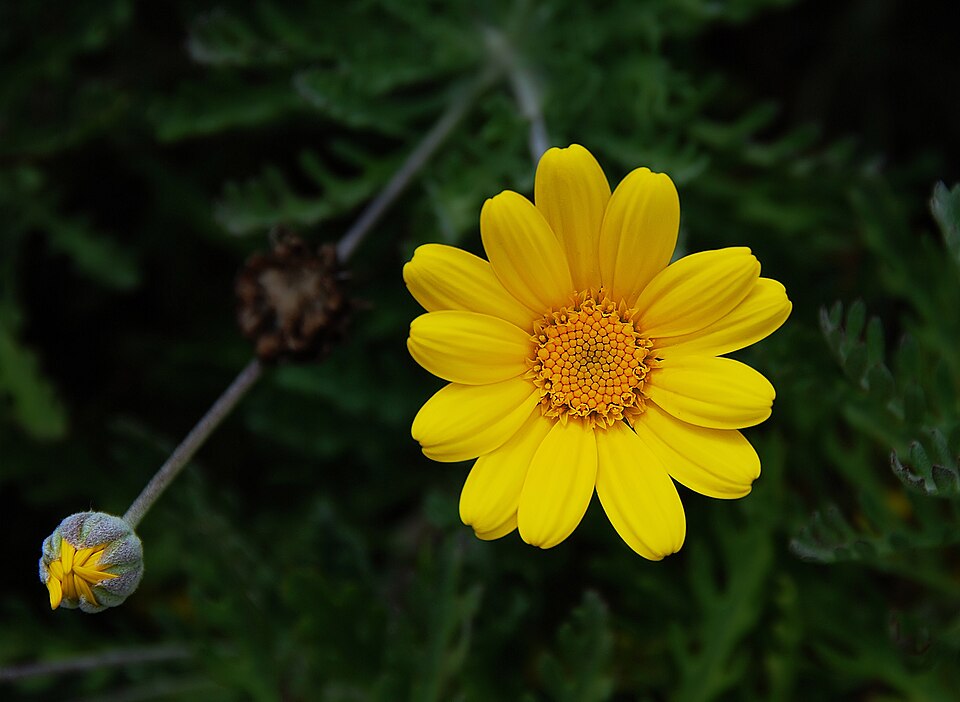
Anthemis tinctoria, commonly known as Golden Marguerite or Yellow Chamomile, is a robust perennial herbaceous plant belonging to the Asteraceae family. Native to Europe and parts of Asia, it thrives in dry, sunny locations, often found in grasslands, rocky slopes, and disturbed areas. This resilient species typically forms a bushy clump, reaching heights of 30 to 70 centimeters, with a spread of similar dimensions.
Its stems are erect, branched, and often slightly hairy, supporting a profusion of foliage and flowers. The leaves are deeply pinnatisect, giving them a finely divided, fern-like appearance, and are arranged alternately along the stem. They are typically a vibrant green, sometimes with a grayish-green hue, and emit a faint, pleasant aroma when crushed.
During its extended blooming season, from late spring through summer, Golden Marguerite produces numerous daisy-like flower heads. These conspicuous blooms feature bright golden-yellow ray florets surrounding a dense central disc of darker yellow tubular florets, making them highly attractive to pollinators such as bees and butterflies. The cheerful yellow flowers are a defining characteristic, differentiating it from other chamomile species.
Anthemis tinctoria is well-adapted to poor, well-drained soils and exhibits notable drought resistance once established, making it a favored choice for xeriscaping, cottage gardens, and naturalized meadows. Its hardiness and striking visual appeal contribute significantly to local biodiversity and landscape aesthetics.
Trusted Scientific References
1. Authoritative external sources for Anthemis Tinctoria
1.1 Wikipedia — Anthemis Tinctoria
1.2 Kew POWO (Plants of the World Online)
1.3 PubMed — peer-reviewed research
1.4 NCBI Taxonomy Browser
1.5 GBIF — Global Biodiversity
1.6Anthemis Tinctoria should be interpreted through verified botanical identity, practical care, and responsible safety language. This recovery note adds the missing context needed for a complete profile: match light to the plant's habit, use well-drained soil, water according to season, and avoid unsupported medicinal or edible claims. For publishing, the plant can be presented as a source-backed garden plant with clear care guidance, common problem diagnosis, and conservative safety wording.
1.1.Anthemis Tinctoria — Defining Traits
- ✓Botanical Name — Anthemis tinctoria, also known as Golden Marguerite or Yellow Chamomile.
- ✓Family — Asteraceae, characterized by composite flower heads.
- ✓Perennial Herb — A hardy, long-lived plant returning year after year.
- ✓Striking Yellow Flowers — Bright golden-yellow daisy-like blooms from late spring to summer.
- ✓Aromatic Foliage — Finely divided, fern-like leaves with a subtle, pleasant scent.
- ✓Drought Tolerant — Well-suited for xeriscaping and dry garden conditions once established.
- ✓Traditional Medicinal Use — Historically valued for digestive and anti-inflammatory properties.
- ✓Rich Phytochemistry — Contains beneficial essential oils, flavonoids, and phenolic acids.
- ✓Pollinator Friendly — Attracts bees and butterflies, enhancing garden biodiversity.
- ✓Aesthetic Appeal — Popular ornamental plant for borders, rock gardens, and naturalized areas.
1.2.Anthemis Tinctoria — At-a-Glance Summary
- ✓Golden Marguerite (Anthemis tinctoria) is a perennial herb in the Asteraceae family, known for its bright yellow, daisy-like flowers.
- ✓Traditionally used for digestive issues, inflammation, and skin conditions.
- ✓Rich in essential oils and polyphenols, offering antioxidant and potential anti-inflammatory benefits.
- ✓Recent research highlights in vitro anticancer activity of its essential oils.
- ✓Thrives in full sun and well-drained soil, drought-tolerant once established.
- ✓Caution advised for pregnant/lactating individuals and those with Asteraceae allergies.
2.Anthemis Tinctoria — Systematic Position
3.Anthemis Tinctoria — Quick Facts
4.Anthemis Tinctoria — Structural Profile
5.Anthemis Tinctoria — Where It Grows
6.Anthemis Tinctoria — Cultural & Traditional Roles
7.Anthemis Tinctoria — Bioactive Constituents
- ✓Essential Oils — Comprise compounds such as palmitic acid, p-cymene, α-muurolene, α-pinene, β-myrcene, isocaryophyllene oxide, and α-bisabolol, contributing to the plant's aroma and potential antimicrobial or anti-inflammatory activities.
- ✓Flavonoids — Key phenolic compounds like quercetin, luteolin, and apigenin derivatives are abundant, known for their significant antioxidant, anti-inflammatory, and antiallergic properties.
- ✓Phenolic Acids — Derivatives of caffeic acid and quinic acid are present, acting as powerful antioxidants and contributing to the plant's overall health benefits.
- ✓Terpenoids — Including sesquiterpenes and monoterpenes, these compounds play a role in the plant's defense mechanisms and contribute to its therapeutic actions, such as anti-inflammatory and antispasmodic effects.
- ✓Tannins — A class of astringent polyphenols that may contribute to the plant's traditional use in wound healing and digestive support by forming protective layers on mucous membranes.
- ✓Coumarins — Certain coumarin derivatives can be found, which may possess anti-inflammatory, anticoagulant, and antimicrobial properties.
- ✓Polyacetylenes — These compounds, though less studied in Anthemis tinctoria, are characteristic of the Asteraceae family and can exhibit cytotoxic and antimicrobial activities.
- ✓Fatty Acids — Palmitic acid is a notable component in the essential oil, indicative of its presence in the plant's lipid profile.
8.Anthemis Tinctoria — What Research Suggests
- ✓Anti-inflammatory Support — Golden Marguerite possesses compounds like flavonoids and terpenoids that may help reduce inflammation in the body, potentially beneficial for conditions such as arthritis or inflammatory skin issues.
- ✓Digestive Aid — Traditionally, preparations from Anthemis tinctoria have been used to soothe gastrointestinal discomfort, assisting digestion and alleviating symptoms like bloating or mild spasms.
- ✓Antioxidant Properties — The plant is rich in polyphenolic compounds, including various flavonoids, which act as potent antioxidants, protecting cells from oxidative stress and free radical damage.
- ✓Skin Soothing Applications — Applied topically, extracts or poultices of Golden Marguerite may help calm irritated skin, reduce redness, and support healing of minor abrasions or insect bites due to its anti-inflammatory and antiseptic qualities.
- ✓Potential Antitumour Activity (In Vitro) — Recent research indicates that essential oils from Anthemis tinctoria exhibit in vitro anticancer effects on certain human carcinoma cell lines, suggesting potential for future pharmaceutical development, though not a clinical treatment.
- ✓Antimicrobial Effects — Certain constituents within the essential oil, such as p-cymene and alpha-pinene, demonstrate mild antimicrobial properties, which could contribute to protecting against certain bacterial or fungal pathogens.
- ✓Stress and Anxiety Relief — Similar to other chamomile species, the aromatic compounds might offer mild nervine effects, contributing to a sense of calm and potentially aiding in the reduction of stress or mild anxiety.
- ✓Hepatoprotective Potential — Some studies suggest that the antioxidant and anti-inflammatory compounds could offer protective benefits to liver cells, supporting overall liver health.
- ✓Diuretic Properties — Traditional uses sometimes include Golden Marguerite as a mild diuretic, aiding in the removal of excess fluids from the body and supporting kidney function.
8.1.Anthemis Tinctoria — Health Applications
9.Anthemis Tinctoria — Precautions & Warnings
9.1.Anthemis Tinctoria — Warnings
- ✓Allergic Reactions — Individuals sensitive to plants in the Asteraceae family (e.g., ragweed, marigolds, chrysanthemums) may experience allergic reactions, including skin rashes, contact dermatitis, or respiratory issues.
- ✓Photosensitivity — Some compounds within the plant might increase sensitivity to sunlight, particularly when applied topically, potentially leading to photodermatitis.
- ✓Gastrointestinal Upset — High doses or sensitive individuals may experience mild stomach upset, nausea, or diarrhea.
- ✓Pregnancy and Lactation Concerns — Insufficient research exists regarding its safety during pregnancy and breastfeeding; therefore, use should be avoided.
- ✓Drug Interactions — Potential interactions with sedative medications, blood thinners, or drugs metabolized by the liver, due to its chemical constituents.
- ✓Skin Irritation — Direct contact with fresh plant material can occasionally cause skin irritation in highly sensitive individuals.
9.2.Anthemis Tinctoria — Risk Assessment
- ✓Pregnancy and Breastfeeding — Avoid use during pregnancy and lactation due to a lack of sufficient safety data and potential uterine stimulant effects.
- ✓Children — Not recommended for infants and young children without professional medical advice, as safety and appropriate dosages are not well-established.
- ✓Allergy Warning — Individuals with known allergies to the Asteraceae family should exercise extreme caution or avoid use altogether to prevent allergic reactions.
- ✓Surgical Procedures — Discontinue use at least two weeks prior to scheduled surgery due to potential interactions with anesthesia or blood coagulation.
- ✓Consult Healthcare Professional — Always consult a qualified healthcare provider before using Anthemis tinctoria, especially if on medication or managing existing health conditions.
- ✓Topical Use — Perform a patch test on a small area of skin before extensive topical application to check for adverse reactions or sensitivities.
- ✓Dosage — Adhere strictly to recommended dosages from reputable sources or healthcare professionals, as excessive intake may lead to adverse effects.
10.Anthemis Tinctoria — Application Forms
- ✓Herbal Tea Infusion — Dried flower heads and leaves can be steeped in hot water to create a calming herbal tea, traditionally used for digestive support or mild sedative effects.
- ✓Tinctures — Alcohol-based extractions of the aerial parts are prepared for concentrated internal use, often for anti-inflammatory or digestive benefits.
- ✓Poultices and Compresses — Fresh or dried plant material, crushed and mixed with a small amount of water, can be applied externally as a poultice to soothe skin irritations, minor wounds, or reduce localized inflammation.
- ✓Essential Oil Extraction — The plant's aerial parts yield an essential oil that can be used in aromatherapy or diluted for topical applications, valued for its aromatic and potential therapeutic properties.
- ✓Herbal Extracts — Standardized extracts are formulated for internal use in capsules or liquid forms, ensuring consistent dosing of active compounds.
- ✓Baths — Infusions of Golden Marguerite can be added to bathwater to provide a soothing and aromatic experience, beneficial for skin conditions or relaxation.
- ✓Culinary Use — Though primarily medicinal, young leaves can sometimes be added in small quantities to salads or dishes for a slightly bitter, aromatic flavor.
11.Anthemis Tinctoria — Propagation & Care
- ✓Site Selection — Choose a location with full sun exposure (at least 6 hours daily) to ensure vigorous growth and abundant flowering.
- ✓Soil Requirements — Golden Marguerite thrives in well-drained soil, preferably sandy or loamy, with a neutral to slightly alkaline pH. Amend heavy clay soils with organic matter and grit to improve drainage.
- ✓Propagation — Can be propagated from seeds sown directly in spring or autumn, or by dividing established clumps in spring or early autumn.
- ✓Watering — Once established, Anthemis tinctoria is drought-tolerant. Water regularly during dry spells, but avoid overwatering, which can lead to root rot.
- ✓Fertilization — Generally, this plant does not require heavy fertilization. An annual application of compost in spring is usually sufficient for healthy growth.
- ✓Pruning — Deadhead spent flowers regularly to encourage continuous blooming and prevent self-seeding. Cut back plants by about one-third after the main flush of blooms to promote a tidier habit and potential rebloom.
- ✓Pest and Disease Control — Golden Marguerite is relatively pest and disease resistant. Ensure good air circulation to prevent fungal issues in humid conditions.
Reviewed by the Flora Medical Global Botanical Review Panel
Multi-disciplinary editorial group · Botany · Ethnobotany · Herbal-medicine literature
Who reviewed this: This page was checked by the Flora Medical Global Botanical Review Panel — an in-house editorial group of botany graduates, ethnobotany researchers, and horticulture practitioners who collectively maintain our 7,000+ plant encyclopedia. Meet the team.
Our 4-step verification process
1. Taxonomic verification
Scientific names and synonyms cross-checked against Kew POWO, World Flora Online, and The Plant List.
2. Phytochemical & medicinal cross-reference
Active compounds, traditional uses, and reported activities are cross-referenced with PubMed, USDA Dr. Duke's database, and peer-reviewed ethnobotanical literature.
3. Conservation & distribution check
Distribution, ecology, and conservation status confirmed against GBIF occurrence records and the IUCN Red List.
4. Editorial & safety review
Every entry passes an editorial pass for clarity, originality, and safety notices (toxicity, contraindications, dosage caveats) before publication.
Last reviewed:
Important medical disclaimer: This content is for educational and research purposes only. It is not medical advice and is not a substitute for consultation with a licensed healthcare provider. Do not use any herb to self-treat a medical condition without professional guidance.
Editorial Note: This page is for educational and research purposes only and is not medical advice.
Written by: Flora Medical Global Editorial Team
Reviewed by: Flora Medical Global Botanical Review Panel
Last Updated: June 15, 2026





Anthemis Tinctoria — Comments & Community Reviews
Rate this plant