
Medical Disclaimer: This content is for educational purposes only. It is not medical advice. Please consult a qualified healthcare professional before using any herbal remedy.
Safety Overview
1.Anthurium Crystallinum — Overview
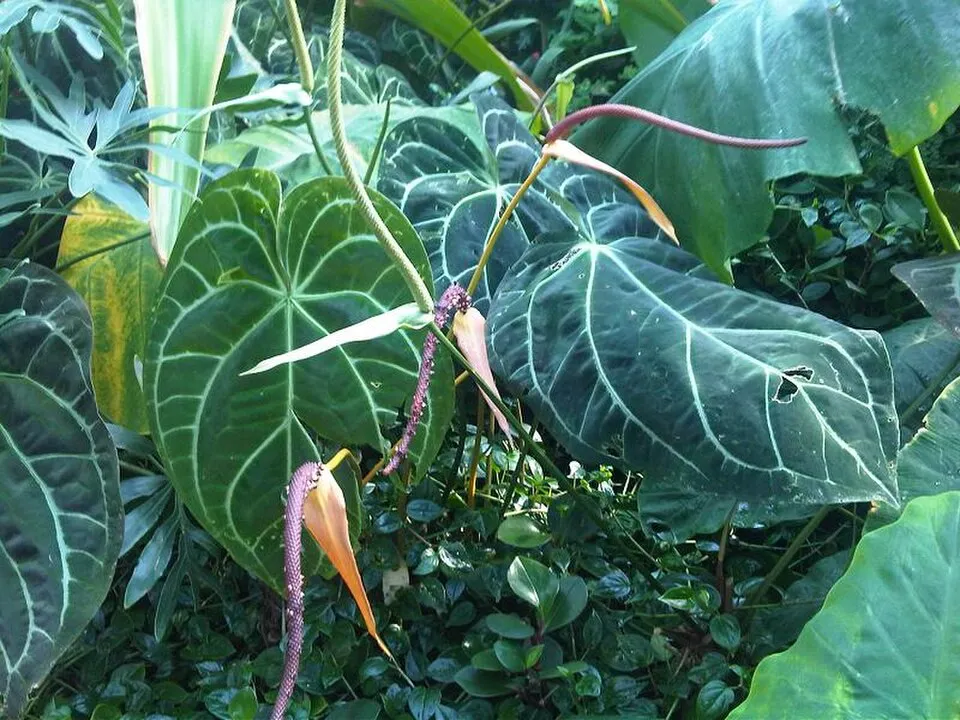
Anthurium crystallinum, a magnificent member of the Araceae family, is a captivating aroid renowned for its spectacular foliage rather than its inconspicuous blooms. Native to the humid understory of Central and South American rainforests, particularly flourishing in Colombia, Peru, Ecuador, and Panama, this species exhibits a unique growth habit, appearing both epiphytically on tree trunks and terrestrially on humus-rich forest floors. Its botanical name, 'crystallinum,' aptly describes the shimmering, crystal-like appearance of its prominent white to silvery venation, which sharply contrasts against the deep, velvety green surface of its large, heart-shaped leaves.
These leaves can mature to impressive sizes, often reaching 60 cm or more in ideal conditions, unfurling with delicate bronze, reddish, or purple tints before settling into their rich, dark green hue. First formally described in the late 19th century by Jean Jules Linden, it quickly became a highly prized ornamental plant among botanists and horticulturists, leading to its widespread cultivation and subsequent development of numerous tissue culture lines and hybrids. Unlike many Anthurium species celebrated for their vibrant spathes, A.
crystallinum's allure lies almost entirely in the intricate texture and striking pattern of its majestic leaves, which also serve a vital physiological role in efficient nutrient and water transport.
Trusted Scientific References
1. Authoritative external sources for Anthurium crystallinum
1.1 Wikipedia — Anthurium crystallinum
1.2 Kew POWO (Plants of the World Online)
1.3 PubMed — peer-reviewed research
1.4 NCBI Taxonomy Browser
1.5 GBIF — Global Biodiversity
1.6Anthurium Crystallinum should be interpreted through verified botanical identity, practical care, and responsible safety language. This recovery note adds the missing context needed for a complete profile: match light to the plant's habit, use well-drained soil, water according to season, and avoid unsupported medicinal or edible claims. For publishing, the plant can be presented as a source-backed indoor plant with clear care guidance, common problem diagnosis, and conservative safety wording.
1.1.Anthurium Crystallinum — Key Features
- ✓Velutinous Leaf Texture — Distinctive soft, velvety feel due to microscopic trichomes on the leaf surface.
- ✓Striking Silver Venation — Prominent white to silvery veins that shimmer against the dark green foliage.
- ✓Heart — Shaped Foliage — Large, cordate (heart-shaped) leaves, often exceeding 30 cm in length.
- ✓Epiphytic/Terrestrial Growth — Adaptable growth habit, found both on tree trunks and forest floors.
- ✓Tropical Origin — Native to the humid rainforests of Central and South America.
- ✓High Ornamental Value — Highly prized as an indoor decorative plant for its dramatic appearance.
- ✓Air Purifying Qualities — Contributes to indoor air quality as a general houseplant.
- ✓Red/Bronze Emergent Leaves — New leaves often unfurl with vibrant reddish, bronze, or purple hues.
- ✓Toxicity (Calcium Oxalate) — Contains irritating calcium oxalate crystals in all plant parts.
- ✓Aroid Family Member — Belongs to the Araceae family, sharing common characteristics with other aroids.
1.2.Anthurium Crystallinum — Quick Summary
- ✓Striking ornamental Aroid with velvety, heart-shaped leaves and prominent silver venation.
- ✓Native to Central and South American rainforests, thrives in high humidity and indirect light.
- ✓Primarily valued for its aesthetic appeal, contributing to biophilic design and general indoor air quality.
- ✓Contains calcium oxalate crystals, making all parts toxic if ingested and irritating upon contact.
- ✓Requires specific care — warm temperatures, high humidity, well-draining substrate, and filtered light.
- ✓Limited documented traditional medicinal uses for this specific species; general Aroid properties are acrid and purgative when properly processed.
2.Anthurium Crystallinum — Scientific Profile
3.Anthurium Crystallinum — Botanical Stats
4.Anthurium Crystallinum — Plant Morphology
5.Anthurium Crystallinum — Habitat & Distribution
6.Anthurium Crystallinum — Ethnobotanical Uses
7.Anthurium Crystallinum — Bioactive Constituents
- ✓Calcium Oxalate Raphides — Needle-shaped crystals primarily responsible for the immediate acrid taste and irritating sensation upon contact or ingestion, a common defense mechanism across the Araceae family.
- ✓Flavonoids — A class of polyphenolic compounds widely distributed in plants, known for potential antioxidant, anti-inflammatory, and protective properties, though specific A. crystallinum profiles are yet to be thoroughly studied.
- ✓Saponins — Glycosidic compounds that produce a stable foam in water, potentially exhibiting diverse biological activities such as hemolytic, anti-inflammatory, and antimicrobial effects, requiring further investigation in this species.
- ✓Alkaloids — Nitrogen-containing organic compounds often associated with potent pharmacological activities; their specific presence and types in Anthurium crystallinum remain largely unexplored.
- ✓Tannins — Polyphenolic compounds with astringent properties, commonly found in plants and known for their ability to bind to proteins, often contributing to defense mechanisms against herbivores.
- ✓Glycosides — Compounds in which a sugar molecule is bonded to a non-sugar component (aglycone), potentially responsible for various physiological effects in plants and possible medicinal properties, awaiting specific identification.
- ✓Volatile Organic Compounds (VOCs) — While certain Aroids release VOCs that contribute to fragrance or defense, the specific volatile profile for A. crystallinum is not well-documented in scientific literature.
- ✓Anthocyanins — Pigments responsible for the red, purple, or bronze colors observed in the emergent foliage and sometimes petioles of A. crystallinum, acting as natural antioxidants and UV protectors.
- ✓Plant Sterols — Steroid alcohols found in plants, structurally similar to cholesterol, often associated with various physiological roles and potential health benefits, awaiting specific quantification in this species.
- ✓Terpenoids — A large and diverse class of organic compounds derived from isoprene units, playing roles in plant defense and producing aromatic qualities, though specific types in A. crystallinum are largely underexplored.
8.Anthurium Crystallinum — Modern Studies
- ✓Ornamental Value — Highly prized for its aesthetic beauty, contributing to mental well-being and stress reduction through biophilic design elements in indoor environments.
- ✓Air Purification Potential — Like many houseplants, it may contribute to filtering indoor air toxins, subtly enhancing air quality in enclosed living spaces.
- ✓Traditional Aroid Counter-Irritant — Historically, some Aroid species were used topically as counter-irritants for localized pain, though this requires careful processing due to inherent acridity; specific A. crystallinum use is not documented.
- ✓Traditional Aroid Purgative — Certain Aroid species, when prepared correctly, have been employed in traditional medicine as purgatives to induce bowel movements; direct medicinal use for A. crystallinum is unconfirmed.
- ✓Mood Enhancement — The presence of lush, vibrant foliage in living spaces can positively impact mood, potentially reducing feelings of anxiety and fostering a sense of calm.
- ✓Biophilic Connection — Cultivating Anthurium crystallinum helps foster a deeper connection to nature, promoting psychological benefits and a sense of well-being in urban or indoor settings.
- ✓Educational Value — Serves as an excellent living specimen for botanical study, enhancing understanding of plant morphology, ecology, and advanced cultivation techniques.
- ✓Humidity Contribution — As a tropical plant, it releases moisture through transpiration, subtly increasing ambient humidity, which can be beneficial for human respiratory comfort.
- ✓Aesthetic Therapy — Its unique velvety leaves and striking venation provide visual stimulation, offering a form of passive aesthetic therapy that can be calming and engaging.
- ✓Habitat Mimicry — Growing A. crystallinum encourages the creation of micro-climates that mimic natural rainforest conditions, beneficial for other humidity-loving plants and promoting biodiversity.
8.1.Anthurium Crystallinum — Conditions Traditionally Used For
9.Anthurium Crystallinum — Risk Profile
9.1.Anthurium Crystallinum — Reported Side Effects
- ✓Skin Irritation — Direct contact with the sap or broken plant parts can cause immediate skin irritation, itching, redness, or dermatitis due to calcium oxalate crystals.
- ✓Oral Irritation & Swelling — Ingestion of any part of the plant can lead to intense burning pain in the mouth, throat, and digestive tract, often accompanied by swelling of the tongue and lips.
- ✓Gastrointestinal Distress — Swallowing plant material may cause severe nausea, vomiting, abdominal pain, and diarrhea due to its acrid and irritating compounds.
- ✓Eye Irritation — Contact with sap can result in severe eye irritation, redness, pain, and temporary vision disturbances, requiring immediate rinsing.
- ✓Pet Toxicity — Highly toxic to pets (cats, dogs) if ingested, leading to symptoms such as excessive drooling, pawing at the mouth, difficulty swallowing, and vomiting.
- ✓Allergic Reactions — Sensitive individuals may experience allergic reactions, including respiratory symptoms, upon prolonged exposure to plant particles or sap in enclosed spaces.
- ✓Respiratory Discomfort — Inhalation of fine particles or aerosols from sap, particularly during handling or processing, might cause temporary irritation of the respiratory passages.
9.2.Anthurium Crystallinum — Safety Profile
- ✓Keep Out of Reach of Children and Pets — Ensure the plant is placed in an inaccessible location where young children and animals cannot reach or ingest it due to its inherent toxicity.
- ✓Wear Protective Gear — Always handle Anthurium crystallinum with gloves when pruning, repotting, or propagating to prevent direct skin contact with the irritating sap.
- ✓Avoid Ingestion — Emphasize that no part of Anthurium crystallinum should ever be consumed, as it is toxic if ingested and can cause severe oral and gastrointestinal distress.
- ✓Wash Hands Thoroughly — Always wash hands with soap and water immediately after handling the plant, even if gloves were worn, to remove any lingering sap residues.
- ✓Seek Medical Attention — In case of accidental ingestion or severe contact reactions, consult a medical professional or poison control center without delay.
- ✓Eye Protection — Consider wearing eye protection when performing tasks that might cause sap splash, such as aggressive pruning or breaking stems.
- ✓Awareness of Symptoms — Be aware of the symptoms of exposure (e.g., oral burning, skin rash, swelling) to ensure prompt and appropriate action if an incident occurs.
10.Anthurium Crystallinum — Preparation & Dosage
- ✓Ornamental Display — Cultivate as a prized indoor houseplant, showcasing its dramatic foliage in living rooms, offices, or botanical collections for its exceptional aesthetic appeal.
- ✓Biophilic Design Element — Incorporate into interior design schemes to enhance well-being, reduce stress, and introduce a sophisticated natural element into urban or indoor spaces.
- ✓Humidity Enhancement — Place in groups with other humidity-loving plants to create a beneficial microclimate, subtly increasing moisture in the surrounding air through natural transpiration.
- ✓Air Quality Improvement (Indirect) — Contribute to general indoor air freshness as part of a diverse plant collection, potentially assisting in the absorption of common household volatile organic compounds.
- ✓Educational Specimen — Utilize in educational settings or botanical gardens as an exemplary model of tropical Aroid morphology, adaptation, and specialized cultivation techniques.
- ✓Gifting — Present as a sophisticated and unique gift for plant enthusiasts, collectors, or those appreciating rare and visually striking botanical specimens.
- ✓Propagation — Employ stem cuttings or tissue culture for controlled multiplication, allowing for expansion of personal collections or sharing with other dedicated growers.
- ✓Aesthetic Focal Point — Use its striking appearance to create a natural focal point in a room, drawing attention to its unique venation and velvety texture.
11.Anthurium Crystallinum — Propagation & Care
- ✓Light — Provide bright, indirect light, mimicking its rainforest understory habitat; avoid direct sun exposure which can scorch its delicate velvety leaves.
- ✓Humidity — Maintain high ambient humidity, ideally between 70-90%, utilizing humidifiers, pebble trays, or grow tents to prevent leaf crisping and promote optimal growth.
- ✓Substrate — Use a well-draining, airy, and organic-rich mix, such as a blend of orchid bark, perlite, coco coir, and worm castings, to support its epiphytic/terrestrial root structure.
- ✓Watering — Water thoroughly when the top few inches of the substrate feel dry, but allow for slight drying between waterings to prevent root rot, ensuring consistent moisture without saturation.
- ✓Temperature — Keep temperatures consistently warm, between 18-29°C (65-85°F), protecting the plant from cold drafts or sudden fluctuations that can cause stress.
- ✓Airflow — Ensure gentle air circulation to prevent fungal issues, especially in high-humidity environments, without creating strong drafts that could rapidly dry out foliage.
- ✓Fertilization — Feed sparingly during the active growing season (spring/summer) with a balanced liquid fertilizer diluted to half strength, reducing frequency during cooler, dormant months.
- ✓Support — Provide a moss pole or stake for aerial roots to cling to, encouraging larger leaf development and a more upright, natural growth habit.
Reviewed by the Flora Medical Global Botanical Review Panel
Multi-disciplinary editorial group · Botany · Ethnobotany · Herbal-medicine literature
Who reviewed this: This page was checked by the Flora Medical Global Botanical Review Panel — an in-house editorial group of botany graduates, ethnobotany researchers, and horticulture practitioners who collectively maintain our 7,000+ plant encyclopedia. Meet the team.
Our 4-step verification process
1. Taxonomic verification
Scientific names and synonyms cross-checked against Kew POWO, World Flora Online, and The Plant List.
2. Phytochemical & medicinal cross-reference
Active compounds, traditional uses, and reported activities are cross-referenced with PubMed, USDA Dr. Duke's database, and peer-reviewed ethnobotanical literature.
3. Conservation & distribution check
Distribution, ecology, and conservation status confirmed against GBIF occurrence records and the IUCN Red List.
4. Editorial & safety review
Every entry passes an editorial pass for clarity, originality, and safety notices (toxicity, contraindications, dosage caveats) before publication.
Last reviewed:
Important medical disclaimer: This content is for educational and research purposes only. It is not medical advice and is not a substitute for consultation with a licensed healthcare provider. Do not use any herb to self-treat a medical condition without professional guidance.
Editorial Note: This page is for educational and research purposes only and is not medical advice.
Written by: Flora Medical Global Editorial Team
Reviewed by: Flora Medical Global Botanical Review Panel
Last Updated: June 15, 2026





Anthurium Crystallinum — Comments & Community Reviews
Rate this plant